Cichlid Compatibility Overview
Cichlidae is one of the most diverse fish families, with over 2,000 described species spanning three continents. Compatibility rules differ dramatically depending on which cichlid group you are keeping. An approach that works perfectly for dwarf South American cichlids will result in carnage if applied to African Mbuna. Understanding the specific aggression patterns, territorial requirements, and water chemistry needs of each group is essential for building a functional community.
The overarching rule for cichlid communities is: match aggression levels, size, and water chemistry. Peaceful species paired with aggressive species results in bullying, stress, and death. Large species paired with small species results in predation. African species paired with South American species results in water chemistry compromise that suits neither.
African Mbuna Tank Mates
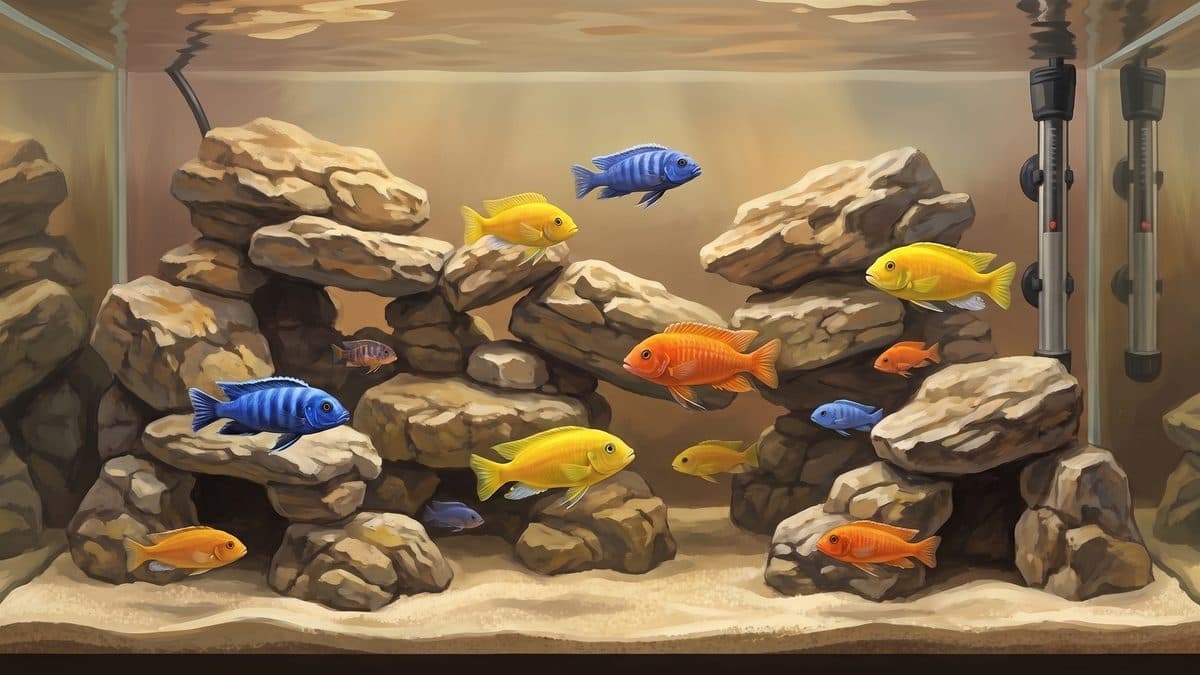
Mbuna (rock-dwelling cichlids from Lake Malawi) are among the most aggressive freshwater aquarium fish relative to their size. They defend territories aggressively, chase constantly, and can kill tank mates that cannot tolerate the pressure. The strategy for Mbuna communities is controlled overstocking — keeping 15–20+ Mbuna in a 75+ gallon tank so that aggression is distributed across many targets, preventing any single fish from being singled out.
Compatible Mbuna Species
Mix Mbuna species that differ in colour pattern to reduce conspecific aggression (fish that look similar are attacked more intensely):
- Yellow Labs (Labidochromis caeruleus): The most peaceful Mbuna. Bright yellow colouration. Essential in almost every Mbuna community.
- Rusty Cichlids (Iodotropheus sprengerae): Brownish-lavender colour, moderate aggression. Compatible with most other Mbuna.
- Red Zebra (Maylandia estherae): Orange-red females, blue males. Moderately aggressive.
- Acei (Pseudotropheus acei): Blue body with yellow tail. Mid-water swimmer (unusual for Mbuna). Relatively peaceful.
- Demasoni (Pseudotropheus demasoni): Stunningly patterned but highly aggressive. Must be kept in groups of 12+ to distribute aggression. Expert-level Mbuna.
Stock Mbuna at a ratio of 1 male to 3–4 females per species. Multiple males of the same species create lethal aggression unless the tank exceeds 125 gallons with complex rockwork.
Non-Cichlid Mbuna Tank Mates
- Synodontis multipunctatus (Cuckoo Catfish): The ideal Mbuna companion. Native to Lake Malawi, same water chemistry, armoured, and fast enough to avoid Mbuna aggression. Reproduces by depositing eggs among Mbuna mouthbrooders — fascinating behaviour.
- Synodontis lucipinnis and S. petricola: Smaller Synodontis (8–12 cm) that thrive in Mbuna tanks. Keep in groups of 5+.
- Bristlenose Plecos: Tolerate the hard, alkaline water Mbuna require. Armoured and nocturnal — ignored by Mbuna. Excellent algae control.
Avoid small tetras, barbs, and community fish in Mbuna tanks — they will be relentlessly chased and killed.
Peacock and Hap Tank Mates
Peacock cichlids (Aulonocara) and Haplochromis-type cichlids are significantly less aggressive than Mbuna. They are open-water swimmers from the sandy and intermediate zones of Lake Malawi. Mix Peacocks and Haps freely in 75+ gallon tanks, choosing species with different colour patterns:
- OB Peacock, Sunshine Peacock, Ruby Red Peacock: Vibrant, moderately peaceful.
- Haplochromis species: Copadichromis borleyi (Red Kadango), Protomelas taeniolatus (Red Empress), Sciaenochromis fryeri (Electric Blue Hap).
- Non-cichlid mates: Synodontis catfish (same as Mbuna), Bristlenose Plecos, and large Rainbowfish (Melanotaenia spp.) which tolerate alkaline water and are fast enough to avoid aggression.
Do not mix Peacocks with Mbuna. Mbuna are too aggressive for the gentler Peacocks and will outcompete them for food and territory. The exception is Yellow Labs, which are peaceful enough to coexist with Peacocks in 100+ gallon tanks.
South American Cichlid Tank Mates
Oscar Community Tanks
Oscars (Astronotus ocellatus) are large (30–35 cm), intelligent, and messy. They need 75 gallons minimum for a single specimen, 125+ gallons for a community:
- Silver Dollars (school of 6+): Fast, disc-shaped, and large enough to avoid predation. The classic Oscar dither fish.
- Large Plecos (Common, Sailfin): Armoured bottom-dwellers that clean up after the Oscar's messy eating habits.
- Bichirs (P. senegalus or larger): Bottom-dwelling, armoured, and ignored by Oscars.
- Severums (Heros spp.): Large, peaceful South American cichlids (20–25 cm) that complement Oscars well.
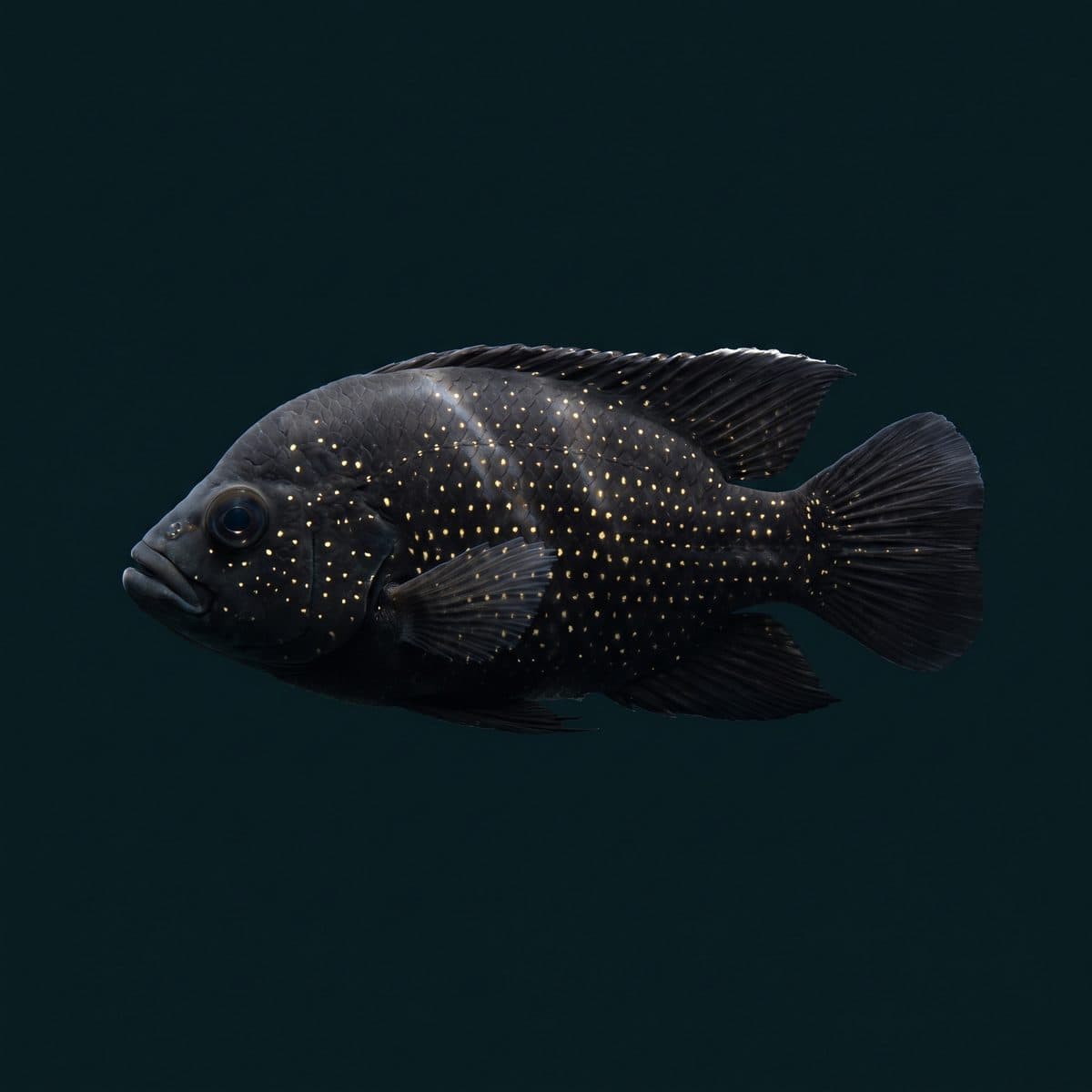
- Jack Dempsey (Rocio octofasciata): Robust enough to coexist with Oscars in 125+ gallon tanks. Can be territorial during breeding.
Other large South American cichlids — Green Terror, Firemouth, Convict — can work in very large tanks (150+ gallons) but require careful monitoring for aggression escalation.
Dwarf Cichlid Tank Mates
Dwarf cichlids — German Blue Rams, Apistogramma, Bolivian Rams — are the gentlest cichlids. They fit into standard community tanks of 20+ gallons with peaceful species:
- Tetras: Cardinal Tetras, Ember Tetras, Rummy-nose Tetras — schools of 8+ provide mid-water activity.
- Corydoras: Pygmy Corydoras, C. habrosus, or C. sterbai (for warmer tanks). Bottom-dwelling schooling fish.
- Otocinclus: Tiny algae eaters that occupy a different niche entirely.
- Pencilfish (Nannostomus spp.): Calm, small, and surface-oriented.
- Other dwarf cichlids: A pair of Rams with a pair of Apistogramma works in 30+ gallon tanks with multiple territory markers (driftwood, caves, dense planting).
Cichlid Combinations to Avoid
- African cichlids with South American cichlids: Different water chemistry requirements. Africans need hard, alkaline water (pH 7.5–8.5, GH 10–20); South Americans need soft, acidic to neutral water (pH 6.0–7.5, GH 2–10). Neither thrives in the other's ideal conditions.
- Mbuna with Peacocks/Haps: Mbuna aggression overwhelms the gentler Peacock and Hap species. Keep them in separate tanks.
- Large predatory cichlids with small cichlids: An Oscar will eat a Ram. A Flowerhorn will kill a Yellow Lab. Match size classes.
- Multiple male cichlids of the same species in small tanks: Territorial aggression between conspecific males is the most common cause of cichlid death in captivity. Maintain appropriate male-to-female ratios.
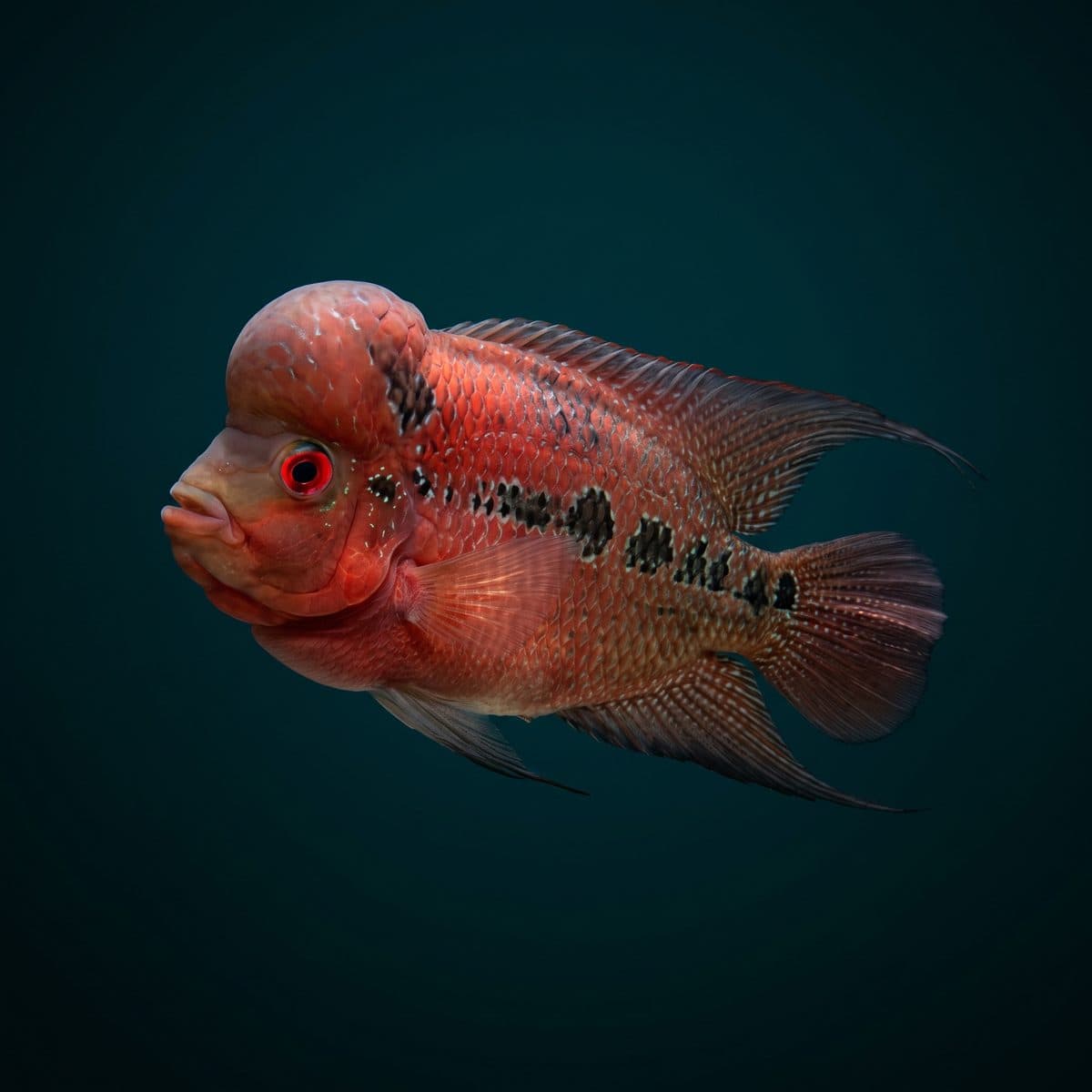
- Flowerhorn with anything: Flowerhorn are hybrid cichlids bred for extreme aggression. They are almost always best kept alone. See our Flowerhorn care guide.
Stocking a Cichlid Community
Example stocking for a 75-gallon Mbuna tank:
- 4 Yellow Labs (1M:3F)
- 4 Red Zebra (1M:3F)
- 4 Acei (1M:3F)
- 4 Rusty Cichlids (1M:3F)
- 5 Synodontis petricola
- 1 Bristlenose Pleco
Example stocking for a 125-gallon Oscar community:
- 1 Oscar
- 6–8 Silver Dollars
- 1–2 large Plecos
- 2 Senegal Bichirs
Powerful filtration is non-negotiable for cichlid communities — canister filters or sumps rated for 8–10× tank volume turnover. Cichlids are messy eaters and heavy waste producers. Weekly 30–50 % water changes are standard. For water chemistry guidance, see our cichlid water parameters guide.