Compatibility Overview
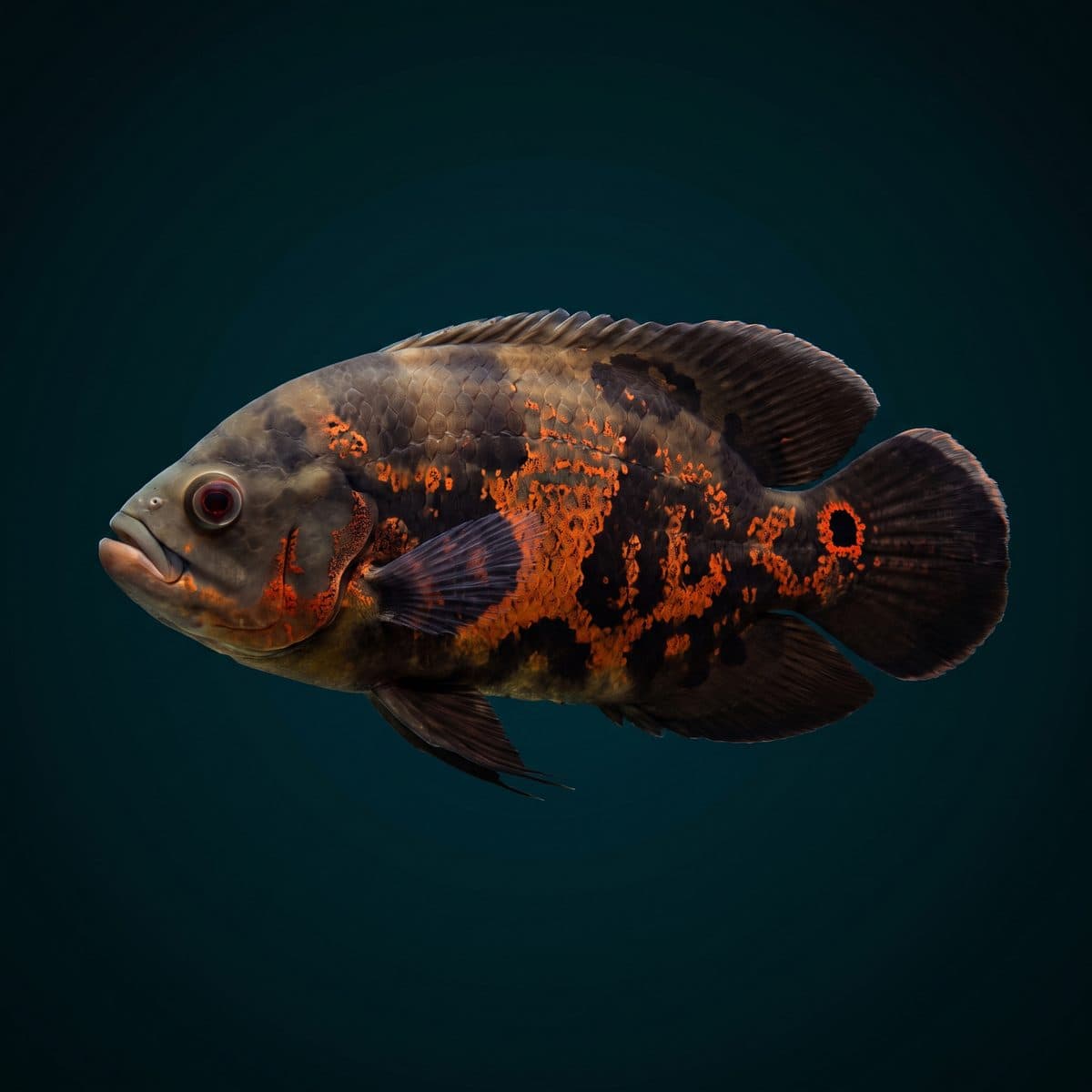
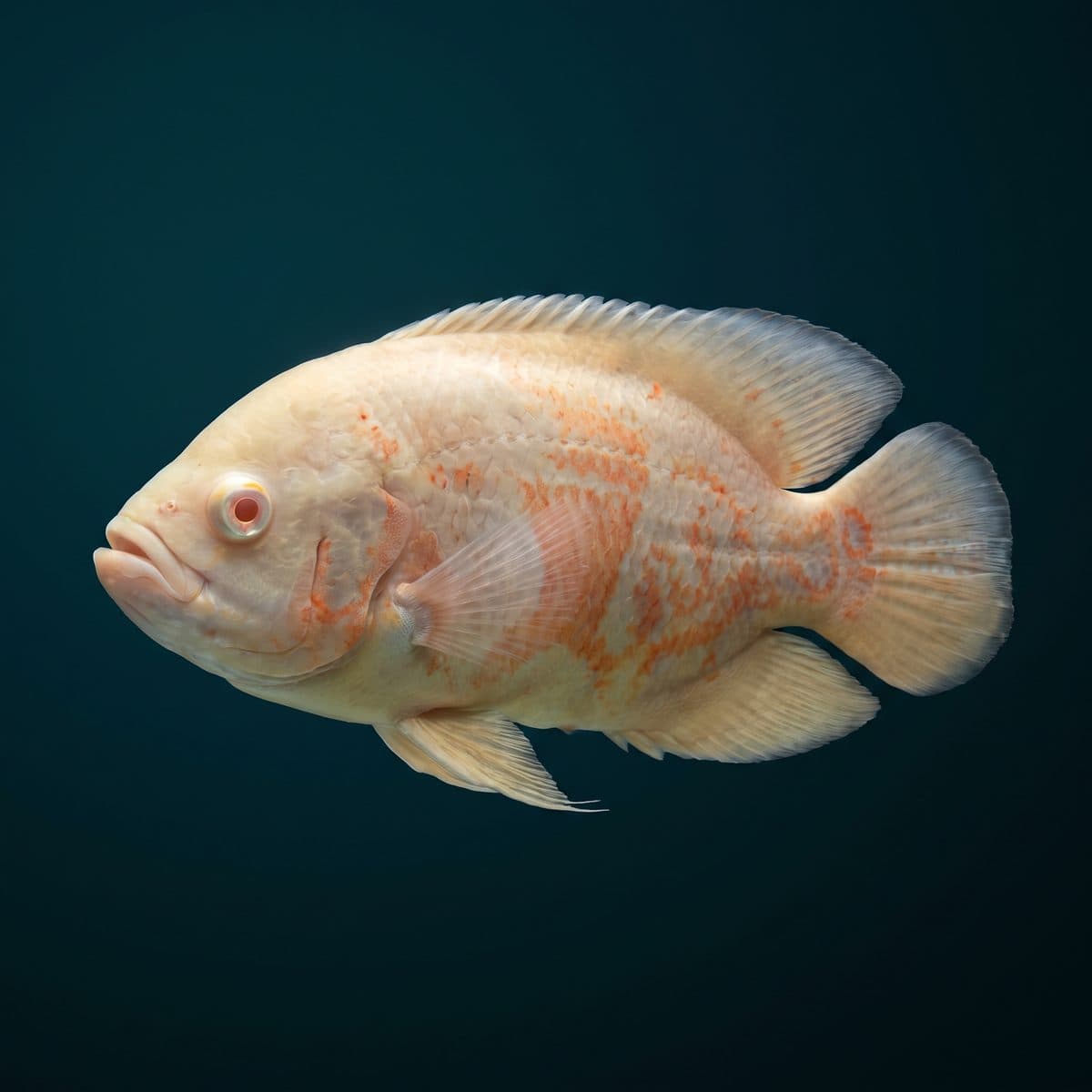
Oscars are semi-aggressive cichlids that will eat any fish small enough to swallow. They are territorial but not relentlessly aggressive like some cichlid species. The key to a successful Oscar community is choosing tank mates that are too large to eat, robust enough to hold their ground, and not aggressive enough to bully the Oscar.
Best Tank Mates
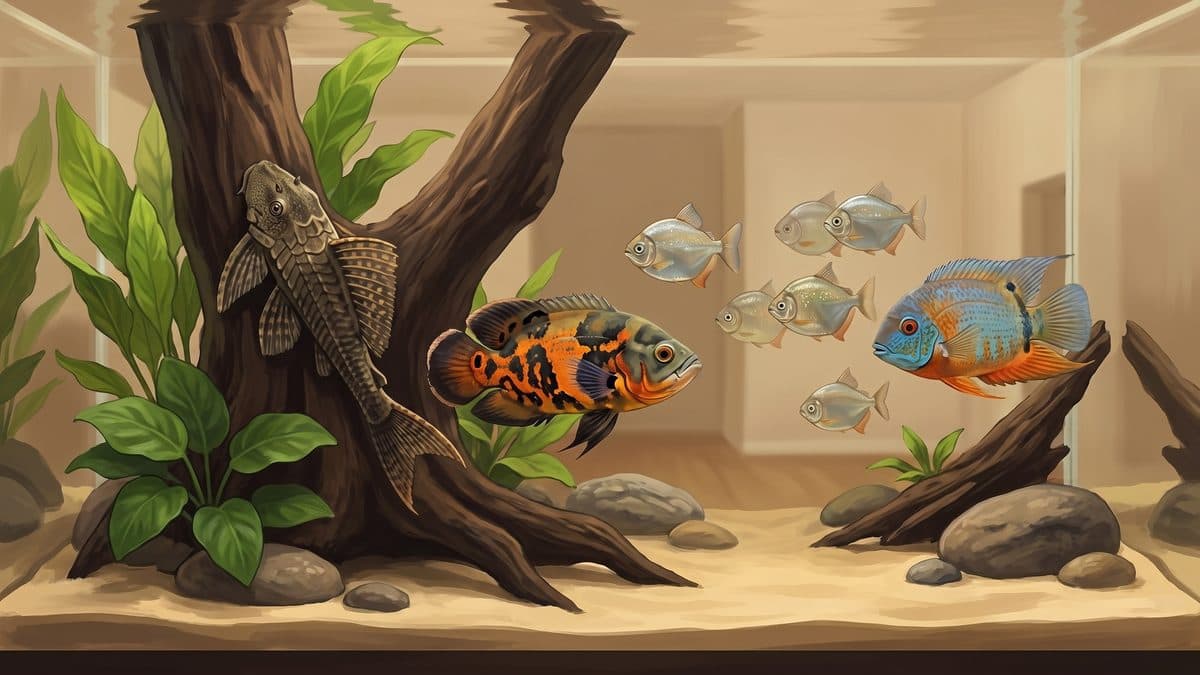
- Silver Dollars (Metynnis spp.) — peaceful, fast schooling fish too deep-bodied for Oscars to eat. Keep 6+. Excellent dither fish.
- Large Plecos (Common Pleco, Sailfin) — armoured bottom-dwellers that Oscars ignore. Excellent cleanup crew.
- Bichirs (Polypterus spp.) — armoured, bottom-dwelling predators that peacefully coexist with Oscars.
- Jack Dempsey — similar size and temperament. Provide a 125+ gallon tank with sightline breaks.
- Severum Cichlid — peaceful South American cichlid, similar water parameters.
- Firemouth Cichlid — can hold its own with a threat display, but needs retreat space.
- Synodontis Catfish — large species (S. eupterus, S. decorus) work well.
Risky Companions
Convict Cichlids can work but may breed prolifically and harass Oscars during defense of fry. Green Terror — similar size but can be extremely aggressive. Red Tail Catfish — will eventually outgrow and eat the Oscar. These pairings require expert-level monitoring.
Species to Avoid
- Any fish under 4 inches (will be eaten)
- Bettas, guppies, neon tetras (guaranteed food)
- Angelfish (too slow, too delicate)
- African cichlids (incompatible water parameters and extreme aggression)
- Flowerhorn (too aggressive — fights likely)
- Goldfish (cold water, wrong parameters)
Stocking Tips
Introduce all fish simultaneously to prevent the Oscar from establishing territory over the entire tank. Provide visual barriers (driftwood, large rocks) to break sightlines. Feed generously — well-fed Oscars are significantly less aggressive. A 125-gallon tank is the minimum for an Oscar with companions; 180+ gallons is recommended for 3+ large cichlids.
Tank Size and Layout for an Oscar Community
Every tank mate decision starts with the tank itself. A solo Oscar lives fine in 75 gallons; the moment you add companions, 125 gallons is the realistic floor, and a 6-foot 180 makes everything easier. The extra length matters more than the gallons — a fish being chased needs somewhere to go, and in a 4-foot tank there's nowhere that isn't "the Oscar's spot".
Layout principles that prevent fights before they start:
- Break the sightlines. Tall driftwood, rock stacks, and large silk plants placed mid-tank mean the Oscar can't see — and police — the entire territory from one position.
- One claimable cave or territory per cichlid, plus a spare, spread along the tank's length rather than clustered together.
- Keep the centre open for Silver Dollars and other dither fish that need cruising room.
- Double the filtration. An Oscar plus a pleco plus a Jack Dempsey is a colossal bioload — run two canisters or a sump rated for 8–10× turnover, because rising nitrate makes every fish in the tank crankier.
How to Introduce Tank Mates
The gold standard is raising everyone together as juveniles — an Oscar that grows up beside a Severum treats it as furniture, not an invader. When that ship has sailed and you're adding fish to an established Oscar's tank, stack the deck:
- Rearrange all the décor the same hour the new fish goes in. It wipes the territorial map and forces the Oscar to re-stake claims as an equal rather than defend home turf.
- Add new fish in the evening with the lights off, after feeding the Oscar to the point of disinterest.
- Size the newcomers honestly: additions should be at least two-thirds of the Oscar's length. A 4-inch Firemouth meeting a 12-inch Oscar is an expensive snack.
- Watch the first 72 hours closely. Chasing, flaring, and gaping displays are normal negotiation. A fish pinned in a corner, missing scales, or split fins worsening by the day are not — that's your cue to intervene.
Have a plan B ready before you need it: a tank divider, a spare tank, or a store that takes returns. Roughly one Oscar in five refuses all company on pure personality, and no introduction technique overrides that.
Tank Mate Quick Reference
| Tank Mate | Adult Size | Tank for the Pairing | Notes |
|---|---|---|---|
| Silver Dollar (school of 6+) | 6 in | 125 gal | Best all-round choice; calms the Oscar |
| Sailfin Pleco | 18 in | 125 gal | Armoured; they ignore each other |
| Severum | 8 in | 125 gal | Peaceful, with matched water preferences |
| Jack Dempsey | 10 in | 125–150 gal | Needs its own cave and sightline breaks |
| Senegal Bichir | 14 in | 125 gal | Bottom zone; feed after lights out |
| Synodontis eupterus | 8 in | 125 gal | Nocturnal, tough, zero conflict |
Read the table as pairings with one adult Oscar. Every additional large cichlid pushes you toward 180 gallons and beyond.
Feeding an Oscar Community
Most "aggression problems" in Oscar communities are really competition problems, and they surface at dinnertime. A routine that keeps the peace:
- Feed the Oscar first, at its usual end of the tank, with floating pellets or sticks. A busy, eating Oscar ignores everything else in the room.
- Drop sinking food at the opposite end a few seconds later for the Severum, the Dempsey, and the dither school.
- Feed the night shift after lights out: sinking wafers for plecos, Bichirs, and Synodontis. Skip this and they slowly starve while everyone assumes they're "living off scraps".
- Audit weekly: every fish should show a visibly full belly at least a few times a week. The fish that's always last and always thin needs target feeding — or a rethink.
And keep the Oscar genuinely well fed. Yes, it's appeasement — it also works. A satisfied Oscar is a measurably calmer Oscar, and it's the cheapest peace treaty you'll ever sign. Just balance generosity against water quality: overfeeding shows up as nitrate, and elevated nitrate makes the whole tank more irritable.