Pufferfish Compatibility Overview
Pufferfish are among the most intelligent and personable aquarium fish — and among the most aggressive. Every puffer species has a beak (fused teeth) capable of inflicting serious damage to tank mates, and most species have a disposition that ranges from "occasionally nippy" to "will murder everything in the tank." Compatibility varies enormously by species, and generalisations about "puffer tank mates" are dangerous.
The essential rule: research your specific puffer species before adding any tank mate. A recommendation that works for an Amazon Puffer will result in dead fish if applied to a Fahaka. This guide covers the most commonly kept freshwater and brackish puffers individually.
Strictly Solitary Puffers
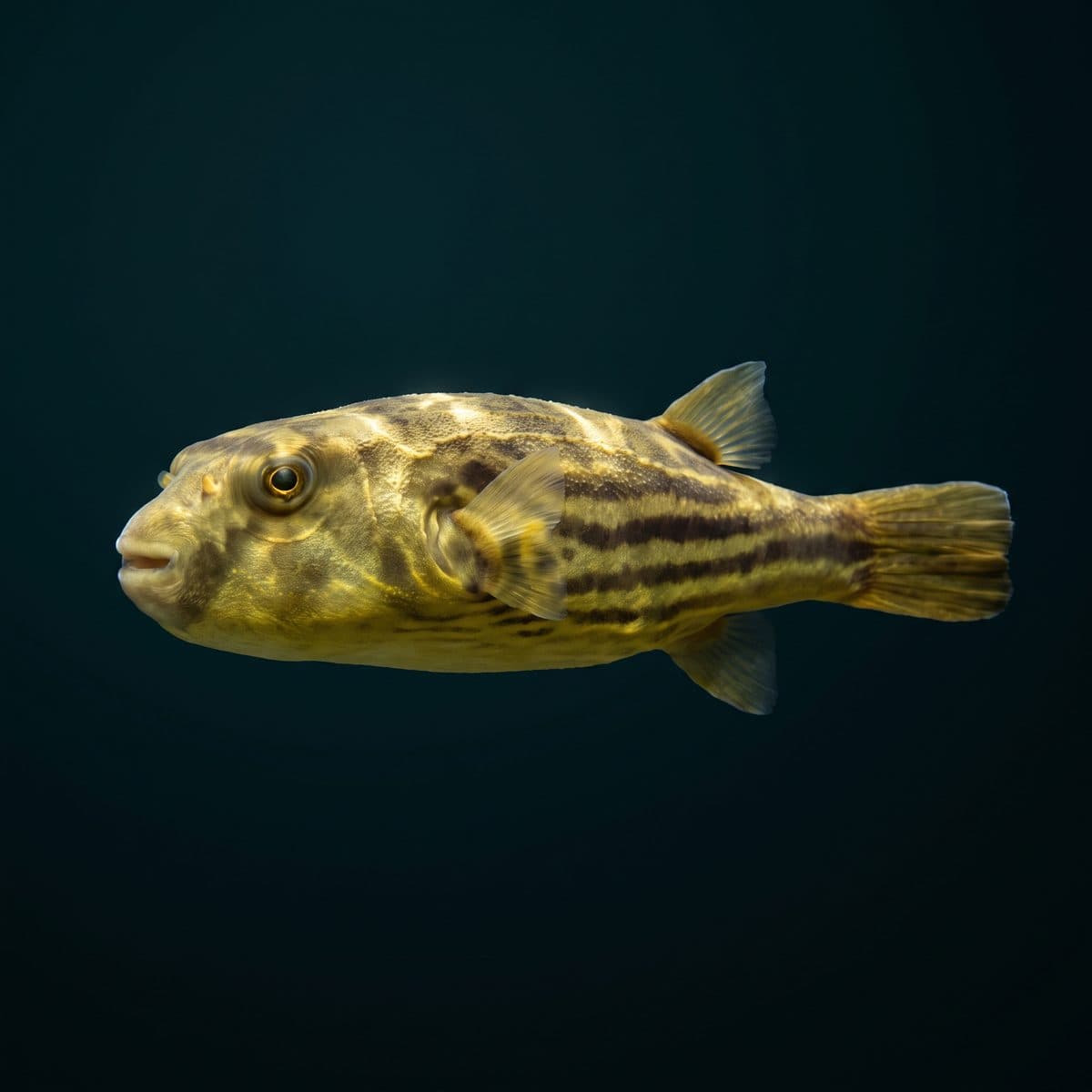
Fahaka Puffer
The Fahaka Puffer (Tetraodon lineatus) is one of the most aggressive freshwater fish in the hobby. It must be kept completely alone — no exceptions. Fahaka Puffers attack and kill every other fish in the tank, regardless of size, speed, or armour. They have been documented killing Plecos by biting through their armoured plates, destroying Bichirs despite their ganoid scales, and even biting through heater guards.
Do not test this. Online anecdotes of "my Fahaka lived with an Oscar for months" inevitably end with an update reporting the Oscar's death. The only safe Fahaka community is a Fahaka in a 125-gallon tank by itself. See our Fahaka care guide for complete details.
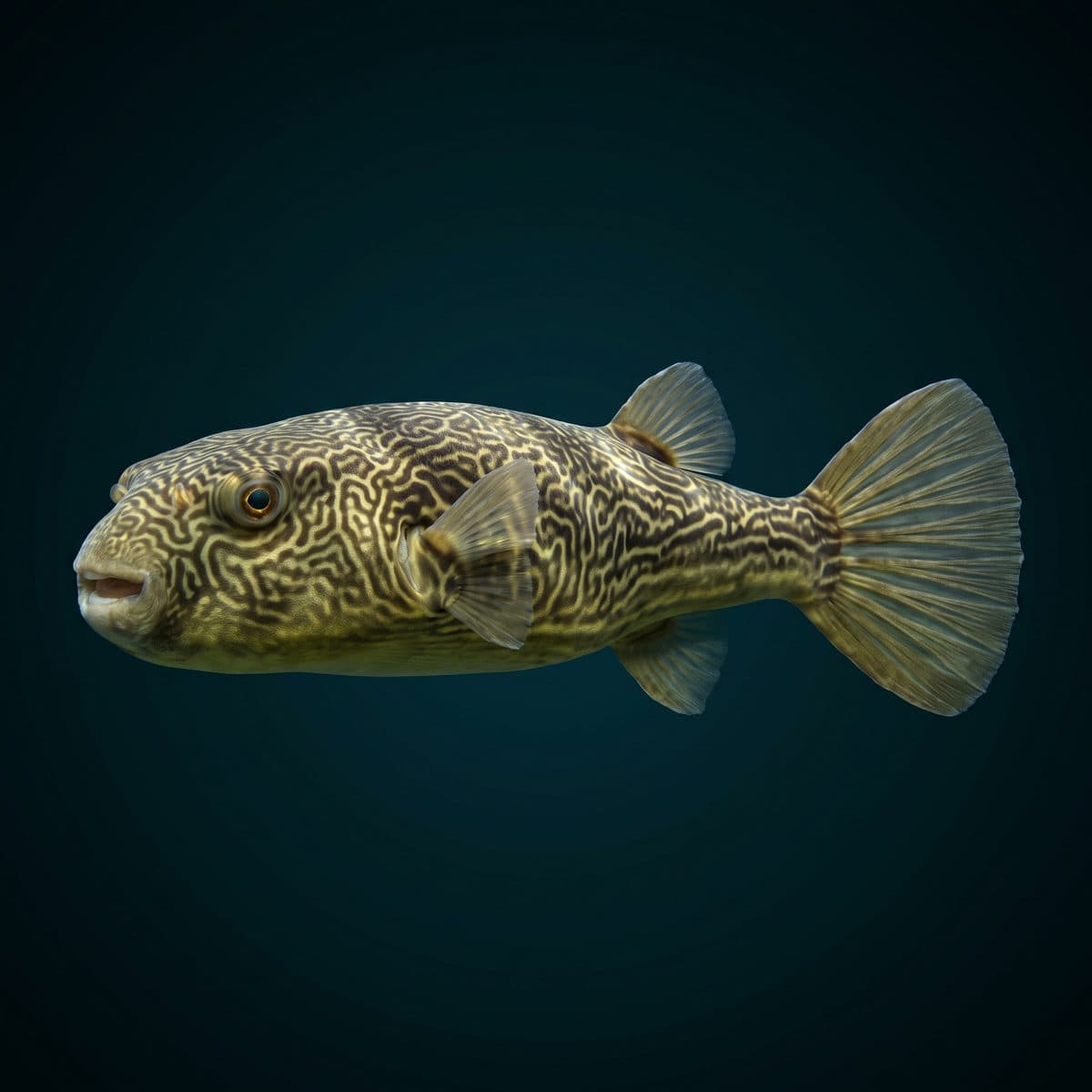
MBU Puffer
The MBU Puffer (Tetraodon mbu) is the largest freshwater puffer (60–75 cm) and, like the Fahaka, must be kept alone. While MBU Puffers are sometimes described as "calmer" than Fahakas, their sheer size means any aggression is devastating. An MBU that decides to bite a tank mate can kill it instantly. Some keepers have maintained MBU Puffers with very large, fast fish (adult Arowana, large Bichirs) in 500+ gallon systems, but this is high-risk and not recommended. See our MBU care guide.
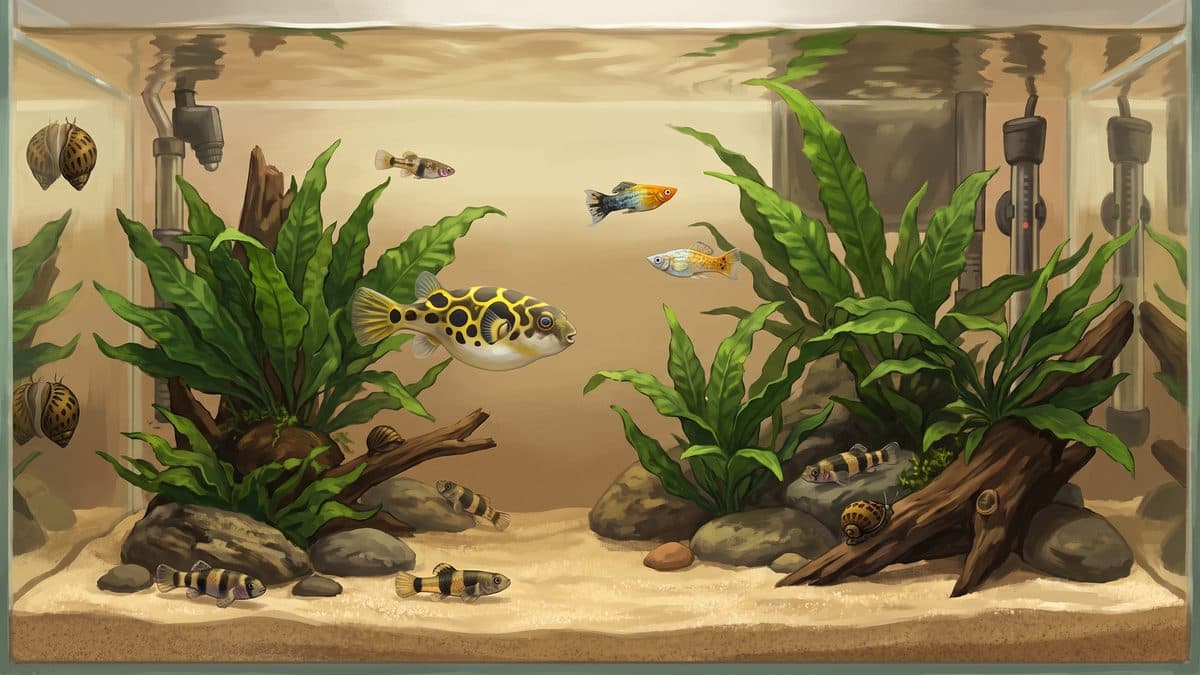
Pea Puffer Tank Mates
Pea Puffers (Carinotetraodon travancoricus) are the smallest puffers (2.5 cm) and the most community-compatible — but "compatible" is relative. They are still nippy, territorial micro-predators. In a heavily planted 20+ gallon tank, Pea Puffers can coexist with:
- Otocinclus: Small, fast algae eaters that occupy glass and plant surfaces — a different zone than the mid-water Pea Puffers. Keep in groups of 6+.
- Pygmy Corydoras: Small, fast bottom-dwellers. Groups of 8+. Their constant movement and bottom orientation keeps them out of Pea Puffer territory.
- Ember Tetras: Tiny and fast. Schools of 10+ in densely planted tanks. Some risk of fin-nipping from the puffers, but the tetras' speed usually keeps them safe.
- Amano Shrimp: Large enough (4–5 cm) to avoid predation. Smaller shrimp (Cherry Shrimp) will be eaten — Pea Puffers are snail and small invertebrate predators by nature.
Keep Pea Puffers in species groups of 3–6 in a 20+ gallon tank. Maintain a 1 male to 2 female ratio. Males are territorial and will fight if space is insufficient.
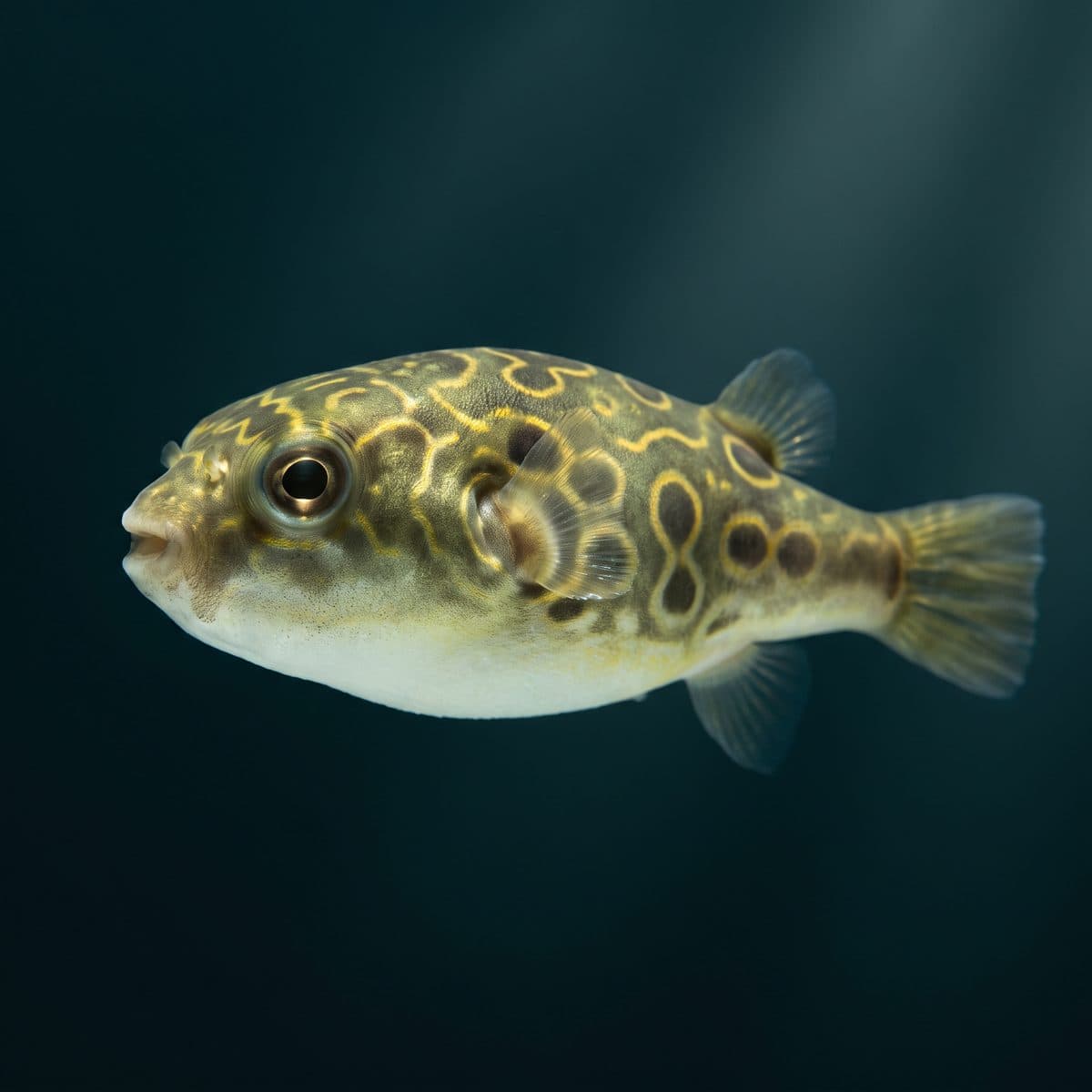
Figure 8 Puffer Tank Mates
Figure 8 Puffers (Dichotomyctere ocellatus) are brackish-water puffers (SG 1.005–1.008) with moderate aggression. Tank mates must tolerate brackish conditions:
- Bumblebee Gobies (Brachygobius spp.): Small (3–4 cm) brackish-water bottom-dwellers. Fast and adept at hiding. Keep in groups of 6+.
- Mollies (Poecilia spp.): Hardy livebearers that thrive in brackish water. Their active swimming and medium size (6–8 cm) usually keeps them above the puffer's aggression threshold.
- Knight Gobies (Stigmatogobius sadanundio): Robust brackish gobies (8–10 cm) that hold their own against Figure 8 aggression.
Minimum tank size for a Figure 8 community: 30 gallons. Provide ample sight-line breaks with driftwood and rock structures. Monitor for fin-nipping — Figure 8 Puffers can be unpredictably aggressive toward slow-moving or long-finned tank mates.
Amazon Puffer Tank Mates
Amazon Puffers (Colomesus asellus) are the most community-friendly freshwater puffer. They are shoaling puffers (keep in groups of 6+) that occupy open-water mid-column zones. In 75+ gallon tanks, they coexist with:
- Silver Dollars: Large, fast, disc-shaped. Too big and quick for the puffers to harass effectively.
- Larger tetras (Congo Tetras, Buenos Aires Tetras): Fast mid-water fish that match the Amazon Puffer's energy level.
- Large Corydoras (C. aeneus, C. paleatus): Armoured, bottom-dwelling, and fast. Groups of 6+.
- Bristlenose Plecos: Armoured and nocturnal. Ignored by Amazon Puffers.
Amazon Puffers have continuously growing beaks that require hard-shelled foods (snails, mussels) for maintenance. They will eat every snail in the tank — do not keep ornamental snails with them. Provide daily hard-shelled food to prevent beak overgrowth.
Congo Puffer Tank Mates
Congo Puffers (Tetraodon miurus) are ambush predators that bury themselves in sand and strike at passing prey. They are best kept alone but, in 75+ gallon tanks, can sometimes coexist with:
- Large Synodontis catfish: Armoured, nocturnal, and too large to eat. Keep in groups of 3+.
- Large Bichirs: Armoured bottom-dwellers. Their size and scales offer protection, though monitor for any aggression.
Any fish small enough to pass over the buried Congo Puffer will be eaten. They are capable of consuming prey nearly their own body length. Do not add mid-water fish of any size to a Congo Puffer tank — they specialise in ambushing fish that swim overhead.
Managing Puffer Aggression
- Feed puffers before introducing tank mates. A well-fed puffer is significantly less aggressive than a hungry one.
- Provide complex environments. Dense planting, driftwood tangles, and rock formations break sight lines and reduce territorial chasing.
- Add tank mates first. Establish companions in the tank before adding the puffer. The puffer enters an occupied territory rather than defending an established one.
- Monitor constantly for the first week. Puffer behaviour can change suddenly — a tank mate tolerated for days can become a target overnight.
- Have a backup plan. A spare tank or divider is mandatory when attempting puffer community setups. If aggression escalates, remove the victim immediately.
Universal Species to Avoid
- Slow, long-finned fish: Angels, fancy goldfish, long-finned Bettas — easy targets for beak-equipped nippers.
- Small invertebrates: All puffers eat snails and small shrimp. If you value your invertebrates, do not keep puffers.
- Other puffer species: Mixing puffer species (e.g., Fahaka with Pea Puffer) results in the larger puffer killing the smaller one.
- Anything the puffer can fit in its mouth: Puffers are opportunistic predators. If it fits, it is food.
Pufferfish community tanks are an advanced project that requires species-specific research, careful monitoring, and contingency planning. The safest approach is always to keep puffers as the sole fish species — their personality and intelligence make them rewarding even without companions. For dietary needs, see our pufferfish feeding guide.