Beginner
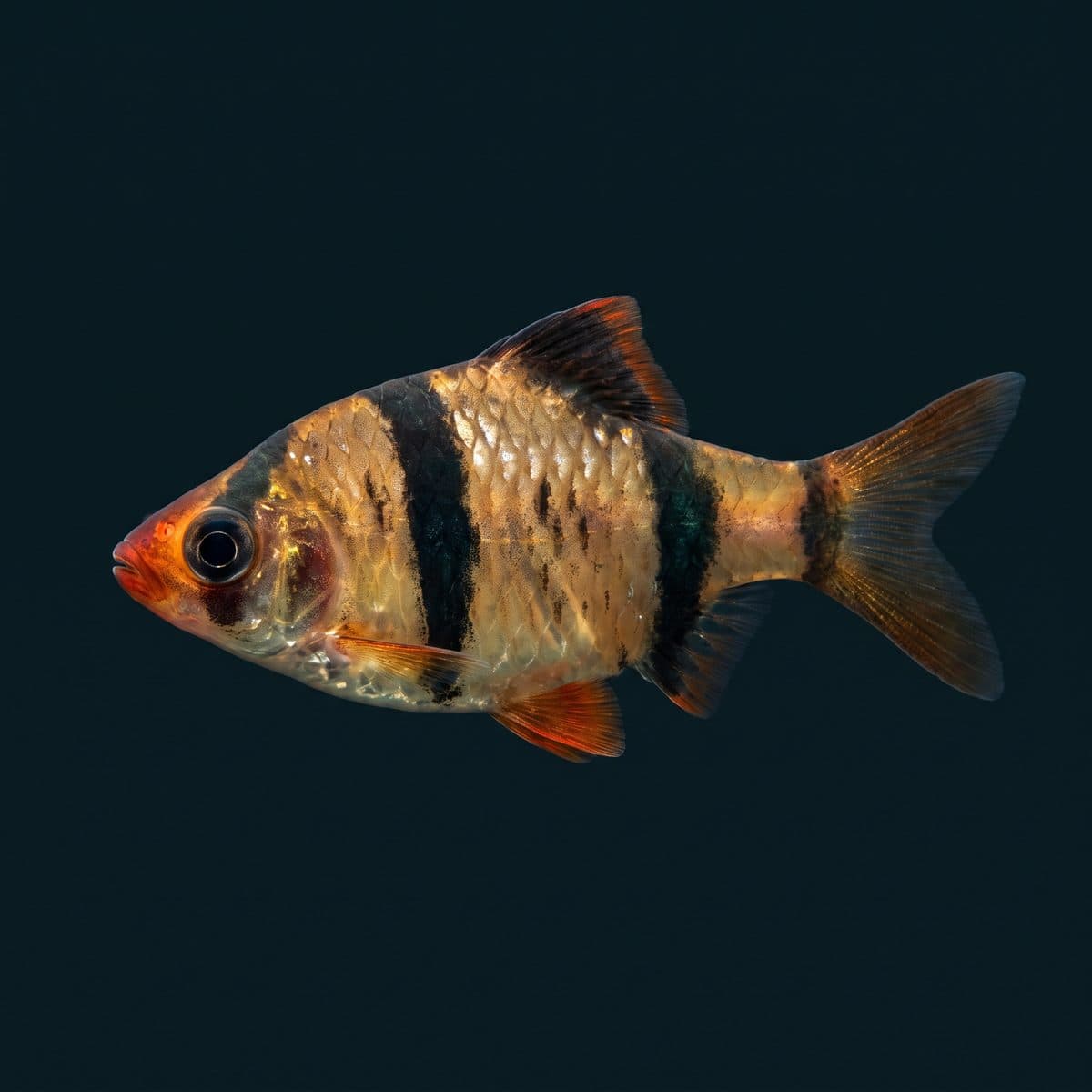
Tiger Barb
Puntigrus tetrazona
From $6Get a quote
Sahyadria denisonii
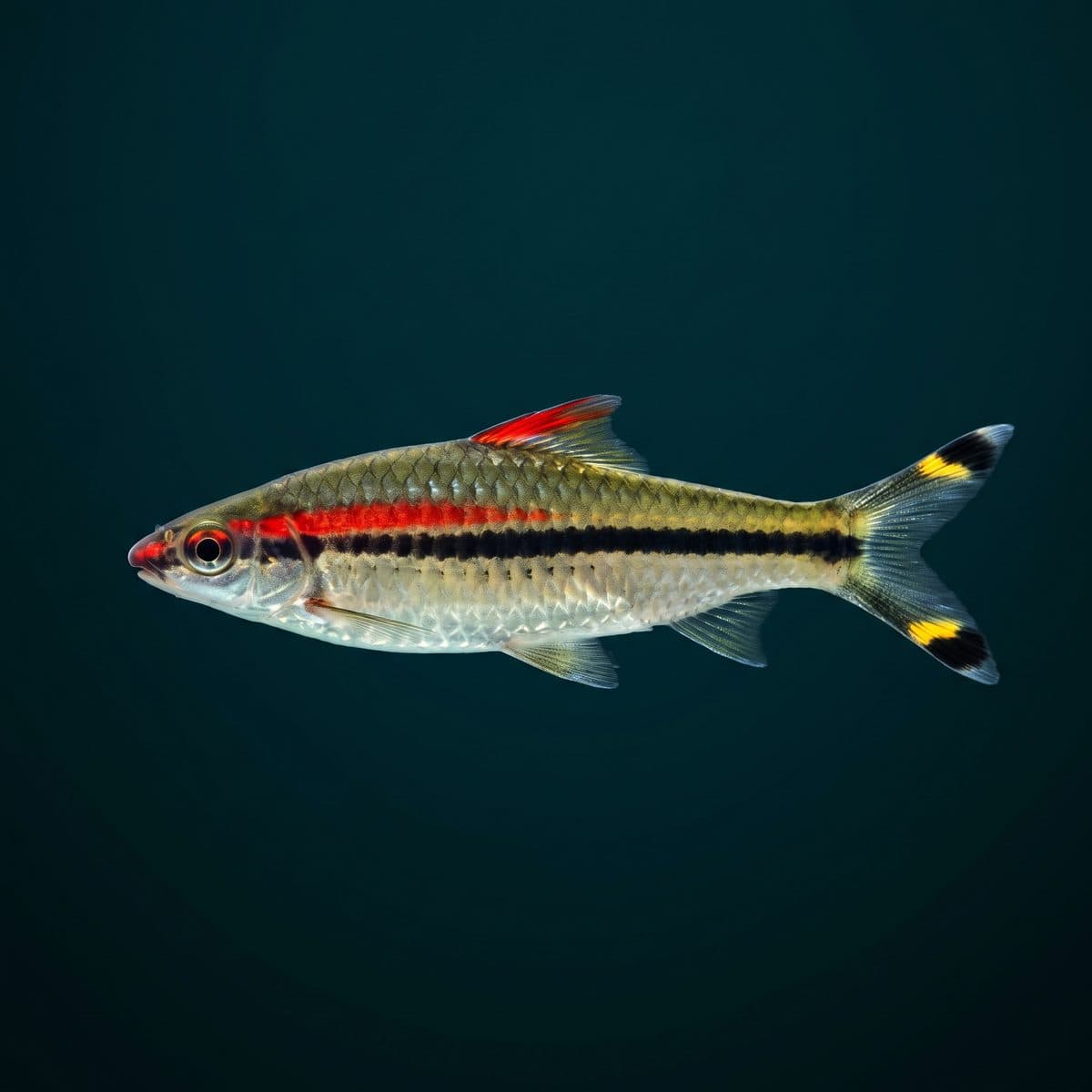
The Denison Barb — also known as the Roseline Shark or Red Line Torpedo Barb — is one of the most visually striking schooling fish in the freshwater hobby. Sahyadria denisonii features a torpedo-shaped silver body bisected by a bold black horizontal stripe, topped with a vivid red line that runs from the snout through the eye and partway along the flank. The tail is marked with black-and-yellow barring that flashes conspicuously as the school turns and maneuvers. The overall effect is of a fish designed by a graphic artist — clean lines, high contrast, and kinetic energy that fills the tank with motion. The Fish Collection sources our Denison Barbs from sustainable breeding programs in Kerala, India, selecting specimens with the most vivid red coloration and strong body condition.
Insulated, oxygen-packed transit · live-arrival guaranteed
Tank size
55+ gallons
Temperament
Peaceful
Diet
Omnivore
Water
65–77°F · pH 6.5–7.8
Tell us what you're dreaming of — we'll reply with a price tailored to you.
Happy together
Not sure if this fish is right for you?
Our team will happily help you choose.
The Denison Barb — also known as the Roseline Shark or Red Line Torpedo Barb — is one of the most visually striking schooling fish in the freshwater hobby. Sahyadria denisonii features a torpedo-shaped silver body bisected by a bold black horizontal stripe, topped with a vivid red line that runs from the snout through the eye and partway along the flank. The tail is marked with black-and-yellow barring that flashes conspicuously as the school turns and maneuvers. The overall effect is of a fish designed by a graphic artist — clean lines, high contrast, and kinetic energy that fills the tank with motion. The Fish Collection sources our Denison Barbs from sustainable breeding programs in Kerala, India, selecting specimens with the most vivid red coloration and strong body condition.
Native to the fast-flowing rivers and streams of the Western Ghats in southern India, S. denisonii was once so heavily collected for the aquarium trade that wild populations declined precipitously, triggering IUCN Endangered listing and strict export controls. Today, the vast majority of specimens in the trade are captive-bred, and well-managed breeding programs have reduced pressure on wild stocks. Our specimens come from facilities that prioritize genetic diversity and color quality, producing fish that rival or exceed wild-caught individuals in vibrancy.
Denison Barbs are obligate schooling fish that must be kept in groups of six or more. In smaller numbers, they become skittish, lose color, and may develop aggression toward tankmates. A proper school of eight to twelve Denison Barbs in a well-planted tank is one of the most spectacular displays in freshwater aquatics — the fish move in synchronized formation, flashing red and silver as they navigate through vegetation and rockwork. The minimum tank size for a school of six is 55 gallons, though 75 gallons or larger is preferable given the species' active swimming habits and maximum size of five to six inches.
Water parameters should reflect the cool, oxygen-rich streams of the Western Ghats. Temperature between 65 and 77 degrees Fahrenheit — cooler than many tropical species — with pH between 6.5 and 7.8 and moderate hardness. Strong water flow from a powerhead or canister filter return is appreciated. These are active swimmers that thrive in well-oxygenated water with moderate to strong current.
Diet is omnivorous and undemanding. High-quality flake and pellet foods form the staple, supplemented with frozen bloodworms, daphnia, brine shrimp, and blanched vegetable matter. Denison Barbs are enthusiastic surface feeders that create a satisfying feeding frenzy at meal times. Feed twice daily in moderate amounts. The Fish Collection ships all Denison Barbs in temperature-controlled, oxygen-enriched containers with our live arrival guarantee.
Common Questions
Expert Resources
You Might Also Like
From $18
Indicative price