Overview
The Arapaima (Arapaima gigas) is the undisputed giant of the freshwater world. Belonging to the ancient family Arapaimidae — part of the superorder Osteoglossomorpha that includes Arowana — this Amazonian megafish represents an unbroken evolutionary lineage stretching back over 100 million years. Adults routinely exceed 2 metres in length and 100 kg in weight, with the largest verified specimens approaching 3 metres and 200 kg. The species' common names — Pirarucu in Brazil, Paiche in Peru — are household words across South America, where it has been the most important commercial freshwater fishery species for centuries.
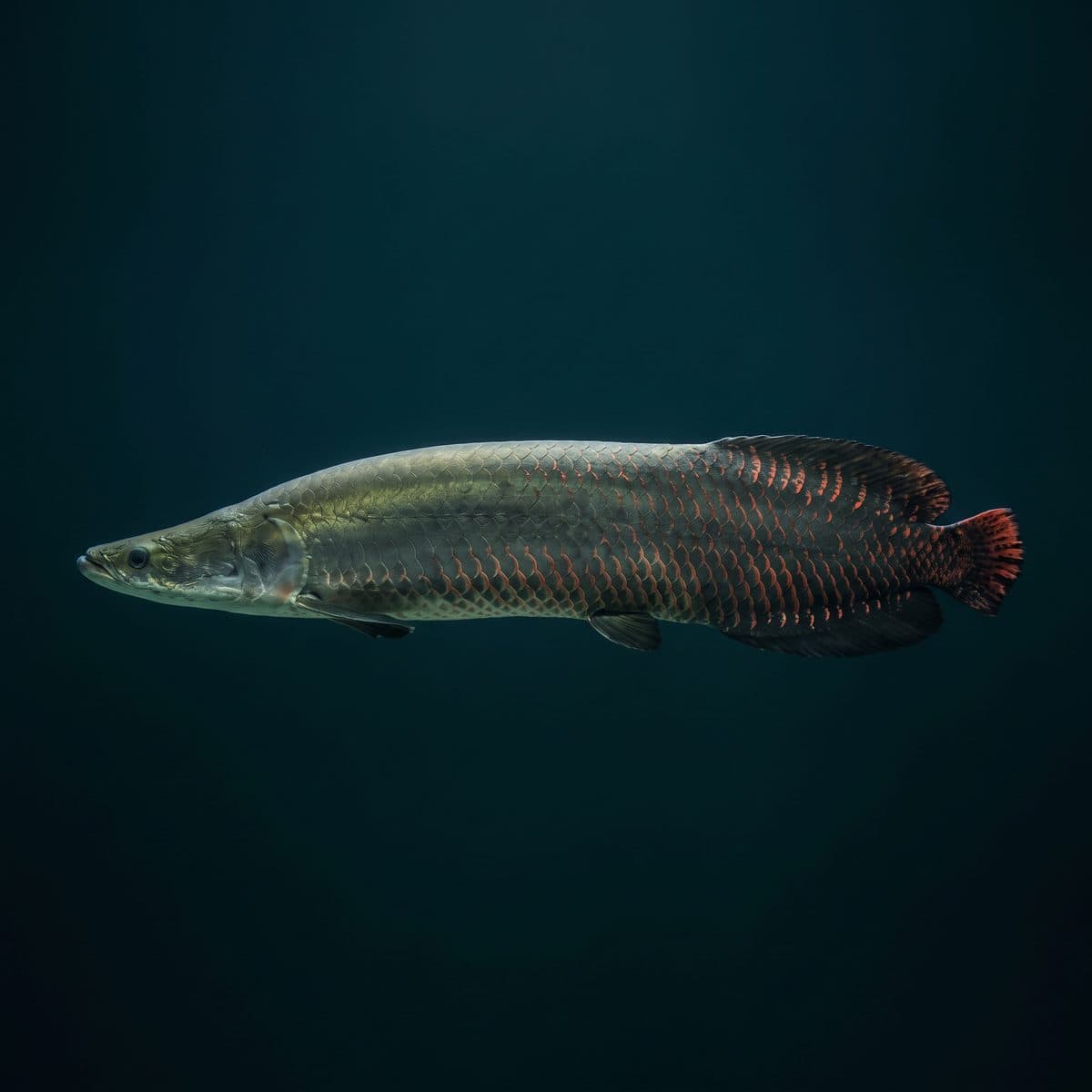
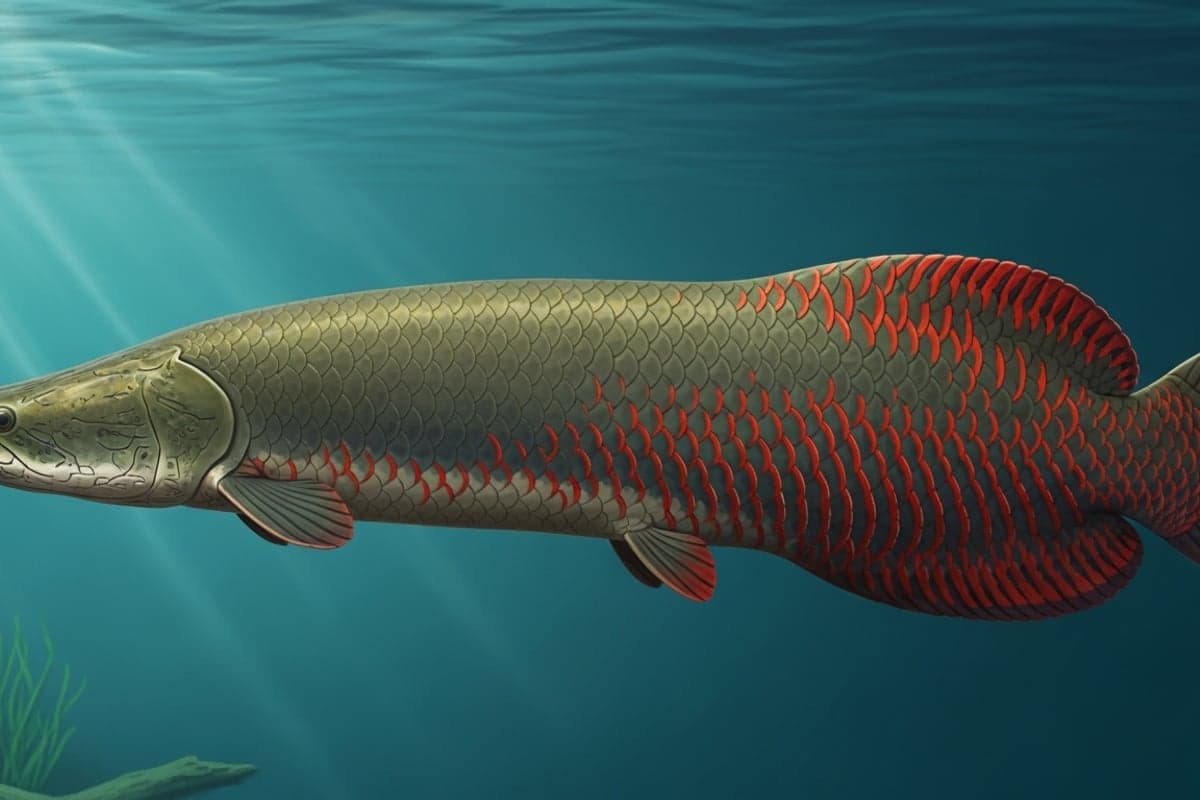
What makes the Arapaima uniquely compelling for the ultra-specialist aquarist is the combination of primordial aesthetics and genuine interactivity. Their armour-like scales — each one a composite of collagen and hydroxyapatite harder than tooth enamel, evolved to resist piranha bites — display an extraordinary crimson-and-olive gradient along the posterior body. Their head is flattened, bony, and unmistakably ancient. And unlike most large predatory fish, captive Arapaima are remarkably personable: they learn to hand-feed within weeks, recognise individual keepers, and will surface on cue for food or interaction.
At The Fish Collection, we do not sell Arapaima casually. Every prospective buyer undergoes a consultation to verify that their facility meets our minimum standards — because we have seen too many juveniles purchased impulsively by keepers who do not grasp the scale of the commitment. A 15 cm juvenile available for $200 will, within five years, become a 150 cm animal requiring a heated concrete pond. This guide exists to ensure that every Arapaima placed through our network receives the lifelong care it deserves.
Natural Habitat
Arapaima gigas is native to the Amazon and Essequibo River basins, inhabiting the vast floodplain lakes (várzea and igapó) that characterise lowland Amazonia. These are shallow, warm, oxygen-poor water bodies that expand enormously during the annual flood cycle — a single floodplain lake can cover hundreds of square kilometres during the wet season and contract to a fraction of that area in the dry months. Water temperatures remain consistently warm (26–32 °C) throughout the year, and pH ranges from mildly acidic (5.5) in blackwater igapó to near-neutral (7.0) in whitewater várzea systems.
The defining ecological adaptation of the Arapaima is obligate air breathing. The swim bladder is extensively vascularised and functions as a true respiratory organ — the fish must surface every 10–20 minutes to gulp air, producing the characteristic explosive "bouff" sound that indigenous fishers have used to locate Arapaima for millennia. In the wild, this surfacing behaviour makes the species vulnerable to harpoon fishing, which, combined with gill-net overharvest, has severely depleted wild populations across much of the Amazon basin.
The species' natural diet consists primarily of fish, but Arapaima are opportunistic predators that also take crabs, birds, and small mammals. Their feeding strike is a powerful suction event — the bony tongue (from which the order Osteoglossiformes gets its name) clamps prey against the palate with crushing force. In captivity, this feeding mechanism means the Arapaima can consume surprisingly large prey items relative to its mouth size.
Legal Status & CITES
Arapaima gigas is listed on CITES Appendix II, meaning international trade is permitted but requires export permits and proof that trade is not detrimental to wild populations. However, national and local regulations vary enormously and are often more restrictive than CITES alone would suggest:
- United States: Federal law does not prohibit Arapaima ownership, but several states ban or restrict large exotic fish. Check your state fish and wildlife agency before purchasing.
- European Union: Legal to own with CITES documentation in most member states. Germany and the Netherlands have additional enclosure-size requirements.
- United Kingdom: Legal with CITES documentation. No specific permit required for private ownership.
- Australia: Prohibited. Import and ownership are banned under the Environment Protection and Biodiversity Conservation Act.
- Brazil: Domestic trade in farmed Arapaima is regulated by IBAMA. Wild-caught specimens require specific harvest permits.
All Arapaima sold through The Fish Collection are captive-bred specimens from licensed farms in Peru, Colombia, or Southeast Asia (where the species has been introduced for aquaculture). Each fish ships with complete CITES documentation and a health certificate. We strongly advise buyers to consult a legal professional familiar with exotic animal regulations in their jurisdiction before committing to a purchase.
Pond Requirements
Pond Dimensions & Construction
Let us be unequivocal: a standard glass or acrylic aquarium is wholly inadequate for an adult Arapaima. Juveniles under 60 cm can be temporarily housed in 300–500 gallon aquaria, but an adult requires a heated indoor pond with a minimum volume of 2,000 gallons (7,570 litres) and a realistic target of 5,000–10,000 gallons. Minimum water dimensions should be 500 cm long × 200 cm wide × 90 cm deep (16 × 6.5 × 3 feet). Depth beyond 120 cm provides diminishing returns — Arapaima are surface-oriented and rarely descend below mid-water.
Construction materials for indoor ponds include poured reinforced concrete with a fibreglass or epoxy liner (the gold standard), above-ground fibreglass stock tanks (economical for the 2,000–3,000 gallon range), or purpose-built insulated pond systems from aquaculture suppliers. The pond must have a secure net or frame cover — Arapaima are explosive jumpers capable of clearing 1.5 metres vertically, and an adult's 100+ kg body mass hitting a concrete floor is catastrophic for both the fish and the floor.
Substrate is unnecessary and complicates cleaning. A bare-bottom pond with a central drain and gentle slope toward a bottom drain simplifies waste removal enormously. If aesthetic considerations demand substrate, use a thin layer (2–3 cm) of fine sand, and plan for frequent vacuuming. Décor should be limited to smooth, large-diameter PVC pipe sections or fibreglass hollow logs — the fish needs unobstructed swimming space above all else.
Filtration & Flow
A 5,000-gallon Arapaima pond requires industrial-grade filtration. The most practical approach is a multi-chamber external sump or a purpose-built moving-bed bioreactor (MBBR) system rated for aquaculture-scale bioloads. Target a minimum turnover of 4–6× the pond volume per hour — for a 5,000-gallon system, this means pump output of 20,000–30,000 gallons per hour across all filtration stages.
A recommended filtration sequence: mechanical pre-filtration (drum filter or large-mesh foam), biological stage (K1 or K3 moving-bed media with dedicated aeration), polishing stage (fine mechanical filtration or sand filter), and UV sterilisation (120+ watts for a 5,000-gallon system). Protein skimmers adapted from aquaculture systems can be beneficial for managing the dissolved organic compounds produced by heavy feeding.
Flow within the pond should be gentle and non-directional. Arapaima are ambush predators, not endurance swimmers, and strong currents cause stress and energy waste. Distribute return flow through multiple low-velocity outlets positioned around the pond perimeter.
Heating
Maintaining 26–30 °C in a 5,000-gallon pond in a temperate climate is a significant engineering and energy challenge. Titanium inline heaters rated for the system volume are the standard solution — expect to install 3,000–6,000 watts of heating capacity depending on ambient room temperature and insulation quality. Heat-pump systems (air-to-water or ground-source) are far more energy-efficient for large volumes and are strongly recommended for ponds exceeding 2,000 gallons. Insulating the pond walls and floor with closed-cell foam (50 mm minimum) reduces heat loss dramatically.
Temperature stability is more important than hitting a specific number. A pond that fluctuates between 24 °C and 30 °C daily is far more harmful than one that sits steadily at 25 °C. Install a redundant temperature monitoring system with audible alarms — a heater failure in winter can drop pond temperature below the species' tolerance within 24–48 hours in an unheated building.
Water Parameters
Arapaima are robust fish from variable Amazonian environments, but the following parameters represent the optimal range for long-term health:
- Temperature: 26–30 °C (79–86 °F). They tolerate brief excursions to 22 °C but prolonged cold exposure causes immune suppression.
- pH: 6.0–7.5. Stability is more important than the exact value.
- General Hardness (GH): 2–12 dGH (36–214 ppm).
- Carbonate Hardness (KH): 2–6 dKH. Sufficient buffering to prevent pH crashes in a system with high organic loading.
- Ammonia / Nitrite: 0 ppm — always. The massive bioload of an Arapaima makes biological filtration capacity the single most important engineering parameter of the pond system.
- Nitrate: <40 ppm. In heavily stocked predator ponds, twice-weekly water changes of 20–25% may be necessary.
Water quality management in a large Arapaima pond is closer to aquaculture practice than traditional aquarium keeping. Invest in a continuous-monitoring system (Neptune Apex, GHL ProfiLux, or similar) with automated alerts for temperature, pH, and conductivity. The cost of such a system is trivial compared to the value of the animal and the consequences of a water quality crash.
Diet & Feeding
Arapaima are voracious carnivores with a metabolism that demands substantial input. A 150 cm adult consumes approximately 2–3% of its body weight per feeding, 3–4 times per week. For a 50 kg animal, this translates to 1–1.5 kg of food per session — a significant ongoing cost and logistical consideration.
Optimal diet components:
- Whole fish: Frozen tilapia, trout, smelt, and mackerel are the dietary backbone. Whole fish provide complete nutrition including bones (calcium), organs (vitamins), and skin (fats). Avoid oily fish like salmon as a staple — occasional inclusion is fine, but the high fat content can cause hepatic lipidosis with chronic overfeeding.
- Aquaculture pellets: High-quality floating pellets designed for large carnivorous fish (Hikari Massivore, Coppens Catfish pellets, or dedicated Arapaima feed from aquaculture suppliers) can constitute 40–50% of the diet. Floating pellets are ideal because they exploit the Arapaima's natural surface-feeding behaviour.
- Shrimp and crustaceans: Whole prawns (shell-on) and crayfish provide chitin, carotenoids, and dietary variety.
- Enrichment items: Whole squid, mussels, and occasional feeder crayfish provide behavioural stimulation and nutritional variety.
Juveniles (under 60 cm) should be fed daily; sub-adults (60–120 cm) every other day; adults (120+ cm) three times per week. Fasting one day per week supports digestive health. Arapaima grow extraordinarily fast when well-fed — a 15 cm juvenile can reach 60 cm within the first year and 120 cm by year three. Underfeeding stunts growth and causes skeletal deformities; overfeeding pollutes water and causes obesity.
Behaviour & Temperament
Despite their enormous size and predatory nature, captive Arapaima are among the most interactive freshwater fish available. They are intelligent, curious, and quickly learn to associate their keeper with food. Hand-feeding is feasible (with caution — their suction strike is powerful enough to injure fingers) and is one of the most remarkable experiences in the fishkeeping hobby. Many keepers report that their Arapaima responds to voice, allows gentle physical contact on the head, and actively solicits attention by surfacing and splashing when the keeper enters the room.
Their surfacing behaviour for air breathing is the defining rhythm of Arapaima keeping. Every 10–20 minutes, the fish rises to the surface, opens its massive mouth, gulps air with an audible "bouff," and descends. This behaviour is completely normal and essential for survival — any interference with surface access is life-threatening. The sound of an Arapaima breathing becomes the ambient soundtrack of the fish room and is, for many keepers, one of the most satisfying aspects of the experience.
Compatible Tank Mates
In pond-scale systems, Arapaima can be housed with other large, robust species:
- Large Plecostomus — Common Plecos, Sailfin Plecos, and Royal Plecos (30+ cm) serve as cleanup crew and are generally ignored.
- Peacock Bass — Cichla species of appropriate size (30+ cm) coexist well in warm, large-volume systems.
- Redtail Catfish — Phractocephalus hemioliopterus is a classic companion for monster-fish setups, though both species need enormous space.
- Silver Arowana — Osteoglossum bicirrhosum occupies the surface zone alongside the Arapaima and adds visual diversity. Ensure the Arowana is too large to be eaten (60+ cm).
- Freshwater Stingrays — Large Potamotrygon species complement the Arapaima's surface orientation with bottom-zone activity.
Any fish under 25 cm will be eaten. Plan tank-mate sizes accordingly and always introduce companions simultaneously or before adding the Arapaima to reduce territorial aggression.
Breeding
Arapaima exhibit biparental care that is extraordinary among fish. Breeding occurs during the low-water season in shallow, cleared nests excavated by the male in sandy substrate. After the female deposits eggs — typically 50,000 or more — both parents guard the nest and newly hatched fry. The male secretes a pheromone-laden mucus from glands on his head that attracts fry into a tight school, providing protection from predation. Fry remain with the parents for 4–6 months, an unusually long period of parental investment for any fish.
Captive breeding has been accomplished at commercial aquaculture facilities in Brazil, Peru, Colombia, and Thailand. Requirements include paired adults in ponds of at least 10,000 gallons with sand substrate, natural photoperiod cycles, and water-level manipulation to simulate seasonal flooding. Home breeding is not realistic for any but the most committed and well-resourced private keepers.
Common Health Issues
Bacterial Infections
The primary health concern for captive Arapaima is bacterial infection, typically Aeromonas hydrophila or Pseudomonas species, presenting as red ulcers, fin erosion, or cloudy eyes. The root cause is invariably water quality — the massive bioload of a carnivorous fish exceeding 50 kg means that filtration failure or missed water changes can degrade conditions rapidly. Treatment involves improving water quality immediately (daily 25% water changes), salt addition (3–5 g/L), and systemic antibiotics (oxytetracycline or enrofloxacin) administered in food for advanced cases. Consult an aquatic veterinarian for dosing — Arapaima are large enough that a veterinary relationship is both practical and advisable.
Jump Injuries
Arapaima are explosive jumpers, and collisions with covers, walls, or the floor are a common cause of injury. Symptoms range from superficial scale loss and abrasions to jaw fractures and spinal injuries. A secure, padded cover system is essential. Many keepers suspend a layer of closed-cell foam beneath the rigid cover to cushion impact. If a jump injury occurs, maintain pristine water quality to prevent secondary infection of wounds, and add salt (2–3 g/L) as a prophylactic antimicrobial measure. Most superficial injuries heal within 2–4 weeks in clean water.
Sudden loud noises, flashing lights, and the introduction of new tank mates are the most common triggers for panic jumping. Minimise disturbances and introduce changes gradually — including new keepers or maintenance personnel, whose unfamiliar presence can trigger a flight response.