Overview
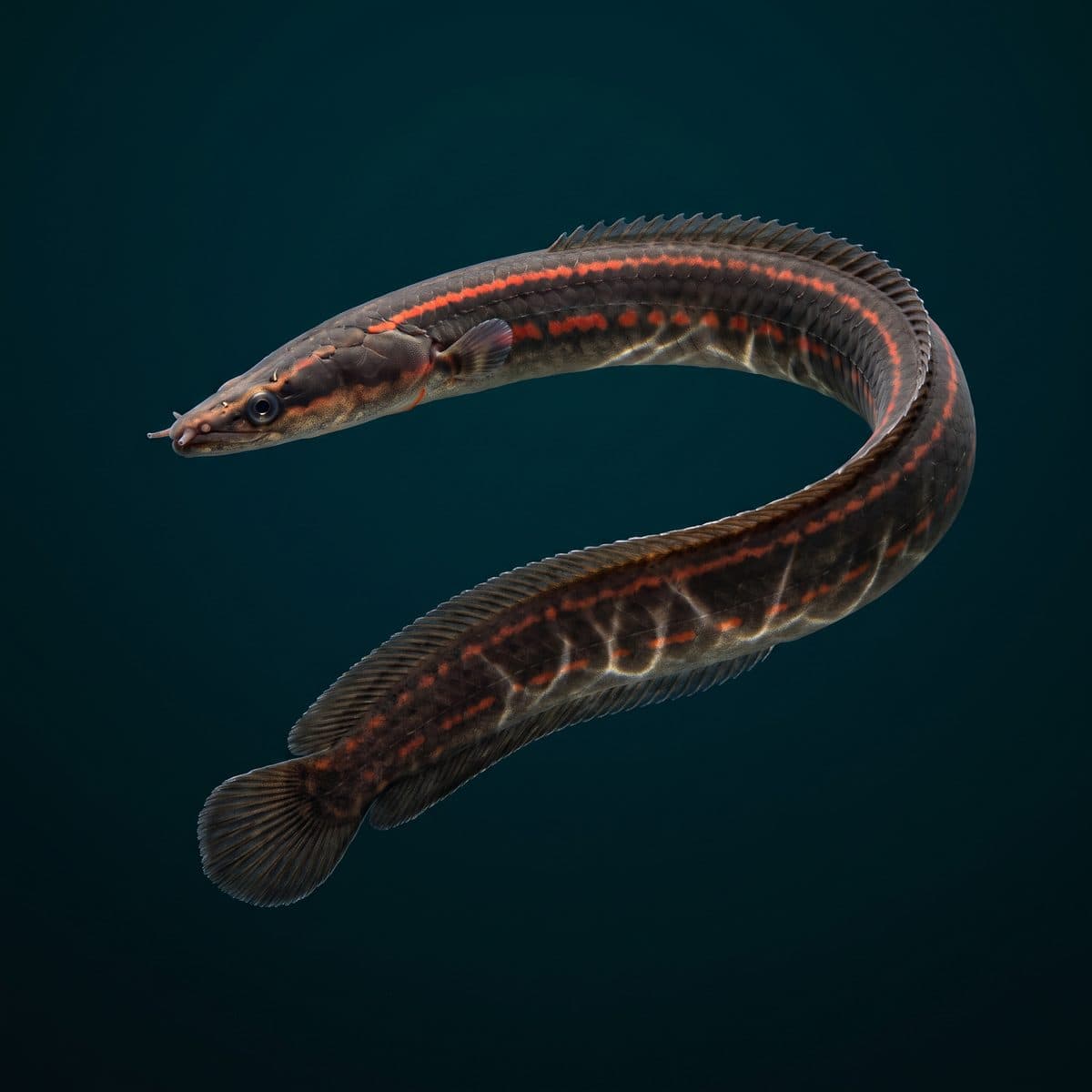
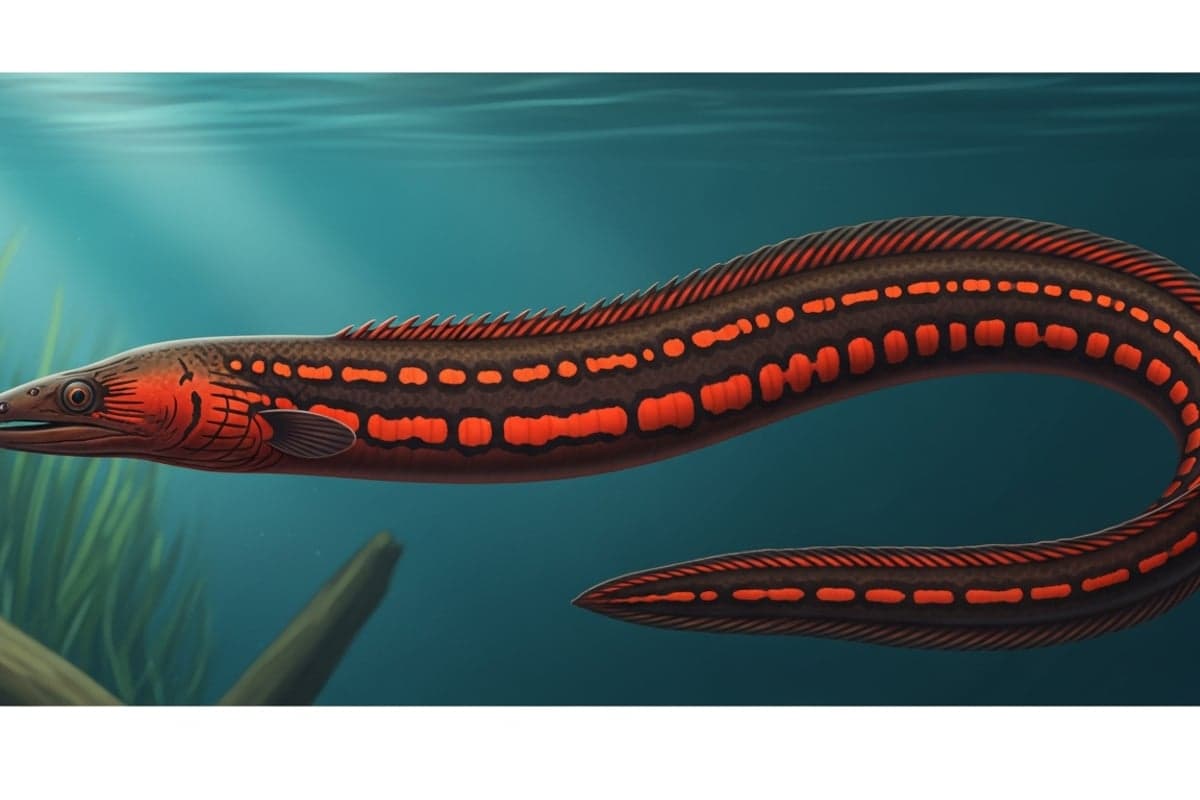
The Fire Eel (Mastacembelus erythrotaenia) is the undisputed titan of the Mastacembelidae family — the spiny eels. Capable of reaching 100 cm (40 inches) in captivity and occasionally exceeding that in the wild, it is a muscular, serpentine predator adorned with vivid red-orange lateral stripes and spots that intensify with age and proper nutrition. Found across mainland Southeast Asia — from the Mekong and Chao Phraya basins to rivers in Myanmar, Indonesia, and Malaysia — the Fire Eel has been a staple of the monster-fish hobby for decades.
Despite its common name, the Fire Eel is not a true eel (Anguilliformes) but a member of the spiny eel order Synbranchiformes. It possesses a series of small, sharp dorsal spines that precede the soft dorsal fin — these spines can puncture skin during handling, so care must be taken when netting or moving the fish. At The Fish Collection, we have imported and maintained Fire Eels from multiple collection points and can attest that the species is hardy, long-lived, and deeply rewarding for the patient aquarist who provides the right environment.
The primary challenges of Fire Eel keeping are its adult size (necessitating a large aquarium), its nocturnal temperament (it will spend most daylight hours hidden), and its sensitivity to rough substrates and poor water quality. These are solvable problems for the dedicated hobbyist, and this guide provides the detailed roadmap you need to succeed.
Natural Habitat
Mastacembelus erythrotaenia inhabits slow-moving lowland rivers, flooded plains, marshes, and canal systems across Southeast Asia. It is particularly abundant in the Mekong basin (Thailand, Laos, Cambodia, Vietnam), the Chao Phraya basin in central Thailand, and the major river systems of Borneo and Sumatra. These environments are characterised by warm water (25–30 °C), soft-to-moderately-hard chemistry (GH 3–12 dGH), near-neutral pH (6.0–7.5), and substrates of fine silt, mud, and sand.
Fire Eels are benthic fish that spend the majority of their time partially or fully buried in soft substrate, emerging at dusk and through the night to hunt. They are found among submerged roots, dense marginal vegetation, and undercut banks where they can wedge their elongate body into crevices. In flooded forests during the monsoon season, Fire Eels disperse widely to exploit abundant invertebrate populations in newly inundated areas.
Understanding this habitat is essential for captive care. The Fire Eel's body plan — scaleless, mucus-coated skin with no bony armour — evolved for burrowing through soft sediment. Coarse gravel, sharp rock, or abrasive decorations will damage the skin and predispose the fish to bacterial and fungal infections. Replicating the soft, dimly lit, structurally complex environment of its natural habitat is the key to a healthy, long-lived Fire Eel.
Tank Requirements
Tank Dimensions & Substrate
An adult Fire Eel requires a minimum 125-gallon (475 L) aquarium measuring at least 180 cm long × 60 cm wide (72 × 24 inches). For specimens exceeding 75 cm, a 200–300 gallon system (240+ cm length) is strongly recommended. Length and width matter more than height — Fire Eels are bottom-dwellers that rarely venture into the upper water column.
Substrate is critically important. Use fine, smooth sand with a grain size of 0.5–1.5 mm — pool filter sand, play sand, or purpose-made aquarium sand (CaribSea Super Naturals, for example). Depth should be at least 5–8 cm to allow full burrowing. Never use coarse gravel, crushed coral, or any substrate with sharp edges. The Fire Eel's scaleless skin is highly vulnerable to abrasion, and substrate-related injuries are the number one cause of bacterial infections in captive specimens.
Filtration & Flow
Fire Eels are messy predators that require robust filtration. Target a turnover rate of 6–8× the tank volume per hour using a large canister filter or sump system. Biological media capacity is paramount — ceramic rings, sintered glass, or K1 moving-bed media in a sump provide the surface area needed to process the high ammonia output from a carnivorous diet. A UV steriliser (25–36 W) is a worthwhile addition for disease prevention.
Flow should be gentle to moderate. Fire Eels do not appreciate strong current and will become stressed in high-flow environments. Direct the filter outlet along the back wall or use a spray bar to diffuse flow. Ensure the substrate in at least one area of the tank remains undisturbed by current — this will become the eel's preferred burrowing zone.
Lighting
Fire Eels are nocturnal and strongly prefer dim conditions. Bright overhead lighting will keep the eel buried throughout the photoperiod, effectively invisible to the keeper. Use dimmable LEDs set to 20–40% intensity, or provide extensive shading with floating plants (Amazon frogbit, water lettuce, or Salvinia). A red or blue moonlight phase encourages the eel to emerge during evening hours when the keeper is most likely to observe it. A photoperiod of 8 hours of subdued light with a gradual dawn/dusk transition works well.
Water Parameters
Fire Eels are reasonably adaptable to a range of water chemistries but perform best in soft-to-neutral conditions that mirror their natural habitat:
- Temperature: 24–28 °C (75–82 °F). Use a reliable heater; avoid submersible glass heaters that the eel could dislodge or crack. Titanium inline heaters are safest.
- pH: 6.5–7.5. Stability is more important than hitting a specific target.
- General Hardness (GH): 3–12 dGH (54–215 ppm).
- Carbonate Hardness (KH): 3–8 dKH.
- Ammonia / Nitrite: 0 ppm — always. Fire Eels are scaleless and absorb toxins through their skin more readily than scaled fish.
- Nitrate: <20 ppm. Weekly 25–30% water changes are recommended.
Because Fire Eels lack scales, they are unusually sensitive to medications. Salt baths, copper-based treatments, and many common fish medications (particularly formalin and malachite green) can be lethal at standard doses. Always use half-dose protocols for scaleless fish and consult an aquatic veterinarian before treating.
Diet & Feeding
Fire Eels are strict carnivores with a strong preference for live and frozen foods. In the wild, they feed on insect larvae, worms, crustaceans, and small fish. In captivity, variety is key to maintaining body condition and vibrant colouration.
Recommended foods:
- Earthworms (nightcrawlers) — the single best staple food. Highly nutritious, readily accepted, and available year-round. Offer 3–5 large worms per session for an adult.
- Frozen bloodworms — excellent for juveniles and as a supplemental food for adults. Use large cubes from reputable brands (Hikari, San Francisco Bay Brand).
- Frozen prawns and mussel — shell-on prawns provide calcium. Cut to appropriate size.
- Live ghost shrimp or river shrimp — outstanding enrichment food that stimulates natural hunting behaviour.
- Hikari Massivore pellets — most Fire Eels can be trained to accept sinking pellets, which are convenient and nutritionally complete.
Feed adults every other day; juveniles (under 30 cm) should be fed daily. Fire Eels are often initially reluctant to feed in a new environment — it is normal for a newly imported specimen to refuse food for 1–2 weeks. Offering live earthworms at dusk in a dimly lit tank almost always triggers the first feeding response. Once established, Fire Eels become enthusiastic feeders that will learn to take food from tongs or even the keeper's hand.
Behaviour & Temperament
Fire Eels are shy, nocturnal, and generally peaceful toward fish too large to eat. They spend the majority of their time buried in sand with only their snout protruding, or wedged into crevices between rocks and driftwood. Activity peaks at dusk and continues through the night, when the eel emerges to patrol the tank floor in search of food.
Despite their large size, Fire Eels are not aggressive. They will, however, eat any fish small enough to fit in their surprisingly expandable mouth — a general rule is that anything under one-third the eel's body length is at risk. Among conspecifics, Fire Eels can be kept in pairs or small groups in sufficiently large tanks (300+ gallons), though some individuals display territorial aggression, particularly during feeding.
Compatible Tank Mates
Tank mates should be large enough to avoid predation and not so aggressive as to prevent the shy Fire Eel from feeding. Proven companions include:
- Large cichlids — Oscars, Severums, or Geophagus species work well. Avoid highly aggressive species like Dovii or Umbees.
- Bichirs — Polypterus species are excellent companions, as they occupy similar niches without significant competition.
- Large catfish — Synodontis, large Plecostomus, or Pictus catfish are all compatible.
- Silver Dollars or Tinfoil Barbs — Active mid-water schooling fish that add movement without threatening the eel.
- Other spiny eels — Tire Track Eels (Mastacembelus favus) or Peacock Eels (Macrognathus siamensis) can coexist in large systems.
Avoid all small fish (tetras, rasboras, guppies — they will be eaten), fin-nippers (tiger barbs, serpae tetras), and any species that might outcompete the eel for food during its nocturnal feeding window.
Breeding
Captive breeding of Fire Eels is extremely rare and has been documented only a handful of times in the aquarium hobby. The species is believed to be a seasonal spawner in the wild, with reproduction tied to the onset of the monsoon flood season. Breeding in captivity likely requires a very large system (500+ gallons), a group of mature adults (5+ years old), and environmental manipulation to simulate seasonal changes — specifically, a gradual reduction in water level followed by a rapid increase with cooler, softer water.
When breeding has been reported, the female deposited several hundred adhesive eggs on flat surfaces (slate, broadleaf plants) after an extended courtship involving the pair swimming in tight spirals. Eggs hatched in approximately 72 hours at 27 °C. Fry are tiny and require infusoria or liquid fry food for the first week, graduating to baby brine shrimp thereafter.
For most hobbyists, breeding Fire Eels is not a realistic goal. The vast majority of specimens in the trade are wild-caught from Southeast Asia. The Fish Collection supports sustainable wild-harvest programmes that operate within government-regulated quotas and is actively exploring captive-breeding partnerships to reduce pressure on wild populations.
Common Health Issues
Skin Abrasions & Secondary Infections
The single most common health issue in captive Fire Eels is skin abrasion from rough substrates or sharp décor, followed by secondary bacterial (Aeromonas, Columnaris) or fungal (Saprolegnia) infection. Prevention is straightforward: use only fine, smooth sand and avoid any decoration that could scrape the eel's mucus coat. If abrasions occur, improve water quality immediately (nitrate below 10 ppm), add Indian almond leaves or Seachem StressGuard to promote mucus regeneration, and treat severe cases with a gentle antibiotic (erythromycin) at half the standard dose.
Ich Sensitivity
Fire Eels, like all scaleless fish, are highly susceptible to ich (Ichthyophthirius multifiliis) and simultaneously intolerant of standard ich medications. Never use copper-based treatments or full-strength malachite green on Fire Eels. Instead, raise the temperature to 30 °C over 48 hours and treat with half-dose methylene blue or Kordon Ich Attack (a herbal formulation safe for scaleless fish). Salt can be added at 1 teaspoon per 5 gallons but must be dissolved and added gradually — Fire Eels are salt-sensitive.
Other conditions to watch for include internal parasites (particularly in wild-caught specimens — prophylactic treatment with praziquantel after quarantine is advisable), Hole-in-the-Head disease (linked to poor nutrition and high nitrate), and stress-related appetite loss during acclimatisation. A calm, dimly lit quarantine tank with pristine water and live earthworms is the best recovery environment for a stressed Fire Eel.