Overview
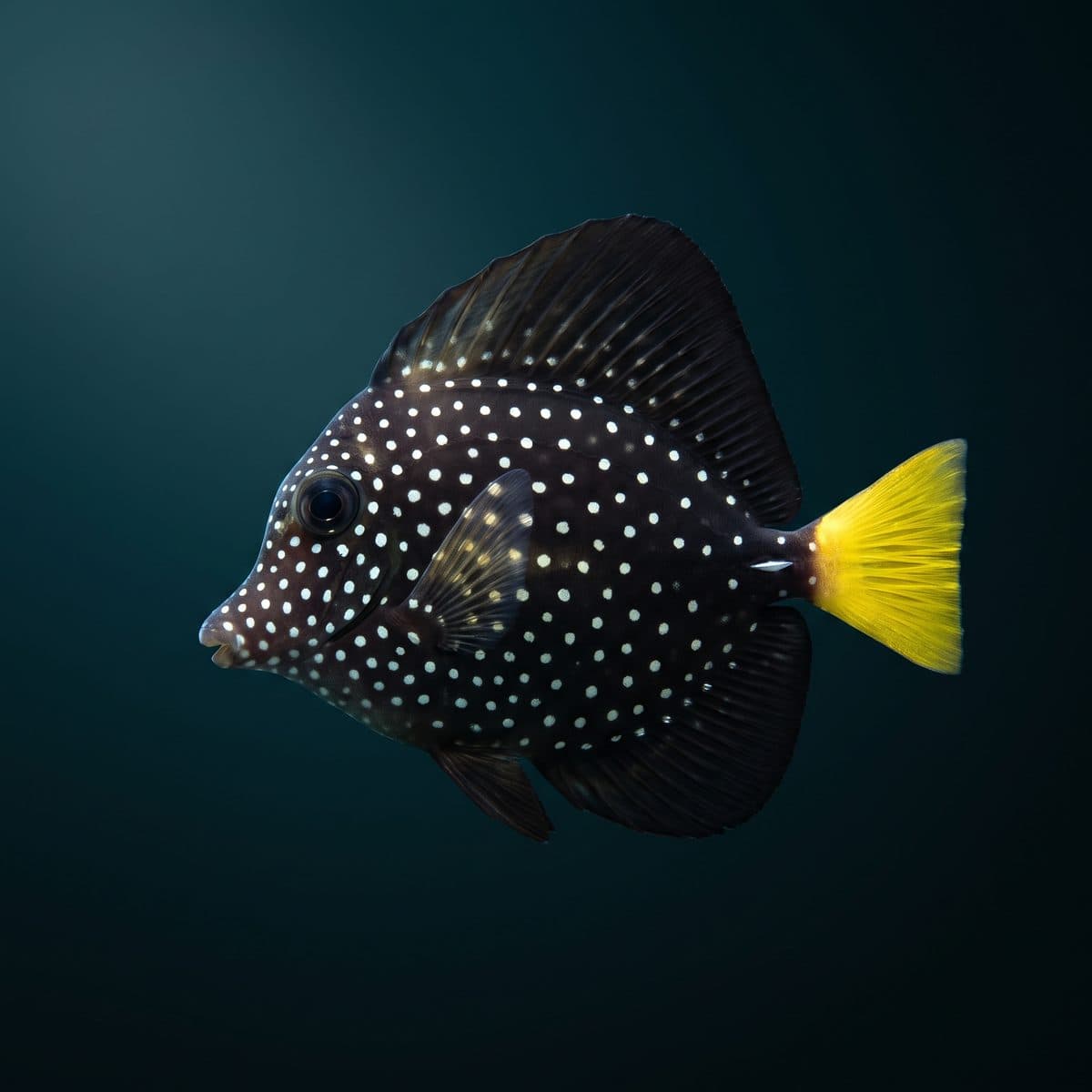
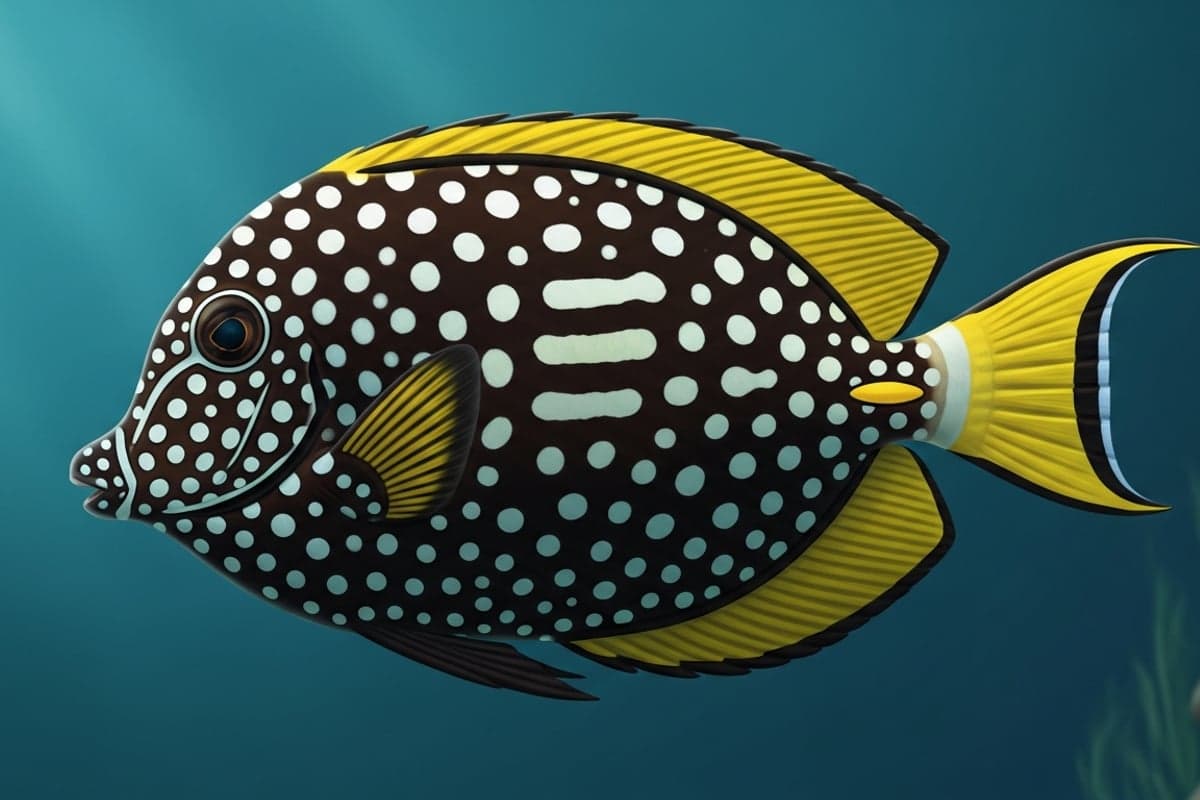
The Gem Tang (Zebrasoma gemmatum) belongs to the family Acanthuridae and is the most valuable member of the Zebrasoma genus. Its common name derives from the scattering of brilliant white spots across a jet-black body — a pattern reminiscent of gemstones set against dark velvet. Unlike its more common relatives (the Yellow Tang Z. flavescens or Sailfin Tang Z. veliferum), the Gem Tang's restricted geographic range and deepwater collection requirements keep supply perpetually below demand.
Specimens entering the trade are almost exclusively collected around Mauritius, where divers must reach depths of 25–60 metres on mixed-gas or rebreather rigs to access the species' preferred rocky reef habitat. Collection quotas are tightly regulated by Mauritian fisheries authorities, and export permits are limited. The result is a fish that may appear at a handful of reputable marine wholesalers only a few times per year — and when it does, it moves within hours.
Despite its rarity and price, the Gem Tang is not an inherently fragile fish. In fact, once properly acclimated, it is among the hardiest Zebrasoma species. The challenge lies in sourcing a healthy specimen, executing a stress-free acclimation, and providing the stable, mature reef environment this fish requires. Get those three things right, and the Gem Tang will reward you with decades of jaw-dropping beauty.
Natural Habitat
Zebrasoma gemmatum is found in the western Indian Ocean, with confirmed populations around Mauritius, Réunion, southern Madagascar, and the Mozambique Channel. Unconfirmed sightings extend to the Comoros and northern KwaZulu-Natal. It inhabits rocky reef slopes and rubble zones at depths of 10–60 metres, though collection for the aquarium trade occurs primarily between 25 and 45 metres where population density is highest.
Water conditions in these habitats are remarkably stable — temperature ranges from 23 °C to 27 °C, salinity is a consistent 35 ppt (specific gravity 1.025–1.026), and pH remains at 8.2–8.4. Strong oceanic currents deliver excellent oxygenation and constant nutrient flow across the reef, supporting the algae and biofilm on which Gem Tang graze throughout the day.
The deepwater preference explains the species' tolerance for moderate lighting in captivity, though they adapt readily to the higher PAR values typical of modern SPS reef systems. In the wild, Gem Tang are typically encountered singly or in pairs, sheltering in reef crevices and emerging to graze during daylight hours.
Tank Requirements
Tank Dimensions & Aquascaping
A minimum 180-gallon (680 L) reef aquarium is required for a single Gem Tang. The tank should measure at least 180 cm long × 60 cm wide × 60 cm tall (72 × 24 × 24 inches). If you plan to house the Gem Tang alongside other tang species — which is possible in well-designed systems — scale up to 300 gallons or more.
Aquascaping should provide abundant live rock (a minimum of 1 kg per 4 litres of net water volume) arranged to create multiple grazing surfaces, swim-throughs, and bolt holes. Gem Tang will claim a specific cave or overhang as their sleeping spot and retreat there when stressed. Ensure the rockwork creates at least 3–4 distinct territories if housing multiple tangs to allow line-of-sight breaks.
Filtration & Flow
This species demands high dissolved oxygen levels and strong, turbulent flow. Target a combined turnover rate of 15–20× tank volume per hour using a combination of return pump, powerheads, and gyre-style wavemakers. A protein skimmer rated for 1.5–2× your system volume is essential — Gem Tang produce moderate bioload for their size, and skimmate removal keeps dissolved organic carbon low.
A refugium with a reverse-daylight Chaetomorpha or Caulerpa crop provides natural nitrate and phosphate export while cultivating pods and micro-algae that supplement the tang's diet. UV sterilisation (40–80 watt, sized for your flow rate) adds an extra layer of pathogen control — particularly important during the first 30 days after introduction.
Lighting
Gem Tang adapt to a wide range of lighting conditions, from moderate fish-only setups to high-PAR mixed reef systems exceeding 350 µmol at the sand bed. Their white-on-black colouration appears most striking under 14,000–20,000 K blue-white LED lighting — the current standard for SPS-dominant reefs. A 10–12 hour photoperiod with a 60-minute dawn/dusk ramp is ideal.
Water Parameters
Gem Tang require the stable, pristine water chemistry that any SPS reef demands. Target the following:
- Temperature: 24–26 °C (75–79 °F). Avoid exceeding 27 °C; elevated temperatures reduce dissolved oxygen and increase metabolic stress.
- Salinity: 1.025–1.026 specific gravity (35 ppt). Use a refractometer calibrated with 35 ppt calibration fluid — not a swing-arm hydrometer.
- pH: 8.1–8.4. Maintain via a kalkwasser reactor or CO₂-driven calcium reactor. Avoid pH swings greater than 0.2 units over 24 hours.
- Alkalinity: 7–9 dKH. Stability is paramount — dose two-part or use a calcium reactor to hold dKH within ±0.5 of your target.
- Calcium: 400–450 ppm.
- Magnesium: 1,280–1,350 ppm.
- Ammonia / Nitrite: 0 ppm — always.
- Nitrate: <10 ppm. Ideally 1–5 ppm in a reef system (some nitrate supports coralline and macro-algae growth).
- Phosphate: 0.01–0.05 ppm.
Weekly water changes of 10–15% using high-quality synthetic salt (Red Sea Coral Pro, Tropic Marin Pro Reef, or Fritz RPM) maintain trace element levels and dilute accumulated metabolites. Test alkalinity, calcium, and magnesium weekly; test for nitrate and phosphate biweekly.
Diet & Feeding
Gem Tang are primarily herbivorous grazers. In the wild, they spend the majority of daylight hours cropping algae and biofilm from rock surfaces. In captivity, replicating this constant grazing behaviour is critical for long-term health and for preventing head and lateral line erosion (HLLE).
- Nori sheets: Offer dried nori (unseasoned, sushi-grade) on a veggie clip 2–3 times daily. Rotate between green, red, and brown nori for nutritional variety.
- Frozen herbivore preparations: LRS Reef Frenzy Herbivore, PE Mysis enriched with Spirulina, or Ocean Nutrition Formula Two. Feed once daily.
- Pellets: New Life Spectrum Marine Fish Formula or Hikari Marine-S. These are useful for targeted vitamin delivery — soak in Selcon or Vitachem before feeding.
- Live rock grazing: A mature reef with abundant coralline and film algae provides continuous supplemental nutrition between feedings. This is the single most important "food source" for long-term tang health.
Vitamin supplementation is essential for tang species. Soak all prepared foods in a marine vitamin complex (Brightwell Aquatics Vitamarin-M, Selcon) at least 3 times per week. Vitamin C (ascorbic acid) at 500 mg per litre of food soak water helps prevent HLLE.
Behaviour & Temperament
Gem Tang are moderately territorial, particularly toward congeneric species (other Zebrasoma). They will vigorously defend their claimed section of rockwork and can inflict damage with the scalpel-like spine at the base of their caudal peduncle — a feature shared by all surgeonfishes. That said, aggression is predictable and manageable with proper planning.
When introducing a Gem Tang to a system that already houses tangs, always add it last. The established residents will have claimed their territories, and the newcomer will find unclaimed space rather than attempting to displace a resident. In large systems (300+ gallons), it is possible to keep a Gem Tang alongside a Yellow Tang, a Powder Blue Tang (Acanthurus leucosternon), and a Naso Tang — provided each species differs in body shape and colour, which reduces conspecific aggression triggers.
Compatible Tank Mates
- Tangs (different genera): Acanthurus spp. (Powder Blue, Achilles), Paracanthurus hepatus (Blue Hippo), Naso spp. — in 300+ gallon systems.
- Wrasses: Fairy wrasses (Cirrhilabrus), Flasher wrasses (Paracheilinus) — peaceful and occupy different niches.
- Clownfish: Amphiprion ocellaris or A. percula pairs. No conflict.
- Anthias: Pseudanthias spp. add colour and movement with zero tang aggression risk.
- Angelfish: Dwarf angels (Centropyge) in larger systems. Avoid large Pomacanthidae in tanks under 300 gallons.
Avoid housing Gem Tang with other Zebrasoma species in tanks under 300 gallons, and never house two Gem Tang together unless the system exceeds 500 gallons and is heavily aquascaped with line-of-sight breaks.
Breeding
Captive breeding of Zebrasoma gemmatum has not been commercially achieved as of early 2026. While researchers at the Oceanic Institute of Hawai'i Pacific University and Rising Tide Conservation have successfully bred related species (Z. flavescens, Z. desjardinii), the Gem Tang's extreme rarity in captive collections has limited breeding attempts. The species is a pelagic spawner — pairs rise into the water column at dusk, releasing eggs and sperm into the current. Larvae undergo an extended planktonic phase (50–80 days), feeding on microscopic plankton before settling onto reef substrate.
Any future breakthrough in Gem Tang aquaculture would dramatically alter the species' market dynamics. Until then, all specimens in the trade are wild-caught, making responsible collection practices and export quotas critical for long-term sustainability.
Common Health Issues
Ich & Marine Velvet
Tangs as a family are notoriously susceptible to Cryptocaryon irritans (marine ich) and Amyloodinium ocellatum (marine velvet). The stress of collection, shipping, and acclimation makes newly acquired Gem Tang particularly vulnerable. A strict quarantine protocol is non-negotiable.
We recommend a minimum 30-day quarantine in a bare-bottom hospital tank (40–75 gallons for a single tang) treated prophylactically with copper sulphate (Copper Power or Coppersafe) maintained at 2.0–2.5 ppm free copper, verified daily with a copper test kit. Alternatively, a 76-day tank transfer method (TTM) provides a copper-free option for keepers who plan to house invertebrates in quarantine. Never introduce a new tang directly into a display reef — the cost of a marine velvet outbreak in a mature reef system dwarfs the cost of a quarantine tank.
Head & Lateral Line Erosion (HLLE)
HLLE presents as pitting and erosion of the skin around the head and along the lateral line. In Gem Tang, it manifests as grey, depigmented patches that destroy the otherwise flawless black colouration. Contributing factors include activated carbon use (which may leach impurities), vitamin deficiency (particularly A and C), stray voltage in the aquarium, and poor diet.
Prevention: feed a varied, vitamin-enriched herbivore diet; use high-quality granular activated carbon (bituminous, acid-washed) or eliminate carbon in favour of GFO and biopellets; install a grounding probe; and maintain nitrate below 10 ppm. Early-stage HLLE is fully reversible with dietary correction and improved water quality.