Why Discus Are Demanding
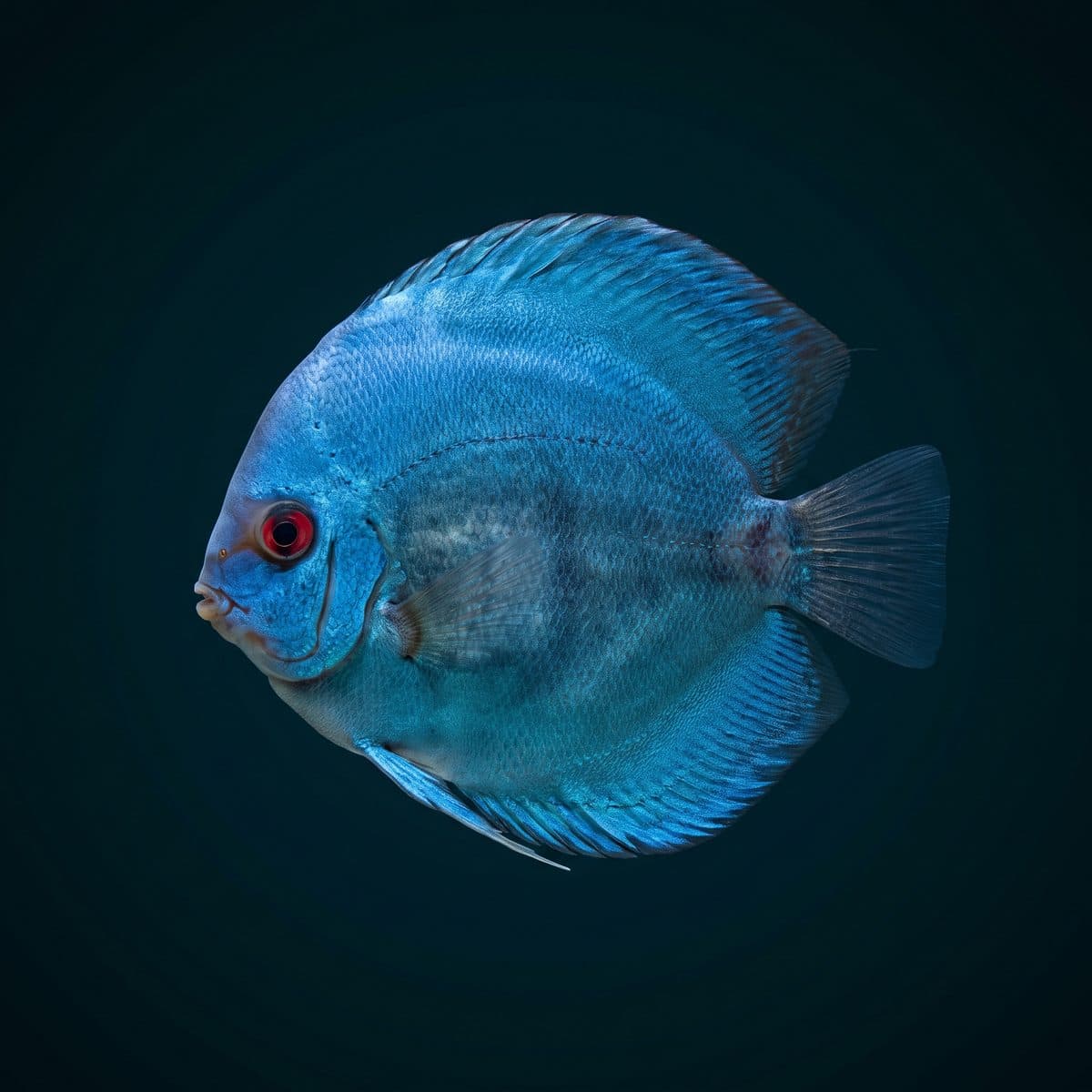
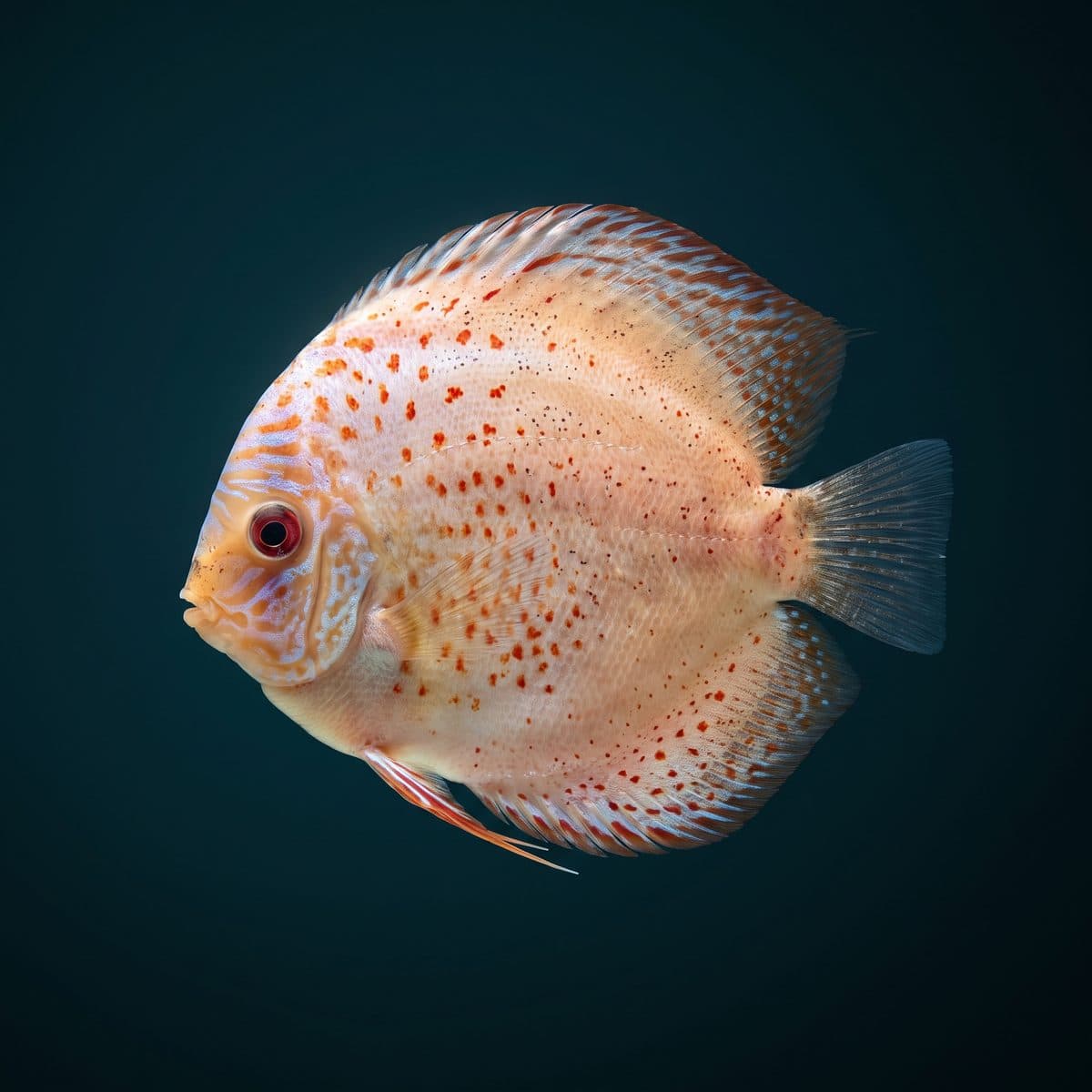
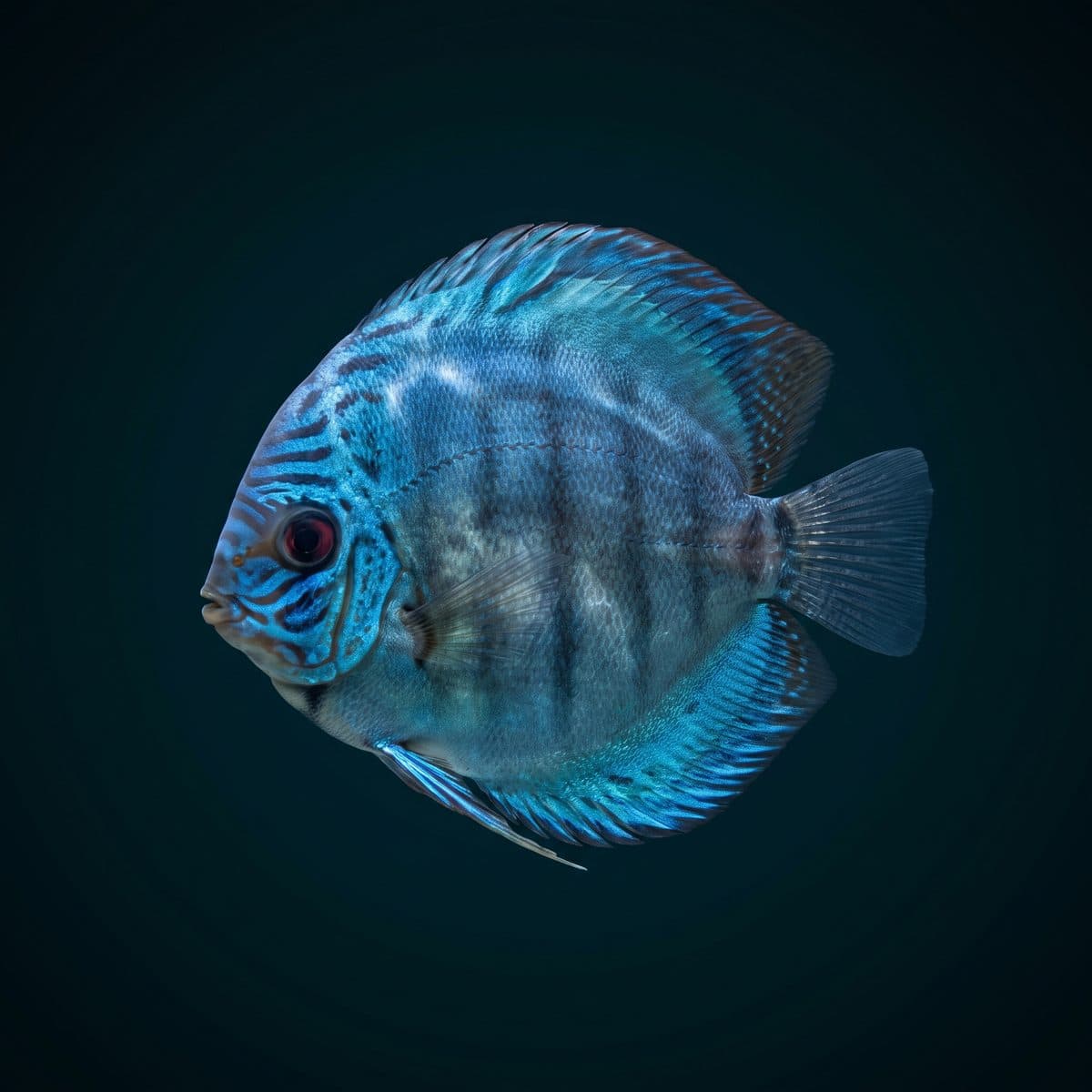
Discus (Symphysodon spp.) have earned their reputation as the most parameter-sensitive freshwater fish in the mainstream hobby. In their native Amazonian habitat — flooded forest tributaries and blackwater lakes — they live in water that is extremely soft (GH below 1 dGH), acidic (pH 4.5–6.0), warm (28–32 °C), and virtually free of dissolved minerals and waste products. These conditions have shaped their physiology over millions of years, and they do not adapt well when we deviate significantly.
The consequence for aquarists is a narrow margin for error. A temperature drop of 2 °C can trigger a stress response that opens the door to bacterial infection. A pH swing of 0.5 units during a water change can cause appetite loss lasting days. Nitrate at 30 ppm — a level most tropical fish ignore — produces visible colour fading and lethargy in Discus. Success with Discus is fundamentally a water quality discipline.
The good news: modern captive-bred Discus strains are more adaptable than their wild ancestors. They tolerate pH up to 7.2, GH up to 8 dGH, and are less susceptible to the parasitic diseases that plague wild imports. But "more adaptable" does not mean "easy" — Discus still demand higher standards than virtually any other common tropical fish.
Tank Size and Dimensions
Discus are social fish that must be kept in groups of 6 or more to distribute aggression and establish a stable hierarchy. A group of 6 requires a minimum 75-gallon tank; 8–10 fish (the ideal school size) need 100–125 gallons.
Height matters for Discus. Their laterally compressed, disc-shaped body is adapted for manoeuvring through vertical structure (submerged tree roots and branches in the wild). Tanks with 24 inches (60 cm) or more of water height suit their body proportions. A 75-gallon tank measuring 48 × 18 × 24 inches (length × width × height) is the standard starting point.
Length is important for swimming space, especially in groups where subordinate fish need to retreat from dominant individuals. A 4-foot minimum length is recommended; 5–6 feet is ideal for larger groups. For tank construction guidance applicable to large tropical systems, see our exotic fish tank setup guide.
Temperature: The Critical Parameter
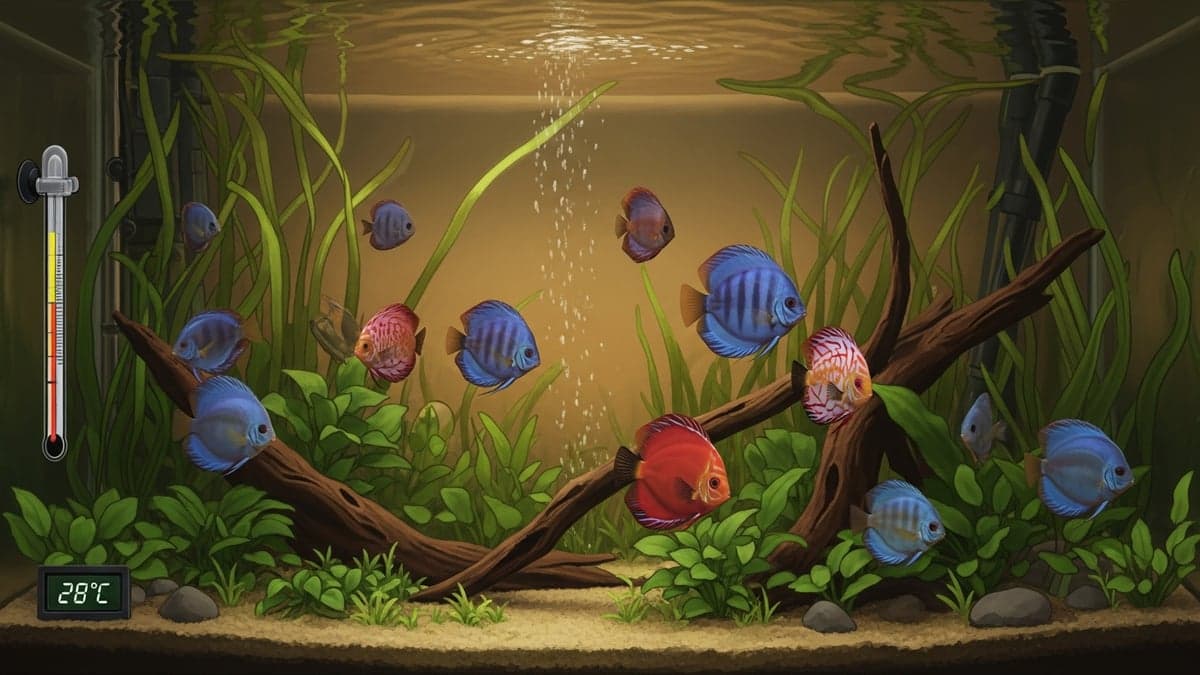
Temperature is the single most important parameter for Discus health. Target: 28–30 °C (82–86 °F). Many experienced Discus keepers maintain 30 °C year-round.
Why so warm? At these temperatures:
- Discus metabolisms operate at peak efficiency, promoting growth and colour development.
- The immune system functions optimally, providing maximum resistance to bacterial and parasitic diseases.
- The common Discus parasites Hexamita and Capillaria are suppressed — their reproductive cycles slow significantly above 29 °C.
Below 26 °C, Discus become lethargic, lose colour, refuse food, and become vulnerable to disease. A sudden drop below 24 °C can be fatal. Temperature stability is as important as the absolute number — daily fluctuations should not exceed 1 °C.
Use a titanium heater rated for at least 1.5× your tank volume (for a 75-gallon tank, a 300-watt heater minimum) connected to an external digital temperature controller. Two heaters (each at 50 % of required wattage) provide redundancy — if one fails, the other maintains temperature until replacement. Place the temperature probe at the opposite end of the tank from the heater return to measure true ambient temperature.
pH and Hardness
Wild Discus live in pH 4.5–6.0 with essentially zero hardness. Captive-bred strains tolerate a wider range:
- pH: 5.5–6.8 optimal; captive-bred strains survive at pH 7.0–7.2 but display less intense coloration.
- GH: 1–4 dGH. Soft water replicates natural conditions and supports proper gill function and osmoregulation.
- KH: 1–3 dKH. Just enough to prevent dangerous pH crashes, but not so high that pH is buffered above the target range.
Stability trumps hitting a specific number. A stable pH of 7.0 is better for Discus than a pH that swings between 5.5 and 6.5 due to inadequate buffering. If your tap water is naturally soft and slightly acidic, you may not need an RO system at all. If your tap water is hard and alkaline (common in much of the US), RO water is the path to success.
RO Water Systems for Discus
A reverse osmosis (RO) or RO/deionisation (RO/DI) system strips virtually all dissolved minerals from tap water, producing near-pure water that you then remineralise to your target parameters. This gives you complete control over water chemistry — essential for Discus keeping in areas with hard tap water.
A 4-stage RO/DI system suitable for Discus costs $150–$400 and produces 75–150 gallons per day (GPD) depending on model and water pressure. Membrane replacement costs $30–$60 annually; pre-filters and DI resin add $50–$100 per year. For a 75-gallon Discus tank requiring 40–50 gallons of RO water per week (for water changes), a 75 GPD system is the minimum.
Blending RO Water
Pure RO water is too soft and mineral-free for direct use. It must be remineralised before adding to the tank:
- Use a GH-raising product (Seachem Equilibrium, SaltyShrimp GH+, or equivalent) to bring GH to 1–4 dGH.
- Alternatively, blend RO water with tap water at a ratio that achieves your target GH and pH. Start with a 3:1 (RO:tap) ratio and test.
- Aerate the blended water for 12–24 hours before adding to the tank. This off-gasses CO₂ and stabilises pH — freshly produced RO water often reads pH 6.0–6.5 due to dissolved CO₂, which rises to 7.0+ after aeration. You want the stable, aerated reading before it enters your system.
Ammonia, Nitrite, and Nitrate
Ammonia and nitrite must be 0 ppm at all times — this applies to all fish, but Discus are less tolerant of even trace levels than most species. A spike to 0.25 ppm ammonia that an Oscar would barely notice will cause a Discus to clamp its fins, darken in colour, and refuse food for 24–48 hours.
Nitrate: Below 10 ppm is the target. Discus begin showing subtle stress indicators (colour fading, reduced appetite, increased mucus production) at 15–20 ppm — levels that most tropical fish tolerate indefinitely. Keeping nitrate below 10 ppm requires either aggressive water changes (the primary method), live plants (supplementary), or a denitrification system (advanced).
Test ammonia, nitrite, and nitrate weekly with liquid reagent kits (API Master Test Kit or equivalent). Do not rely on test strips — they lack the precision needed for Discus-level parameter management.
Filtration for Discus
Discus produce moderate bioload for their size, but the near-zero nitrate requirement means filtration must be robust and well-maintained. Target 6–8× total tank volume turnover per hour.
For a 75-gallon tank, a large canister filter (Fluval FX4 or equivalent rated for 250+ gallons) is sufficient. For tanks above 100 gallons, consider a sump-based system for added volume and ease of maintenance. Biological media (sintered glass, ceramic rings) should dominate your filter — mechanical polishing (fine foam, filter floss) is secondary but important for water clarity.
Avoid strong current in the display tank. Discus are not strong swimmers and prefer gentle to moderate flow. Position return outlets to create broad, gentle circulation rather than concentrated jets. Spray bars are ideal.
Substrate and Décor
Discus keepers split into two camps: bare-bottom tanks and planted tanks. Both work, but each has trade-offs.
Bare bottom: The breeder's choice. Maximum hygiene — uneaten food and waste are visible and easily siphoned. No substrate-trapped detritus means lower nitrate accumulation. The downside is aesthetics and the fact that some Discus display less intense colour without a dark substrate below them.
Fine sand (1–2 mm): Provides a natural, dark base that enhances colour expression. Maintain at 2–3 cm depth and vacuum thoroughly during each water change to prevent detritus accumulation.
Planted substrate (aqua soil): For dedicated planted Discus tanks. Products like ADA Amazonia or Fluval Stratum buffer pH into the acidic range naturally and support plant root systems. However, new aqua soil releases ammonia during its initial weeks — cycle the tank with the substrate in place before adding Discus.
Décor should replicate the flooded-forest biotope: vertical driftwood pieces (manzanita, spider wood) suggesting submerged tree roots, Indian almond leaves on the substrate for natural tannin release, and broad-leaf plants (Amazon Swords, Echinodorus) for shelter. Avoid sharp rocks or abrasive surfaces.
Water Change Protocol
Water changes are the cornerstone of Discus keeping. There is no filtration system, additive, or gadget that replaces regular removal and replacement of water.
- Minimum: 30 % twice weekly.
- Optimal for grow-out (juveniles under 10 cm): 50 % daily. Juvenile Discus grow fastest in near-pristine water with aggressive feeding and equally aggressive waste removal.
- Optimal for adult display tanks: 30–50 % twice weekly.
All replacement water must be temperature-matched to within 1 °C and parameter-matched (pH and GH within 0.2 pH units and 1 dGH). Pre-condition replacement water in a separate container: add dechlorinator, remineraliser (if using RO), and aerate for 12–24 hours. A dedicated "water ageing" barrel with a heater and air stone simplifies this routine enormously.
During water changes, siphon the substrate (or bare bottom) to remove detritus. Clean filter media on a rotating schedule — never clean all media on the same day as a large water change, as this compounds the biological disruption.
Planted Discus Tanks
Planted Discus tanks are among the most beautiful displays in freshwater aquaristics, but they present a unique challenge: Discus require 28–30 °C, which is at or above the tolerance limit for many popular aquarium plants.
Plants that thrive at Discus temperatures:
- Amazon Sword (Echinodorus spp.) — the natural companion, handles 28–30 °C well.
- Anubias (Anubias barteri) — slow-growing, attaches to driftwood, tolerates warmth and low light.
- Java Fern (Microsorum pteropus) — another epiphyte, highly adaptable.
- Vallisneria — fast-growing background plant, tolerates up to 30 °C.
- Staurogyne repens — low-growing carpeting plant that handles Discus temperatures.
Plants to avoid: Most mosses (Java Moss degrades above 28 °C), Dwarf Hairgrass (prefers cooler water), and most Bucephalandra species (prefer 22–26 °C).
If running CO₂ injection in a planted Discus tank, monitor pH closely — CO₂ lowers pH, which can push already acidic Discus water into dangerously low territory. Use a pH controller or drop checker to prevent overshooting.
Common Parameter Mistakes
- Chasing wild-type parameters with captive-bred fish. Pushing pH to 5.0 for farm-raised Discus is unnecessary and risky. Captive-bred strains thrive at pH 6.0–6.8 — focus on stability, not replicating extreme Amazonian conditions.
- Neglecting KH. Zero-KH water (common with undiluted RO) is prone to sudden pH crashes. Maintain at least 1–2 dKH as a buffer.
- Overfeeding without compensating water changes. Discus need frequent feeding (3–5 small meals daily for juveniles), but each meal adds organic waste. Match feeding intensity with water change frequency.
- Adding Discus to a new tank. A tank that has been cycled for 4 weeks is chemically ready but biologically immature. Wait 8–12 weeks and stock gradually — add 2–3 Discus at a time with 2-week intervals between additions to allow the biological filter to adapt.
- Mixing wild and captive-bred Discus. Wild Discus carry parasites and pathogens that captive-bred fish have no immunity to. Never combine them without a rigorous quarantine and prophylactic treatment protocol for the wild specimens.
For those ready to take the plunge, The Fish Collection offers select Discus specimens from reputable breeders, with full acclimation support and water parameter consultation included.