Overview
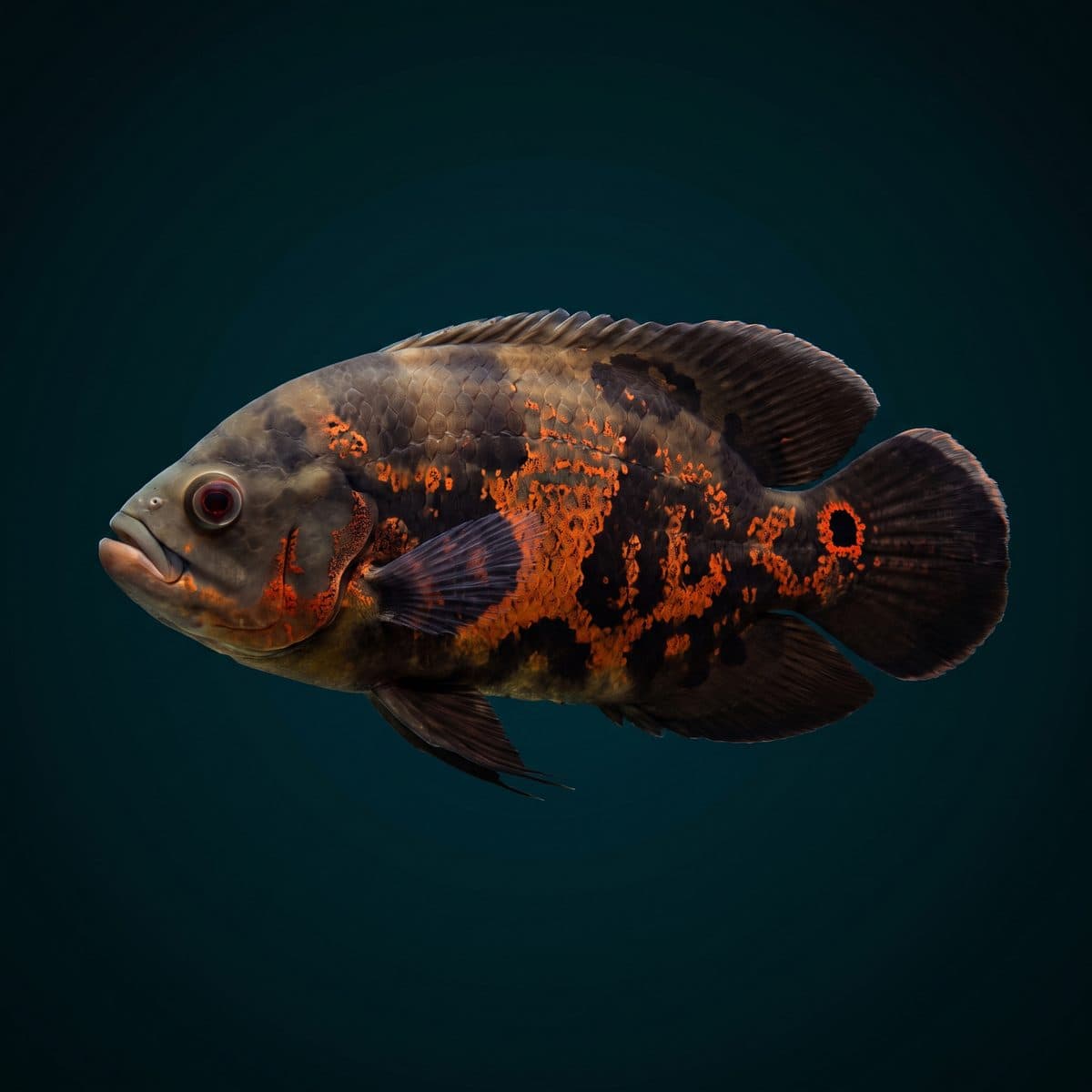
The Oscar (Astronotus ocellatus) is a South American cichlid native to the Amazon, Orinoco, and La Plata river basins. Widely regarded as one of the most intelligent freshwater aquarium fish, Oscars recognise their owners, can be hand-fed, and display distinct individual personalities. They grow rapidly — reaching 10–12 inches within the first year — and can exceed 14 inches at maturity.
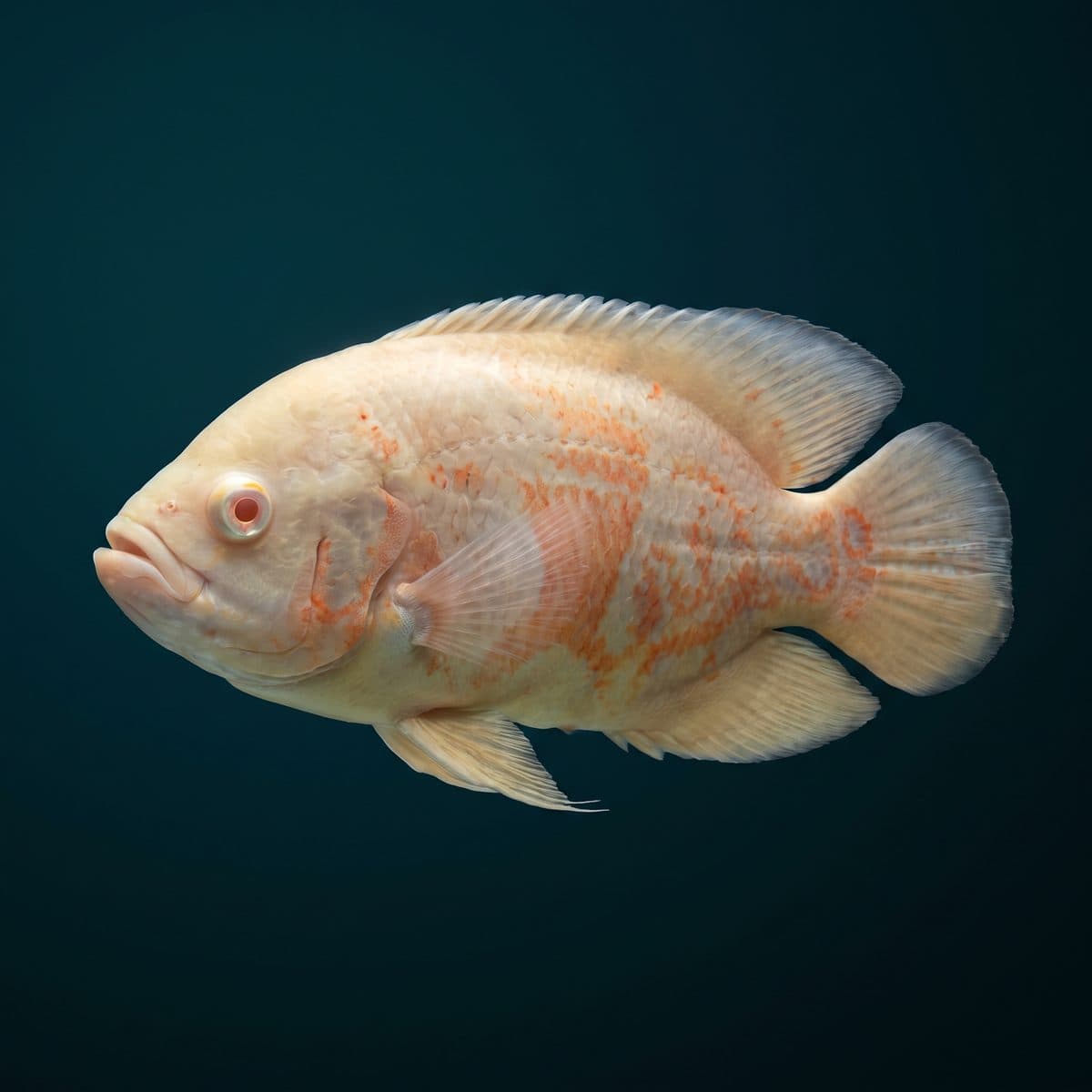
Popular varieties include the Tiger Oscar (orange and black), Albino Oscar (white and orange), Red Oscar, and Lemon Oscar. Despite their charm, Oscars are messy, aggressive eaters that demand robust filtration and spacious tanks. They are not community fish in the traditional sense.
Tank Setup
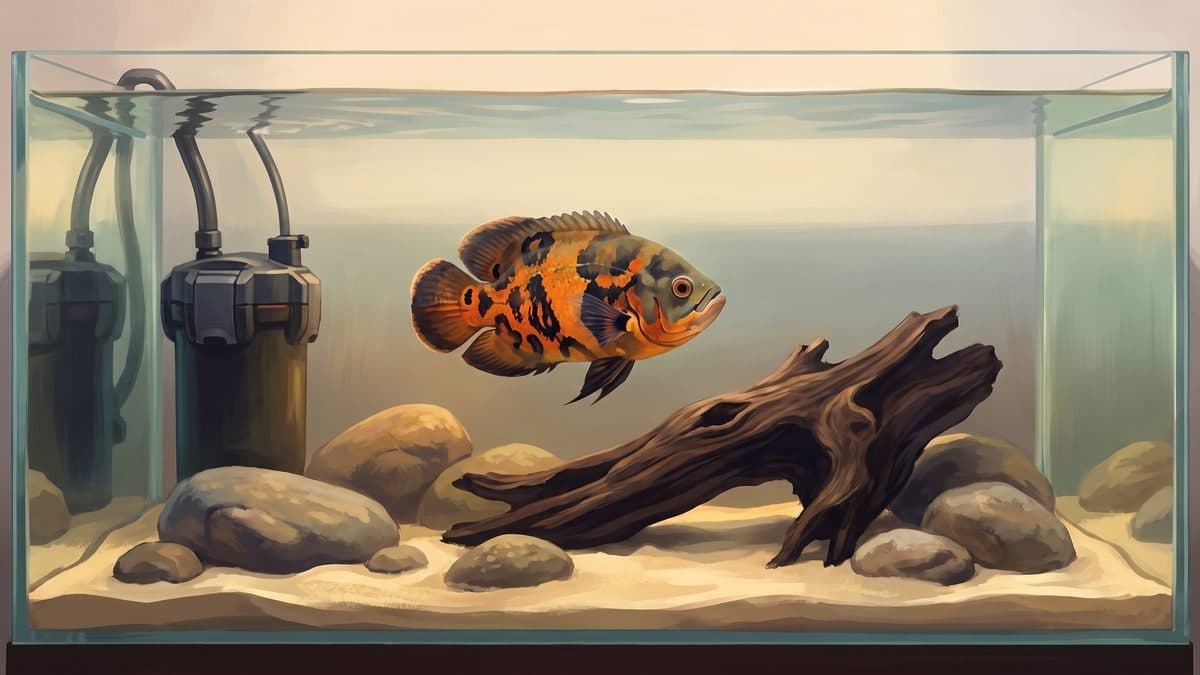
A single adult Oscar requires a minimum 75-gallon aquarium; a pair or community with other large cichlids demands 125 gallons or more. Oscars are powerful fish that rearrange décor — secure any hardscape and avoid delicate plants. Use sand or smooth gravel substrate, as Oscars sift and dig constantly.
Filtration
Oscars produce enormous waste relative to their size. A canister filter rated for at least 8× the tank volume per hour is the minimum — many keepers run two filters for redundancy. Supplement with a sponge pre-filter on the intake to protect the motor from debris. Weekly 30–40% water changes are non-negotiable.
Water Parameters
Oscars are adaptable across a wide pH and hardness range, making them suitable for most tap water conditions:
- Temperature: 74–81 °F (23–27 °C)
- pH: 6.0–8.0
- GH: 5–20 dGH
- Ammonia/Nitrite: 0 ppm (essential)
- Nitrate: Below 20 ppm — Oscars are sensitive to nitrate accumulation
Diet and Feeding
Oscars are true omnivores. A quality cichlid pellet (Hikari Cichlid Gold, Northfin Cichlid) should form the staple diet. Supplement with:
- Earthworms and nightcrawlers (excellent nutrition)
- Crickets and mealworms
- Frozen shrimp, krill, and silversides
- Blanched vegetables (peas, zucchini) occasionally
Avoid feeder fish — they carry parasites and offer poor nutritional value. Feed juveniles twice daily, adults once daily. Oscars are prone to obesity, so resist overfeeding despite their enthusiastic begging.
Tank Mates
Oscars are territorial and will eat anything that fits in their mouth. Compatible tank mates include Silver Dollars, large Plecos (common or sailfin), Jack Dempsey cichlids, Bichirs, large catfish (Synodontis, Pictus at risk when small), and Severum cichlids. Avoid small fish, slow-moving species, and fin-nippers. Always introduce tank mates simultaneously to reduce territorial aggression.
Breeding
Oscars form monogamous pairs but are notoriously difficult to sex visually. The most reliable method is to raise a group of 6 juveniles and let them pair naturally. Breeding pairs clean a flat rock or the tank bottom, deposit 1,000–3,000 eggs, and guard them aggressively. Eggs hatch in 3–4 days at 80 °F. Fry become free-swimming within a week and accept baby brine shrimp and crushed pellets.
Common Health Issues
Hole-in-the-Head Disease (HITH)
The most significant Oscar-specific disease is HITH (Hexamita/Spironucleus), which presents as pitting lesions on the head and lateral line. Contributing factors include poor water quality, vitamin deficiency (especially vitamin C and D), and activated carbon overuse. Treatment involves improving water quality, adding metronidazole to food, and supplementing with vitamins. Prevent HITH by maintaining pristine water, feeding a varied diet, and minimising stress.
Other common issues include ich (treat by raising temperature to 86 °F and adding salt), bloat from overfeeding, and fin damage from aggression.
Growth Rate and Tank Upgrades
Oscar growth catches almost everyone off guard. That 2-inch juvenile in the store can hit 8 inches within six months and 10–12 inches by its first birthday — roughly an inch a month when fed well in clean, warm water. Growth slows after year one but doesn't stop; most Oscars add another inch or two through years two and three. Here's a realistic planning timeline:
| Age | Typical Size | Tank Needed |
|---|---|---|
| 0–3 months | 2–4 in | 40 gallons (temporary at best) |
| 3–8 months | 5–8 in | 55–75 gallons |
| 8–14 months | 9–12 in | 75 gallons minimum |
| 14 months+ | 12–14 in | 75–125 gallons |
Our honest advice: skip the grow-out tanks and buy the 75-gallon (or bigger) on day one. A juvenile in a full-sized tank grows faster, colours up better, and you won't be tank-shopping again in six months. Keeping an Oscar in a small tank doesn't keep it conveniently small — it stunts the fish, compromises its health, and shortens a lifespan that should run 10–15 years.
Weekly Maintenance Routine
Oscars punish lazy maintenance faster than almost any other big cichlid — HITH nearly always traces back to chronically high nitrate. Here's the routine we run on a 75-gallon Oscar tank, and it takes about 45 minutes a week:
- Daily (2 minutes): Check the temperature, confirm strong filter outflow, and watch your Oscar eat. Appetite is your earliest warning light — a healthy Oscar never skips a meal without a reason.
- Weekly (30–40 minutes): Change 30–40% of the water with a gravel vacuum, hitting the spots where food and waste collect. Wipe algae from the glass and glance over the silicone seams while you're there.
- Every 2 weeks: Rinse sponges and filter floss in the bucket of tank water you just siphoned out — never under the tap, which kills the beneficial bacteria you spent weeks growing.
- Monthly: Test nitrate right before a water change. Reading above 20 ppm? Bump to 50% weekly changes or add a mid-week change until it trends back down.
Keep a dedicated bucket and siphon for this tank, too. Sharing equipment between tanks is one of the quietest ways disease travels around a fish room.
Behaviour and Enrichment
Half the appeal of an Oscar is that it acts more like a dog than a fish. They learn your schedule, tell you apart from strangers, and follow your finger along the glass. The flip side of that intelligence: a bored Oscar becomes a destructive or sulky one.
Enrichment that actually works:
- Rearrange one piece of décor every few weeks. Your Oscar will spend the next day inspecting and "correcting" your work — they genuinely engage with novelty.
- Float a ping-pong ball for 20–30 minutes at a time. Many Oscars learn to push it around the surface. Remove it afterwards so it stays interesting.
- Vary the feeding routine — drop food at different ends of the tank, use feeding tongs for earthworms, or toss a pellet into the filter current for a chase.
And expect theatrics. Oscars famously sulk — flopping onto their side after a water change, a décor move, or seemingly out of pure spite. If the water tests clean and the fish still takes food, sulking is personality, not illness. Give it a day before you worry.