Overview
Tangs (surgeonfish) are among the most iconic marine aquarium fish, prized for their vivid colours, active swimming behaviour, and algae-grazing utility in reef tanks. The name "surgeonfish" comes from the scalpel-like spines on each side of the tail base, used for defense. With over 80 species across 6 genera, tangs range from the 6-inch Kole Tang to the 16-inch Naso Tang.
Popular Species
- Yellow Tang (Zebrasoma flavescens) — 8 in, 75+ gallons, the most popular tang, bright yellow
- Blue Hippo Tang (Paracanthurus hepatus) — 12 in, 125+ gallons, "Dory" from Finding Nemo
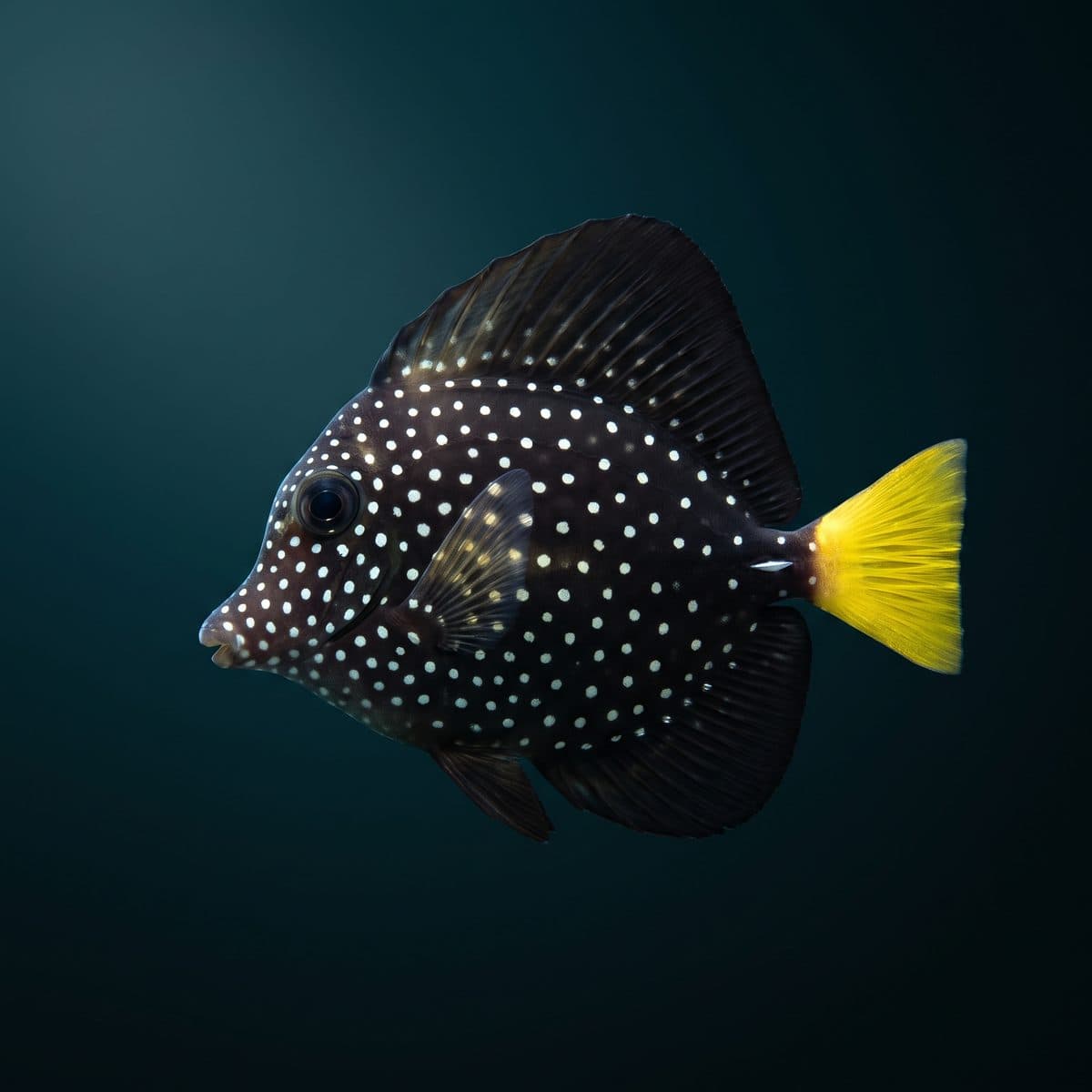
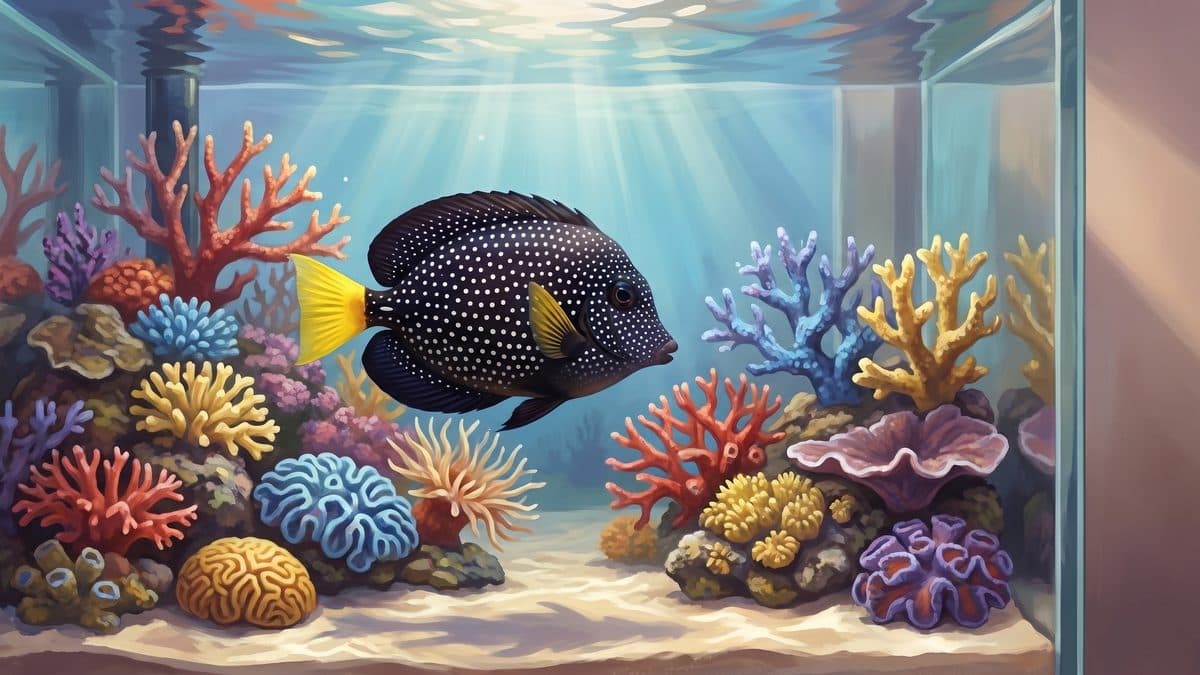
- Gem Tang (Zebrasoma gemmatum) — 8 in, 75+ gallons, ultra-rare, $800+, black with white spots
- Powder Blue Tang (Acanthurus leucosternon) — 9 in, 125+ gallons, stunning but ich-prone
- Kole Tang (Ctenochaetus strigosus) — 6 in, 75+ gallons, excellent algae grazer, more peaceful
Tank Requirements
Tangs are active, open-water swimmers that need long tanks with strong flow. The "tang police" meme exists for a reason — these fish truly need space. A 75-gallon (4-foot) tank is the absolute minimum for smaller Zebrasoma species. Larger tangs (Blue Hippo, Naso, Sohal) need 125–180+ gallons. Provide excellent water circulation (20–40× turnover), live rock for grazing and shelter, and a mature, stable system.
Water Parameters
- Temperature: 76–80 °F
- pH: 8.1–8.4
- Salinity: SG 1.024–1.026
- Alkalinity: 8–12 dKH
- Ammonia/Nitrite: 0 ppm
- Nitrate: Below 10 ppm
Stability is paramount. Tangs are stressed by parameter swings — use an ATO (auto top-off) and dose alkalinity/calcium consistently.
Diet — The Algae Imperative
Tangs are primarily herbivores. A diet lacking in marine algae leads to HLLE (Head and Lateral Line Erosion), nutritional deficiency, and weakened immune response. Feed:
- Nori sheets (dried seaweed) — clip to the glass daily, the dietary cornerstone
- Frozen preparations with Spirulina and algae (Rod's Food, LRS)
- Mysis shrimp and brine shrimp — for protein supplementation
- Quality pellets (New Life Spectrum, TDO) — soaked in Selcon or vitamins
Tangs should eat multiple times daily — they graze constantly on reefs and cannot thrive on once-daily feeding.
Ich Prevention
Tangs are the most ich-susceptible family in the marine hobby. Marine ich (Cryptocaryon irritans) is often called "tang disease" for this reason. Prevention is critical:
- Quarantine all new tangs for 6–8 weeks in a separate system with prophylactic copper treatment
- Maintain stable temperature — even 1–2 °F swings can trigger an outbreak
- Feed heavily with vitamin-enriched foods to support immune function
- Run a UV steriliser on the display as an additional layer of protection
Compatibility
Most tangs are aggressive toward other tangs, especially of the same genus. The general rule: one tang per genus unless the tank is very large (200+ gallons). Tangs coexist well with clownfish, wrasses, gobies, blennies, angels, and most reef invertebrates. Avoid keeping multiple Zebrasoma species together in tanks under 150 gallons.
A Practical Tang Quarantine Protocol
"Quarantine your tangs" is easy advice to give — here's what it actually looks like in practice. You need a 40-gallon breeder (bigger for large species), a cycled sponge filter, a heater, PVC fittings for shelter, and a lid. No rock, no sand: bare-bottom tanks make observation and dosing simple.
- Week 1: Settle and feed. Get the tang eating nori and frozen food confidently before you medicate — treating a starving fish goes badly. Observe under good light for white spots, dusty patches, and rapid breathing.
- Weeks 2–4: Copper at full therapeutic level, verified with a test kit every other day — chelated copper products need to hold 2.0–2.5 ppm. Stay at target a minimum of 14 days and keep feeding heavily throughout.
- Weeks 5–6: Pull the copper with water changes and carbon, then run two doses of praziquantel a week apart for flukes. Final week: clean observation, no medication.
Six weeks feels long. It's still faster — and far cheaper — than tearing down a 180-gallon reef to catch an ich-covered tang later, which is the alternative you're buying insurance against.
A Daily Feeding Routine That Works
Wild tangs graze more or less continuously, so the goal at home is little and often, heavy on the greens:
- Morning: Clip in nori — start with half a sheet per tang and adjust to what disappears within a few hours. This is the backbone of the diet.
- Midday: A small pellet feeding (an auto-feeder covers workdays) — quality pellets soaked in Selcon two or three times a week for fatty acids.
- Evening: Frozen food for the whole tank — mysis, spirulina-enriched brine shrimp, or an algae-heavy blend.
Judge success by body condition, not appetite — a tang always acts hungry. Look at the fish head-on: flanks should be full, with no pinched line behind the head. A thinning tang gets more nori, more often, full stop. And leave some algae film on the back glass; free grazing between meals is exactly how these fish are built to eat.
HLLE — Head and Lateral Line Erosion
HLLE shows up as pale, pitted erosion spreading around the face and along the lateral line, and tangs are its most frequent victims. It isn't a pathogen — it's a husbandry condition, which means it's preventable and often partially reversible.
The evidence points to a few contributors:
- Dietary deficiency — the big one. Tangs fed meaty foods without marine algae miss the vitamins (A and C especially) their skin needs.
- Activated carbon fines — controlled studies reproduced HLLE in surgeonfish exposed to lignite carbon dust. Rinse carbon thoroughly, run it bagged away from high flow, or skip it entirely.
- Chronic stress — undersized tanks and constant aggression suppress immune function and stall healing.
Treatment is the same list in reverse: daily nori and vitamin-enriched foods, pull the carbon, fix the stressor. Early lesions typically fill back in over 2–4 months; deep, long-standing erosion can scar permanently. Start correcting at the first pale patch — not when half the face is gone.
Stocking Order and Introducing Tangs
Tang aggression is mostly about prior claims, so introduction order matters as much as species choice:
- Add tangs late but not last — after peaceful fish are established, and in one coordinated event if you're keeping several.
- Multiple tangs go in simultaneously. If you must stagger, add the most peaceful genus first (Ctenochaetus, then Zebrasoma, with Acanthurus last — they're the scrappiest).
- Rearrange some rockwork just before the introduction to reset existing territorial maps.
- Use an acclimation box for a few days when adding a tang to a tank that already holds one — visible-but-untouchable takes the edge off the first meeting.
Expect a few days of sideways posturing and tail flicking — that's negotiation, and it settles. Actual scalpel contact, torn fins, or a fish pinned in a corner means it isn't settling: move the aggressor into the acclimation box for a week rather than hoping it resolves. It rarely does on its own.