Overview
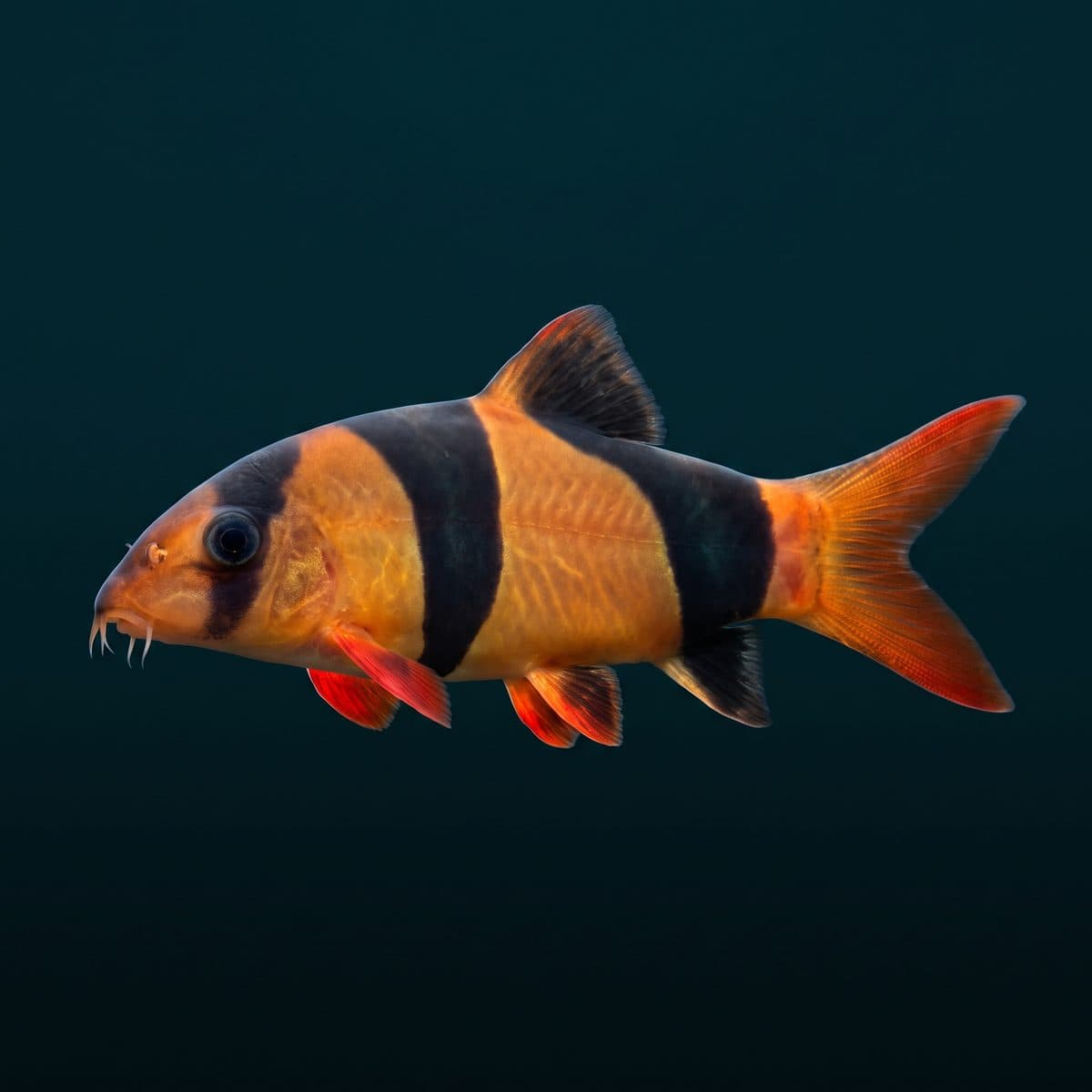
The Tiger Loach belongs to the genus Syncrossus — a group of large, assertive botiid loaches that include some of the most impressive freshwater fish in the hobby. Often confused with the more commonly available Clown Loach (Chromobotia macracanthus), the Tiger Loach differs in several important ways: it is more aggressive, more territorial, grows slightly larger, and demands warmer water. These differences make it a fish for experienced keepers who appreciate its bold pattern and dynamic behaviour.
Appearance
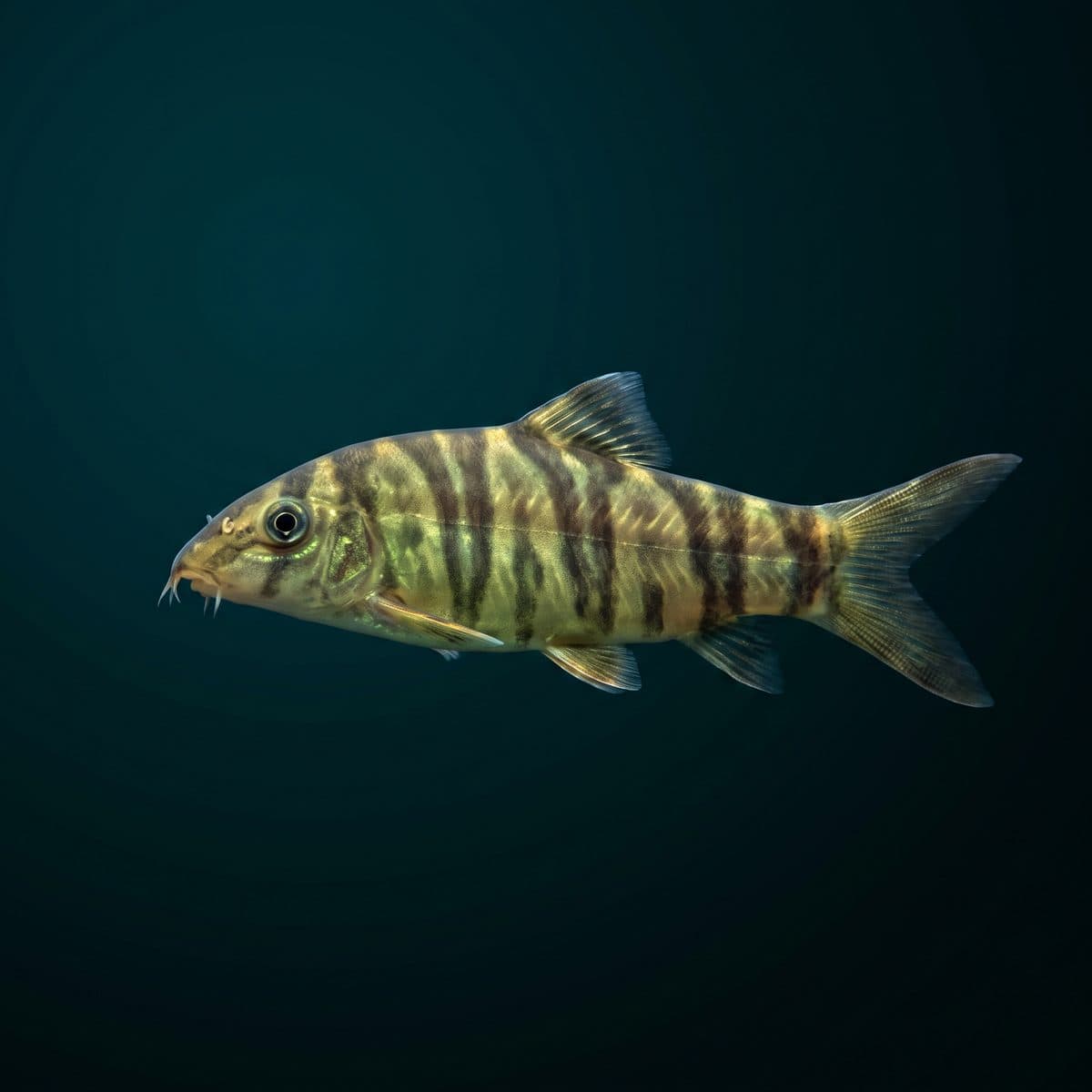
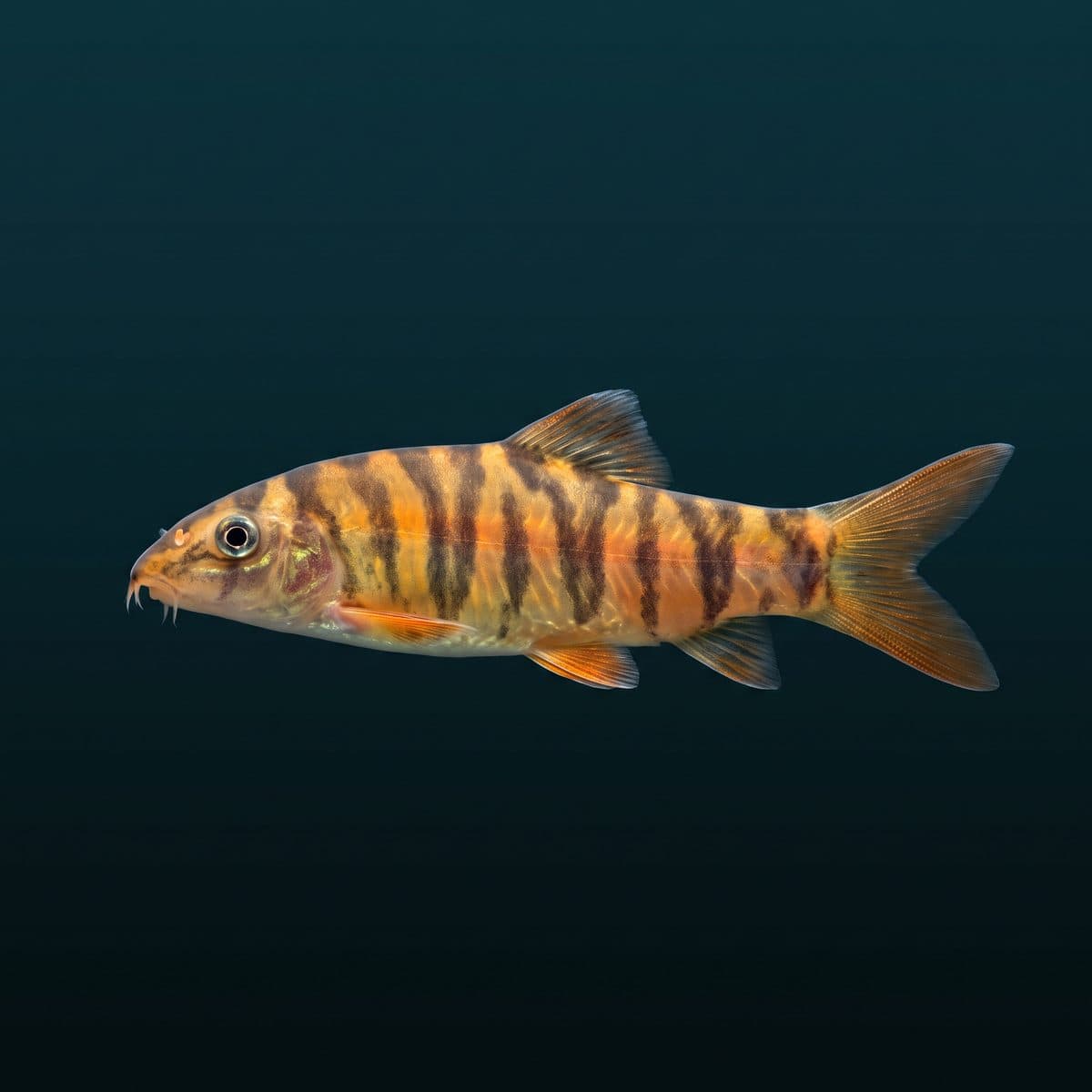
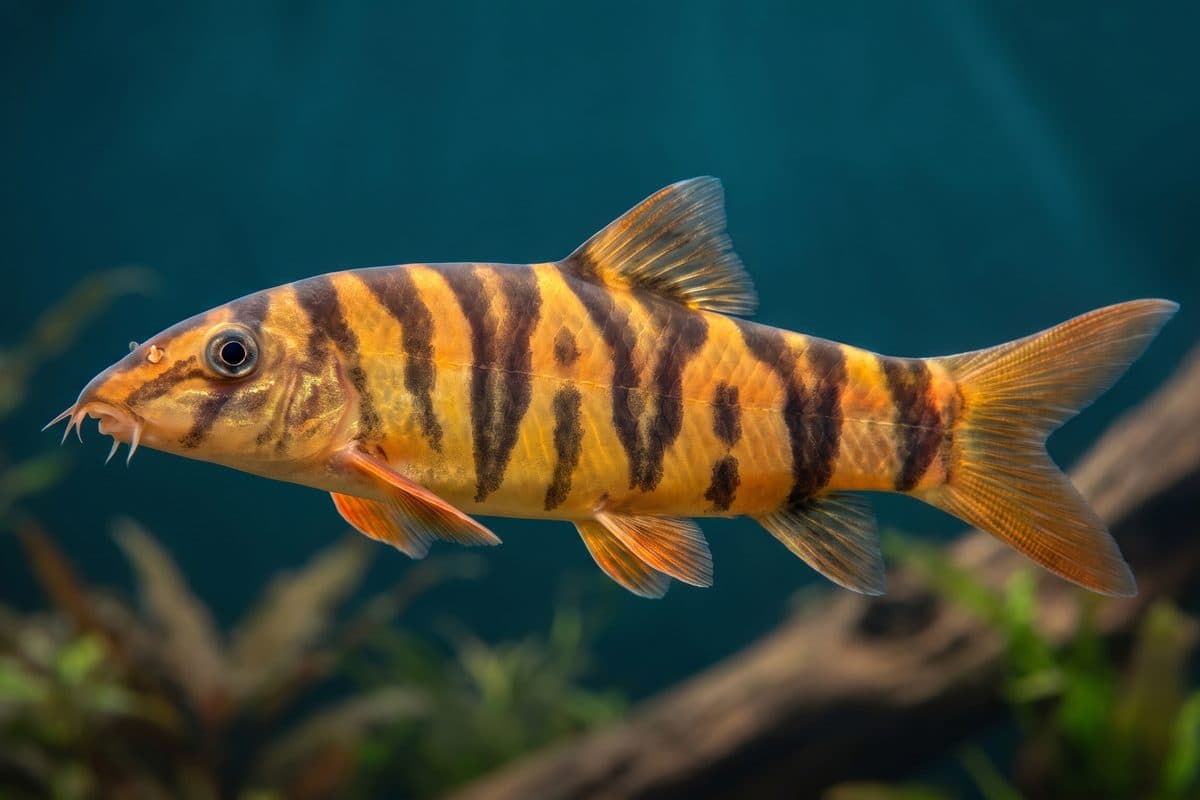
The Tiger Loach is a handsome fish with a distinctive colour pattern:
- Body colour: Golden to pale bronze base.
- Pattern: Bold dark brown-to-black vertical bars that extend from the dorsal surface down the flanks — the "tiger stripes." The bars are typically broader than the interspaces, creating a high-contrast pattern.
- Body shape: Laterally compressed, torpedo-shaped — more streamlined than the Clown Loach.
- Sub-orbital spine: Like all botiid loaches, Tiger Loaches have a retractable spine below each eye. This spine is used defensively and can snag nets and injure handlers — use a container rather than a net when moving these fish.
The related Syncrossus beauforti (Beaufort's Loach) is sometimes sold as "Tiger Loach" as well. The two species are similar in care requirements but have slightly different patterning.
Tank Requirements
- Tank size: 75 gallons (284 L) minimum for a group of 5; 125+ gallons for a group of 8+.
- Substrate: Fine sand is essential — Tiger Loaches dig and sift substrate when foraging, and coarse gravel can injure their sensitive barbels.
- Hiding spots: Abundant caves, driftwood, PVC tubes, and dense planting. Each fish needs its own hiding spot to establish territory — insufficient hiding places increase aggression.
- Current: Moderate to strong. Tiger Loaches come from flowing rivers and streams and appreciate current from a powerhead or canister spray bar.
- Lighting: Moderate to subdued — these fish are most active in lower light conditions.
Water Parameters
- Temperature: 77–86 °F (25–30 °C) — warmer than most community tanks. This is one of the most important parameters to get right.
- pH: 6.0–7.5 (slightly acidic preferred).
- GH: 5–12 dGH.
- Ammonia/Nitrite: 0 ppm — loaches are sensitive to water quality.
- Nitrate: Below 20 ppm.
Tiger Loaches are highly sensitive to medication — particularly copper-based treatments and formalin. Avoid these in tanks containing loaches. Use half-dose protocols if treatment is absolutely necessary, and always have a plan B (separate hospital tank).
Diet & Feeding
- Staple: Sinking pellets and wafers (Hikari Sinking Wafers, Northfin Kelp Wafers, Bug Bites Bottom Feeder).
- Protein: Frozen bloodworms, brine shrimp, mysis shrimp — offered 3–4 times weekly.
- Snails: Tiger Loaches are excellent snail controllers. They crack and consume snails of all sizes with their powerful pharyngeal teeth.
- Vegetables: Blanched zucchini, cucumber, and spinach.
- Feeding time: Tiger Loaches are crepuscular (most active at dawn and dusk). Feeding in the evening, shortly before or after lights go off, often produces the best feeding response.
Behaviour & Social Structure
This is where Tiger Loaches differ most significantly from Clown Loaches. Tiger Loaches are:
- Territorial: Each fish establishes and defends a preferred hiding spot. Intrusions result in physical confrontations — usually chasing and clicking sounds (produced by grinding pharyngeal teeth).
- Hierarchical: Groups establish a pecking order. The dominant individual claims the best cave and has priority access to food.
- Semi-aggressive: They will chase, harass, and occasionally damage the fins of other bottom-dwelling fish that encroach on their territory.
Critical: Keep Tiger Loaches in groups of at least 5. In smaller numbers, the dominant fish focuses aggression on one or two subordinates, causing chronic stress and potential injury. In larger groups, aggression is distributed and no single individual bears the brunt.
Tank Mates
Choose tank mates that occupy different zones and can tolerate occasional aggression:
- Good options: Mid-to-upper water schooling fish (Giant Danios, Rainbowfish, Congo Tetras), robust medium cichlids (Severums, Keyhole Cichlids), and fast-swimming species that stay above the substrate zone.
- Avoid: Other bottom-dwellers (Corydoras, Plecos) in small tanks — they may be harassed. Small, slow fish that cannot escape pursuit. Other Syncrossus species (unless the tank is very large, 200+ gallons, with separate territories).
Natural Habitat & Origins
The Tiger Loach comes from the warm, fast-flowing rivers and forest streams of Southeast Asia — Sumatra, Borneo, the Malay Peninsula, and parts of Thailand. In the wild, Syncrossus hymenophysa lives over sand and gravel beds among submerged roots, leaf litter, and rock, in soft, slightly acidic water that stays warm year-round. These are clear, oxygen-rich waters with real current, and the fish spend their days foraging along the bottom, sifting sand and probing crevices for insect larvae, worms, and small crustaceans.
Two things about that habitat matter for your tank. First, the current and oxygen: these loaches evolved in moving water and do best with brisk flow and high dissolved oxygen, which is why a powerhead or spray bar isn't a luxury here — it's part of keeping them healthy. Second, the temperature: their native rivers run warm, 26–30 °C, which is why Tiger Loaches want warmer water than a typical community tank, a point keepers routinely get wrong.
They're also seasonal migrators in the wild, moving into flooded forest and tributaries to spawn during the monsoon. That migratory, current-loving nature is part of why they're so active and restless in captivity, and why cramped tanks bring out the worst of their temperament. Give them room to cruise and a strong current to swim against, and you'll see far more natural, settled behaviour.
Bringing Tiger Loaches Home
The first few weeks set the tone with this species, so slow down at the start. Tiger Loaches ship poorly and arrive stressed, so drip-acclimate over 45–60 minutes and get them into a quiet, dimly lit, fully cycled tank — ideally quarantine first. Don't add a lone loach or a pair to a bright, bare tank and expect it to settle; it'll hide, pale out, and pick fights when it does emerge.
Add the whole group at once if you can. Introducing loaches one at a time lets early arrivals establish territories and bully later ones. A group of five or more added together spreads aggression from day one and settles far faster. Have caves, tubes, and driftwood already in place so each fish can claim cover immediately rather than squabbling over it.
Expect some odd behaviour while they acclimate. New Tiger Loaches often rest on their sides (a normal loach quirk that alarms first-time keepers), hide for days, and click audibly as they sort out a pecking order. Feed lightly at first — a stressed loach that won't eat can waste quickly — and once you see them foraging confidently in the open and holding weight, you'll know they've settled in.
Health & Common Problems
Loaches carry a reputation for fragility, and while Tiger Loaches are tougher than tiny kuhli or dwarf species, they share the botiid weaknesses. Watch for these:
- Ich (white spot): Loaches are famously the first fish in a tank to show ich, and they have small, embedded scales that make them sensitive to standard medications. Treat with heat (raise to 30 °C over 48 hours) and a loach-safe treatment at half dose. Never dose copper at full strength.
- Skinny disease: A wasting condition, often caused by internal parasites (flagellates or nematodes), where the fish eats but grows thin, with a pinched belly and hollow back. It's common in freshly imported, stressed loaches. Quarantine new arrivals and treat with a levamisole- or fenbendazole-based dewormer if you see it.
- Barbel and skin damage: Sharp gravel wears down their barbels, and the sub-orbital spine can catch on rough décor. Sand substrate and smooth hardscape prevent it.
- Medication sensitivity: Botiid loaches react badly to copper and formalin. Always use the lowest effective dose, increase aeration during treatment, and keep a close eye on breathing.
Prevention is straightforward: quarantine everything new for 3–4 weeks, keep nitrate under 20 ppm, hold the temperature in their warm comfort zone, and feed a varied diet. A well-kept group in a mature tank is genuinely hardy and long-lived.
Breeding
Home breeding of Tiger Loaches is, realistically, off the table — it essentially doesn't happen in aquariums. Like most botiid loaches, they're seasonal migratory spawners that need environmental triggers (rising water, changing flow and chemistry with the monsoon) that a tank can't reproduce. The commercial fish you buy are either wild-caught or, increasingly, farm-bred in Southeast Asia using hormone induction on ponded broodstock.
That has a practical knock-on for keepers: because the trade relies on collection and specialist farming, availability and size can be inconsistent, and freshly imported fish often arrive underweight and parasitised (see skinny disease above). Sexing is difficult too — mature females tend to be rounder and deeper-bodied when in condition, but there's no reliable external difference outside spawning season.
If you want the reward of watching loach social behaviour develop, put your energy into a good-sized group rather than breeding ambitions. A stable group of six or more, given years in a well-maintained tank, will show far more interesting behaviour — hierarchy, play, communal resting piles, and the characteristic clicking — than any breeding project is likely to deliver.
Is the Tiger Loach Right for You?
The Tiger Loach is a stunning, characterful fish, but it asks more of a keeper than its lookalike the Clown Loach does. Be honest about whether it fits your setup before you buy.
It's a good choice if you:
- Can provide a 75+ gallon tank with sand, strong flow, and plenty of cover.
- Are willing to keep a group of at least five to manage aggression.
- Run a warm tank (77–86 °F) and can keep tank mates that suit those temperatures.
- Want an active, intelligent bottom-dweller and don't mind a semi-aggressive streak.
Think twice if you:
- Keep a peaceful community of small, slow, or long-finned fish.
- Only have room for one or two loaches — solo and pair setups bring out chronic bullying.
- Want a low-maintenance beginner fish; these need experienced husbandry and stable, pristine water.
Given the right tank and a proper group, Tiger Loaches reward you with a decade or more of dynamic, endlessly watchable behaviour. Given the wrong one, they become stressed, aggressive, and prone to disease. The species isn't difficult so much as demanding — it simply needs you to meet it on its terms.