Overview
Barbs are a diverse group of cyprinid fish native to Asia and Africa. They are among the most active, colourful, and entertaining freshwater aquarium fish. Barbs range from the 1.5-inch Cherry Barb to the 6-inch Denison Barb, but all share key traits: schooling behaviour, omnivorous appetites, and high energy levels. When kept properly in large enough groups, barbs are hardy, long-lived community fish.
Popular Species
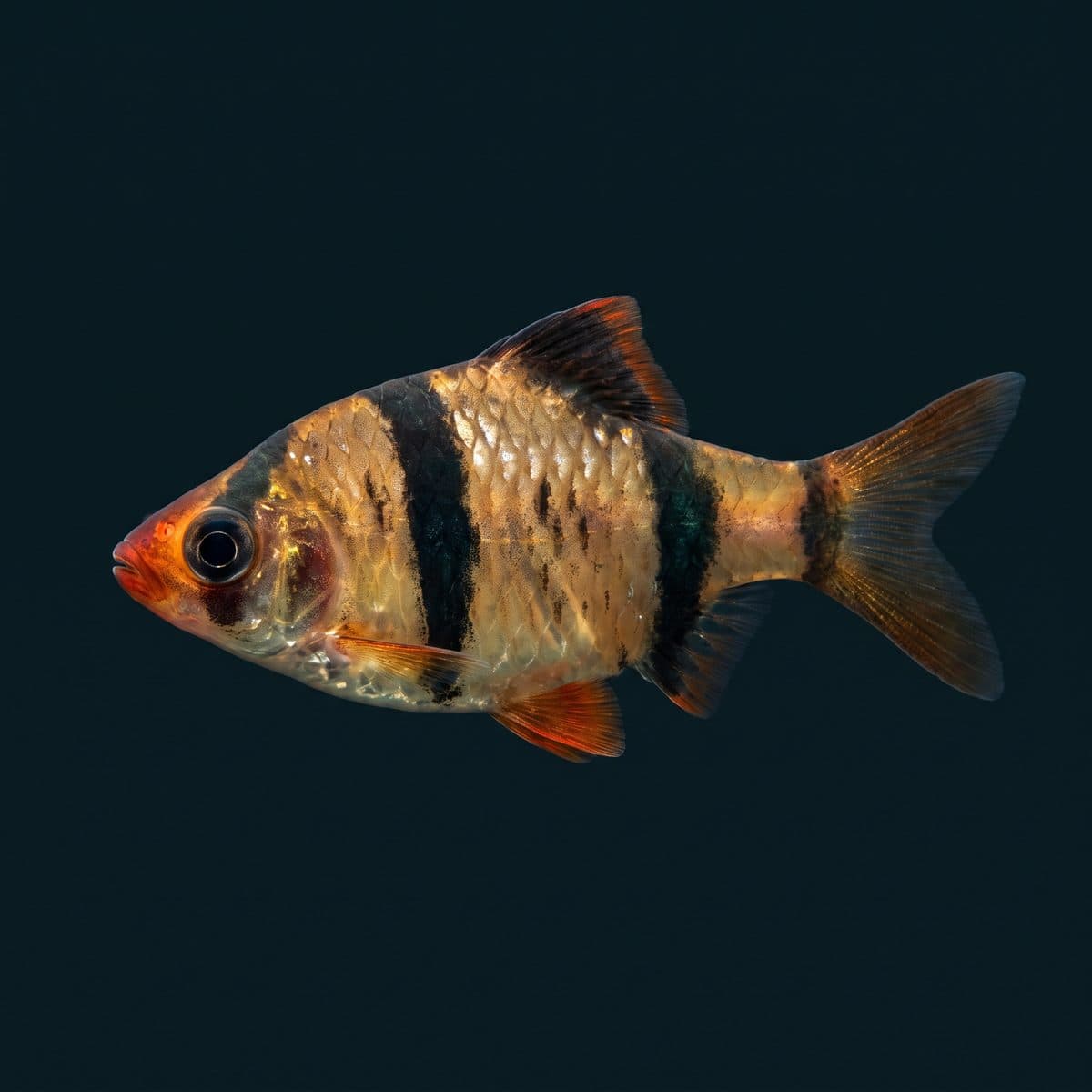
- Tiger Barb (Puntigrus tetrazona) — 3 in, 30+ gallons, notorious fin-nipper if kept in small groups
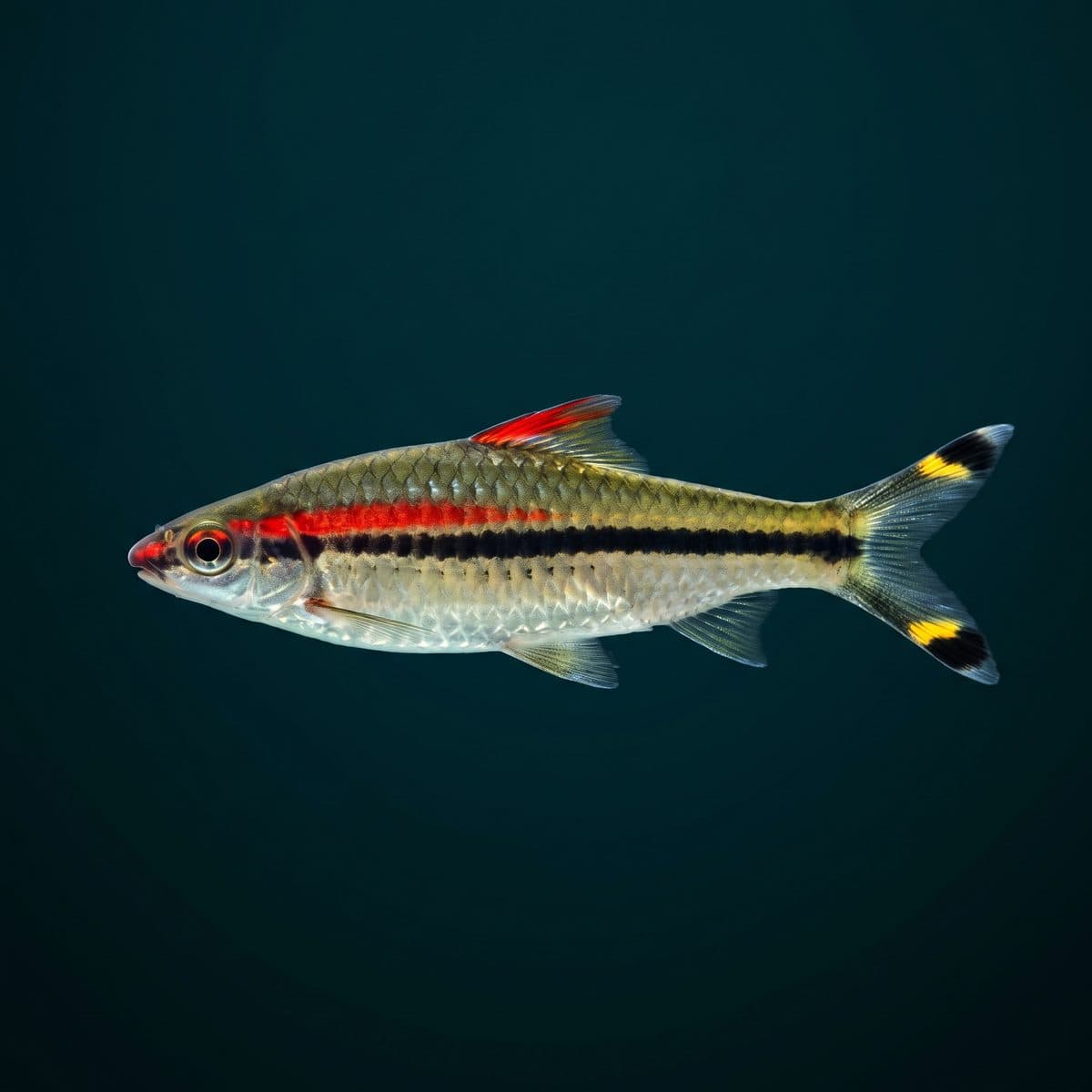
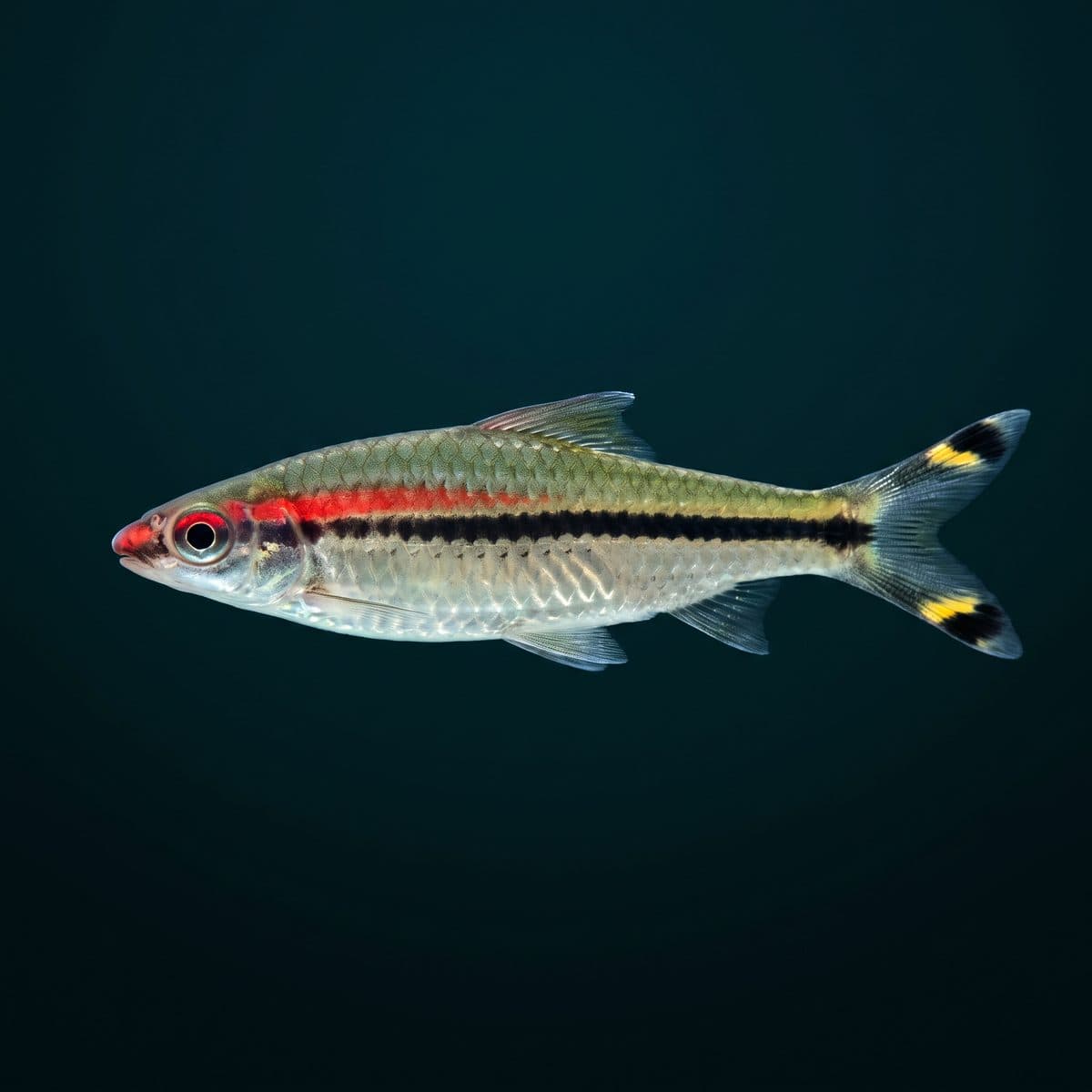
- Denison Barb / Roseline Shark (Sahyadria denisonii) — 6 in, 55+ gallons, stunning red stripe, IUCN Endangered
- Cherry Barb (Puntius titteya) — 2 in, 20+ gallons, peaceful and beginner-friendly
- Rosy Barb (Pethia conchonius) — 4 in, 30+ gallons, cold-tolerant, males develop pink-red colouration
- Odessa Barb (Pethia padamya) — 3 in, 30+ gallons, males show vivid red band
Schooling Requirements
All barbs must be kept in groups of 6 or more — ideally 8–12 for Tiger Barbs. Small groups amplify hierarchical aggression, causing fin-nipping of both conspecifics and tank mates. A proper school establishes a clear pecking order and directs energy into within-group dynamics rather than harassing other species.
Tank Setup
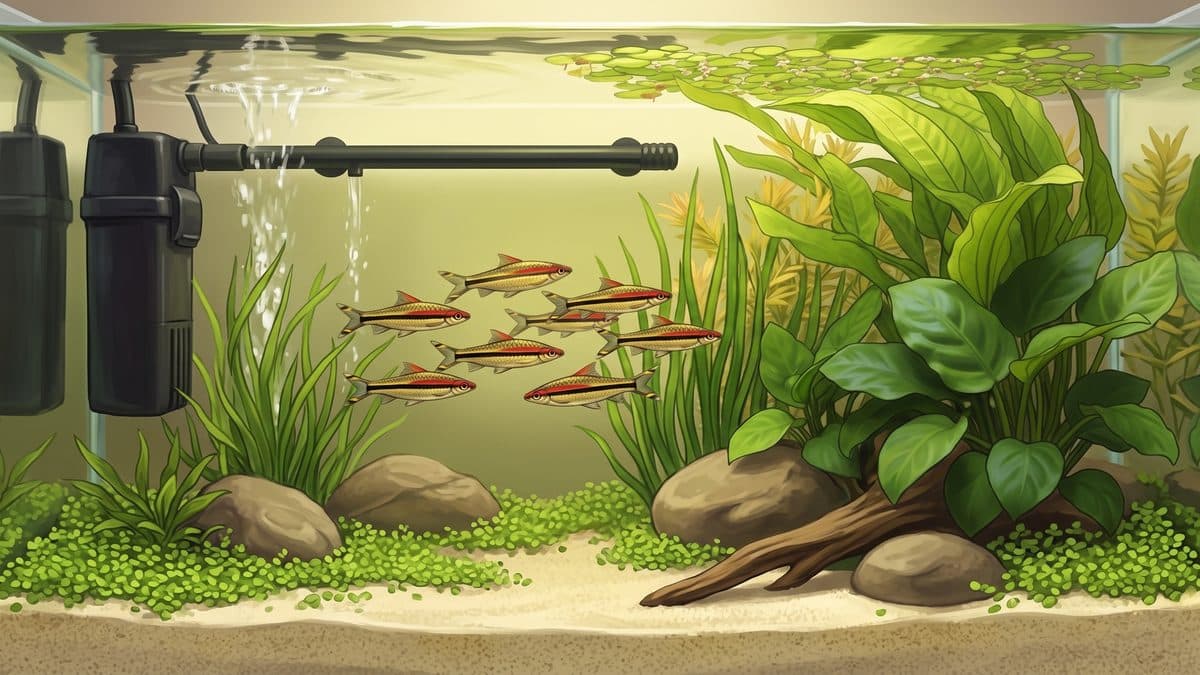
Barbs are constant horizontal swimmers. Prioritise tank length over height — a standard 4-foot tank (55 gallons) is ideal for most species. Provide moderate to strong water flow via a powerhead or filter return — barbs are riverine fish that enjoy swimming against current. Plant the sides and back, leaving open swimming space in the centre and front.
Water Parameters
- Temperature: 72–79 °F (most species; Rosy Barbs tolerate 64–72 °F)
- pH: 6.0–7.5
- GH: 4–15 dGH
- Ammonia/Nitrite: 0 ppm
- Nitrate: Below 20 ppm
Feeding
Barbs are unfussy omnivores. A staple of quality flake or micro-pellet supplemented with frozen bloodworms, brine shrimp, daphnia, and blanched vegetables covers all nutritional needs. Feed 2–3 times daily in small amounts. Barbs feed aggressively and eat quickly — ensure slower tank mates have access to food.
Preventing Fin-Nipping
Tiger Barbs in particular are notorious fin-nippers. Prevention strategies:
- Keep groups of 8+ Tiger Barbs — larger schools dramatically reduce outward aggression
- Avoid slow-moving, long-finned tank mates (angelfish, bettas, gouramis)
- Provide adequate tank space — overcrowding increases stress and nipping
- Maintain water flow — active swimming reduces boredom-based nipping
Tank Mates
Compatible tank mates include Corydoras, Plecos, Rainbowfish, larger Tetras (Congo, Serpae), Loaches, and other barb species. Avoid long-finned fish (bettas, fancy guppies, angelfish), very small fish (neon tetras with Tiger Barbs), and slow-moving species. Cherry Barbs are the most community-friendly barb and can be kept with virtually any peaceful species.
Building a Planted Barb Tank
Barbs look their best over a dark substrate in a planted tank — a green backdrop makes a school of Tigers or Odessas absolutely glow. The catch: barbs nibble. Soft, fine-leaved stem plants get grazed down, and Rosy Barbs in particular treat delicate greenery as a salad bar.
Stick to plants that shrug off the attention and enjoy the same moderate flow the fish do:
- Anubias and Java Fern — tough, bitter leaves nothing bothers; attach them to wood or rock
- Cryptocoryne — reliable mid-ground bushes once established
- Vallisneria — tall background ribbons that sway in the current
- Amazon Sword — a robust centrepiece for 55-gallon-plus tanks
Aquascape with the school in mind: plant the back and sides densely, keep the front and centre open as a swimming lane, and angle the filter return to run a gentle current down that lane. You'll see noticeably tighter, more active schooling when the fish have moving water to work against.
Breeding Barbs
Most barbs are enthusiastic egg-scatterers, which makes them a classic first breeding project. Cherry and Rosy Barbs are the most forgiving; Tiger Barbs are prolific once conditioned. The basic recipe:
- Condition the adults for 1–2 weeks on frozen bloodworms, daphnia, and live blackworms. Females fill out visibly with eggs.
- Set up a spawning tank: 10–20 gallons, a sponge filter, and a layer of marbles or a mesh grate on the bottom — barbs eat their own eggs the moment they're laid, and the grate lets eggs fall out of reach.
- Add a pair or trio in the evening. Spawning usually kicks off at first light: frantic chasing, then hundreds of eggs scattered across the bottom. A well-conditioned Tiger Barb female can drop 200–300.
- Remove the adults immediately afterwards and keep the tank dimly lit.
Eggs hatch in 24–48 hours at 78 °F, and fry swim free about three days later. Start them on infusoria or liquid fry food, then baby brine shrimp after a few days. Growth is quick — you'll have recognisable miniature barbs within a month.
Common Health Problems
Barbs are genuinely hardy, and most losses trace back to water quality rather than anything exotic. The short list worth knowing:
- Ich: The usual suspect after temperature swings or skipped quarantine — white salt-grain spots, flashing, clamped fins. Treat with heat (86 °F for 10 days) or a standard ich medication; barbs tolerate full doses.
- Columnaris: Cottony patches around the mouth and saddle-shaped marks on the back, typically in warm, overcrowded tanks. It moves fast — treat with kanamycin plus nitrofurazone and drop the temperature a few degrees.
- Wasting in wild-caught fish: Denison Barbs especially may eat well yet slowly thin out — usually internal parasites. A course of levamisole-medicated food resolves most cases.
- Sudden deaths in a new tank: Almost always ammonia or nitrite, not disease. Barbs are active, high-metabolism fish that show poisoning quickly — test the water before you medicate anything.
A 2–3 week quarantine for new arrivals stops nearly all of this from ever reaching your display.
Species Quick Reference
Matching the barb to your tank up front avoids most problems later:
| Species | Adult Size | Group | Minimum Tank | Temperature |
|---|---|---|---|---|
| Cherry Barb | 2 in | 6+ | 20 gal | 73–79 °F |
| Tiger Barb | 3 in | 8+ | 30 gal | 74–79 °F |
| Odessa Barb | 3 in | 8+ | 30 gal | 70–79 °F |
| Rosy Barb | 4–6 in | 6+ | 30–40 gal | 64–72 °F |
| Denison Barb | 6 in | 6+ | 55 gal | 65–77 °F |
Two pairings people routinely get wrong: Rosy Barbs are subtropical and shouldn't live long-term in a heated 78 °F community, and Denison Barbs want cooler, high-oxygen water with genuine current — they're river fish first, showpieces second.