Overview
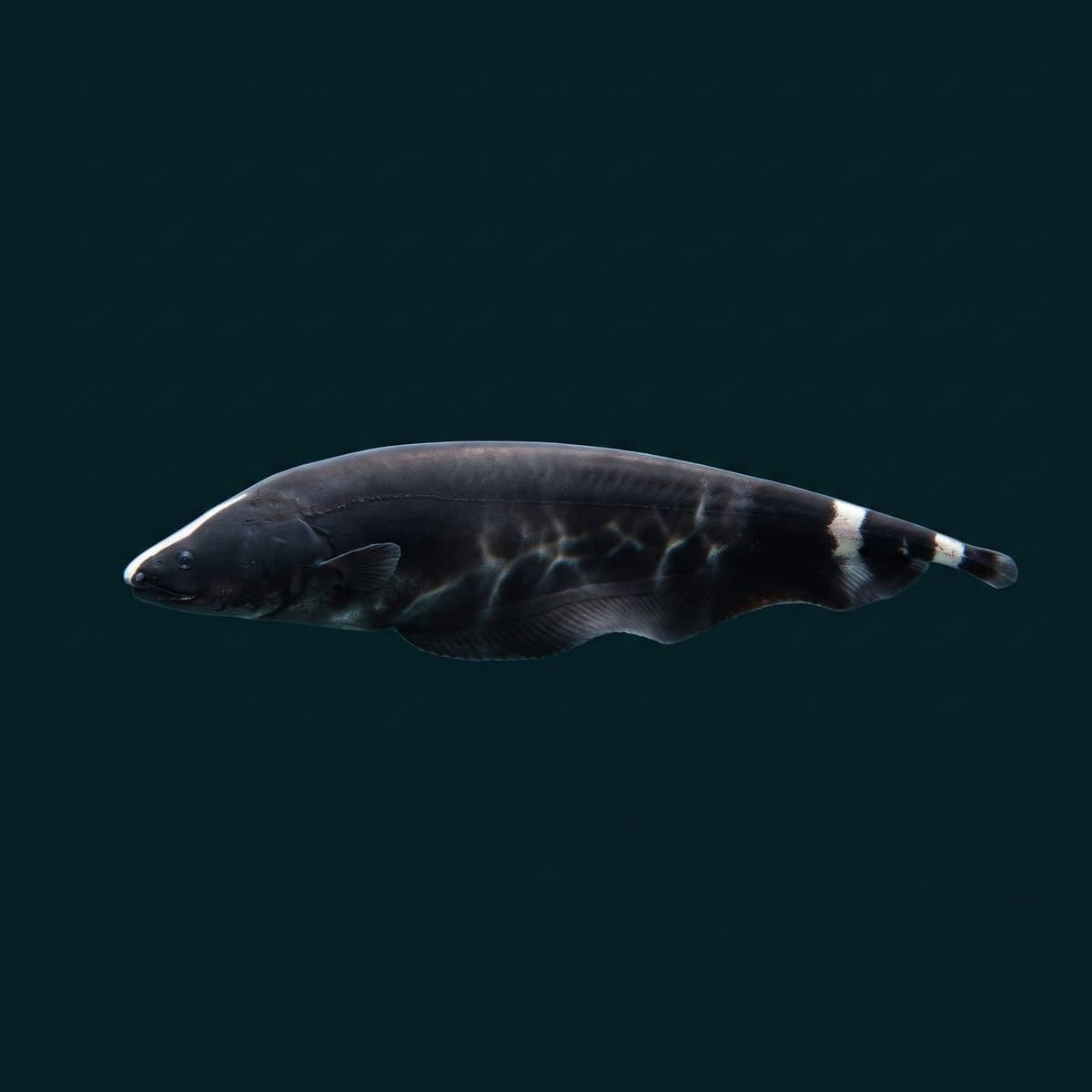
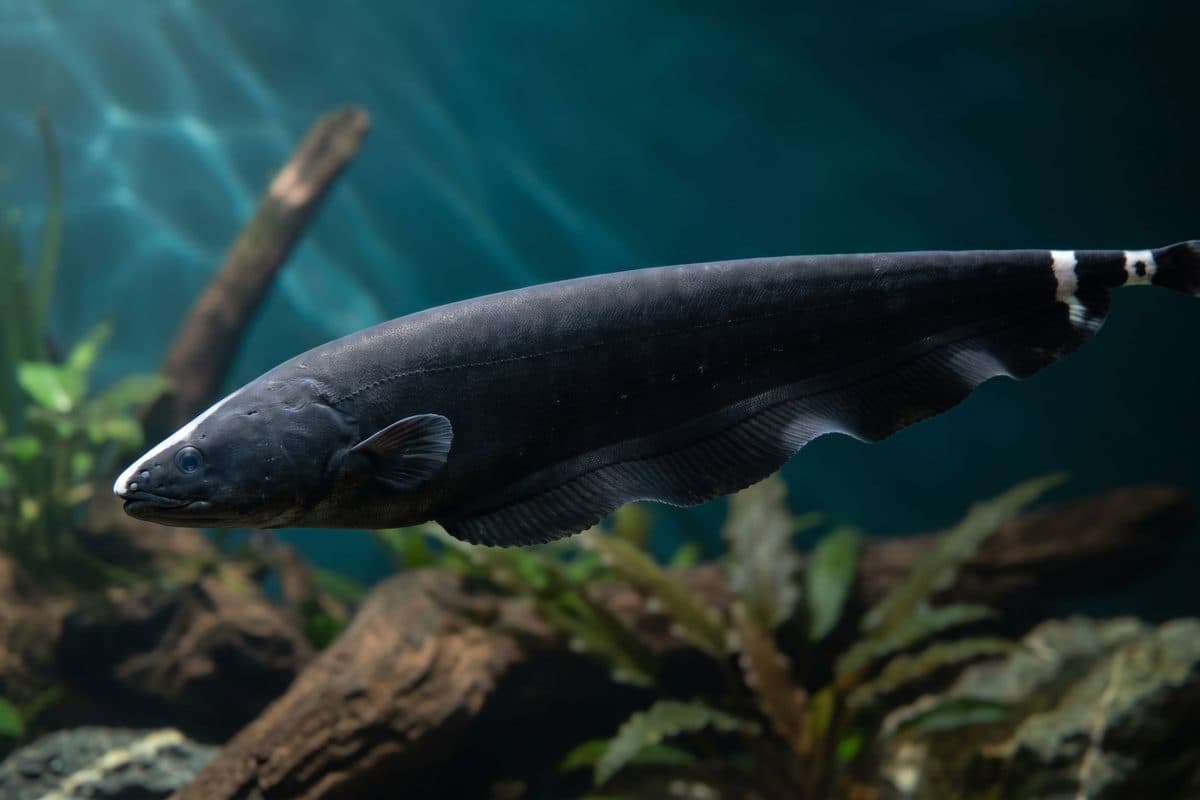
The Black Ghost Knife Fish has captivated aquarists since its introduction to the hobby in the mid-20th century. Its unusual morphology — a blade-shaped body propelled by an undulating anal fin that allows forward and reverse swimming with equal grace — combined with its jet-black colouration and white-tipped tail, creates an appearance unlike anything else in the freshwater world. Add to this its ability to generate and sense electrical fields, and you have a fish that genuinely feels like something from another era of evolution.
The species' common name derives from South American folklore — indigenous peoples of the Amazon believed the fish was inhabited by the ghosts of the deceased, which explained its nocturnal habits and ghostly, silent movement through the dark waters.
Electrolocation
The Black Ghost Knife Fish's most remarkable feature is its electrogenic and electrosensory system. A specialised organ in the tail generates a weak electrical field (too weak to be felt by humans or other fish) that surrounds the fish's body. Thousands of electroreceptors distributed across the skin detect distortions in this field caused by nearby objects — rocks, plants, prey items, and other fish. This system functions as a biological "radar" that allows the fish to navigate, hunt, and communicate in complete darkness.
The practical implications for aquarists:
- Metal sensitivity: Some keepers report that metal tank equipment (clips, screws, thermometer guards) can create localised electrical interference that confuses or stresses the fish. Use plastic or rubber alternatives where possible.
- Avoid keeping two together: Two Black Ghost Knife Fish in the same tank generate overlapping electrical fields that interfere with each other's electrolocation. This causes chronic stress and territorial aggression. Keep only one per tank unless the tank exceeds 200 gallons.
- Clear tube enrichment: Providing a clear plastic or glass tube as a hiding spot allows the fish to use its electrosensory system to "see" the environment while feeling secure. Many keepers use transparent PVC or acrylic tubes as the primary hiding spot.
Appearance
The Black Ghost Knife Fish's appearance is distinctive:
- Body shape: Blade-shaped — deep and laterally compressed, tapering to a point at the tail. The body profile looks like an elongated leaf or knife blade, hence the "knife fish" name.
- Colour: Jet black with two white bands on the tail. Some specimens develop a white blaze on the head as they mature.
- Fins: No dorsal, ventral, or caudal fins. Locomotion is entirely via the long, undulating anal fin that runs the length of the underside. This fin provides remarkably precise control, allowing the fish to swim forward, backward, hover, and rotate with equal ease.
- Size: Adults reach 45–50 cm (18–20 in) in captivity. Growth is moderate — expect 5–10 cm (2–4 in) per year.
Tank Requirements
- Tank size: 100 gallons (378 L) minimum for a single adult. While juveniles can temporarily occupy smaller tanks (55 gallons), they grow steadily and will need the full 100 gallons within 2–3 years.
- Lighting: Dim to moderate. Black Ghost Knife Fish are nocturnal and stressed by bright lighting. Use dimmable LEDs, floating plants to create shade, or moonlight/actinic modes for viewing.
- Hiding spots: Essential. Provide one or more tubes (PVC, acrylic, bamboo) long enough for the fish to fully conceal itself, plus driftwood caves and dense planting along the back and sides. The fish will spend most daylight hours hiding.
- Substrate: Fine sand — the fish may rest on or partially bury itself in substrate during the day.
- Current: Moderate — a gentle but consistent flow from the filter return is sufficient.
Water Parameters
- Temperature: 75–82 °F (24–28 °C).
- pH: 6.0–7.5 (slightly acidic preferred).
- GH: 5–15 dGH.
- Ammonia/Nitrite: 0 ppm — Black Ghost Knife Fish are scaleless and more sensitive to water quality issues than scaled fish.
- Nitrate: Below 20 ppm.
Critical: As a scaleless fish, the Black Ghost Knife is highly sensitive to copper-based medications, formalin, and many common aquarium treatments. Never use copper in a tank containing this species. If treatment is necessary, use scaleless-fish-safe alternatives at reduced dosage in a hospital tank.
Diet & Feeding
Black Ghost Knife Fish are carnivores that can be finicky eaters, especially as juveniles:
- Frozen foods: Bloodworms (often the first food accepted), brine shrimp, mysis shrimp, and chopped shrimp/prawn. These should form the bulk of the diet.
- Sinking pellets: High-quality sinking carnivore pellets (Hikari Carnivore, Northfin Carnivore) — many specimens can be trained to accept these, which improves nutritional balance.
- Live foods: Blackworms, earthworms, and small feeder shrimp. Useful for enticing reluctant feeders.
- Feeding time: After lights out. These nocturnal fish feed most readily in darkness. Target-feeding near their hiding spot using a feeding syringe or pipette is the most reliable method.
Behaviour
Black Ghost Knife Fish are nocturnal and shy during the day, hiding in their tubes or caves and emerging after dark to explore and hunt. As they settle into an established tank, they may become more visible during dim daytime conditions, especially when they learn to associate their keeper's presence with food.
They are remarkably intelligent for a fish — capable of recognising individual human faces (distinguishing their primary keeper from strangers), learning feeding routines, and navigating complex environments with their electrosensory system. Many keepers report their Black Ghost Knife developing "pet-like" behaviour: approaching the glass when they see their owner, accepting hand-feeding, and exploring items placed in the tank.
Tank Mates
Compatible tank mates must meet two criteria: peaceful temperament and appropriate size.
- Good options: Large, peaceful community fish — Angelfish, Discus, large Tetras (Congo, Emperor), Corydoras catfish, peaceful medium cichlids (Severums, Geophagus), and Bristlenose Plecos.
- Avoid: Aggressive species (large cichlids, aggressive barbs), other electric fish (other knife fish, electric catfish), very small fish that may be eaten at night, and any species known for fin-nipping.
Natural Habitat & Origins
The Black Ghost Knife Fish comes from the freshwater rivers and streams of South America, ranging widely across the Amazon basin and into the Paraná and other drainages from Venezuela down to Paraguay. Apteronotus albifrons lives in slow to moderate stretches of warm, soft, often tannin-stained water, sheltering among submerged roots, leaf litter, and undercut banks during the day and coming out to hunt after dark.
These are creatures of dim, structured, low-visibility water — which is exactly why they've evolved to navigate by electricity rather than sight. In the tea-coloured, shaded rivers they call home, eyes are of limited use, so the fish "sees" its world through the weak electrical field described earlier. That background is the single most useful thing to understand about them: nearly every care recommendation, from subdued lighting to plentiful cover to soft, clean water, is really just an effort to recreate a slice of that shaded Amazonian stream.
Their wild diet reflects the habitat too — they root through substrate and leaf litter at night for insect larvae, small crustaceans, and worms, using electrolocation to pinpoint hidden prey. Recreating that environment, with driftwood tangles, dim light, gentle flow, and a fine sandy bed to forage over, is what turns a nervous, permanently hidden knife fish into the confident, interactive pet this species can become.
Health & Common Problems
The Black Ghost Knife Fish is a scaleless fish, and that single fact drives most of its health considerations. Without protective scales, it's more sensitive to water quality and to medications than scaled fish, so caution is the watchword:
- Ich (white spot): Scaleless fish show ich readily and suffer from it quickly. Treat gently — use heat and half-dose medication, and never use full-strength copper, which is dangerous to this species.
- Medication sensitivity: Copper, formalin, and many standard treatments can poison a Black Ghost. Always choose scaleless-safe products, dose conservatively, and treat in a hospital tank where you can monitor closely.
- Skin and barbel damage: Sharp décor and rough handling scrape the delicate skin, opening the door to infection. Smooth hardscape, sand substrate, and careful handling prevent it.
- Poor water quality: As a large, somewhat sensitive fish, it needs pristine water. Ammonia and nitrite must be zero and nitrate kept low, or you'll see stress, faded response, and secondary infections.
The prevention story is simple and effective: quarantine new fish (so you're not forced to medicate a scaleless fish in the main tank), keep the water clean and stable, avoid copper entirely, and use only smooth décor. Get that right and a Black Ghost Knife Fish is a hardy, long-lived fish that can reach 10–15 years.
Breeding
Breeding Black Ghost Knife Fish in a home aquarium is genuinely difficult and rarely achieved, so it's worth setting expectations honestly. Most of the fish in the trade are farmed in Southeast Asia (notably Indonesia) using large ponds and, in many cases, hormone induction — conditions a living-room tank can't easily replicate.
The main obstacles at home are space and the fish's own territoriality. A serious breeding attempt needs a very large, mature tank, since two Black Ghosts housed together tend to wage electrical and physical war over their overlapping fields unless there's room for entirely separate territories. On top of that, the environmental triggers thought to prompt spawning — subtle shifts in water chemistry, temperature, and flow that mimic the seasonal rains of the Amazon — are hard to reproduce deliberately.
The handful of hobbyist successes on record have involved big, heavily planted tanks with numerous caves and tubes, soft acidic water, and simulated rainy-season conditions, with eggs typically deposited in sheltered spots. It's a project for a dedicated, experienced keeper with space to spare rather than a realistic goal for most owners. For nearly everyone, the reward with this species lies not in breeding it but in coaxing a single fish into the confident, hand-feeding, keeper-recognising pet it can become over years.
Is a Black Ghost Knife Right for You?
The Black Ghost Knife Fish is one of the most fascinating freshwater fish in the hobby, but it's a specialised animal with specific needs and a big adult size. Here's the honest assessment.
It's a good fit if you:
- Can provide a 100+ gallon tank with dim lighting, sand, and plenty of tubes and caves.
- Are happy to keep just one (they don't tolerate their own kind except in very large tanks).
- Will maintain pristine, stable water and avoid copper medications for this scaleless fish.
- Enjoy a shy, nocturnal fish that slowly becomes a genuinely interactive, intelligent pet.
Reconsider if you:
- Have a small tank or want an always-visible, day-active fish.
- Keep tiny fish that could be eaten at night, or aggressive or fin-nipping species.
- Aren't prepared to accommodate a 50 cm adult with a decade-plus lifespan.
Given the right dim, spacious, well-filtered home and a little patience, a Black Ghost Knife Fish rewards you like few other fish — learning your face, taking food from your hand, and gliding backwards and forwards on that hypnotic ribbon fin. It's not a beginner's community fish, but for a keeper ready to meet it halfway, it's unforgettable.