Overview
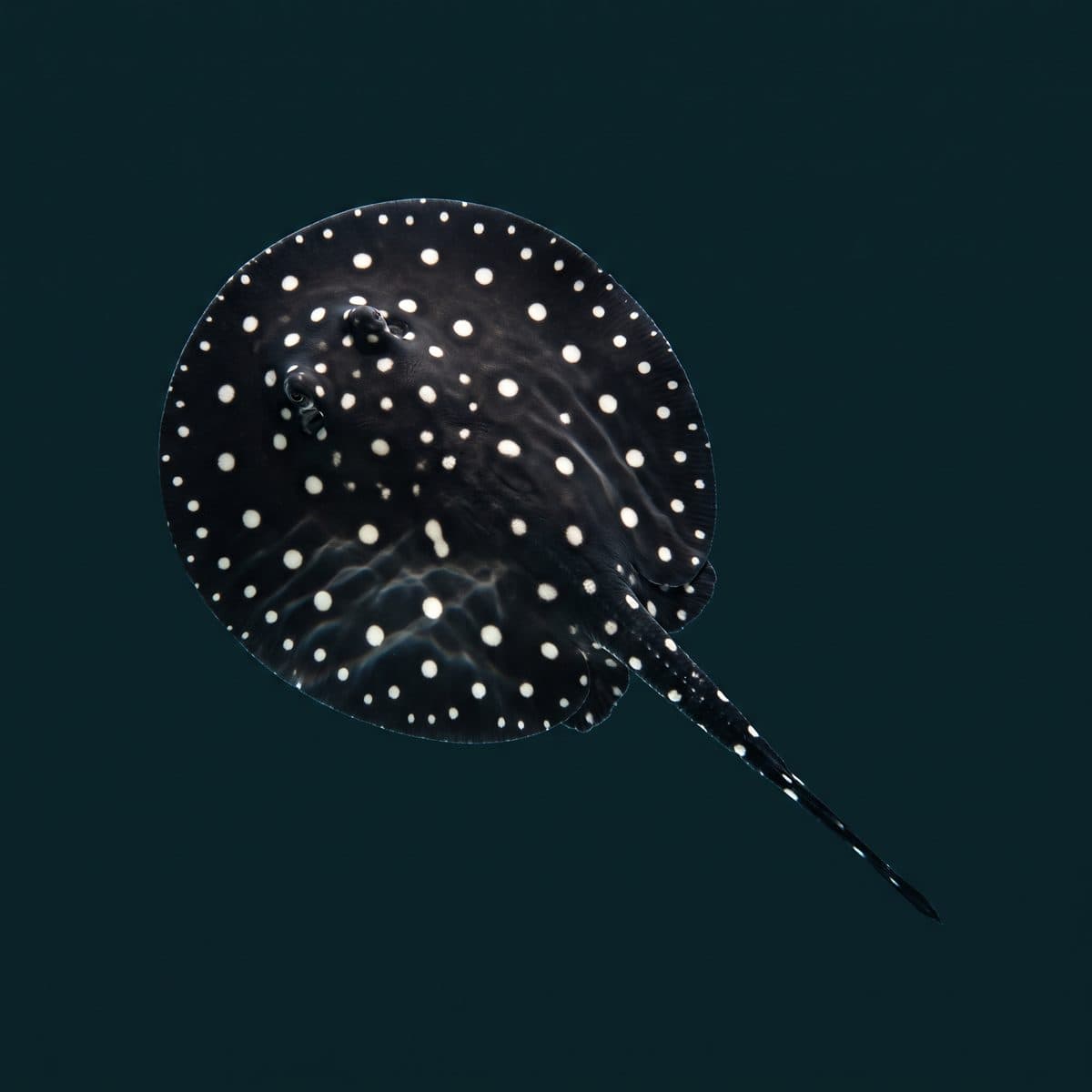
Freshwater stingrays of the family Potamotrygonidae are the only elasmobranchs (cartilaginous fishes) to have completely adapted to freshwater environments. Unlike their marine relatives, potamotrygonids have lost the ability to osmoregulate in saltwater and are restricted entirely to the river systems of South America. Potamotrygon motoro is the most widespread member of the family, occurring across the Amazon, Orinoco, Paraná, and Paraguay drainages — a range that spans virtually the entire continent east of the Andes.
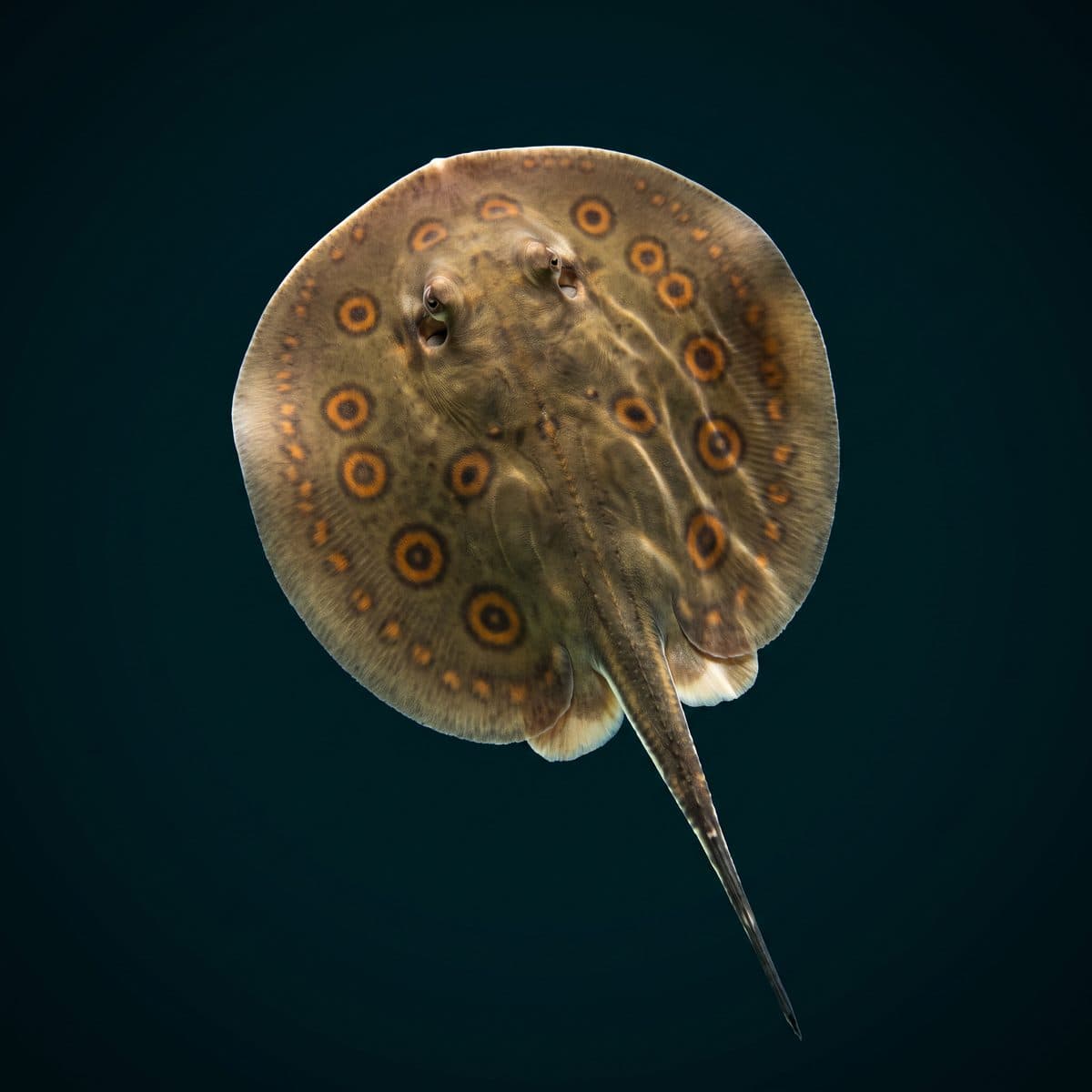
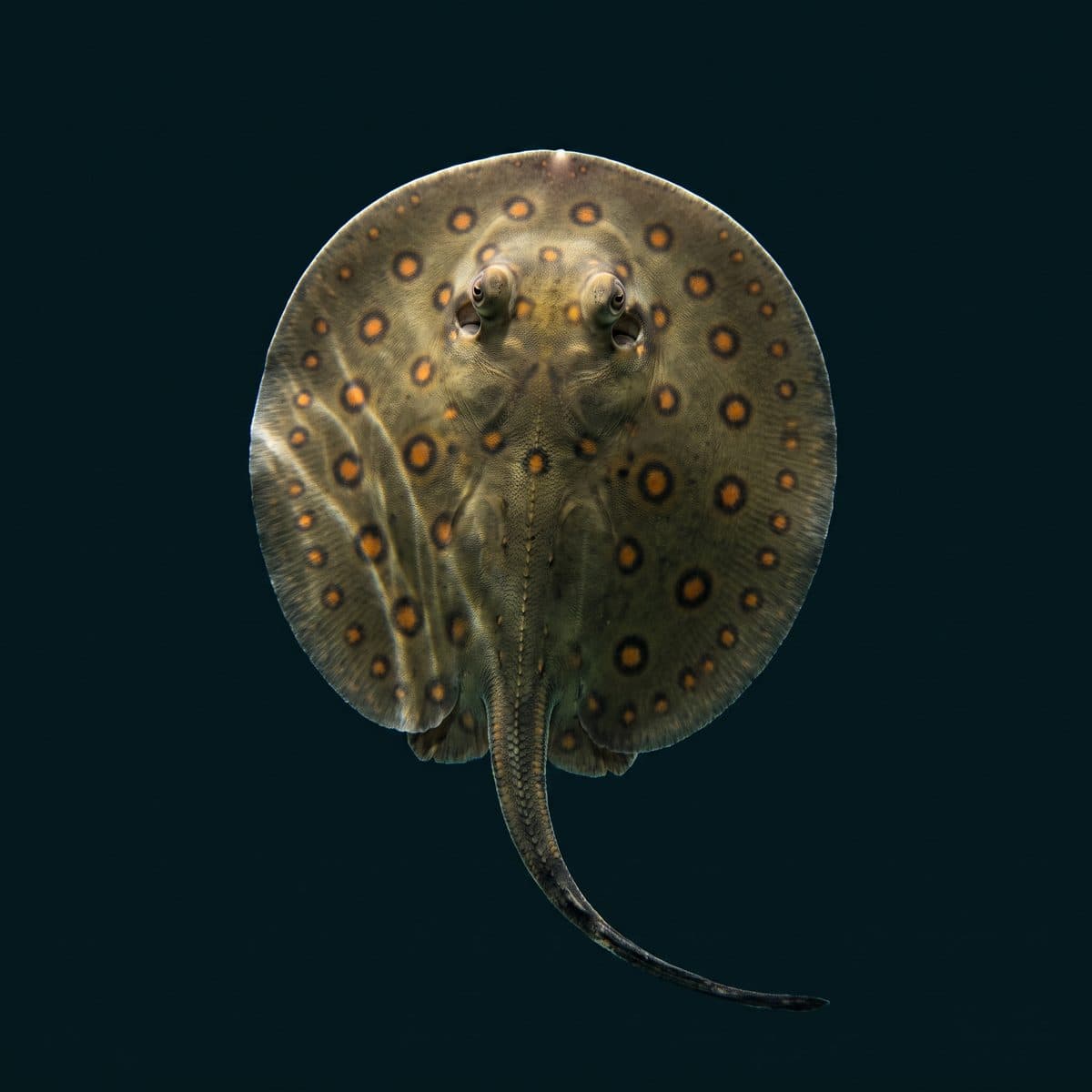
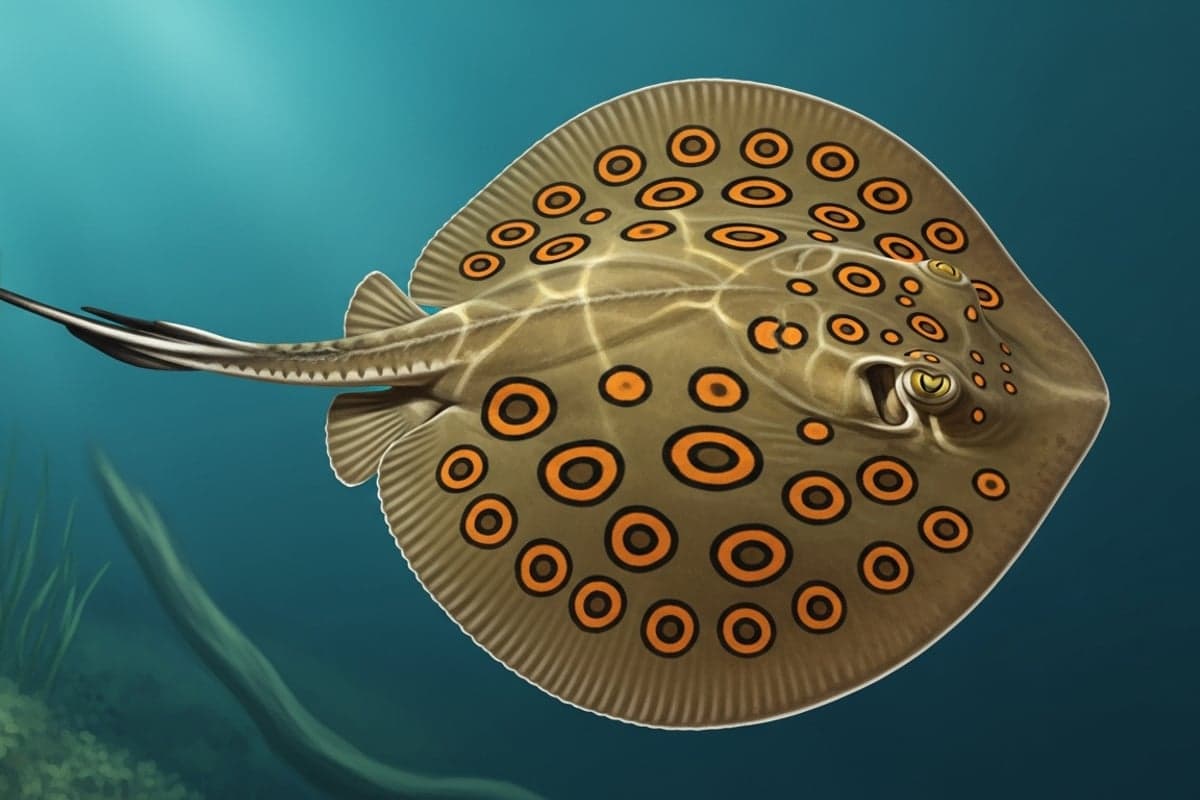
The species' appeal to aquarists is immediately apparent: a flattened, near-circular disc adorned with bold orange or gold ocelli (eye-spots) against a dark background, a graceful undulating swimming motion, and an interactive personality that makes it one of the most engaging bottom-dwelling species available. Motoro Stingrays learn to recognise their keeper, rise to the surface to accept hand-fed food (though caution is warranted given the venomous spine), and display problem-solving behaviour that surprises keepers accustomed to bony fish.
At The Fish Collection, we have specialised in potamotrygonid species since 2011 and maintain breeding groups of P. motoro, P. leopoldi (Polka Dot/Xingu Stingray), and the hybrid varieties that have become increasingly popular in Asian markets. We consider freshwater stingrays the pinnacle of advanced freshwater fishkeeping — demanding, expensive, and occasionally hazardous, but offering a connection with one of evolution's most elegant body plans. For related large-predator species, see our stingray category page.
Natural Habitat
Potamotrygon motoro inhabits a diverse range of freshwater environments across its enormous range: sandy river bottoms, flooded forest floors, lake margins, and the shallow nearshore zones of major tributaries. They show a strong preference for sandy or fine-mud substrates where they can partially bury themselves — both as a hunting strategy (ambushing benthic invertebrates) and as predator avoidance. In the Amazon basin proper, they favour the slower backwaters and flooded margins rather than the main channel, where current speeds exceed their comfortable range.
Water chemistry across the species' range is variable: pH from 5.5 (blackwater tributaries like the Rio Negro) to 7.5 (whitewater drainages), temperatures from 24 °C (southern Paraná in winter) to 32 °C (equatorial Amazon), and extremely low mineral content (GH 1–5 in most locations). The consistent thread is soft, warm, slightly acidic water with a fine substrate — conditions that must be approximated in captivity for the species to thrive.
In the wild, P. motoro is a benthic predator that feeds primarily on insect larvae (especially chironomids), crustaceans (shrimp, crabs), molluscs, and small fish. They locate prey using a combination of electroreception (via ampullae of Lorenzini, the same sensory system used by sharks), olfaction, and mechanosensory lateral line detection. Feeding typically occurs at dawn and dusk when prey activity peaks.
Tank Requirements
Tank Dimensions & Layout
The critical dimension for stingray keeping is footprint, not volume. A P. motoro with a 40 cm disc width needs a tank floor area of at least 150 × 60 cm (60 × 24 inches) — and that is the absolute minimum for a single specimen. For a pair or small group, upgrade to a tank with a footprint of 200 × 75 cm (80 × 30 inches) or larger. In volumetric terms, this translates to a minimum of 180 gallons (680 litres) for a single ray, and 240–300 gallons for a pair. The tank need not be tall — 45–50 cm (18–20 inches) water depth is sufficient, as stingrays are strictly bottom-dwelling.
Wide, shallow tanks or custom-built "stingray tanks" with enlarged footprints are ideal. Standard tall aquaria (e.g., 120 × 40 × 60 cm) waste vertical space while providing insufficient floor area. If budget permits, a fibreglass or acrylic custom build with dimensions of 200 × 75 × 50 cm provides an excellent single-ray habitat.
The tank should have rounded internal corners wherever possible. Stingrays are powerful swimmers that cruise the perimeter constantly, and sharp 90-degree corners can cause disc-edge abrasions. Silicone bead the internal corners to create a gentle curve, or choose a tank with factory-rounded edges.
Filtration & Flow
Stingrays are extraordinarily sensitive to water quality — more so than virtually any other commonly kept freshwater species. Ammonia and nitrite must be at absolute zero at all times, and even moderate nitrate levels (>20 ppm) can trigger the lethal "death curl" condition. Target a turnover rate of 10–12× the tank volume per hour using a large sump system with robust biological media (ceramic rings, sintered glass, or K1 moving-bed). A canister filter alone is insufficient for the bioload of an adult stingray fed a high-protein diet.
Flow should be moderate and evenly distributed. Stingrays appreciate gentle current but should not be subjected to strong directional jets that pin them against the substrate. A manifold return distributing flow across the tank length is ideal. Excellent oxygenation is critical — use airstones, surface agitation, or a spray bar to maintain dissolved oxygen above 6 mg/L.
Perform 30–40% water changes twice weekly for stingray systems. Weekly changes are not frequent enough to manage the nitrate accumulation from a protein-rich diet and heavy bioload. Temperature- and pH-match all replacement water meticulously — stingrays are more sensitive to parameter shifts during water changes than most bony fish.
Substrate & Décor
Fine sand is mandatory — not optional, not "recommended," but a hard requirement. Stingrays spend much of their time partially buried in sand, and this burying behaviour is essential for both thermoregulation and psychological comfort. Play sand, pool-filter sand, or blasting sand (silica-free) at a depth of 5–8 cm is ideal. Never use gravel, crushed coral, or any substrate with sharp edges — the delicate ventral surface of the disc will be abraded, creating entry points for bacterial infection.
Décor should be minimal and smooth. Large, rounded driftwood pieces and smooth river stones placed along the perimeter provide visual barriers without creating dead zones where the ray can become trapped. Avoid rockwork with overhangs or caves — a stingray that wedges itself under a rock structure can injure its disc or trap its spine. Leave the central floor area completely open for the ray to cruise and bury.
Water Parameters
Freshwater stingrays demand pristine, stable water chemistry. The following ranges represent optimal conditions for P. motoro:
- Temperature: 26–30 °C (79–86 °F). Stingrays are tropical animals that suffer at temperatures below 24 °C. Use a titanium inline heater — never a glass submersible, which the ray will break.
- pH: 6.0–7.0. Soft, slightly acidic conditions replicate the Amazonian habitat. Higher pH (7.5+) is tolerable for acclimated specimens but not ideal.
- General Hardness (GH): 1–8 dGH (18–143 ppm). Soft water is essential. If your tap water is hard, use an RO/DI system and remineralise to the target range.
- Carbonate Hardness (KH): 1–4 dKH. Low KH mimics natural conditions but requires careful monitoring to prevent pH crashes. Maintain at least 2 dKH.
- Ammonia / Nitrite: 0 ppm — absolute zero, no exceptions. Even trace ammonia (0.1 ppm) that many bony fish would shrug off can trigger fatal distress in stingrays.
- Nitrate: <15 ppm. Ideally below 10 ppm. Nitrate toxicity is a leading cause of stingray mortality in captivity.
Invest in a high-quality test kit (Salifert or Hanna instruments) and test parameters at least twice weekly. A continuous monitoring system (Neptune Apex, GHL ProfiLux) with automated alerts for temperature and pH is strongly recommended for stingray systems — the cost is modest compared to the value of the animal and the consequences of undetected parameter drift.
Safety & Handling
Every freshwater stingray possesses a venomous caudal spine — a serrated, retrorsely barbed structure located on the dorsal surface of the tail. P. motoro can deliver an agonisingly painful sting that causes immediate, severe localised pain (often described as the worst pain the victim has ever experienced), significant tissue necrosis, and risk of secondary bacterial infection. The venom is thermolabile (heat-sensitive), and the standard first aid for a stingray envenomation is immediate immersion of the wound in water as hot as the victim can tolerate (approximately 45 °C) for 60–90 minutes.
Safety protocols for stingray keepers:
- Never place hands on or near the substrate: When performing maintenance, keep hands above the ray's disc level. If the ray is resting on the bottom, encourage it to move before cleaning the area.
- Use long-handled tools: Algae scrapers, gravel vacuums, and feeding tongs should be at least 45 cm long to maintain distance from the tail.
- Know where the ray is at all times: Before putting any equipment in the tank, visually locate the stingray. They can be partially buried and difficult to spot.
- Never attempt to handle a stingray bare-handed: If the ray must be moved (for transport or medical treatment), use a large, wide net or plastic container to scoop it. A stingray thrashing in a net will reflexively lash its tail, and the spine can penetrate standard aquarium nets.
- Have a first-aid plan: Keep a basin capable of holding hot water near the tank, along with a thermometer. Know the location of the nearest hospital emergency department in case of a serious envenomation.
Diet & Feeding
Freshwater stingrays are carnivorous benthic predators with high metabolic demands. A well-fed P. motoro should have a disc that is rounded and slightly convex at the edges — sunken or concave disc margins indicate underfeeding and are a serious welfare concern. Feed once or twice daily, offering a variety of protein-rich foods:
- Frozen bloodworms and blackworms: The dietary staple for juveniles under 20 cm disc width. Thaw and dispense directly onto the sand substrate where the ray can detect them via electroreception.
- Frozen shrimp: Whole prawns (shell-on, deveined) and krill are eagerly accepted by specimens of all sizes. The shell provides calcium for disc growth and maintenance.
- Frozen silversides and smelt: Whole small fish provide complete nutrition. Excellent for growing juveniles and maintaining adults.
- Live earthworms: Nightcrawlers placed on the sand substrate trigger an immediate feeding response and are nutritionally outstanding.
- Fresh mussels and clams: Open and place on the substrate. Stingrays use their powerful jaws to crush mollusc shells in the wild, and the behaviour is enriching in captivity.
- Quality pellets: Many P. motoro can be trained to accept sinking carnivore pellets (Hikari Massivore, Northfin Monster). This simplifies daily feeding but should not replace fresh and frozen items entirely.
Juvenile rays (under 20 cm disc) should be fed twice daily. Adults (30+ cm disc) can be fed once daily with a fast day every 7–10 days. Monitor disc condition closely — the disc edges should always be rounded and full, never curled upward (which indicates starvation or dehydration).
Behaviour & Temperament
Freshwater stingrays are intelligent, curious animals with distinct individual personalities. A well-acclimated P. motoro will patrol the tank continuously, investigate new objects, and readily interact with its keeper — rising off the substrate to accept food from tongs, following the keeper's movements along the front glass, and splashing at the surface during feeding. They are crepuscular (most active at dawn and dusk) but will be active throughout the day in a dimly lit tank with a secure environment.
Stingrays are generally tolerant of conspecifics and can be kept in pairs or small groups in sufficiently large systems. Male-female pairs are the most compatible; male-male combinations can result in competition and disc-biting during the breeding season. Introducing a new stingray to an established system should be done carefully — monitor for aggression, particularly tail-whipping, for the first 48 hours.
Compatible Tank Mates
Stingrays coexist with a range of large, non-aggressive species:
- Arowana — Surface-dwelling predators that occupy a completely different water column zone. A classic pairing in large systems.
- Large Plecostomus: Useful for algae control, though some Plecos will rasp on the stingray's disc at night. Choose non-aggressive species and monitor.
- Peacock Bass — Robust mid-water cichlids that ignore bottom-dwelling rays.
- Bichirs: Another bottom-dweller, but their armoured scales protect them from the ray's spine, and competition for territory is minimal.
- Silver Dollars: Peaceful schooling fish that occupy the mid-water column and add movement to the display.
Avoid aggressive cichlids that will harass the ray, small fish that may be eaten (anything under 10 cm), and any species that nips at the ray's disc or tail. Also avoid other bottom-dwellers that compete directly for substrate territory in tanks under 300 gallons.
Breeding
Freshwater stingrays are livebearers — a rarity among cartilaginous fishes. P. motoro has been bred successfully in captivity by advanced hobbyists and commercial breeders. Mating involves the male biting and gripping the edge of the female's disc while inserting one of his two claspers (modified pelvic fins) into her cloaca. The courtship can be rough, and females may sustain disc-edge bite wounds during mating — monitor and treat if necessary.
Gestation lasts approximately 3–4 months. The female gives birth to 1–8 fully formed pups (typically 3–5) with disc widths of 8–12 cm. Pups are immediately independent and can be fed frozen bloodworms and baby brine shrimp from day one. Separate pups from adults in a dedicated grow-out tank — while parental predation is uncommon, the risk of accidental injury from adults is significant.
Triggering breeding requires a well-established pair (minimum 12–18 months of cohabitation), excellent water quality, and generous feeding. Some breeders report that a slight temperature reduction (2 °C) followed by a return to normal triggers mating behaviour, mimicking the seasonal temperature fluctuations of South American river systems.
Common Health Issues
Death Curl
"Death curl" is the colloquial name for a terminal condition in which the stingray's disc margins curl irreversibly upward, the animal becomes lethargic, and death follows within 24–72 hours. Despite the dramatic name, death curl is a symptom, not a disease — it indicates acute systemic failure caused by one or more critical water quality parameters exceeding the ray's tolerance. The most common triggers are ammonia or nitrite spikes (even brief ones), nitrate levels above 40 ppm, pH crashes, and temperature drops below 22 °C.
Prevention is the only reliable approach — once full death curl has manifested, survival rates are below 10% regardless of intervention. If caught in the earliest stage (slight disc-edge lifting), an immediate 50% water change with temperature- and pH-matched water, addition of an ammonia detoxifier (Seachem Prime at triple dose), and maximisation of aeration can sometimes reverse the condition. Death curl underscores why continuous water quality monitoring and redundant filtration are non-negotiable for stingray systems.
Disc Edge Curling
Mild disc-edge curling — distinct from the acute, lethal death curl — can occur chronically in stingrays that are underfed, kept on inappropriate substrates, or housed in water that is too hard or alkaline. The disc edges become slightly concave or rippled rather than smooth and convex. This is a serious welfare indicator that demands immediate attention. Evaluate and correct diet (increase feeding frequency and variety), substrate (switch to fine sand if not already using it), water chemistry (ensure GH below 10 dGH and pH below 7.0), and nitrate levels (target below 10 ppm). Early-stage chronic curling is reversible with environmental improvement over 2–4 weeks.
Bacterial and fungal infections on the ventral disc surface are also common, typically caused by abrasion from inappropriate substrates. White or red patches on the underside of the disc, particularly around the gill slits and mouth, should be treated with salt baths (5 g/L for 10 minutes) and antibiotic treatment (kanamycin or nitrofurazone) if the condition does not improve within 5 days. Avoid copper-based medications and formalin, both of which are poorly tolerated by elasmobranchs.