The Bowl Myth: Why It Persists and Why It Is Wrong
The idea that Bettas thrive in small bowls or vases is the most persistent and damaging myth in the aquarium hobby. It persists because Bettas possess a labyrinth organ — a specialised respiratory structure that allows them to breathe atmospheric air directly. This adaptation evolved in oxygen-depleted rice paddies and stagnant pools in Southeast Asia, enabling survival in conditions that would kill other fish. But survival is not thriving.
A Betta in a bowl is not "fine" — it is chronically stressed. Without a heater, the water temperature drops below the species' comfort range (25–28 °C), suppressing the immune system and slowing metabolism. Without a filter, ammonia from waste and uneaten food accumulates, burning the fish's gills and fins. Without adequate space, the fish cannot exhibit natural behaviours — territorial patrol, hunting, exploring, flaring.
The scientific evidence is unambiguous: Bettas kept in heated, filtered tanks of 5+ gallons live 3–5 years (some reaching 7+), display vibrant coloration, build bubble nests regularly (a sign of health and comfort), and exhibit active, exploratory behaviour. Bettas in unheated bowls typically survive 1–2 years and display chronic fin clamping, colour fading, and lethargy. The bowl does not save money — it costs you years of your fish's life.
Minimum Tank Requirements
Absolute minimum: 5 gallons (19 litres). This provides enough water volume for basic parameter stability and enough space for territorial behaviour.
Recommended: 10 gallons (38 litres). A 10-gallon tank offers significantly better parameter stability (larger water volumes dilute waste more effectively), more space for plants and décor, and the option to add a few compatible tankmates. The price difference between a 5-gallon and 10-gallon setup is typically $20–$40 — a trivial cost for meaningfully better fish welfare.
Tank shape: Bettas are surface-oriented fish with modified pelvic fins for maneuvering, not distance swimmers. Long, low tanks are preferable to tall, narrow ones — a 10-gallon "standard" (20 × 10 × 12 inches) is better than a 10-gallon "tall" (10 × 10 × 24 inches). Water depth should not exceed 12–14 inches, as Bettas must swim to the surface to breathe air.
Lid: Mandatory. Bettas jump — particularly when startled, when water quality deteriorates, or when they detect an open top. A gap of 1–2 inches between the water surface and the lid allows the fish to access atmospheric air while preventing escape. The air layer above the water must be warm and humid (the lid helps maintain this) — cold, dry air above warm water causes labyrinth organ damage.
Heating: Non-Negotiable
Bettas are tropical fish native to Thailand, Cambodia, and Vietnam — regions where water temperatures rarely drop below 25 °C. In an unheated tank at room temperature (20–22 °C in most homes), a Betta's metabolism slows, immune function deteriorates, and the fish becomes lethargic and susceptible to disease.
Target temperature: 25–28 °C (77–82 °F). Stability matters more than precision — a stable 26 °C is better than fluctuating between 25 and 28 °C daily.
Heater selection:
- For 5-gallon tanks: 25-watt adjustable heater.
- For 10-gallon tanks: 50-watt adjustable heater.
- Always choose adjustable over preset heaters. Preset models are locked at a fixed temperature (often 26 °C) with no way to compensate for ambient room temperature changes or raise the temperature for disease treatment (ich treatment requires 30 °C).
- Position the heater near the filter outflow for even heat distribution. Use a separate thermometer (digital or glass, not the sticker type) at the opposite end of the tank to verify the actual temperature.
Filtration: Gentle but Essential
Bettas need filtration but cannot tolerate strong current. Their elaborate finnage (especially in Halfmoon, Crowntail, and Rosetail varieties) creates drag that makes swimming in current exhausting. A Betta in strong flow will hide behind structures and stop eating — chronic flow stress can be fatal.
Best filter options:
- Sponge filter (air-driven): The gold standard for Betta tanks. Provides gentle water movement and excellent biological filtration. The sponge surface hosts beneficial bacteria, and the air-driven operation produces a gentle current that Bettas tolerate well. Cost: $5–$15.
- Hang-on-back (HOB) filter with baffled output: Effective mechanical and biological filtration, but the output flow must be baffled. Attach a piece of filter sponge or a pre-filter intake sponge to diffuse the current. Many Betta keepers use a water bottle baffle (cut a plastic bottle to redirect flow against the tank wall).
- Internal filter at lowest flow setting: Acceptable if flow is genuinely gentle. Position the output against the tank wall to further diffuse current.
Avoid: canister filters on small Betta tanks (excessive flow), undergravel filters (trap waste, difficult to maintain), and any filter that creates visible surface agitation across more than 25 % of the water surface.
Water Parameters
- Temperature: 25–28 °C (77–82 °F).
- pH: 6.5–7.5. Bettas tolerate a wide pH range but prefer slightly acidic to neutral conditions. Stability is more important than hitting a specific number.
- GH: 3–12 dGH. Moderately soft to moderately hard water is acceptable.
- KH: 3–8 dKH. Provides adequate buffering against pH swings.
- Ammonia: 0 ppm.
- Nitrite: 0 ppm.
- Nitrate: Below 20 ppm. Weekly water changes of 25–30 % maintain this target in a properly filtered 5–10 gallon tank.
Indian almond leaves (Terminalia catappa) are a beneficial addition to Betta tanks. They release tannins that mildly acidify the water, contain antibacterial compounds that reduce pathogen load, and create a natural blackwater tint that reduces light intensity and makes Bettas feel more secure. Add 1 medium leaf per 5 gallons and replace as it decomposes (every 2–3 weeks).
Substrate and Plants
Substrate: Fine gravel or sand in dark colours (black, dark brown). Dark substrates reduce light reflection, make Bettas feel more secure, and enhance colour display (fish intensify pigmentation against dark backgrounds). Avoid large gravel or glass marbles — uneaten food falls between pieces and rots, spiking ammonia.
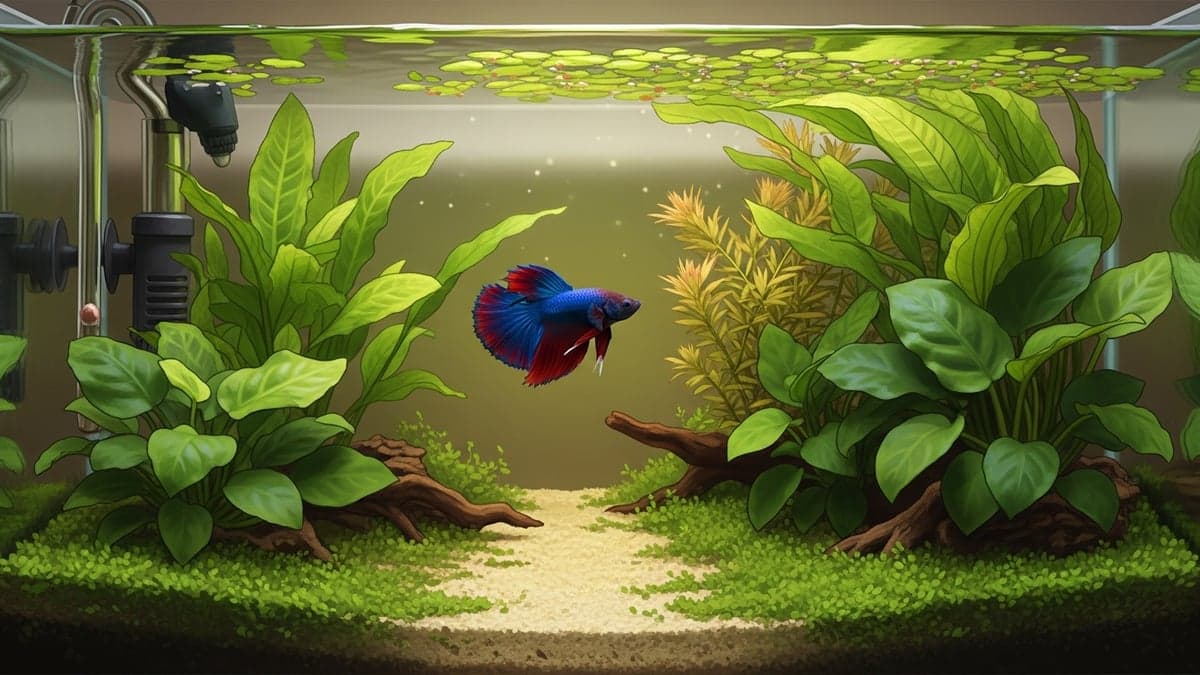
Plants: Live plants are strongly recommended. They provide resting surfaces (Bettas frequently rest on broad leaves near the surface), reduce nitrate, create hiding spots, and improve water quality. Ideal plants for Betta tanks:
- Anubias: Broad leaves perfect for Betta resting. Attach to driftwood or rock — do not bury the rhizome. Low light tolerant.
- Java Fern: Hardy, low-light, attaches to surfaces. Provides excellent cover.
- Amazon Frogbit or Salvinia (floating): Creates shaded surface areas where Bettas feel secure. Also reduces light intensity naturally.
- Betta Hammock/Leaf: Commercial suction-cup artificial leaf placed near the surface — Bettas rest on these regularly. A simple enrichment item.
Avoid: Plastic plants with sharp edges (tear delicate Betta fins). If using artificial plants, choose silk only.
Enrichment: Bettas Are Intelligent
Bettas are among the most intelligent aquarium fish. They recognise their owners, can be trained to perform tricks (swimming through hoops, following a finger), and exhibit clear signs of boredom in barren environments. Enrichment is not anthropomorphism — it is evidence-based husbandry.
Enrichment ideas:
- Training sessions: Use a small stick or laser pointer to guide the Betta through targets. Reward with food. Many Bettas learn to jump through hoops, follow hand movements, and flare on command within days.
- Rearranging décor: Move plants and caves every 2–4 weeks to create novelty. The Betta will re-explore and re-establish its territory — stimulating natural behaviour.
- Mirror sessions (limited): Placing a small mirror against the tank for 2–3 minutes triggers a flaring display — the Betta fans its fins and gill covers in a territorial display. This is exercise and behavioural stimulation. Limit to 2–3 minutes, 2–3 times per week — chronic mirror exposure causes stress.
- Floating objects: A ping-pong ball on the water surface gives curious Bettas something to investigate and push around.
- Live food hunts: Dropping live daphnia or brine shrimp into the tank triggers hunting behaviour — a natural enrichment that also provides excellent nutrition.
Diet and Feeding
Bettas are insectivores — in the wild, they eat mosquito larvae, small crustaceans, and insect eggs from the water surface. Their upturned mouth is adapted for surface feeding.
Staple diet: High-quality Betta-specific pellets (Northfin Betta Bits, Hikari Betta Bio-Gold, New Life Spectrum Betta). Feed 2–4 pellets twice daily. Bettas have tiny stomachs (roughly the size of their eye) — overfeeding causes bloat, constipation, and water quality degradation.
Supplementary foods:
- Frozen bloodworms — 2–3 times per week. A Betta favourite but high in fat — not suitable as a staple.
- Frozen brine shrimp — 2–3 times per week. Good variety item.
- Frozen daphnia — excellent for digestive health, acts as a mild laxative. Useful for preventing bloat. Once or twice weekly.
- Live foods (mosquito larvae, wingless fruit flies, live brine shrimp) — the ultimate enrichment food. Triggers natural hunting behaviour.
Fasting: One fast day per week (no food) helps prevent constipation and gives the digestive system a rest. This is standard practice among experienced Betta keepers.
Tankmates for Bettas
Male Bettas are territorial and aggressive toward other male Bettas and any fish with bright colours and flowing fins (which they mistake for rival males). However, in tanks of 10+ gallons with adequate hiding spots, many peaceful species can coexist with a Betta:
Compatible tankmates:
- Corydoras catfish (bottom dwellers, peaceful, schooling — keep 6+).
- Nerite snails (algae control, cannot reproduce in freshwater).
- Amano shrimp (large enough to avoid predation by most Bettas).
- Kuhli Loaches (nocturnal, hide during the day, peaceful).
- Ember Tetras (tiny, dull-coloured, fast — minimal trigger for Betta aggression).
Incompatible:
- Other male Bettas — will fight to death.
- Guppies, Endlers — their bright colours and flowing tails trigger aggression.
- Fin-nipping species (Tiger Barbs, Serpae Tetras) — will destroy Betta finnage.
- Large or aggressive fish (Cichlids, Gouramis) — will bully or kill the Betta.
Common Betta Diseases
- Fin rot: Fraying, discoloured fin edges progressing toward the body. Caused by bacterial infection, usually triggered by poor water quality. Treatment: clean water (daily 25 % changes), aquarium salt (1 tsp/gallon for mild cases), antibiotics (kanamycin or erythromycin for severe cases).
- Ich (white spot disease): White spots resembling grains of salt on fins and body. Treatment: raise temperature to 30 °C gradually (over 24 hours), add aquarium salt (1 tsp/gallon), and maintain for 10 days after last visible spot disappears.
- Velvet: Gold-dust appearance on the body, clamped fins, lethargy. Caused by the parasite Piscinoodinium. Treatment: darken the tank (velvet parasites are photosynthetic), raise temperature to 28–30 °C, and treat with copper-based medication.
- Swim bladder disorder: Fish floats sideways, sinks, or struggles to maintain position. Often caused by constipation or overfeeding. Treatment: fast for 2–3 days, then feed frozen daphnia (natural laxative). If persistent, may indicate internal infection requiring antibiotics.
- Dropsy: Pinecone-like scale protrusion, severely swollen abdomen. Indicates organ failure, usually from bacterial infection. Prognosis is poor. Isolate and treat with Epsom salt baths (1 tbsp/gallon for 15 minutes) and antibiotics (kanamycin + metronidazole), but survival rates are low.
Popular Betta Varieties
The Betta breeding world is vast and constantly evolving. Key varieties by tail type:
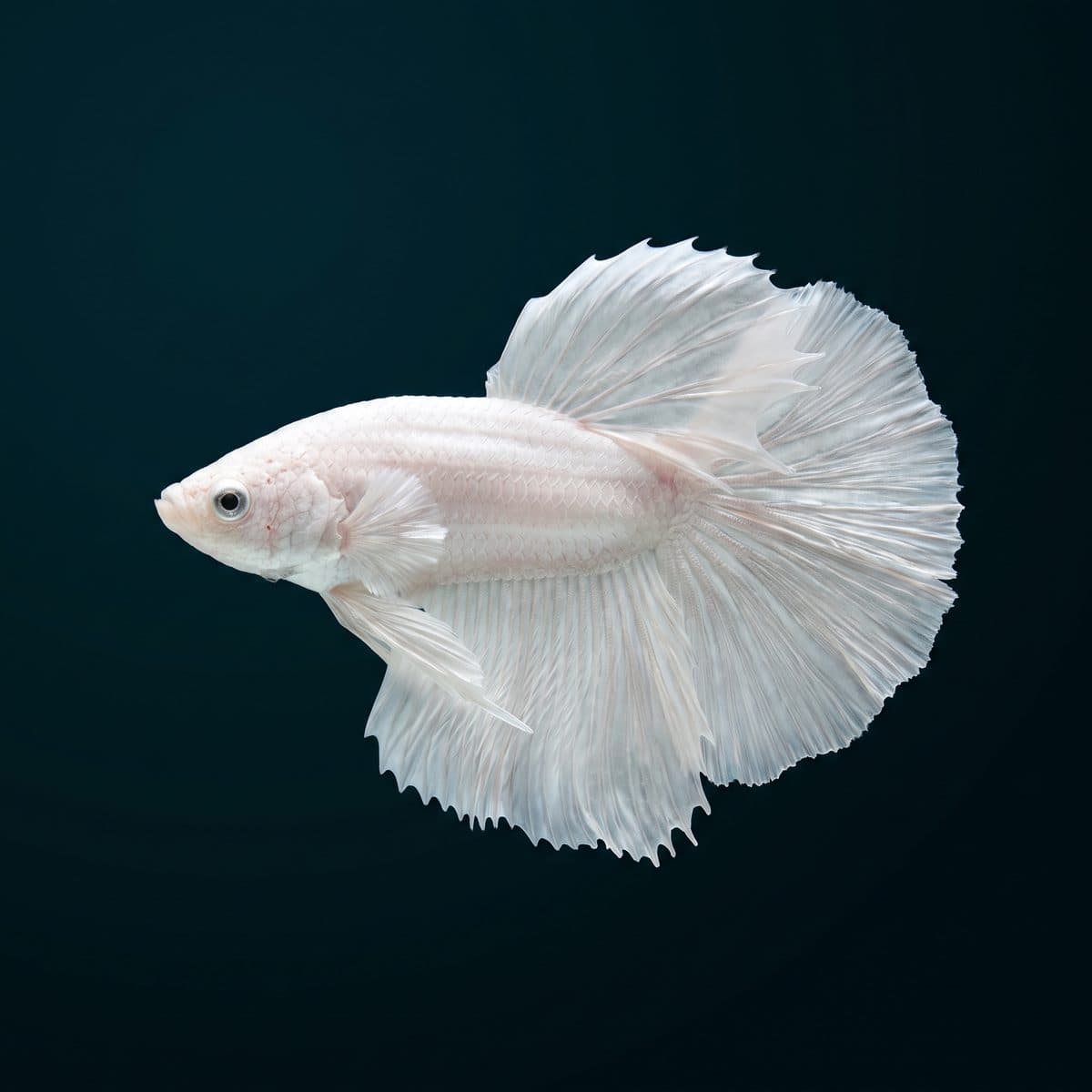
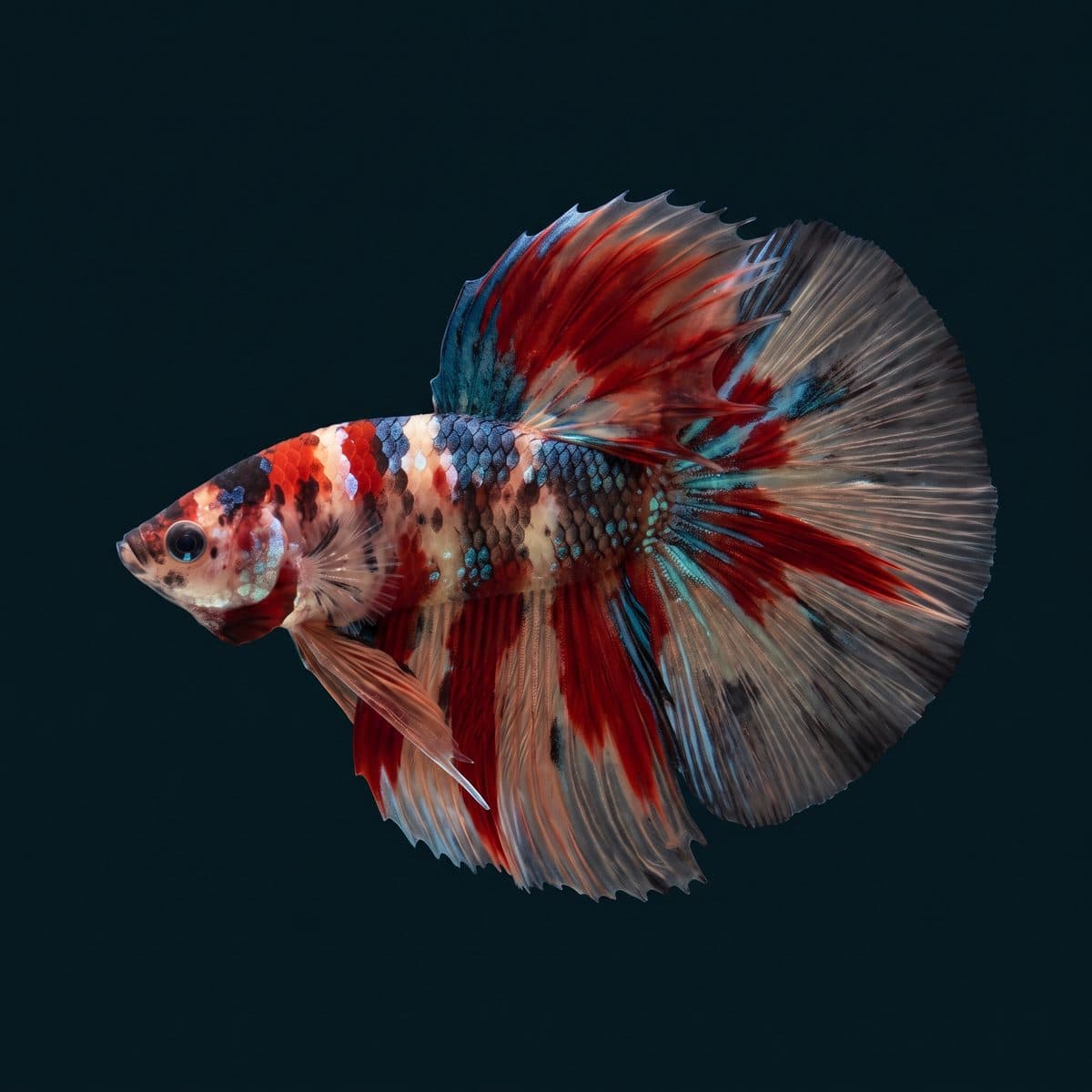
- Halfmoon: Tail spreads 180° when flared, creating a perfect semicircle. The show standard for Betta competitions.
- Crowntail: Fin rays extend beyond the webbing, creating a spiky, crown-like appearance.
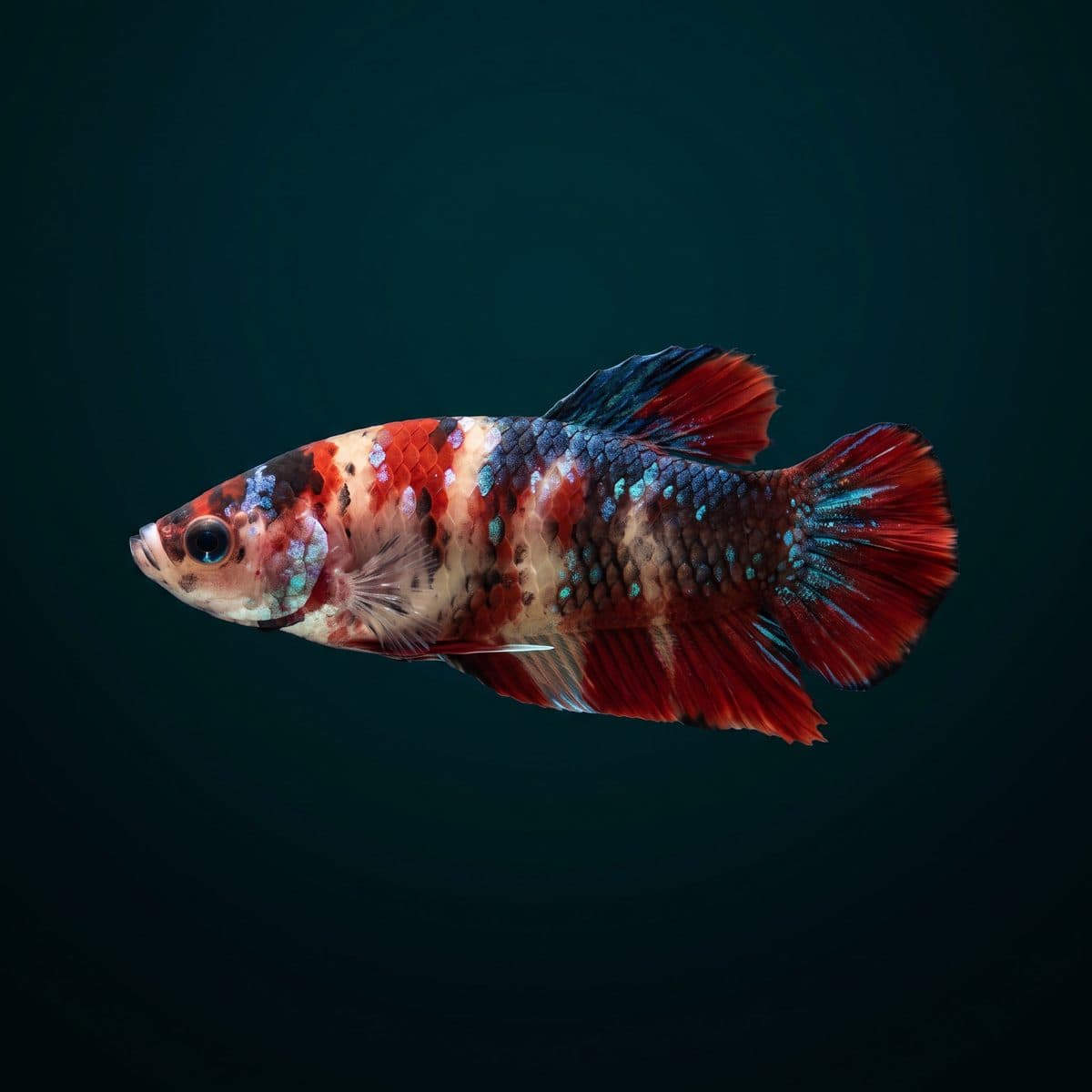
- Plakat: Short-finned variety closest to the wild form. More active and better swimmers than long-finned varieties. Popular for their vigour and natural appearance.
- Dumbo Ear: Oversized pectoral fins that resemble elephant ears, creating a unique flying motion during swimming.
- Galaxy Koi: Multi-coloured marble pattern combining red, white, blue, and black — resembling koi carp. Colours may shift over the fish's lifetime due to the marble gene.
The Fish Collection offers select Betta specimens including imported Thai show-grade fish. Every Betta ships with a live-arrival guarantee and acclimation guide.