Easy
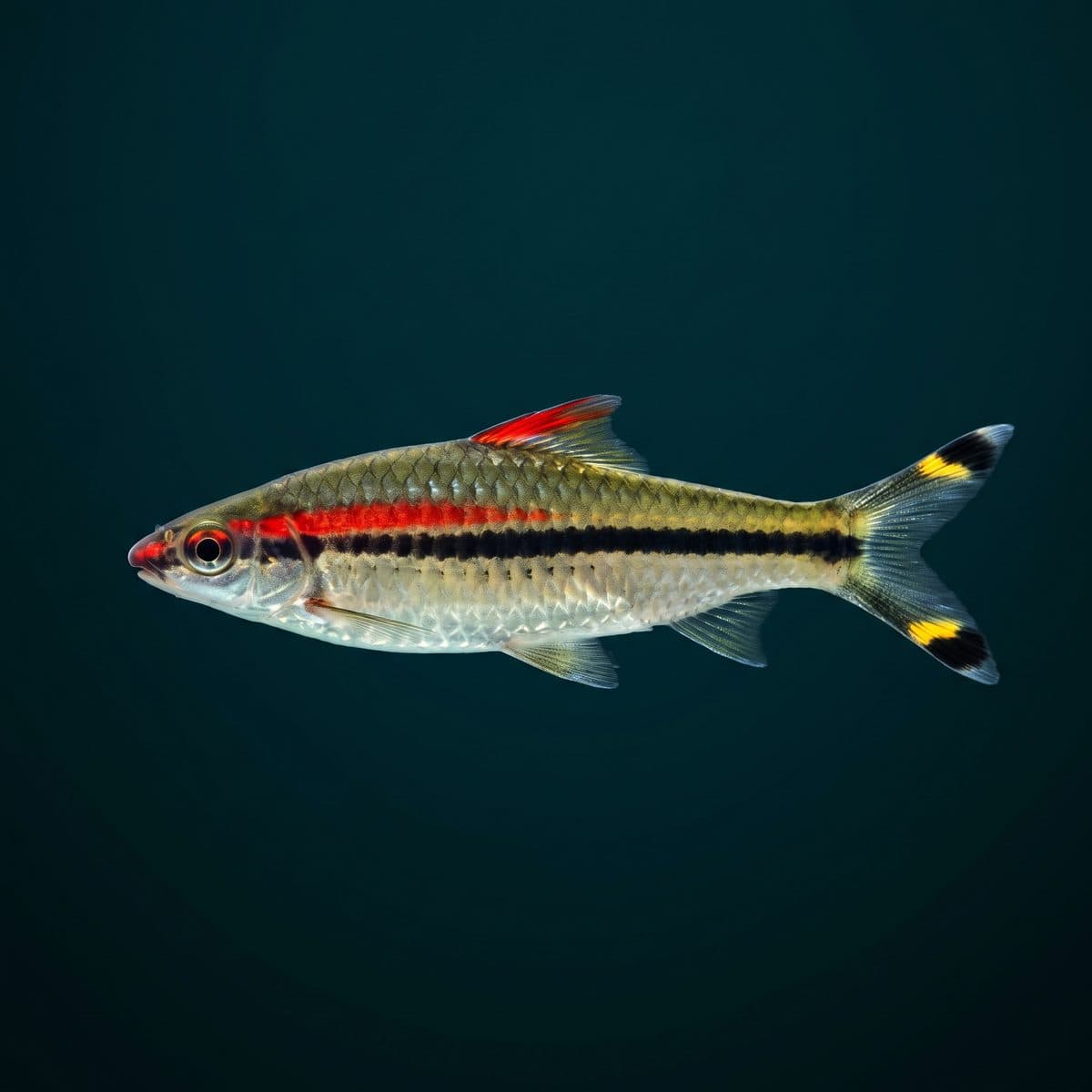
Denison Barb
Sahyadria denisonii
₩23,760~Get a quote
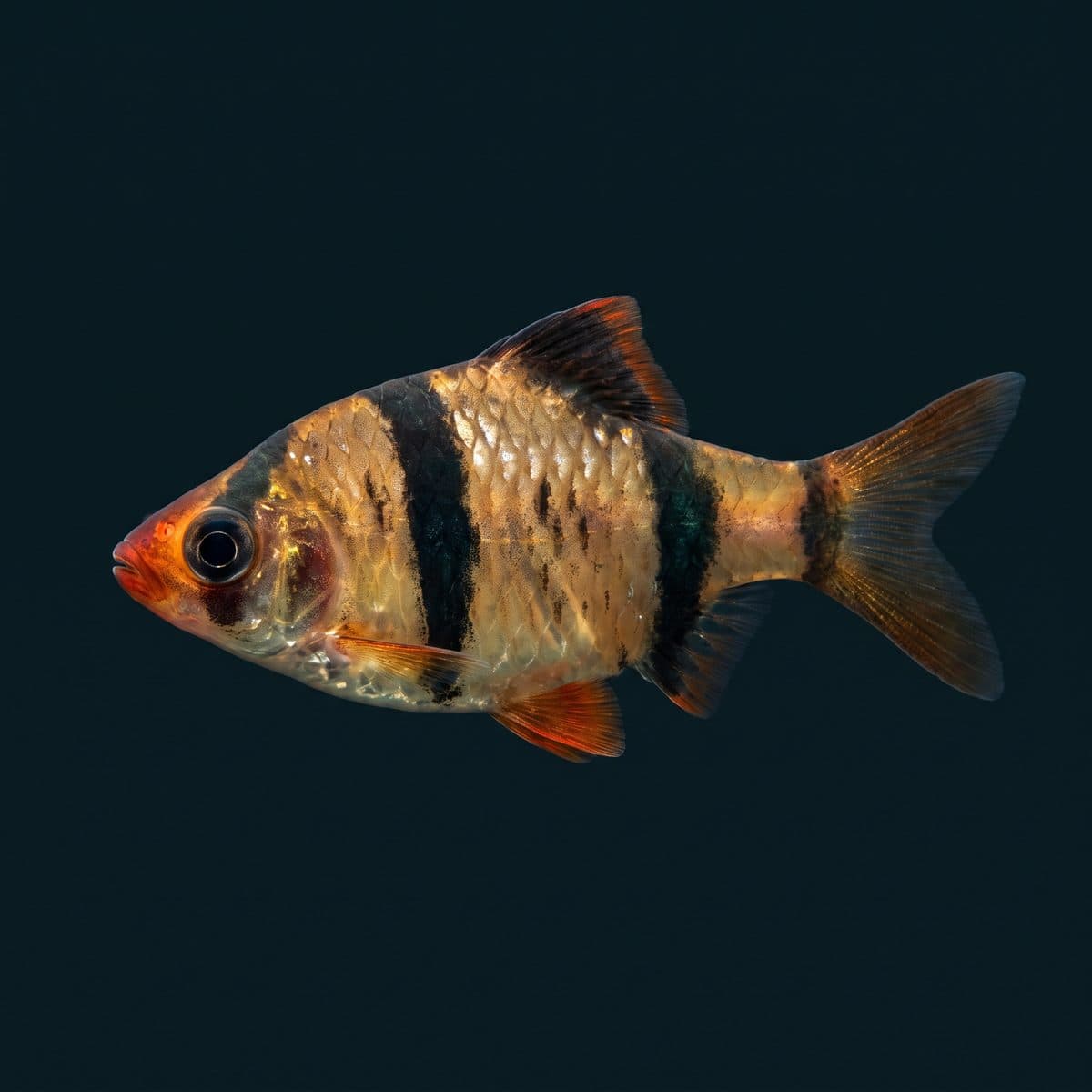
Puntigrus tetrazona
The Tiger Barb is one of the most recognizable and popular freshwater aquarium fish in the world — a compact, energetic schooling species whose bold black-and-orange banding has made it a staple of community fishkeeping for over a century. Puntigrus tetrazona originates from the streams and rivers of Borneo and Sumatra, though the species has been captive-bred for so many generations that aquarium strains are far removed from wild populations. The Fish Collection offers premium-grade Tiger Barbs selected for the deepest orange-red coloration and crispest black barring — a marked improvement over the washed-out specimens common in chain pet stores.
Insulated, oxygen-packed transit · live-arrival guaranteed
Tank size
30+ gallons
성격
Semi-aggressive
먹이
Omnivore
Water
74–82°F · pH 6–7.5
Tell us what you're dreaming of — we'll reply with a price tailored to you.
Not sure if this fish is right for you?
Our team will happily help you choose.
The Tiger Barb is one of the most recognizable and popular freshwater aquarium fish in the world — a compact, energetic schooling species whose bold black-and-orange banding has made it a staple of community fishkeeping for over a century. Puntigrus tetrazona originates from the streams and rivers of Borneo and Sumatra, though the species has been captive-bred for so many generations that aquarium strains are far removed from wild populations. The Fish Collection offers premium-grade Tiger Barbs selected for the deepest orange-red coloration and crispest black barring — a marked improvement over the washed-out specimens common in chain pet stores.
The Tiger Barb's reputation as a fin-nipper precedes it, and while not entirely undeserved, this behavior is almost entirely a consequence of improper husbandry. Tiger Barbs are active, boisterous schooling fish that redirect their social energy toward tankmates when kept in insufficient numbers. A solitary Tiger Barb or a group of two or three will almost certainly harass slow-moving, long-finned species like angelfish and bettas. A group of eight or more, however, is typically too occupied with internal social dynamics to bother other fish. The solution to Tiger Barb aggression is always more Tiger Barbs.
We recommend a minimum group of eight, housed in a tank of at least 30 gallons. The aquarium should provide a mix of open swimming space for the school to patrol and planted areas for visual complexity. Moderate water flow and good filtration support the active metabolism of these perpetually moving fish. Lighting can range from moderate to bright — Tiger Barbs are not photosensitive and actually display their best coloration under well-lit conditions that highlight the metallic sheen on their scales.
Water parameters are forgiving. Temperature between 74 and 82 degrees Fahrenheit, pH between 6.0 and 7.5, and soft to moderately hard water cover the species' comfort zone. Tiger Barbs are hardy fish that tolerate minor parameter fluctuations well, making them suitable for aquarists building experience with schooling species. They are not especially disease-prone, though like all tropical fish they benefit from stable conditions and regular water changes.
Diet is omnivorous and completely undemanding. High-quality flake food forms the staple, supplemented with frozen or live bloodworms, daphnia, brine shrimp, and blanched vegetable matter. Tiger Barbs are surface and mid-water feeders with excellent appetites — overfeeding is a more common problem than underfeeding. Two small meals daily is preferable to one large feeding. Varied diet promotes the best coloration, with carotenoid-rich foods particularly effective at enhancing the orange-red pigmentation.
The Tiger Barb has spawned numerous captive-bred color variants including Green Tiger Barb, Albino Tiger Barb, and GloFish varieties. The wild-type coloration remains the most popular and, in our opinion, the most attractive. The Fish Collection ships Tiger Barbs in insulated bags with our live arrival guarantee.
일반적인 질문
전문가 자료
이런 물고기도 좋아하실 수 있습니다
₩7,920~
Indicative price