Wolf Fish Care Overview
Wolf fish are powerful, intelligent freshwater predators that reward experienced keepers with dramatic behaviour and imposing presence. Their care is straightforward once the fundamentals are established: a large enough tank, robust filtration, a varied carnivorous diet, and respect for their aggressive temperament. The challenge is not complexity — it is scale and consistency. For a comprehensive species overview, see our wolf fish complete guide.
Species-Specific Care Requirements
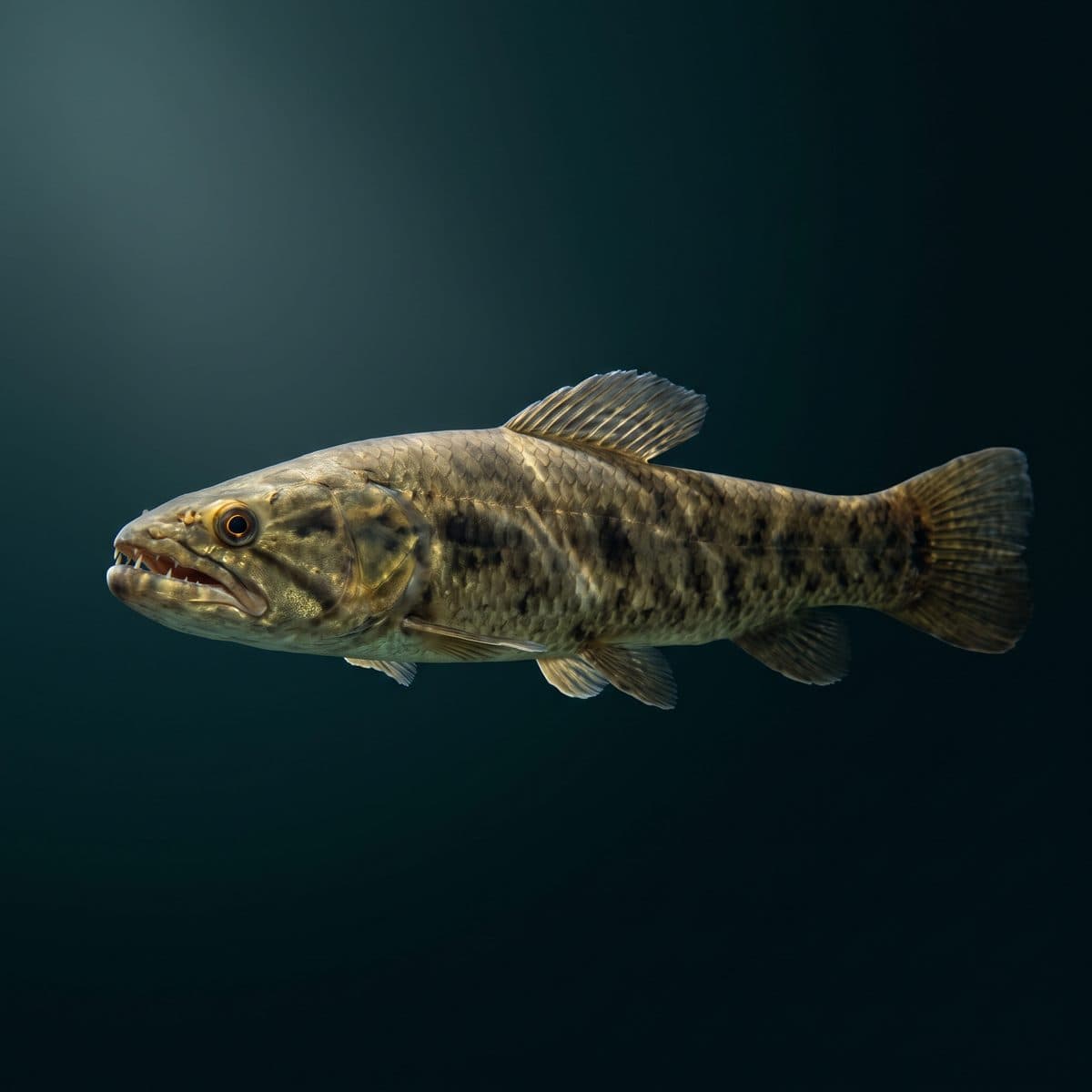
- Hoplias malabaricus (Trahira): The most commonly kept species. Adults reach 30–50 cm. Minimum 125-gallon tank. Tolerates pH 5.5–7.5 and temperatures 22–28 °C. The most adaptable and beginner-friendly wolf fish.
- Hoplias aimara (Giant Wolf Fish): Adults reach 60–100 cm and 20+ kg. Requires 300+ gallon tank with industrial-grade filtration. Expert keepers only. Extreme caution during maintenance — adults can cause genuine injury.
- Hoplias curupira (Red Wolf Fish): Adults reach 25–40 cm. Prefers softer, more acidic water (pH 5.0–6.5). A 100-gallon tank suits a single adult. More reclusive than H. malabaricus.
- Erythrinus erythrinus (Rainbow Wolf Fish): The smallest species at 15–25 cm. A 55–75 gallon tank is adequate. Beautifully coloured with red, orange, and green iridescence. Equally aggressive despite smaller size.
Tank Requirements
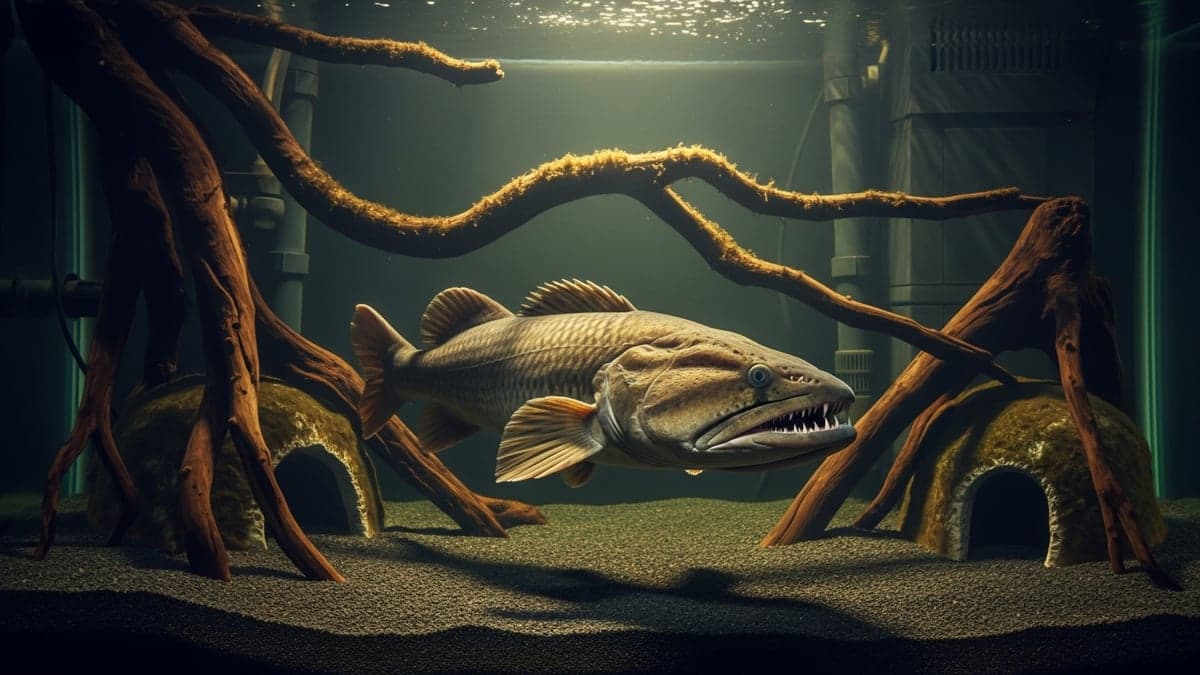
- Footprint over height: Wolf fish are bottom-to-mid-water dwellers. A long, wide tank with moderate height is ideal. For H. malabaricus, a 125-gallon tank (72 × 18 × 22 inches) provides excellent space.
- Filtration: Biological filtration rated for 8–10× tank volume turnover. Sump systems are ideal; large canisters (FX6 or equivalent) in parallel are the alternative. Run activated carbon to manage odour from meaty feeding.
- Substrate: Fine sand or bare bottom. Sand allows natural burying behaviour exhibited by some species.
- Cover: Critical for reducing stress. Driftwood stacks, PVC caves (painted or hidden behind hardscape), and dense plant thickets provide ambush points. A wolf fish without cover is chronically stressed.
- Lid: Mandatory, heavy, and secure. Wolf fish jump when startled. Use clips or weights to prevent the fish from pushing the lid open.
- Lighting: Dim. Wolf fish are crepuscular ambush predators that prefer low light. Bright lighting causes stress, increased aggression, and glass-striking behaviour. Use timed ramp-up/ramp-down cycles.
Water Parameters
- Temperature: 24–28 °C (75–82 °F). H. curupira prefers 26–28 °C.
- pH: 5.5–7.5 (H. malabaricus), 5.0–6.5 (H. curupira).
- Hardness: 2–15 dGH. Most species come from soft Amazonian waters.
- Ammonia/Nitrite: 0 ppm.
- Nitrate: Below 40 ppm; below 20 ppm preferred.
Tannin-stained blackwater (using Indian almond leaves or peat) is beneficial for all species, reducing stress, enhancing colour, and providing mild antibacterial properties. Weekly 30–50 % water changes maintain parameter stability.
Feeding Protocol
Staple foods:
- Frozen fish fillets (tilapia, smelt, silversides) — the dietary base
- Frozen shrimp and prawns (whole, shell-on)
- Earthworms and nightcrawlers
- Carnivore pellets (Hikari Massivore, Northfin Predator) — train onto these for nutritional balance
Schedule: Feed juveniles daily. Adults 3–4 times per week with 1–2 fasting days. Wolf fish are ambush predators with slow metabolisms adapted to feast-and-famine cycles. Overfeeding causes obesity and fatty liver disease.
Avoid: Live feeder fish as a staple (parasite and disease risk). Use live food only for conditioning newly arrived specimens or as occasional enrichment. See our predatory fish feeding guide for complete nutrition protocols.
Aggression and Safe Handling
- Never hand-feed. Use 30+ cm feeding tongs exclusively. Wolf fish strike at movement reflexively and cannot distinguish between fingers and food.
- Dim lights before maintenance. Reaching into a brightly lit wolf fish tank invites a strike response. Dim or turn off lights 10–15 minutes before performing water changes or tank maintenance.
- Move slowly and predictably. Sudden movements trigger panic biting and glass-striking.
- Solitary housing is safest. Wolf fish are best kept alone. If attempting multi-species setups, use only tank mates too large and armoured to be eaten (large Plecos, Bichirs) in tanks 200+ gallons.
- Have first-aid available. For keepers of H. aimara, have a first-aid kit accessible. Bites from adults can cause deep lacerations requiring medical attention.
Health Monitoring
Wolf fish are hardy once established. Watch for:
- Obesity: Visible belly distension, lethargy, food refusal after extended overfeeding. Reduce feeding frequency and implement regular fasting days.
- Bacterial infections: Reddened patches, fin erosion, cloudy eyes. Usually secondary to poor water quality or wounds from aggression/glass-striking. Maintain impeccable water quality. Treat with appropriate antibiotics under veterinary guidance.
- Glass-strike injuries: Scraped snout, damaged barbels. Caused by startling or inadequate cover. Increase hiding spots and reduce lighting intensity.
- Parasites: Wild-caught specimens should be prophylactically treated with praziquantel and metronidazole upon arrival.
Weekly Maintenance Schedule
- Monday: Test ammonia, nitrite, nitrate. Feed.
- Wednesday: Feed. Spot-clean uneaten food debris from substrate.
- Friday: Feed.
- Saturday: 30–50 % water change. Clean filter socks/sponges (rotate — never clean all filtration media at once). Top off evaporation. Inspect lid security.
- Sunday: Fast day. Observe fish behaviour for signs of stress or illness.
With consistent care, wolf fish live 15–20+ years in captivity — a long-term commitment that rewards patience and discipline. Browse The Fish Collection's predator fish collection for available wolf fish specimens.