Overview
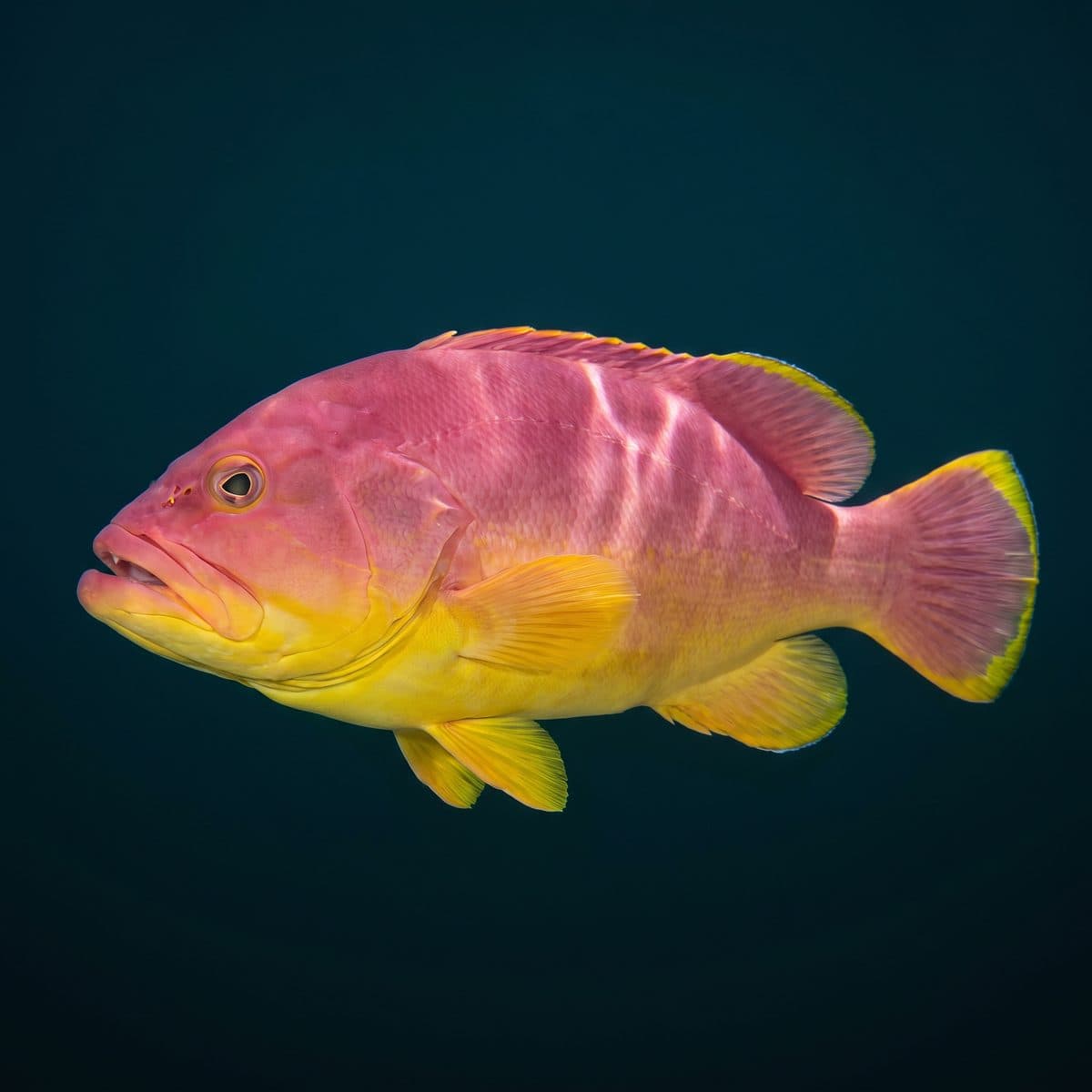
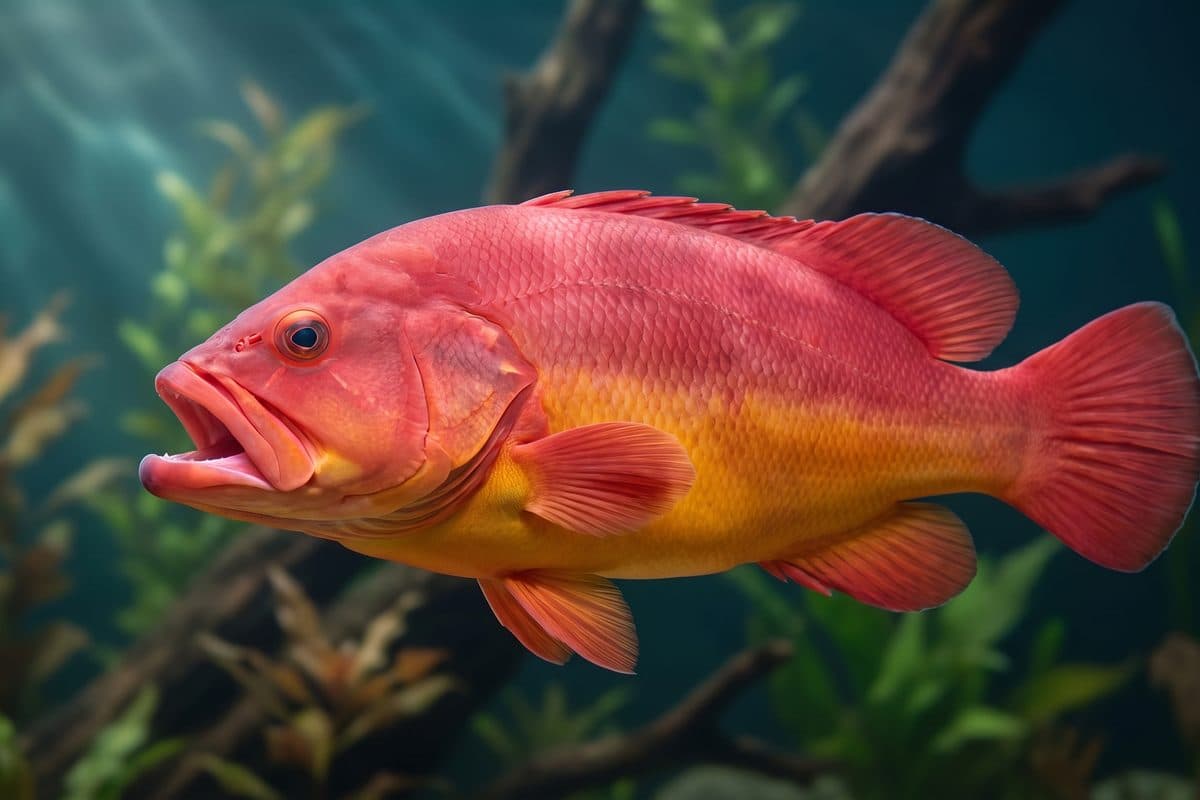
The Neptune Grouper occupies a rarefied position in the marine aquarium hobby — it is simultaneously one of the most beautiful and most expensive fish available. A member of the Serranidae family (groupers and sea basses), Cephalopholis igarashiensis inhabits deep rocky reefs and seamounts at depths where sunlight barely penetrates, yet it displays colouration more vivid than most shallow-water reef fish: a brilliant orange-pink body with golden-yellow highlights and bands, offset by large, expressive eyes adapted for low-light environments.
The species was first described scientifically in 1957, but it remained virtually unknown in the aquarium trade until the early 2000s, when advances in deep-collection techniques made it possible to bring specimens to the surface alive. Today, Neptune Groupers appear in the trade sporadically — typically a handful of specimens per year from Japanese, Filipino, or Hawaiian collectors — and each one generates significant excitement among serious marine hobbyists.
Natural Habitat & Collection
Neptune Groupers inhabit deep rocky reefs, seamounts, and underwater ridges at depths of 80–260 metres (260–850 feet) across the Indo-Pacific, from Japan through the Philippines, Indonesia, Hawaii, and the Indian Ocean. At these depths, water temperatures are significantly cooler than surface reefs — typically 16–22 °C (61–72 °F) — and light levels are extremely low.
Collection of Neptune Groupers is an extraordinary undertaking. The depth at which they live exceeds the safe limits of recreational SCUBA diving, requiring either technical deep diving (using trimix gas blends), specialised submersibles, or hook-and-line techniques with careful decompression protocols for the fish. Specimens must be slowly brought to the surface over a period of hours, with their swim bladder carefully vented at intervals to prevent fatal barotrauma. The mortality rate during collection remains significant, which — combined with the extreme depths, limited collector expertise, and the species' naturally low population density — accounts for the extraordinary price.
Appearance
The Neptune Grouper's colouration is its defining feature and the reason for its desirability:
- Body colour: Base colour ranges from vivid orange to salmon-pink, sometimes with a golden or copper undertone. The intensity of colour can vary between individuals and may shift somewhat in captivity depending on diet and lighting.
- Markings: Golden-yellow bands or highlights across the body, most prominent on the head and dorsal region. Some specimens display subtle reticulated patterning.
- Eyes: Proportionally large (an adaptation to the low-light deep-reef environment), adding to the fish's expressive appearance.
- Body shape: Typical grouper morphology — robust, laterally compressed body with a large mouth and rounded fins.
Under proper aquarium lighting (moderate intensity, warm spectrum), the Neptune Grouper is genuinely one of the most visually stunning marine fish in existence. The orange-pink-gold combination is virtually unique among commonly kept species.
Tank Requirements
- Tank size: 200 gallons (757 L) minimum. Neptune Groupers are not especially active swimmers but are robust fish that need adequate territory.
- Aquascape: Rocky structure with caves, overhangs, and ledges — mimicking the deep-reef habitat. The fish will establish a preferred cave or overhang as its home base.
- Lighting: Moderate to low. Deep-reef species are not adapted to intense lighting, and Neptune Groupers may be stressed or photophobic under bright reef LEDs at full intensity. Dimmer settings or actinic-heavy spectrums are preferred.
- Filtration: Excellent marine filtration with protein skimmer, adequate biological media, and stable water chemistry. Sump-based systems are preferred for the volume and stability they provide.
Water Parameters
The critical parameter for Neptune Groupers is temperature — they require cooler water than typical tropical reef tanks:
- Temperature: 68–74 °F (20–23 °C). This is significantly cooler than the 76–80 °F (24–27 °C) maintained in most reef aquariums. A chiller is essential in most setups.
- pH: 8.1–8.4.
- Salinity: 1.024–1.026 SG.
- Ammonia/Nitrite: 0 ppm.
- Nitrate: Below 10 ppm.
The cooler temperature requirement means Neptune Groupers cannot be housed in standard mixed reef tanks with tropical corals. They are best kept in a dedicated deep-reef or fish-only-with-live-rock (FOWLR) setup, or with cold-water corals and invertebrates that share their temperature preference.
Diet & Feeding
Neptune Groupers are carnivores that typically adapt well to captive diets once settled:
- Initial feeding: Newly acquired specimens may be reluctant to feed for the first 1–2 weeks as they acclimate. Live ghost shrimp or small marine feeder shrimp can be used to initiate feeding response.
- Staple diet: Frozen silversides, frozen shrimp (Mysis, krill, whole prawn), frozen squid, and high-quality marine pellets (New Life Spectrum, Hikari Marine).
- Feeding frequency: Once daily for juveniles; every 2–3 days for established adults.
Vitamin supplementation (Selcon or similar HUFA-enriched vitamin supplement) soaked into frozen foods helps maintain colour intensity and overall health.
Behaviour & Tank Mates
Neptune Groupers are relatively peaceful for groupers — they lack the extreme aggression of larger serranid species. However, they are still predatory and will consume any fish or invertebrate small enough to swallow (anything less than half their body length).
Compatible tank mates include other similarly sized, robust marine fish that tolerate the cooler temperature range: large wrasses, tangs (some Acanthurus species tolerate cooler water), large angelfish, and other groupers of similar size. The tank mates' temperature compatibility is usually the limiting factor.
Pricing & Availability
Neptune Groupers are among the most expensive marine aquarium fish:
- Typical price range: $6,000–$12,000 USD (£4,500–£9,000).
- Exceptional specimens: Large, perfectly coloured adults have sold for $15,000+.
Availability is extremely limited — typically fewer than 10–20 specimens reach the global aquarium trade per year. The Fish Collection works with specialist deepwater collectors in Japan and the Pacific to source specimens when available. Due to the rarity and value of these fish, we recommend pre-registering your interest so that you can be notified immediately when a specimen becomes available.
Building a System for a Neptune Grouper
When a single fish costs as much as a car, the aquarium around it has to be bulletproof. A Neptune Grouper isn't a fish you add to an existing tank on a whim — it demands a purpose-built, deep-water system designed for stability above all else. The two defining requirements are cool temperature and rock-solid consistency.
Temperature is the big one. These fish come from 80–260 metres down, where the water sits at 16–22 °C, so they need a tank held at 68–74 °F — several degrees cooler than a standard reef. That means a properly sized aquarium chiller, and given the stakes, a backup chiller or at least a plan for a cooling failure. Pair it with a large water volume (200 gallons minimum), a generous sump, a strong protein skimmer, and plenty of mature live rock to buffer the system chemically and biologically.
Then build in redundancy, because a fish this valuable can't ride out an equipment failure. Uninterruptible power for circulation and air, a controller with temperature and level alarms that message your phone, backup heaters and pumps, and an automatic top-off system are all sensible on a tank like this. Aim for dim, warm-spectrum or actinic lighting rather than the intense white light of a coral reef — deep-water fish are adapted to near-darkness and can be genuinely stressed by bright reef LEDs. In short: over-engineer everything, then add a backup.
Acclimation & Quarantine
Acclimating a Neptune Grouper is a delicate business, partly because of what the fish has already been through to reach you. Wild specimens are brought up from extreme depth over hours, with their swim bladder carefully vented to prevent barotrauma, and they arrive stressed and often still recovering. The last thing you want is to compound that with a rushed introduction.
Quarantine is strongly advised despite — actually, because of — the fish's value. A separate, dimly lit, cool quarantine system lets you observe for disease, establish feeding, and avoid exposing your display to imported pathogens, all without the complication of medicating a full reef. Drip-acclimate slowly over a couple of hours, matching temperature and salinity with great care, and give the fish a cave to retreat into immediately.
Feeding is the milestone that tells you the fish has turned the corner. Newly imported Neptune Groupers often refuse food for the first week or two; live ghost shrimp or small marine feeder shrimp are the usual way to spark a feeding response, after which most transition to frozen silversides, shrimp, and squid. Be patient, keep the lights low and the tank quiet, and resist the urge to fuss. Once it's feeding confidently and holding condition, you can consider a careful move to its permanent home.
Health & Common Problems
There's limited long-term data on Neptune Groupers in captivity simply because so few are kept, but they're subject to the same marine ailments as other groupers, with some added fragility from their deep-water origins and the trauma of collection:
- Post-collection stress: The single biggest early risk. Barotrauma, handling, and shipping leave new fish weakened and prone to secondary infection. A calm, stable, cool quarantine is the best medicine.
- Marine ich and velvet: The usual parasitic suspects. Because you can't easily medicate a priceless fish aggressively, prevention through quarantine of everything that enters the system is paramount.
- Temperature stress: Let the tank drift up to tropical reef temperatures and a Neptune Grouper will suffer. Chiller failure is a genuine emergency for this species.
- Nutritional and lighting stress: A monotonous diet dulls colour and weakens the fish, while over-bright lighting stresses a deep-water animal. Feed varied, vitamin-enriched foods and keep light levels low.
The theme with this species is that prevention isn't just better than cure — it's very nearly the only option. You cannot afford to gamble a five-figure fish on treating an avoidable disease, so everything rides on stable, cool, pristine water, a stress-free environment, and ironclad quarantine of any tank mate you introduce.
Is a Neptune Grouper Right for You?
The Neptune Grouper is a "holy grail" fish, and for almost everyone that's exactly where it should stay — a thing to admire rather than own. But for a tiny number of expert marine keepers, it's the pinnacle of the hobby. Here's the honest test.
A Neptune Grouper might be for you if you:
- Have years of marine experience and can run a chilled, redundant, 200+ gallon system flawlessly.
- Can absorb a $6,000–$12,000 (or higher) purchase and the cost of the infrastructure around it.
- Understand its cool-water needs rule out a standard tropical reef.
- Are prepared for the patience and risk of settling a delicate, deep-collected fish.
It's not for you if you:
- Are anything less than a highly experienced marine aquarist.
- Can't guarantee stable, cool temperatures with backup against equipment failure.
- Would be financially or emotionally devastated by losing the fish.
There's no shame in admiring the Neptune Grouper from afar — most professional aquarists never keep one. If you do have the experience, the system, and the means, sourcing an ethically collected, well-acclimated specimen and giving it the stable deep-water home it needs is one of the rare pinnacles of marine fishkeeping. For everyone else, it's a magnificent fish to dream about.