Arowana Compatibility Principles
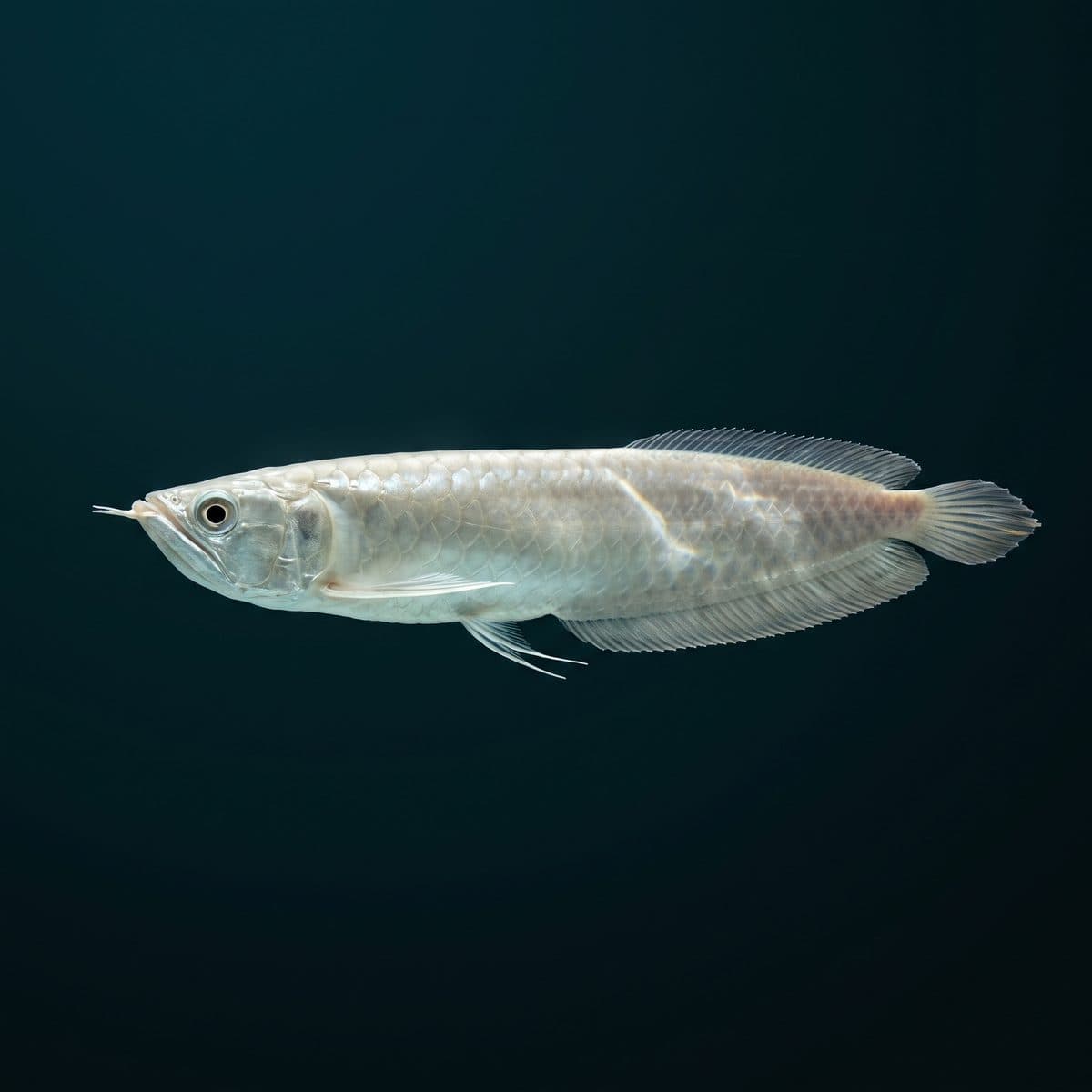
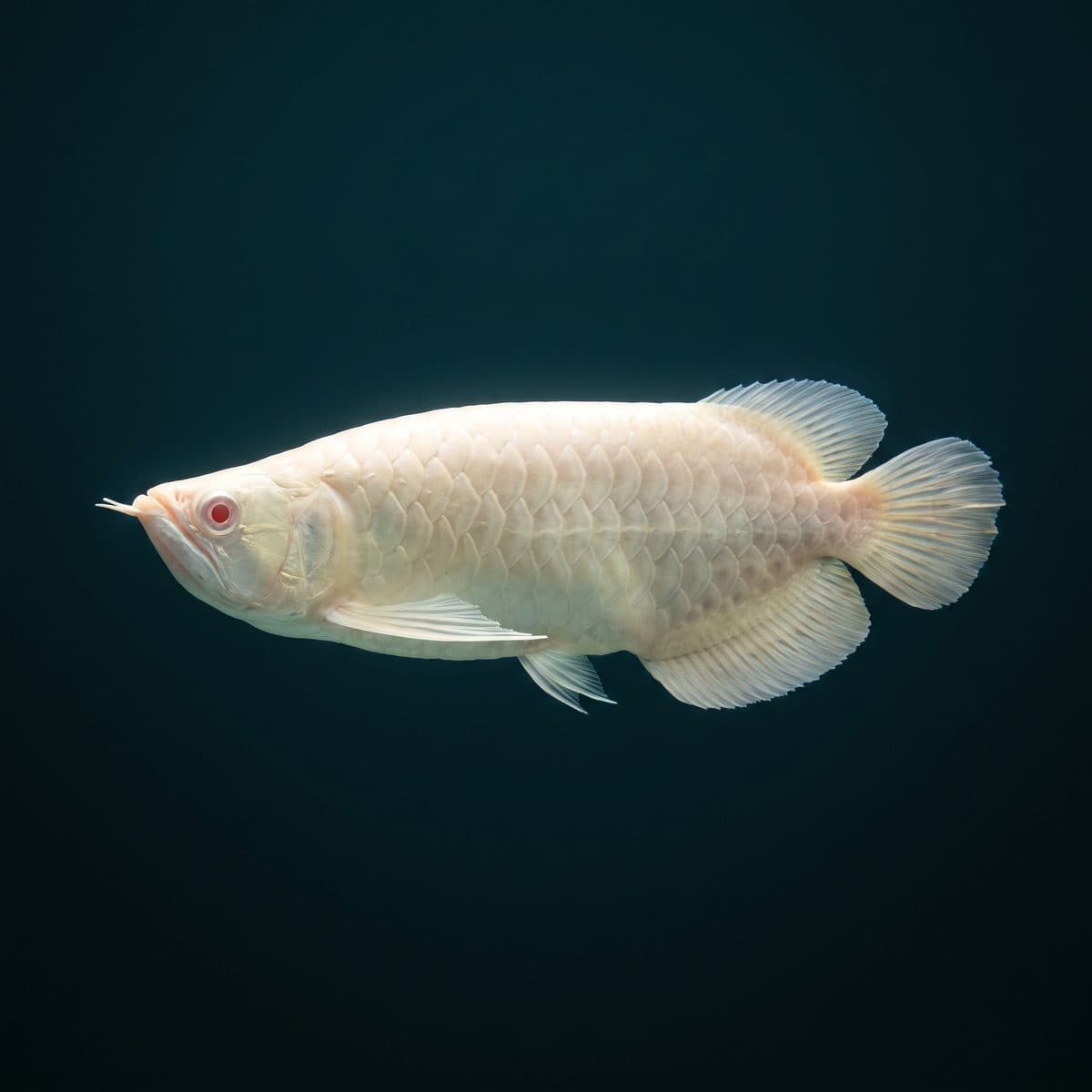
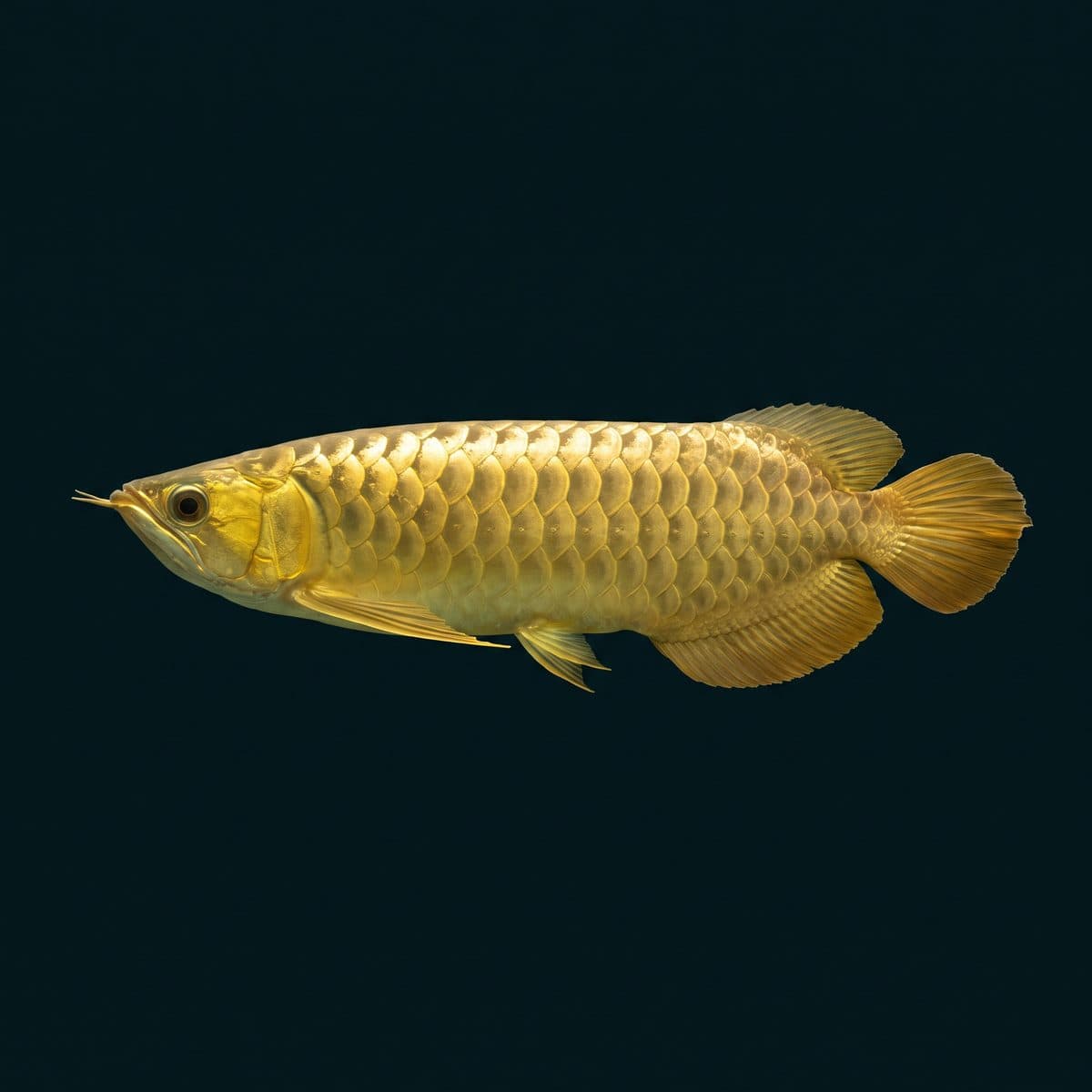
Arowana are apex predators in the wild — surface-oriented hunters that patrol the top water column and strike at anything that fits in their mouth. Any potential tank mate must satisfy three criteria:
- Size: Too large to be swallowed. Arowana will eat any fish that fits in their mouth, and their mouths are surprisingly large relative to their body length. A 60 cm Silver Arowana can consume a 15 cm fish without difficulty. Tank mates must be at least 40–50 % of the Arowana's body length.
- Zone separation: Arowana dominate the top third of the water column. The best tank mates occupy the bottom or mid-water zone, reducing territorial competition.
- Temperament: Tank mates must be assertive enough not to cower (which triggers predatory pursuit) but not so aggressive that they attack the Arowana — particularly its sensitive trailing barbels.
Arowana community tanks require serious volume. A 250-gallon tank is the minimum for a Silver Arowana with tank mates; 300+ gallons for Asian Arowana communities. Browse our Arowana collection and plan the community tank before purchasing.
The Size Constraint
The defining factor in Arowana compatibility is size. Arowana grow rapidly — a 15 cm juvenile Silver Arowana will reach 45–60 cm within 18–24 months. Tank mates must either grow at a comparable rate or be introduced at a size that puts them above the Arowana's predation threshold.
The practical consequence: small community fish — tetras, rasboras, guppies, Corydoras — are food, not companions. Even "peaceful" tank mates become prey if they are small enough to swallow. Plan your community around large, robust species from the outset.
Best Bottom-Dwelling Tank Mates
Bichirs (Polypterus)
Bichirs are arguably the single best Arowana tank mates. These armoured, prehistoric fish are nocturnal bottom-dwellers that occupy a completely different zone than the surface-oriented Arowana. Large species — Polypterus endlicheri (50–75 cm), P. ornatipinnis (45–60 cm), and P. bichir bichir (60+ cm) — are too armoured and too large to be eaten, and they are completely non-aggressive toward Arowana.
Keep Bichirs in groups of 2–3 in a 300+ gallon Arowana tank. Provide PVC caves or driftwood shelters for daytime resting. Bichirs are slow feeders — ensure they receive sinking pellets or frozen food at night when the Arowana is less active.
Large Plecos
Common Plecos (Pterygoplichthys spp.) and Sailfin Plecos reach 30–45 cm and are heavily armoured with bony scutes. They are nocturnal algae grazers and detritivores that occupy the bottom and glass surfaces — zero competition with the Arowana. Their armour protects them from any predation attempt.
One or two large Plecos serve as excellent cleanup crew in an Arowana tank, consuming algae and leftover food. Supplement their diet with algae wafers and blanched vegetables (zucchini, cucumber) dropped in after lights-out.
Best Mid-Water Tank Mates
Silver Dollars
Silver Dollars (Metynnis and Myleus spp.) are the classic Arowana dither fish. At 12–15 cm adult size, they are large enough to avoid predation by most adult Arowana (though very large Asian Arowana may still attempt to eat them). Their round, laterally compressed body shape makes them difficult to swallow. Keep in schools of 6–8 for natural shoaling behaviour.
Silver Dollars are fast, peaceful, and occupy the mid-water column — creating visual activity that makes the Arowana less skittish. They are herbivorous and will eat live plants, so plan accordingly (use hardy plants like Java Fern and Anubias, or a plant-free setup).
Oscar Cichlids
Oscars (Astronotus ocellatus) are intelligent, robust cichlids that reach 30–35 cm. They occupy the mid-to-bottom water column and are assertive enough to coexist with Arowana without being bullied, yet not aggressive enough to cause damage. Oscars work best in 300+ gallon tanks where both species have adequate territory.
Keep a single Oscar or a bonded pair. Multiple unrelated Oscars in a confined space creates territorial aggression. Feed Oscars separately with sinking pellets to prevent food competition at the surface where the Arowana feeds.
Other Compatible Species
- Clown Loaches (Chromobotia macracanthus): Grow to 25–30 cm, active, social bottom-dwellers. Keep in groups of 5+. Their spiny sub-ocular spine deters predation. Require warm water (82–86 °F) and a long-term commitment (25+ year lifespan).
- Large Synodontis catfish: Synodontis eupterus (Featherfin Squeaker, 20–25 cm) and S. decorus (Decorated Synodontis, 25–30 cm) are robust, armoured bottom-dwellers suitable for Arowana community tanks.
- Fire Eel (Mastacembelus erythrotaenia): Grows to 60–100 cm. Nocturnal bottom-dweller that hides during the day and hunts at night. Requires sand substrate for burrowing.
- Peacock Bass (Cichla spp.): Large, robust predatory cichlids that match Arowana in temperament. Only for 400+ gallon tanks. Both species are surface-to-mid-water predators, so adequate space is critical.
- Datnoides (Datnioides spp.): Tiger-striped predators (25–40 cm) that make striking visual complements to Arowana. Mid-water zone. Feed similar diets.
Species to Avoid
- Any fish under 15 cm: Will be eaten. Tetras, barbs, rasboras, Corydoras, small loaches, and small catfish are food, not companions.
- Aggressive cichlids that target barbels: Some aggressive cichlids (Flowerhorn, aggressive Midas Cichlids) will bite the Arowana's trailing barbels, causing permanent damage. The barbels do not regenerate reliably.
- Other Arowana: Two Arowana in one tank almost always results in severe aggression. Only a handful of experienced keepers maintain multiple Arowana, typically in tanks exceeding 1,000 gallons with complex sight-line breaks.
- Stingrays (in most setups): While Arowana and freshwater stingrays share Amazonian habitats, stingrays require smooth, sand-only substrates and impeccable water quality. The combination works only in purpose-built 500+ gallon setups with advanced filtration.
- Slow, long-finned fish: Fancy goldfish, long-finned Bettas, Angelfish — will be harassed or eaten.
Stocking an Arowana Community Tank
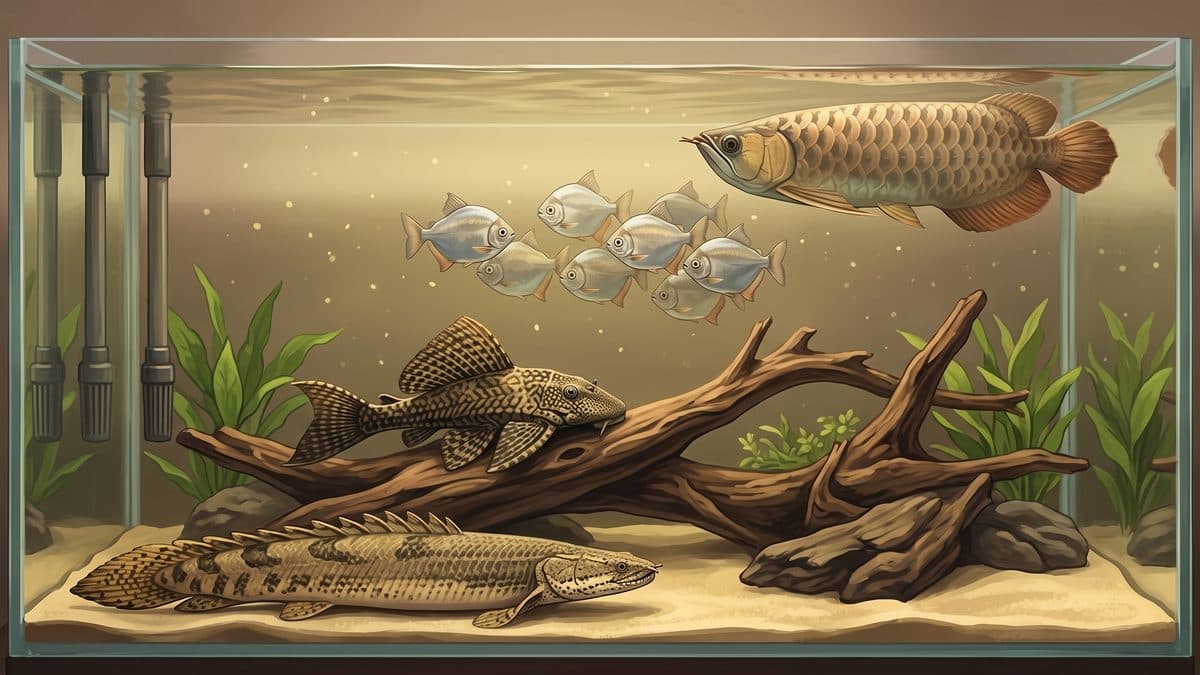
A well-stocked 300-gallon Arowana community might include:
- 1 Silver Arowana or Asian Arowana
- 6–8 Silver Dollars
- 2–3 large Bichirs (P. endlicheri or P. ornatipinnis)
- 1–2 large Plecos
- 5 Clown Loaches
This combination covers all water levels — Arowana at the top, Silver Dollars mid-water, Bichirs and Plecos at the bottom, Clown Loaches throughout. The tank needs robust filtration (sump system processing 8–10× tank volume per hour), weekly 30–40 % water changes, and a varied feeding regime that ensures all species receive appropriate food.
Add the Arowana last after all other species are established and at adult size. This reduces territorial aggression. Rearrange hardscape when introducing the Arowana to reset territorial claims. For water parameters, see our Arowana water parameters guide. For tank setup, see the Arowana tank setup guide.