Flowerhorn Care Overview
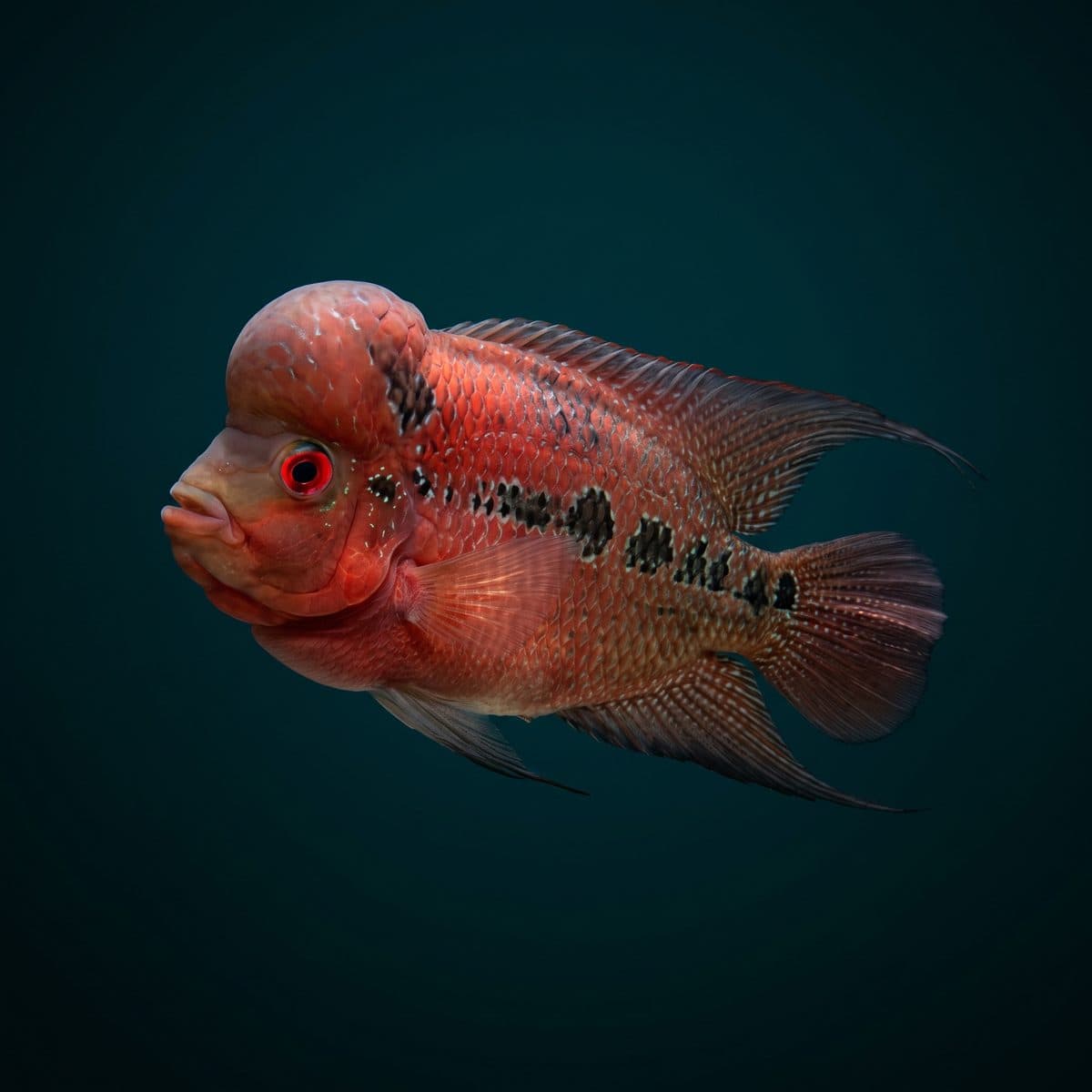
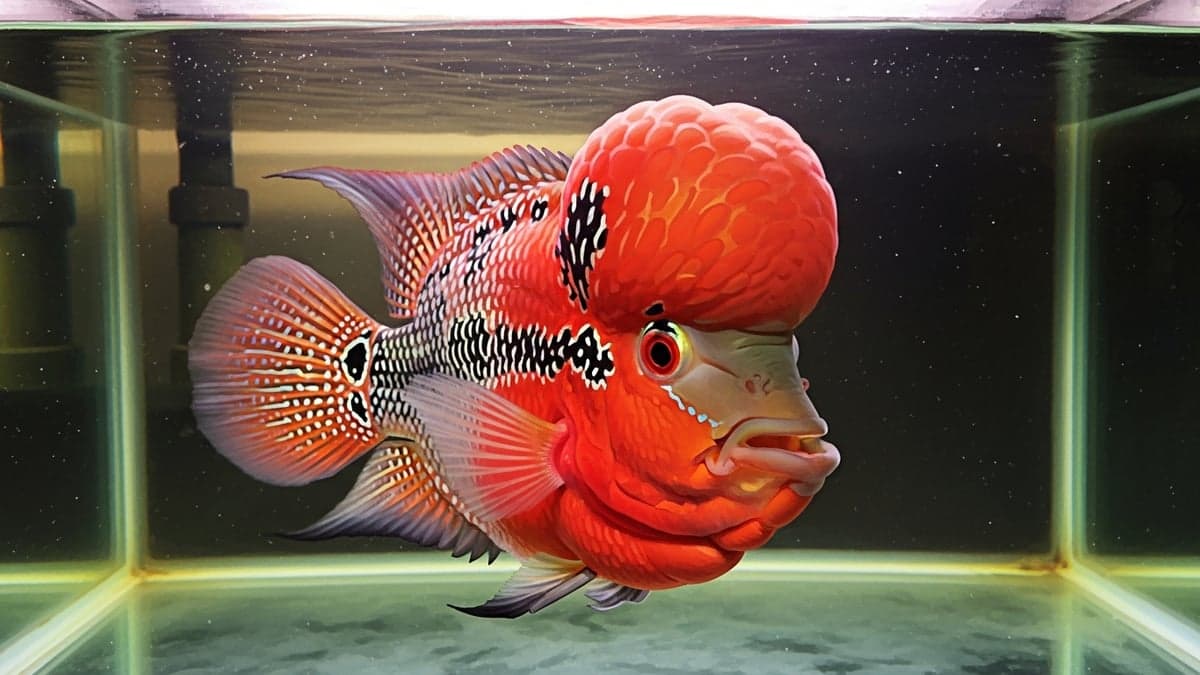
Flowerhorn Cichlids are among the most personable and visually striking aquarium fish — hybrid creations bred for bold colour, massive nuchal humps (koks), and aggressive interactive behaviour. Their care is straightforward for anyone with large-cichlid experience: robust tank, clean warm water, high-protein diet, and respect for their territorial nature. For the full deep-dive into strains, breeding, and competition grading, see our complete Flowerhorn guide.
Tank Setup
- Tank size: 75 gallons minimum for a single adult. 125 gallons is recommended for large males (30+ cm). Length of at least 4 feet (122 cm).
- Filtration: 8–10× turnover. Large canister filter (FX6 or equivalent) or sump. Supplementary sponge filters add biological backup.
- Substrate: Bare bottom (standard for serious keepers — easiest to clean, shows colour best) or fine gravel. Avoid sand — Flowerhorns dig aggressively and can expose the tank bottom.
- Décor: Minimal. Large, heavy rocks siliconed in place or on the tank bottom. Flowerhorns rearrange everything — unsecured décor can crack glass. No plants (they destroy them).
- Lid: Secure. Flowerhorns jump during feeding excitement or when startled.
- Lighting: Standard LED lighting on a timer (8–10 hours). Some keepers use colour-enhancing LEDs with elevated red/blue spectrum to showcase the fish's coloration.
Water Parameters
- Temperature: 28–31 °C (82–88 °F). Warmer within this range accelerates metabolism and growth.
- pH: 7.0–8.0. Slightly alkaline, reflecting Central American cichlid ancestry.
- Hardness: 8–20 dGH. Moderate to hard water.
- Ammonia/Nitrite: 0 ppm.
- Nitrate: Below 20 ppm. Weekly 30–50 % water changes.
Flowerhorns are more tolerant of parameter variation than many species on this site, but consistent, clean water produces the best colour and kok development. For broader cichlid water chemistry, see our cichlid water parameters guide.
Feeding for Growth, Colour, and Kok
Diet directly influences Flowerhorn colour intensity, kok size, and overall health:
- Staple: High-protein cichlid pellets (40–48 % protein) — Grand Sumo, Okiko Platinum, Hikari Cichlid Gold. Feed 2–3 times daily, as much as consumed in 2 minutes.
- Colour enhancers: Pellets with astaxanthin and canthaxanthin. Frozen shrimp and krill (natural carotenoid sources). Spirulina-enriched foods for blue-green tones.
- Protein supplements: Frozen bloodworm, mealworms, earthworms, and superworms 2–3 times per week.
- Avoid: Feeder fish (parasite risk), excess beef heart (fatty liver), foods with artificial dyes.
Juveniles: 3–4 meals daily for maximum growth. Adults: 2 meals daily with one fasting day per week.
Kok Stimulation
Kok development is primarily genetic, but environmental stimulation helps maximise potential:
- Mirror sessions: Place a mirror against the tank glass for 15–30 minutes daily. The Flowerhorn flares at its reflection, stimulating blood flow to the kok. Remove after 30 minutes to prevent chronic stress.
- Visual contact with other fish: Housing adjacent to another Flowerhorn (separated by a divider or separate tanks touching) provides ongoing stimulation.
- Solitary housing: Flowerhorns kept alone develop larger koks than those with tank mates. Energy directed toward defence in community settings is redirected to growth when solitary.
- Clean, warm water: Frequent water changes remove growth-inhibiting hormones. Temperature at the upper end (30–31 °C) accelerates metabolic processes including kok growth.
Aggression Management
- Keep alone. The simplest approach. A single Flowerhorn in a 75+ gallon tank is perfectly content.
- Use feeding tongs. Flowerhorns bite hard and fast. 30+ cm tongs keep fingers clear during feeding.
- Dim lights before maintenance. Reaching into a Flowerhorn tank during bright lighting can provoke a strike.
- No hands in the tank. Use a gravel vacuum, magnetic glass cleaner, and tongs to minimise hand exposure. Flowerhorn bites are painful and can break skin.
Common Health Issues
- Hole-in-the-head (HITH): Pitting lesions around the head and lateral line. Caused by poor water quality and nutritional deficiency (particularly vitamin C and calcium). Treat by improving water quality, enriching diet with vitamin-supplemented foods, and treating with metronidazole if Hexamita is suspected.
- White spot (Ich): Common after temperature drops or introduction of new fish. Raise temperature to 32 °C and treat with malachite green or formalin-based medication.
- Fin rot: Bacterial infection of fin edges, usually secondary to poor water quality or injury. Address water quality first; treat with antibacterial medication if needed.
- Kok shrinkage: The kok can deflate due to illness, stress, poor diet, or advanced age. Ensure optimal husbandry and high-protein feeding. Some shrinkage in older fish (8+ years) is normal.
Daily and Weekly Routine
- Morning: Feed (staple pellets). Brief visual health check — colour, fin condition, appetite.
- Afternoon: Mirror session (15–30 min). Second feed (variety — frozen shrimp, bloodworm, or krill).
- Evening: Remove uneaten food if any. Check temperature.
- Weekly: 30–50 % water change. Test ammonia, nitrite, nitrate, pH. Clean filter media (rotate — never all at once). Inspect heater and equipment.
- Monthly: Clean or replace filter pads. Inspect lid security. Photograph the fish from standardised angles to track kok and colour development over time.
With proper care, Flowerhorn Cichlids live 10–12 years, providing a decade of interactive, visually spectacular fishkeeping. Browse The Fish Collection's cichlid collection for select Flowerhorn specimens.
Buying a Healthy Flowerhorn
Flowerhorn pricing runs from 20-dollar juveniles to four-figure show males, and quality varies as widely as price. Before you buy, check:
- Body and balance: A thick, symmetrical body, straight spine, and even swimming. Avoid fish with pinched heads or kinked caudal peduncles — common in poorly culled batches.
- Active aggression: A healthy Flowerhorn charges the glass when you approach. A juvenile hiding in the corner is either sick or badly stressed.
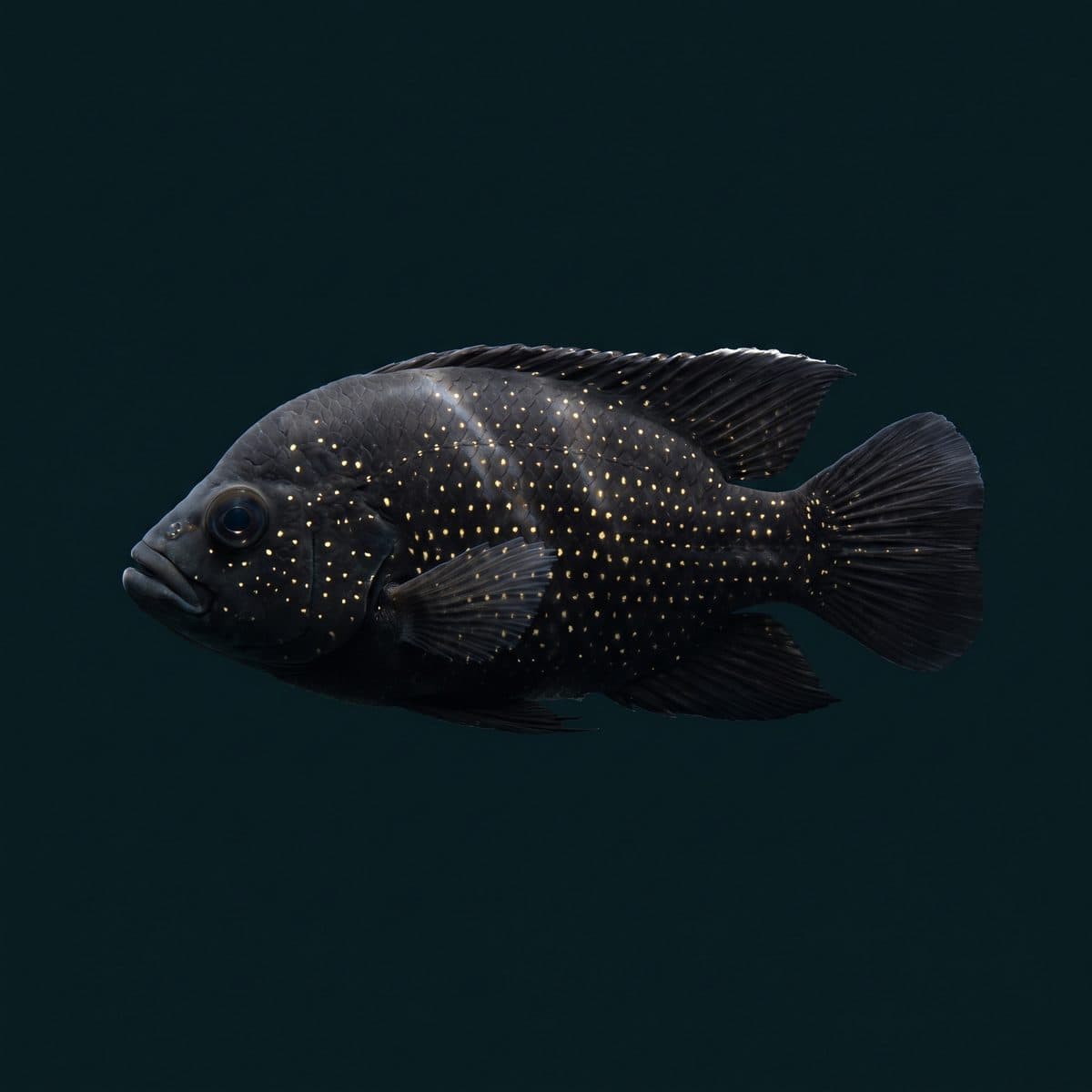
- Colour honesty: Juveniles change dramatically as they mature — "fader" strains literally darken to near-black before recolouring. Buy from sellers who show parent fish or grow-out photos rather than promising a specific adult look from a 5 cm juvenile.
- Kok expectations: Small juveniles show no kok at all, and nobody can guarantee one — it's genetics first, husbandry second. Treat any "guaranteed monster kok" claim as pure marketing.
Fair warning on the gamble: even from excellent bloodlines, only a fraction of male juveniles develop show-quality koks, and females rarely develop large ones at all. If the kok matters to you, budget for a proven sub-adult male instead of rolling the dice on a juvenile — it costs more upfront and saves real disappointment.