Intermediate
3 Restantes
Kohaku Koi
Cyprinus rubrofuscus
a partir de R$ 1.739,50Get a quote
Cyprinus rubrofuscus
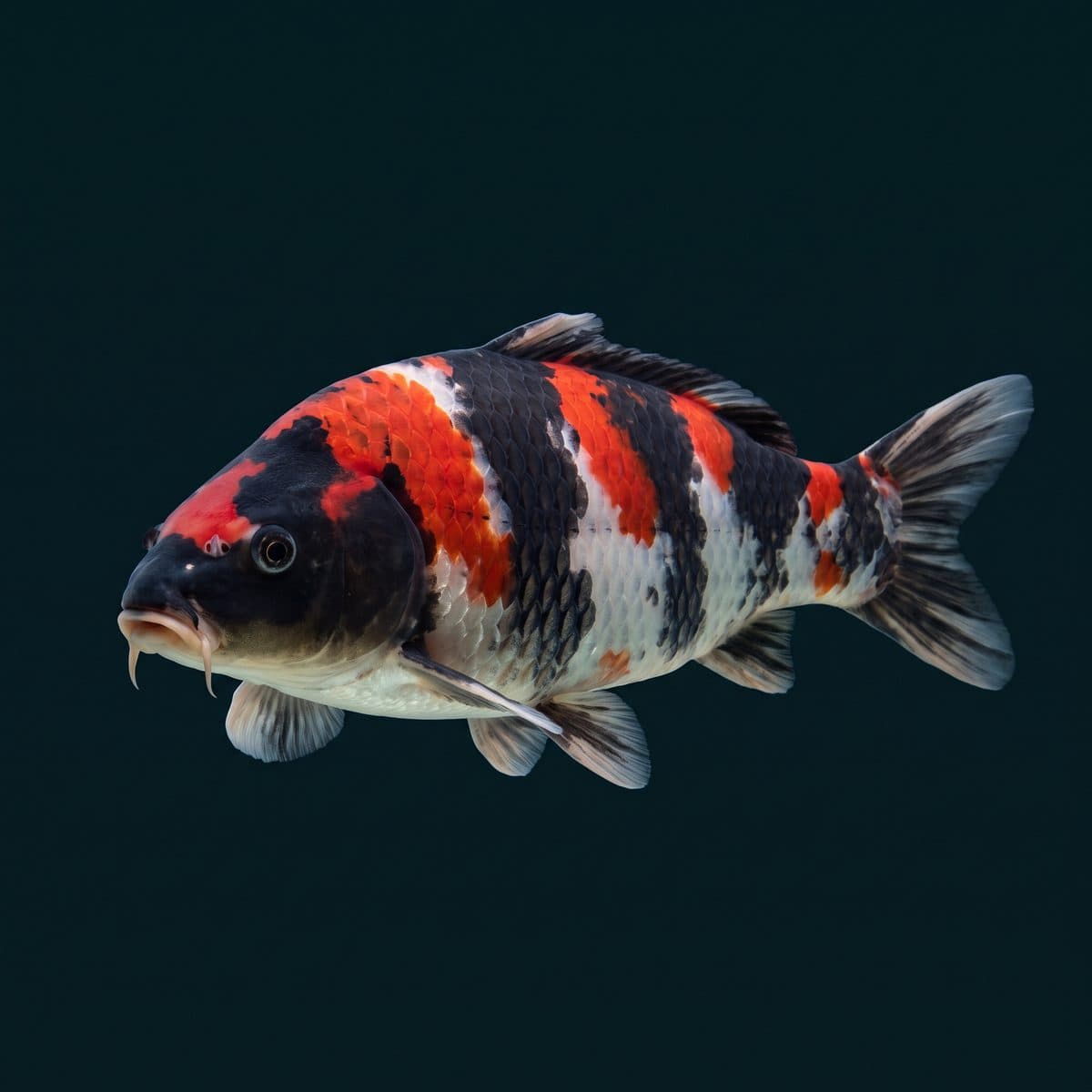
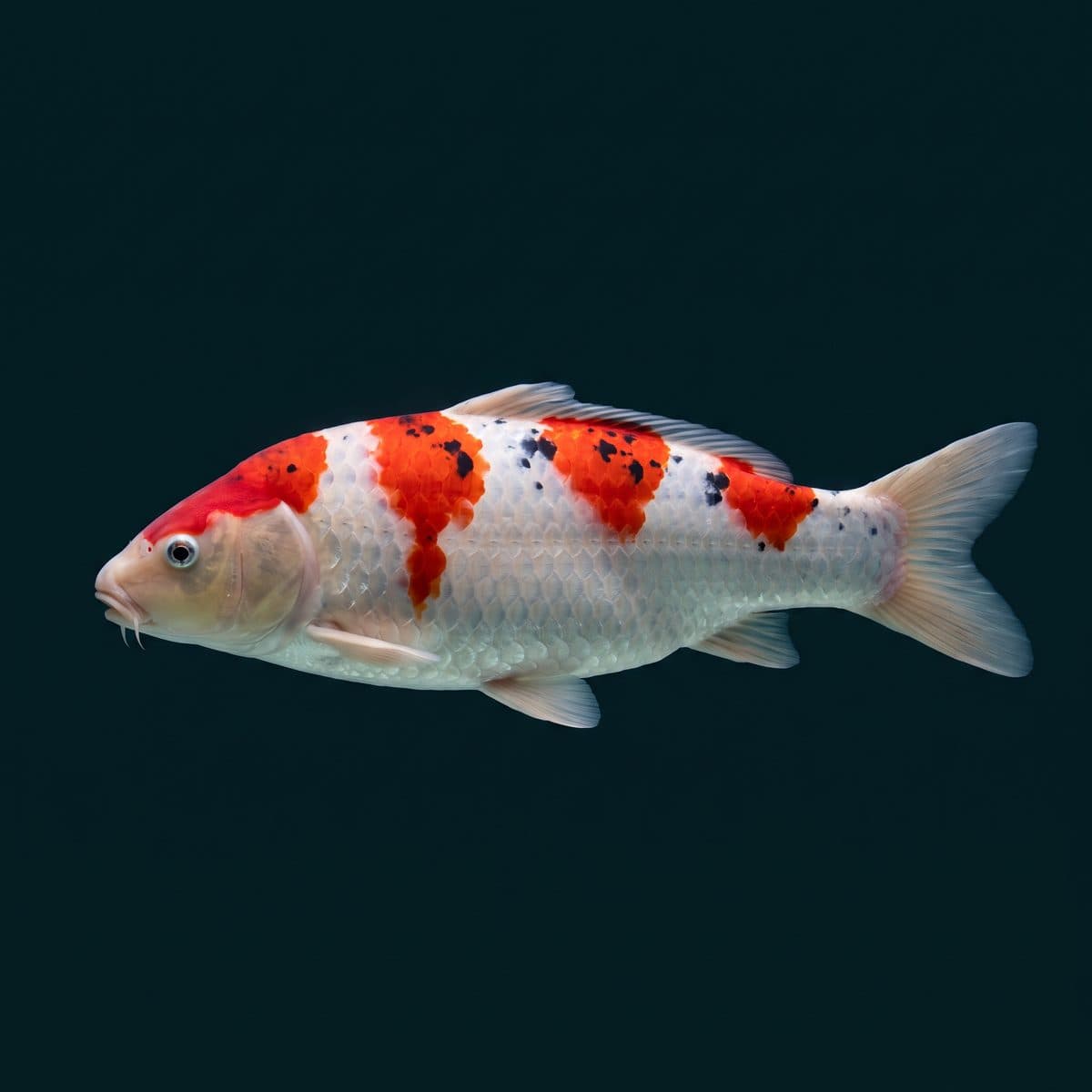
The Sanke — formally Taisho Sanshoku — is the second pillar of the "Big Three" koi varieties that form the cornerstone of Nishikigoi appreciation, alongside Kohaku and Showa. What distinguishes the Sanke from its Kohaku cousin is the addition of a third colour: small, accent-like patches of black (sumi) that punctuate the red-and-white pattern without dominating it. The effect is one of refined complexity — a Kohaku elevated by strategic black accents that add depth and visual rhythm to the composition. The Fish Collection sources our Sanke from established Japanese breeders in the Niigata region who have spent generations perfecting the balance between the three colours, producing fish with the clarity, depth, and pattern precision that define competition-quality specimens.
Insulated, oxygen-packed transit · live-arrival guaranteed
Tank size
1000+ gallons
Temperamento
Peaceful
Dieta
Omnivore
Water
65–75°F · pH 7–8.6
Tell us what you're dreaming of — we'll reply with a price tailored to you.
Happy together
Not sure if this fish is right for you?
Our team will happily help you choose.
The Sanke — formally Taisho Sanshoku — is the second pillar of the "Big Three" koi varieties that form the cornerstone of Nishikigoi appreciation, alongside Kohaku and Showa. What distinguishes the Sanke from its Kohaku cousin is the addition of a third colour: small, accent-like patches of black (sumi) that punctuate the red-and-white pattern without dominating it. The effect is one of refined complexity — a Kohaku elevated by strategic black accents that add depth and visual rhythm to the composition. The Fish Collection sources our Sanke from established Japanese breeders in the Niigata region who have spent generations perfecting the balance between the three colours, producing fish with the clarity, depth, and pattern precision that define competition-quality specimens.
The art of evaluating a Sanke lies in understanding the relationship between its three elements. The white base (shiroji) should be the same pure snow-white demanded in Kohaku — luminous, unblemished, and free of yellowing. The red (hi) markings follow Kohaku principles: deep, uniform crimson with crisp edges, balanced across the body. Where the Sanke becomes its own art form is in the sumi. Black markings should appear as small, well-placed accents — primarily on the body above the lateral line and occasionally on the pectoral fins (tejima, which appears as black stripes on the fin joints). Critically, sumi should not appear on the head of a quality Sanke; a clean, sumi-free head with an attractive hi marking is a hallmark of the variety. The black accents should complement the red pattern without overwhelming it — think of sumi as punctuation in a well-written sentence.
Our current Sanke is a Japanese import measuring 18 to 24 inches, displaying the balanced three-colour pattern that Sanke enthusiasts prize. The sumi is well-developed and stable — an important consideration, as black markings in koi can take years to fully emerge and stabilise. Young Sanke often show only faint or partial sumi that strengthens dramatically as the fish matures, a process called sumi development. A Sanke with stable, well-placed sumi at this size is a strong indicator of future show potential.
Pond requirements mirror those of all koi: a minimum 1,000 gallons with robust filtration, though 2,500 gallons or more is recommended for a collection. Water temperature between 65 and 75 degrees Fahrenheit during active months, with pH maintained between 7.0 and 8.6. Sanke are hardy, long-lived fish that thrive in the same conditions as other Nishikigoi varieties. They are peaceful community fish that coexist well with other koi varieties and with goldfish, though koi should not be housed with smaller fish that might be accidentally consumed.
Feeding a Sanke for optimal colour development requires a thoughtful approach. High-quality colour-enhancing koi pellets containing spirulina and astaxanthin will intensify the red hi markings. The sumi benefits from cooler water temperatures during autumn, which is why Japanese breeders often keep Sanke in mountain mud ponds where seasonal temperature drops naturally deepen the black. In Western pond keeping, maintaining good water quality and a varied diet achieves excellent colour results over time.
The Fish Collection ships all koi in oxygen-saturated, temperature-controlled containers with our unconditional live arrival guarantee. Our koi specialists are available for consultation on pond design, water management, and the nuances of Sanke appreciation.
Perguntas Comuns
Recursos Especializados
Guia da Espécie
The Taisho Sanke — universally shortened to Sanke — is one of the three most prestigious koi varieties (the Gosanke, alongside Kohaku and Showa Sanshoku). First developed in the Taisho era of Japan (1912–1926), the Sanke displays a tri-colour pattern of pure white (shiroji), deep red (hi), and jet black (sumi) that, when perfectly balanced, is considered among the most beautiful expressions in the koi world. Understanding Sanke pattern appreciation — what makes a good Sanke versus a great one — is central to koi connoisseurship.
Leia o guia completo →Guia de Cuidados
A comprehensive guide to designing and building a koi pond, covering pond sizing, depth requirements, liner and construction options, multi-stage filtration, aeration, plumbing, aquatic plants, predator deterrents, and year-round seasonal maintenance.
Leia o guia de cuidados →Você Também Pode Gostar
a partir de R$ 1.988
Indicative price