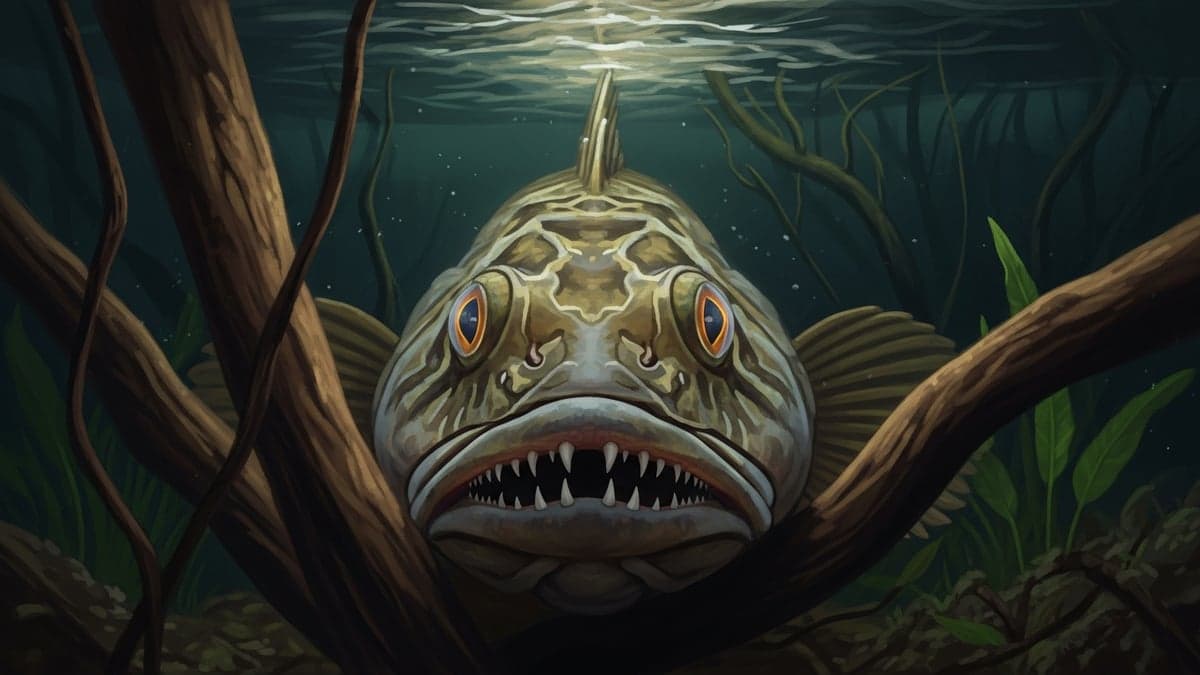
What Are Wolf Fish?
Wolf fish are freshwater predators belonging to the family Erythrinidae, native to rivers and floodplains across South and Central America. The common name comes from their prominent canine-like teeth and aggressive feeding behaviour — these are ambush predators designed to strike with explosive speed and lock onto prey with a vice-like bite. In the aquarium hobby, wolf fish occupy the same niche as other large predators like Arowana and freshwater stingrays: they are kept by experienced aquarists who appreciate raw predatory behaviour and are prepared for the commitment involved.
Wolf fish are not community fish. They are territorial, often aggressive toward conspecifics and tank mates, and possess the dentition to cause serious damage to anything they perceive as food or threat. That said, their intelligence, personality, and dramatic feeding response make them some of the most engaging fish in the predator hobby. Understanding the species differences and their specific requirements is the first step to keeping them successfully.
Wolf Fish Species in the Aquarium Hobby
Hoplias malabaricus — Trahira
The most commonly kept wolf fish. Adults reach 30–50 cm (12–20 inches) depending on locality, making them manageable in a 125-gallon tank. Colouration is typically mottled brown and grey with darker banding — perfect camouflage for an ambush predator. Trahiras are adaptable regarding water chemistry, tolerating pH 5.5–7.5 and temperatures of 22–28 °C. Their availability and relatively moderate adult size make them the recommended starting point for wolf fish keeping.
Hoplias aimara — Giant Wolf Fish
The apex species. H. aimara reaches 60–100 cm (24–40 inches) and can exceed 20 kg in the wild. These are serious predators requiring 300+ gallon tanks, industrial-grade filtration, and extreme caution during tank maintenance — a bite from an adult aimara can cause genuine injury. Only experienced monster-fish keepers should attempt this species. Their sheer power and imposing presence are unmatched in the freshwater predator hobby.
Hoplias curupira — Red Wolf Fish
A more recently described species complex, H. curupira encompasses several red-tinged wolf fish from blackwater habitats. Adults reach 25–40 cm and display reddish-brown colouration with dark blotching. They prefer softer, more acidic water (pH 5.0–6.5) than H. malabaricus and are somewhat less aggressive, though still not community-safe. A 100-gallon tank suits a single adult.
Erythrinus erythrinus — Rainbow Wolf Fish
The smallest and most colourful species commonly available. Adults reach 15–25 cm (6–10 inches) and display brilliant red, orange, and green iridescence — hence the "rainbow" name. Their smaller size makes a 55–75 gallon tank adequate for a single specimen. Despite their beauty, they are every bit as aggressive as their larger relatives and should be housed alone or with carefully chosen tank mates too large to eat.
Tank Setup for Wolf Fish
Wolf fish are ambush predators that spend most of their time stationary, waiting in cover for prey to pass within strike range. Tank design should reflect this behaviour:
- Tank size: 125 gallons minimum for H. malabaricus, 75 gallons for E. erythrinus, and 300+ gallons for H. aimara. Length and footprint matter more than height — wolf fish rarely use the upper water column.
- Filtration: Heavy biological filtration is essential. Wolf fish are messy eaters that produce substantial waste. A sump or large canister filter rated for 8–10× turnover is the minimum. Run activated carbon to manage odour from meaty feeding.
- Substrate: Fine sand or bare bottom. Avoid gravel — uneaten food and waste fall between the pieces and decay. Sand also allows wolf fish to partially bury themselves, which they do in some localities.
- Cover: Essential. Driftwood, PVC pipes (hidden behind hardscape), and dense plant thickets give wolf fish the ambush points they need to feel secure. A wolf fish without cover is a stressed wolf fish — and stressed wolf fish are more aggressive and prone to injuring themselves against tank walls.
- Lid: Mandatory and secure. Wolf fish can and do jump, especially when startled or during feeding. Use a tight-fitting lid with no gaps larger than 1 cm.
Water Parameters
Wolf fish are generally adaptable, but species-specific preferences exist:
- Temperature: 24–28 °C (75–82 °F) for most species. H. curupira prefers the warmer end.
- pH: 5.5–7.5 for H. malabaricus; 5.0–6.5 for blackwater species (H. curupira, some E. erythrinus localities).
- Hardness: Soft to moderate (2–15 dGH). Most Amazonian species come from very soft water.
- Ammonia/Nitrite: 0 ppm — non-negotiable with predators producing heavy bioload.
- Nitrate: Below 40 ppm; below 20 ppm preferred. Weekly 30–50 % water changes maintain this.
Tannin-stained water (achieved with Indian almond leaves, alder cones, or peat filtration) is beneficial for all wolf fish species. It reduces stress, enhances natural colouration, and provides mild antibacterial properties.
Feeding Wolf Fish
Wolf fish are obligate carnivores with powerful jaws and an aggressive feeding response. In the wild they eat fish, crustaceans, insects, and occasionally terrestrial animals that fall into the water.
Recommended captive diet:
- Frozen fish fillets: Tilapia, smelt, silversides, and lance fish. Cut to appropriate size. This should form the staple diet.
- Frozen shrimp and prawns: Whole with shell — provides roughage and calcium.
- Earthworms and nightcrawlers: Excellent nutrition, readily accepted, and inexpensive.
- High-quality carnivore pellets: Hikari Massivore or Northfin Predator. Many wolf fish can be trained onto pellets with patience — a significant advantage for long-term nutrition balance.
Avoid feeding live feeder fish as a staple. Goldfish and rosy reds carry parasites, lack nutritional balance, and introduce disease. Live food is occasionally useful for conditioning or coaxing a newly arrived specimen to eat, but should not exceed 10 % of the diet.
Feed juveniles daily; adults 3–4 times per week. Wolf fish are prone to obesity in captivity — their metabolism is adapted to feast-and-famine cycles. A fasting day between feeds mimics natural conditions and prevents hepatic lipidosis. For more on predator feeding, see our predatory fish feeding guide.
Aggression Management
Aggression is the single biggest challenge of wolf fish keeping. Understanding its drivers helps you manage it:
- Territorial aggression: Wolf fish claim ambush points and defend them. Provide more hiding spots than fish. If keeping multiple specimens (not recommended for beginners), ensure the tank is large enough that each fish can establish territory out of the other's line of sight.
- Feeding aggression: Wolf fish strike at any movement during feeding. Use feeding tongs (30 cm minimum length) and present food calmly. Never hand-feed — wolf fish cannot distinguish between fingers and food at close range.
- Conspecific aggression: Most wolf fish species are solitary as adults. Keeping two H. malabaricus in a 125-gallon tank almost always results in one killing the other. Pairs can sometimes coexist in 300+ gallon tanks with extensive line-of-sight breaks, but this requires careful monitoring.
- Stress-induced aggression: Sudden lighting changes, vibrations, and maintenance intrusions can trigger panic biting. Dim the lights before reaching into the tank. Move slowly and predictably.
Tank Mates for Wolf Fish
The safest tank mate for a wolf fish is no tank mate. However, in sufficiently large systems (200+ gallons for H. malabaricus, 500+ for H. aimara), certain species can coexist:
- Large armoured catfish: Plecos (Pterygoplichthys, large Panaque species) and Raphael catfish are protected by armour plating and occupy different tank zones. They are generally ignored.
- Large cichlids: Oscar, Green Terror, and Flowerhorn Cichlids can hold their own in tanks of 200+ gallons — but monitor constantly for the first 2 weeks.
- Other large predators: Peacock Bass, Arowana (in very large systems), and Bichirs sometimes coexist with wolf fish, provided all individuals are of similar size.
Never keep wolf fish with: anything small enough to fit in their mouth (they will eat it), slow-moving fish without armour (easy prey), or other wolf fish in undersized tanks.
Health and Lifespan
Wolf fish are remarkably hardy once established. Common health issues are almost always husbandry-related:
- Obesity: The most common problem. Overfeeding leads to fatty liver disease. Maintain a lean feeding schedule with regular fasting days.
- Bacterial infections: Usually secondary to poor water quality or injuries sustained during feeding or aggression. Maintain impeccable water quality and treat wounds with Methylene Blue or antibacterial dips.
- Injury from striking glass: Startled wolf fish lunge at tank walls. Provide adequate cover and avoid sudden light or noise changes near the tank.
With proper care, H. malabaricus lives 15–20 years in captivity. H. aimara can exceed 20 years. These are long-term commitments — plan accordingly. Wolf fish are available from specialist predator fish dealers, including The Fish Collection's predator collection.