Overview
Koi (Nishikigoi) are ornamental varieties of the common carp, selectively bred in Japan since the 1820s for colour, pattern, and body conformation. Modern koi come in over 100 named varieties across 16 official classification groups. They are long-lived (25–35 years with proper care), highly social, and can grow to 24–36 inches. Koi keeping is a global hobby with competitive shows, dedicated breeders, and individual fish commanding prices from $10 to over $1 million for grand champions.
Pond Requirements
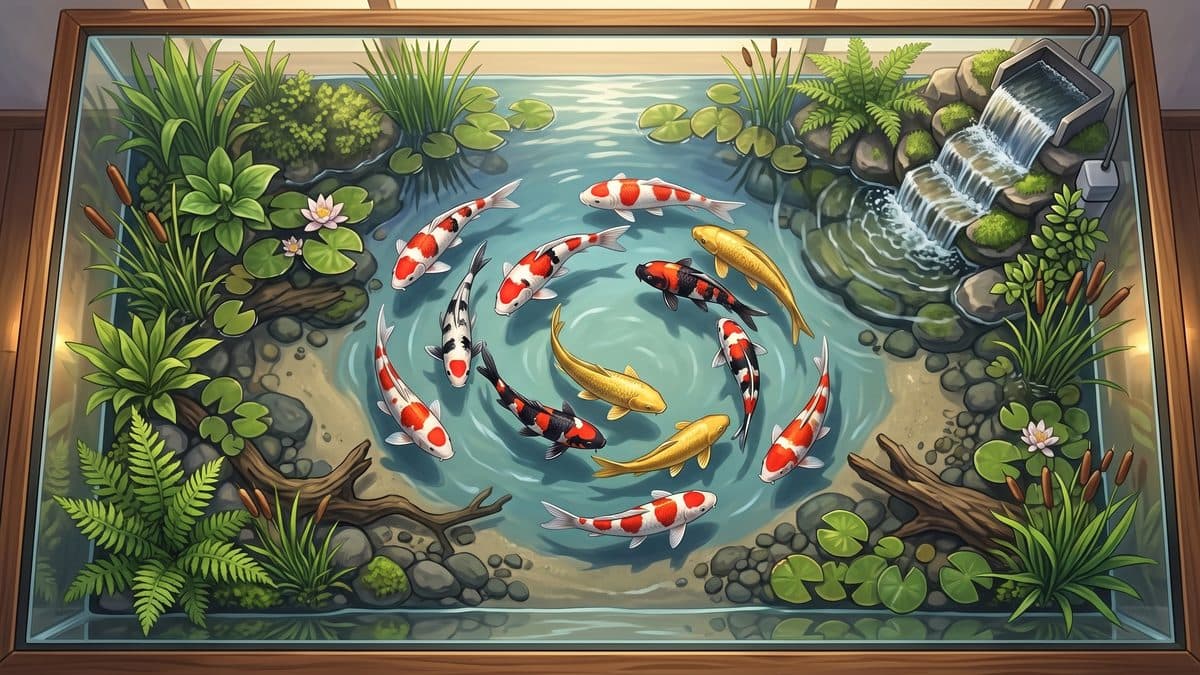
Koi are pond fish — indoor tanks are only viable for juveniles or quarantine. Minimum pond specifications:
- Volume: 1,000 gallons minimum; 250 gallons per adult koi
- Depth: 3 feet minimum (4+ feet in regions with harsh winters for thermal layering)
- Filtration: Multi-stage system — settlement chamber, biological media (moving bed or shower filter), UV clarifier
- Aeration: Air pumps with diffuser stones; essential in summer when warm water holds less oxygen
- Bottom drain: Gravity-fed bottom drain is the most efficient way to remove waste from a koi pond
Water Quality
Koi tolerate a wide range but thrive with stable parameters:
- Temperature: Active range 65–75 °F; survive 35–85 °F
- pH: 7.0–8.6 (stable is more important than exact number)
- Ammonia/Nitrite: 0 ppm (critical)
- Nitrate: Below 40 ppm
- Dissolved oxygen: Above 6 mg/L
Test water weekly. Spring is the most dangerous period — rising temperatures activate koi metabolism and bacteria simultaneously, while the biofilter is still sluggish from winter dormancy.
Seasonal Feeding
Koi feeding is temperature-dependent — their metabolism slows dramatically in cold water:
- Below 50 °F: Do not feed — koi cannot digest food at these temperatures
- 50–60 °F: Wheat germ pellets, small amounts every 2–3 days
- 60–70 °F: Standard koi pellets, once daily
- 70–85 °F: High-protein growth pellets, 2–3 times daily
Supplement with treats: watermelon, oranges, lettuce, and earthworms. Never overfeed — uneaten food degrades water quality rapidly.
Popular Koi Varieties
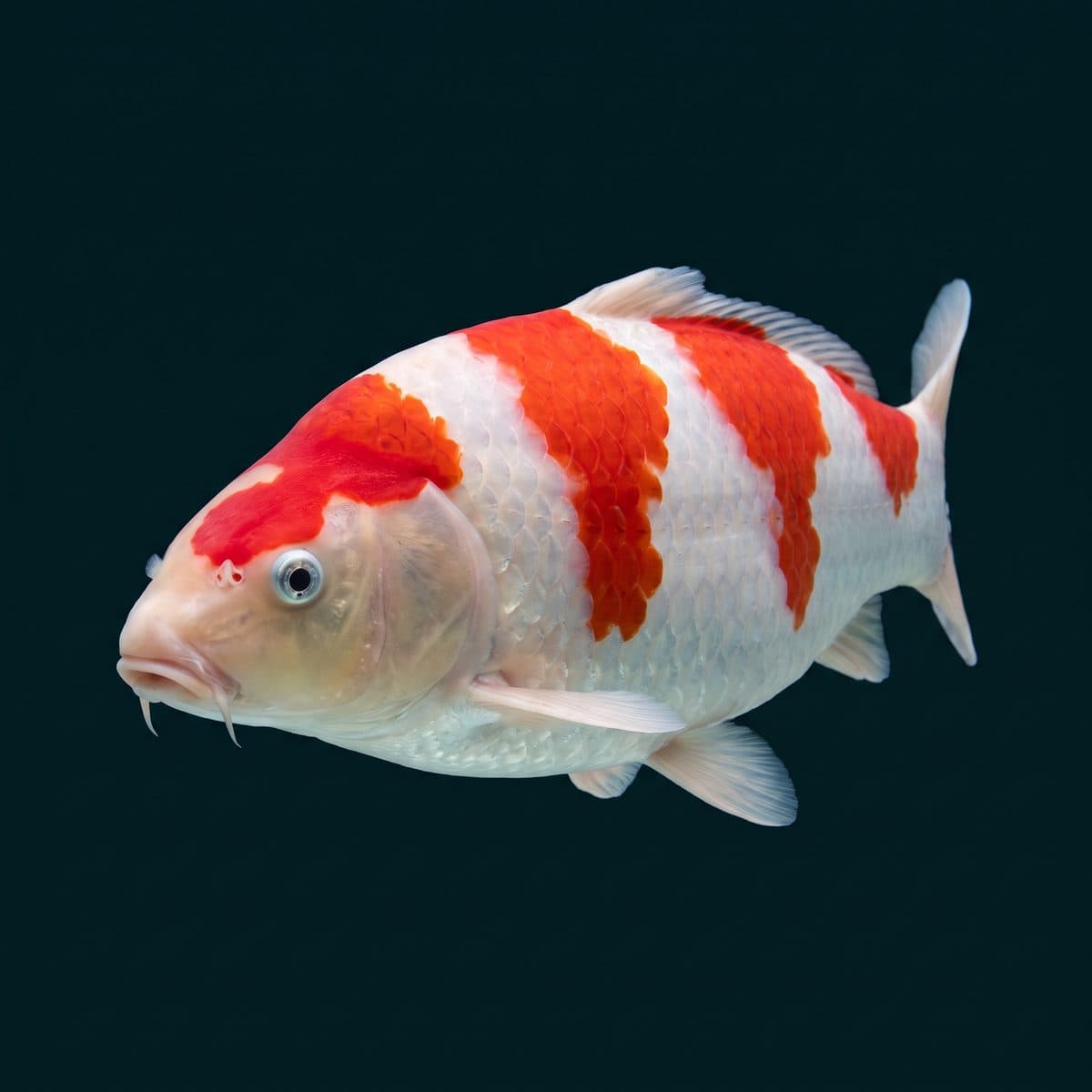
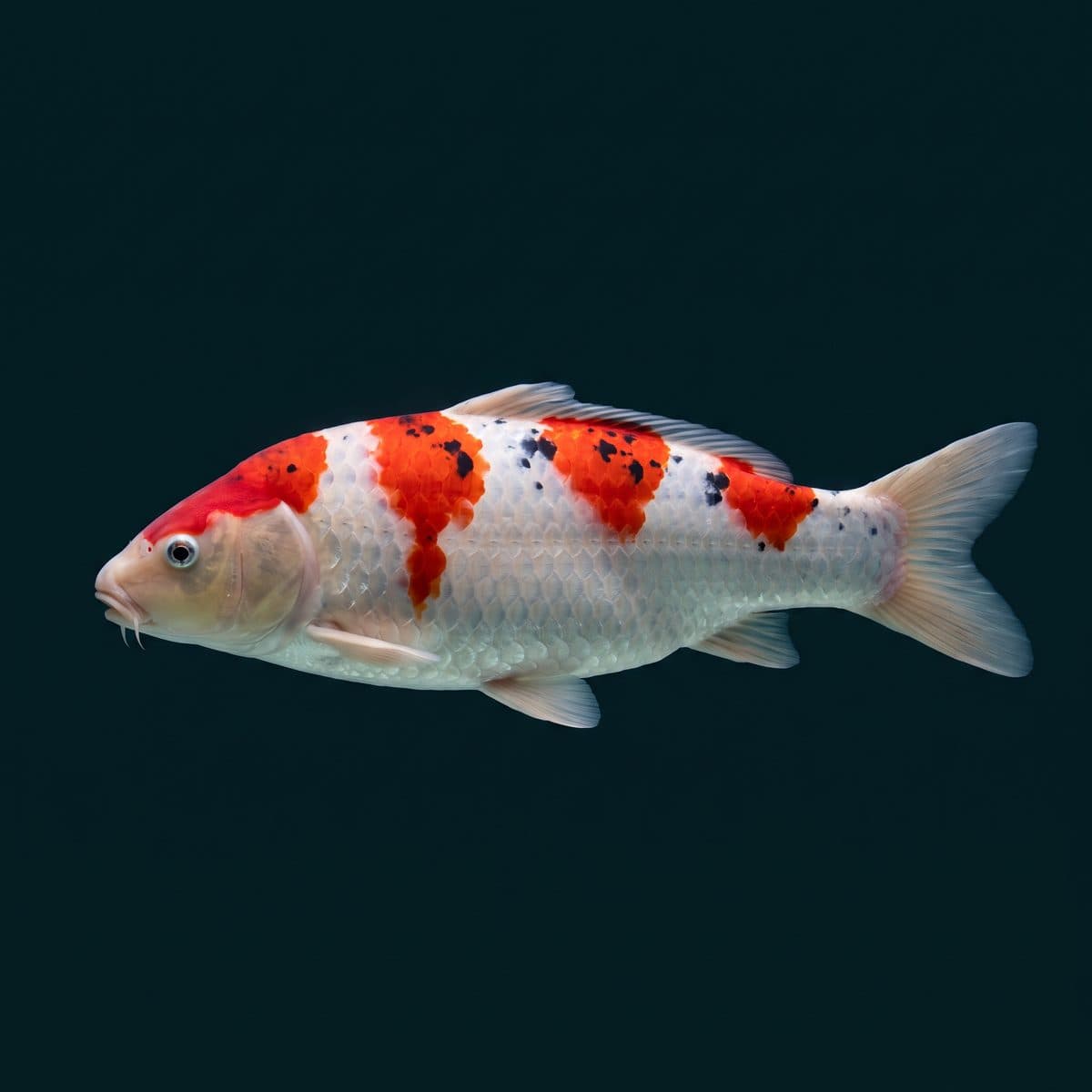
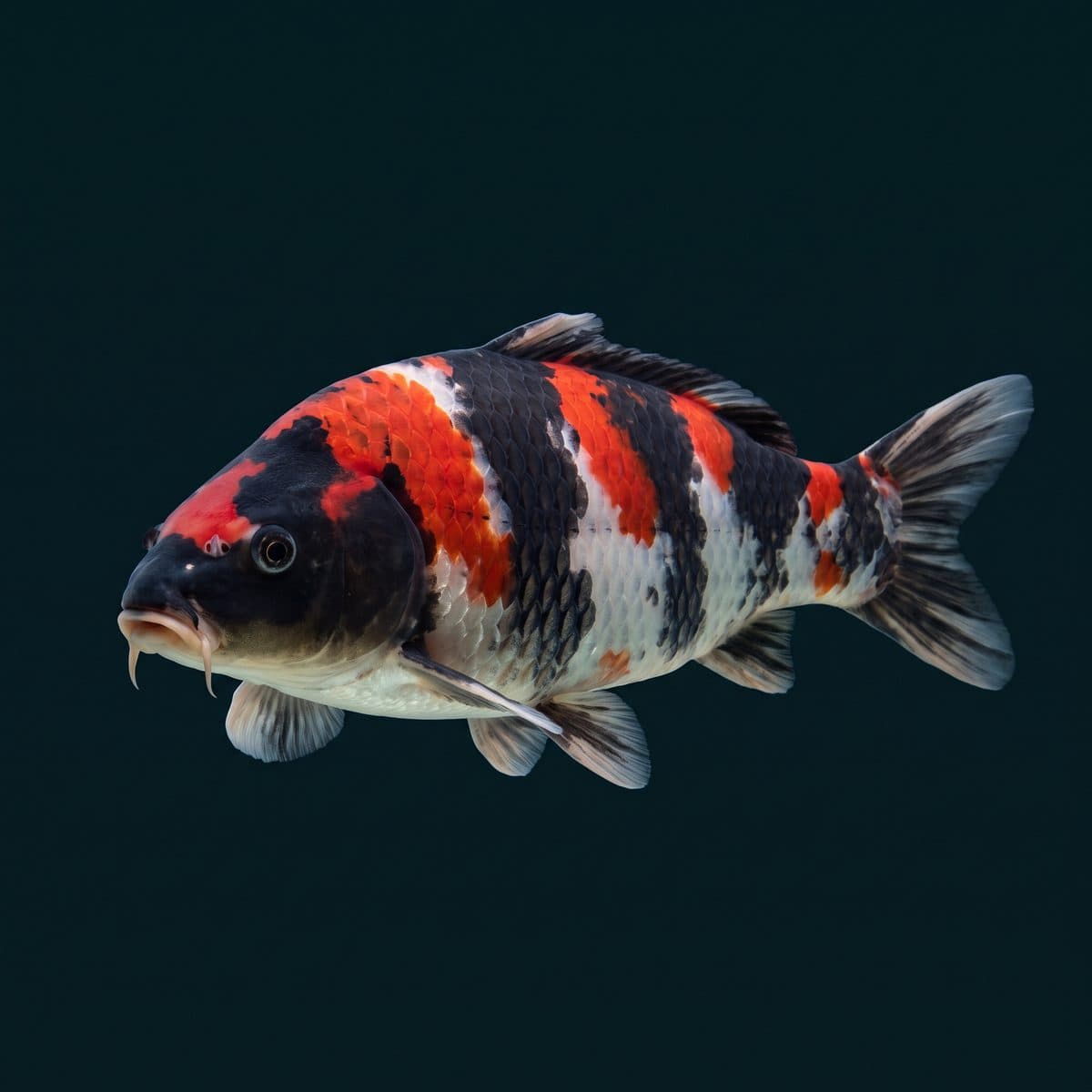
The "Big Three" (Gosanke) are the most prized: Kohaku (white with red patterns), Taisho Sanke (white with red and black), and Showa Sanshoku (black with red and white). Other popular varieties include Butterfly Koi (long-finned), Ogon (metallic gold), Shusui (scaleless blue with red), and Asagi (blue netted scales with red belly).
Breeding
Koi spawn naturally in late spring when temperatures reach 68–72 °F. Females scatter adhesive eggs on vegetation or spawning brushes; males fertilise externally. A single female can produce 100,000+ eggs. Remove eggs or parents to prevent predation. Fry hatch in 4–7 days and require infusoria, then powdered fry food. Culling is standard practice — only 5–10% of fry will develop desirable patterns.
Common Diseases
The most serious koi diseases include KHV (Koi Herpes Virus — fatal, no cure, quarantine all new fish), Aeromonas/ulcer disease (bacterial, treat with antibiotics and salt), and parasites (Costia, Trichodina, anchor worm — treat with potassium permanganate or formalin). Spring is peak disease season. Quarantine all new koi for 4–6 weeks in a separate system before introduction to your main pond.
Predator Protection
Koi ponds attract herons, raccoons, cats, and birds of prey. Protection measures include pond netting, motion-activated sprinklers, steep pond walls (minimum 18-inch vertical edge above water), and providing depth refuges (3+ feet) where koi can escape predators. Decoy herons are ineffective — real herons are not territorial enough to be deterred.
A Season-by-Season Care Calendar
Koi keeping runs on the calendar. Water temperature drives everything — metabolism, immune function, even how well your biofilter works — so the smart move is to work with the seasons instead of against them:
| Season | Water Temp | Priorities |
|---|---|---|
| Spring | 50–65 °F | Restart feeding slowly with wheat germ, service filters, test water often — disease risk peaks now |
| Summer | 65–85 °F | Feed for growth, maximise aeration, watch oxygen on hot nights, shade part of the pond |
| Autumn | 50–65 °F | Net the pond before leaf fall, taper feeding back to wheat germ, do the final filter service |
| Winter | 35–50 °F | Stop feeding below 50 °F, keep a hole open in the ice for gas exchange |
Two moments deserve extra respect. In spring, koi immune systems lag behind waking parasites and bacteria — the notorious "spring sickness" window between 50 and 60 °F. Feed lightly, test often, and hold off on new fish until the pond stabilises above 60 °F. In winter, never bang on the ice to open a breathing hole (the pressure wave can injure dormant fish); float a pond de-icer or run an air stone just below the surface instead.
Quarantining New Koi
KHV changed the koi hobby permanently — one infected fish can wipe out a pond you've built over a decade, and there's no cure. That's why serious keepers quarantine every new arrival, no exceptions, not even fish from "trusted" dealers.
A workable quarantine setup is a 100–300 gallon tank or tub with a cycled filter, air pump, heater, and a cover net (new koi jump). Run arrivals through this sequence:
- Weeks 1–2: Observe and feed lightly. Salt at 0.3% knocks back most external parasites. Test ammonia daily — quarantine filters are easily overwhelmed.
- Weeks 3–4: Raise the temperature gradually to 74–77 °F. KHV expresses in this range, so a carrier shows symptoms in quarantine instead of in your pond.
- Weeks 4–6: All clear? Match quarantine water to pond water and transfer on a mild, low-stress day.
It feels like overkill right up until the first time it catches something. And it will.
Growth, Stocking, and Planning Ahead
Koi grow fast when fed well in warm water — 6–10 inches in year one, and 18–24 inches by year four or five. That's why the stocking maths matters so much: the classic rule is 250 gallons per adult koi, and we'd treat that as a floor, not a target. A 2,500-gallon pond holds ten adult koi comfortably — not the thirty juveniles it could physically fit today.
Overstocking sneaks up on you in three ways: nitrate climbs even with regular water changes, dissolved oxygen dips overnight in summer, and growth visibly stalls — stunted koi develop big heads on short bodies, and it's not subtle. If you're seeing any of these, you're overstocked for your filtration, whatever the online calculator said.
Plan for the fish you'll have in five years, not the ones in the bag. Buying fewer, better koi and growing them out is more satisfying — and dramatically cheaper in filtration, food, and heartbreak — than cramming a pond with impulse buys. When you do add, quarantine first (see above), and add in late spring or early summer so new fish are fully established before facing their first winter.