Overview
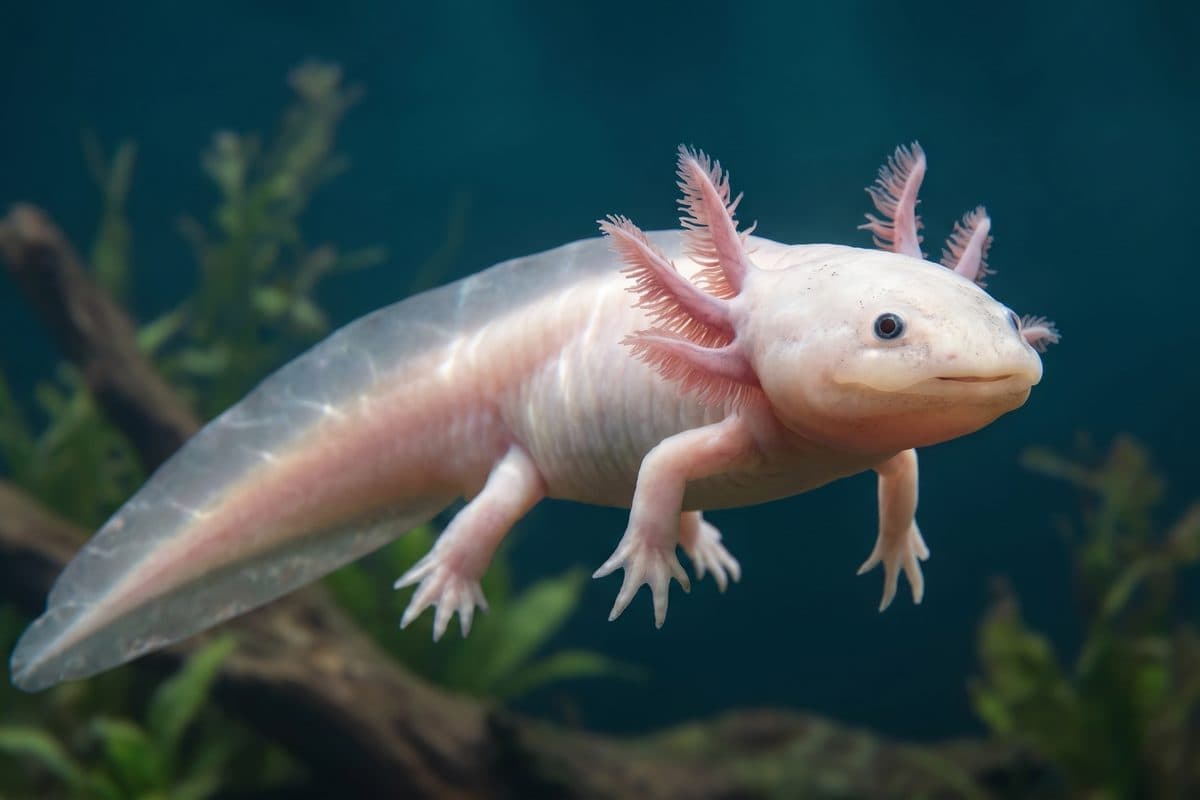
The axolotl (Ambystoma mexicanum) occupies a singular position in the aquatic hobby: it is simultaneously one of the most scientifically important vertebrates on the planet and one of the most charming creatures a keeper can maintain at home. Unlike virtually all other amphibians, the axolotl is permanently neotenic — it retains its larval features, including feathery external gills, a caudal fin, and a fully aquatic lifestyle, throughout its entire life. It never undergoes metamorphosis under normal conditions, a trait that has made it indispensable to regenerative medicine research.
Originally endemic to the lake complex of Xochimilco and Chalco in the Valley of Mexico, wild axolotl populations have been devastated by urbanisation, water pollution, and the introduction of invasive tilapia and Asian carp. The species is listed as Critically Endangered on the IUCN Red List, with wild population estimates in the low hundreds. Paradoxically, the captive population numbers in the millions — axolotls breed readily in aquaria, and the hobby has maintained robust genetic lines for decades.
At The Fish Collection, we source our axolotls exclusively from specialist breeders who maintain detailed lineage records and prioritise genetic diversity. Every specimen we ship is health-screened, quarantined for a minimum of 14 days, and packed in insulated containers with cold packs to maintain the cool temperatures these animals require. This guide distils our practical experience into a comprehensive care manual for keepers at every level.
Natural Habitat
The historic habitat of Ambystoma mexicanum is the high-altitude lake system of the Valley of Mexico, situated at approximately 2,240 metres above sea level. Lake Xochimilco — the last remnant of the once-vast lake complex — is a shallow, cool-water environment characterised by dense aquatic vegetation, muddy substrates, and slow-to-stagnant flow. Water temperatures historically ranged from 14 °C to 20 °C (57–68 °F), with moderate hardness and a neutral-to-slightly-alkaline pH.
The axolotl is a benthic predator, spending most of its time walking along the lake floor or resting among aquatic plants. In the wild, it feeds on insect larvae, small fish, worms, and crustaceans, using a distinctive suction-feeding mechanism to inhale prey. Understanding this ecology is essential: axolotls are not swimmers in the conventional sense. They are bottom-dwellers that walk, and their tank should be designed with floor space as the primary consideration rather than water depth.
The cool, oxygen-rich water of their native habitat also explains why axolotls are profoundly intolerant of warm temperatures. Sustained exposure to water above 22 °C (72 °F) induces severe stress, immune suppression, and often fatal bacterial infections. Keeping axolotls in tropical aquarium conditions is one of the most common — and most lethal — husbandry errors.
Tank Requirements
A single adult axolotl requires a minimum of 20 gallons (75 litres), with an additional 10 gallons per additional animal. A 40-gallon breeder tank (90 × 45 × 30 cm) is ideal for a pair, offering ample floor space with modest water depth. Axolotls do not require deep water; a depth of 25–35 cm is sufficient and easier to maintain at cool temperatures.
Substrate choice is critical. Fine sand (grain size under 1 mm) is the preferred substrate, as axolotls ingest substrate particles when feeding. Gravel is strictly contraindicated — impaction from swallowed gravel is a leading cause of veterinary emergencies and death in captive axolotls. Bare-bottom tanks are a safe alternative and simplify cleaning, though they may cause the animal stress from its inability to grip the smooth surface. If using bare glass, provide slate tiles or large smooth stones for traction.
Filtration should be gentle. Axolotls are stressed by strong currents, which force their delicate gill filaments backward and can cause chronic irritation. A sponge filter rated for the tank volume is the gold standard — it provides adequate biological and mechanical filtration without generating significant flow. Hang-on-back filters are acceptable if fitted with a baffle or pre-filter sponge to diffuse output. Canister filters work well in larger systems but must have their spray bar directed against the back glass.
Lighting should be dim. Axolotls lack eyelids and are sensitive to bright light. Low-intensity LED lighting on a timer (8–10 hours) is sufficient. Live plants such as Elodea, Anubias, and Java fern provide cover and help with nitrogen absorption. Floating plants like Salvinia or duckweed are excellent for diffusing overhead light.
Water Parameters
Axolotls are cold-water animals with straightforward but non-negotiable water chemistry requirements:
- Temperature: 15–20 °C (60–68 °F). The single most important parameter. Temperatures above 22 °C suppress the immune system and promote bacterial proliferation. In warm climates, an aquarium chiller or fan-based evaporative cooling system is essential.
- pH: 6.5–8.0. Axolotls tolerate a relatively wide pH range, but stability is paramount. Avoid pH swings greater than 0.4 units in 24 hours.
- General Hardness (GH): 7–14 dGH (125–250 ppm). Moderately hard water supports gill health and osmoregulation. Very soft water (below 4 dGH) can cause oedema and gill deterioration.
- Carbonate Hardness (KH): 3–8 dKH. Sufficient buffering capacity prevents pH crashes, particularly in tanks with active biological filtration producing acid.
- Ammonia / Nitrite: 0 ppm — always. Axolotls are highly sensitive to nitrogenous waste. Cycle the tank fully before introducing any animal.
- Nitrate: Below 20 ppm. Perform 20–25% weekly water changes with temperature-matched, dechlorinated water.
Use a liquid test kit (API Master Kit or equivalent) rather than test strips, which are unreliable for the precision required. Monitor temperature continuously with a digital thermometer — analogue stick-on thermometers are inaccurate by 2–3 degrees, which is the difference between a safe and a dangerous temperature for axolotls.
Diet & Feeding
Axolotls are obligate carnivores with a strong preference for live or fresh foods. The cornerstone of an adult axolotl's diet should be earthworms (nightcrawlers / Lumbricus terrestris). Earthworms are nutritionally complete, readily accepted, and available year-round from bait shops or online suppliers. Cut large worms into segments for juvenile axolotls under 12 cm.
A well-rounded feeding schedule for an adult axolotl includes:
- Primary diet (3–4 times per week): 2–4 earthworms per feeding, depending on the animal's size. Feed until the belly is gently rounded but not distended.
- Supplementary foods: Frozen bloodworm cubes (1–2 cubes per session, excellent for juveniles), sinking carnivore pellets (Hikari Sinking Carnivore Pellets or Rangen Salmon Pellets), and occasional raw prawns cut into small pieces.
- Treats: Blackworms, daphnia, and brine shrimp are excellent enrichment foods, particularly for juveniles and recently hatched larvae.
Avoid feeding live fish as a staple — feeder fish carry parasites and diseases that can devastate an axolotl colony. Never feed mealworms (their chitinous exoskeleton is indigestible), mammalian proteins, or processed human food. Overfeeding is a common error; axolotls have slow metabolisms in cool water, and excess food fouls the water rapidly. Remove uneaten food within 30 minutes.
Morphs & Varieties
Decades of captive breeding have produced a remarkable range of axolotl colour morphs. Understanding the genetics behind each morph helps breeders predict offspring colouration and avoid inbreeding depression.
- Wild Type: The natural colouration — a mottled dark olive-to-black base with iridescent speckles. Wild-type axolotls carry the full complement of melanophores, xanthophores, and iridophores that define the species' ancestral phenotype. They are the hardiest morph and the genetic baseline against which all others are measured.
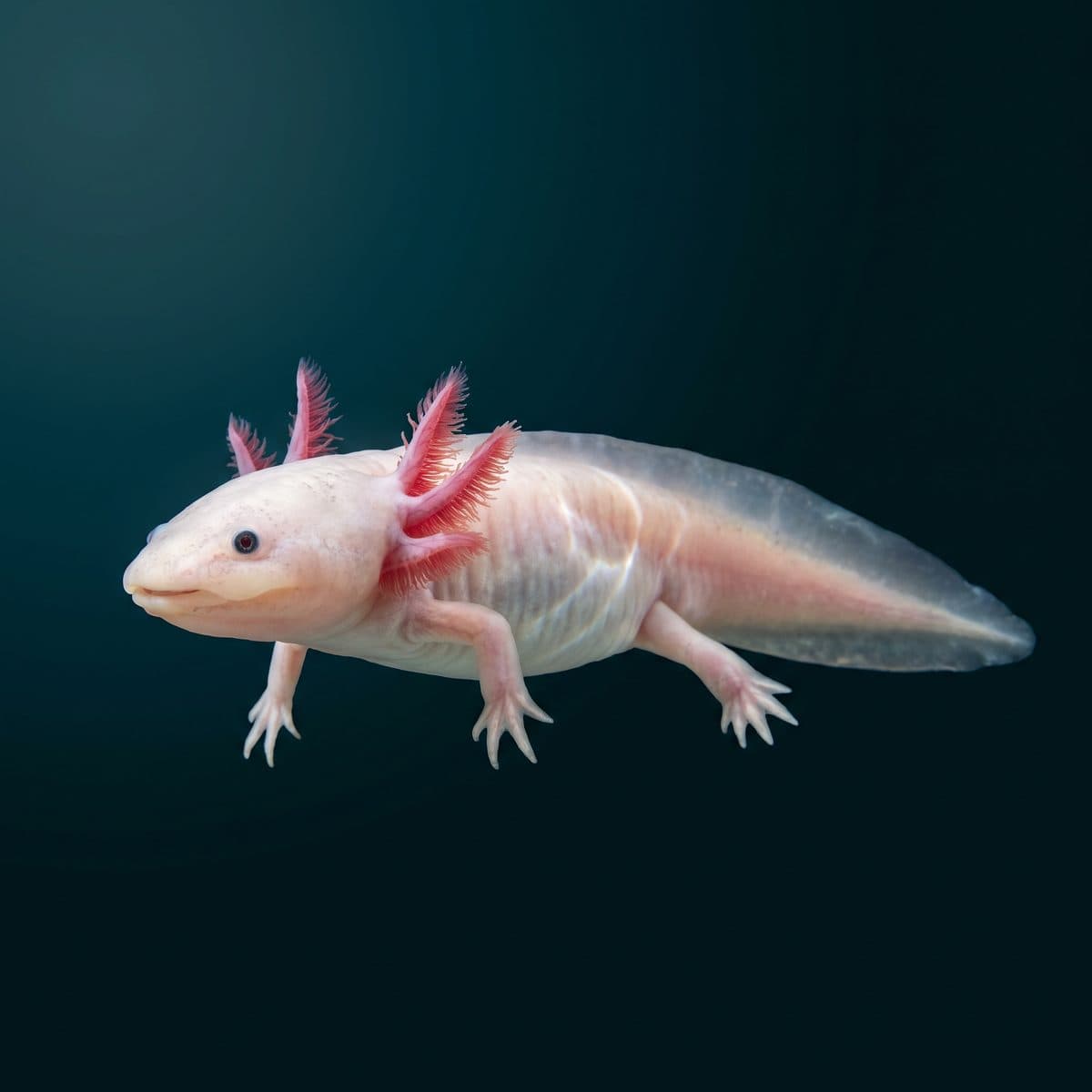
- Leucistic: The most popular morph in the hobby. Leucistic axolotls display a translucent white-to-pink body with dark eyes — a result of reduced melanophore migration during embryonic development. Unlike true albinos, leucistic animals retain full eye pigmentation. Their pink gills, visible blood vessels, and pale colouration make them the quintessential "pet" axolotl.
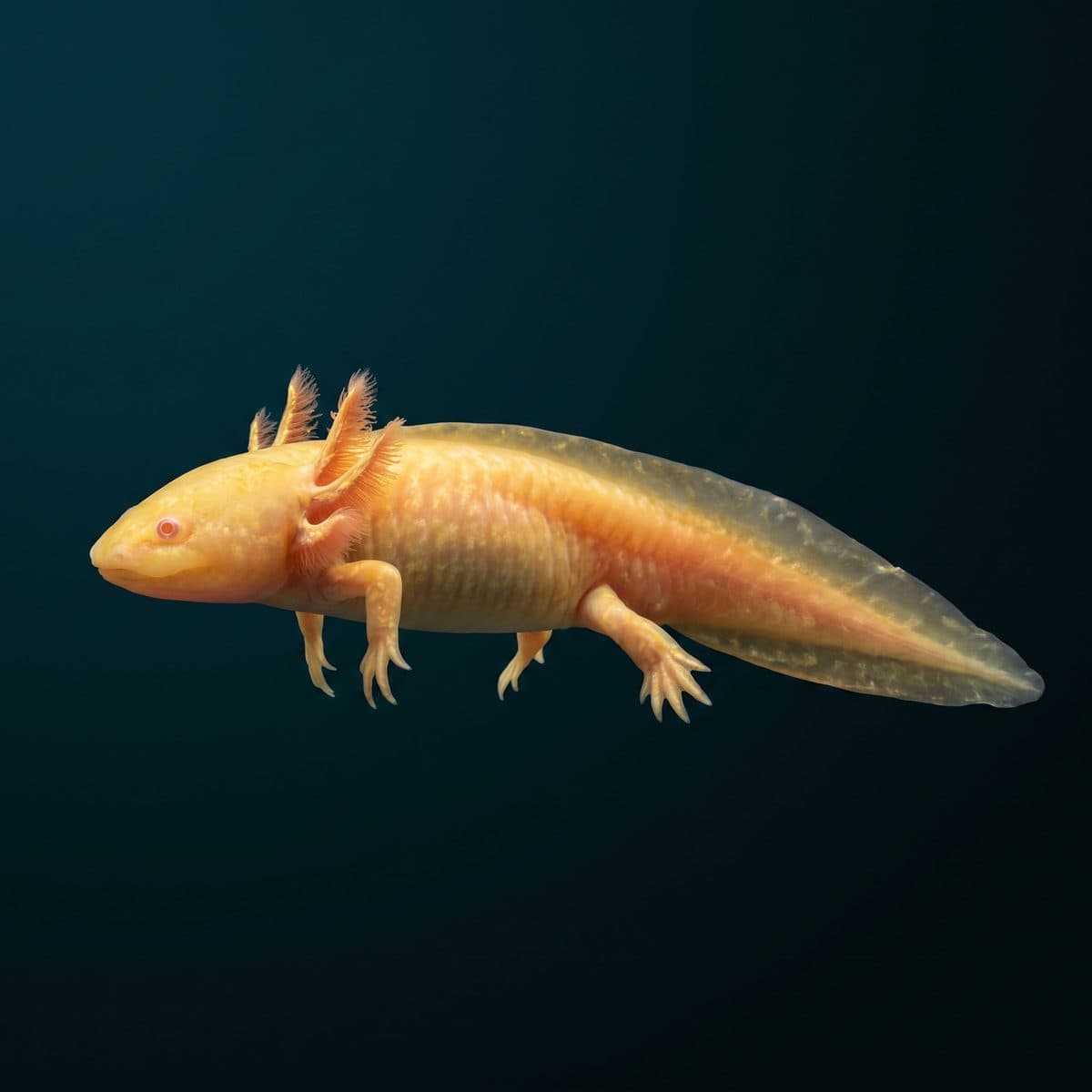
- Golden Albino: A true albino morph lacking melanin entirely. The body appears golden-yellow with prominent xanthophore pigmentation, and the eyes are a distinctive clear red-gold. Golden albinos are slightly more light-sensitive than pigmented morphs and benefit from subdued lighting and ample plant cover.
- Melanoid: The inverse of the leucistic — melanoid axolotls produce excess melanin, resulting in a uniform jet-black appearance without the iridescent speckles of the wild type. They lack functional iridophores entirely. Melanoids are prized for their striking, ink-dark colouration.
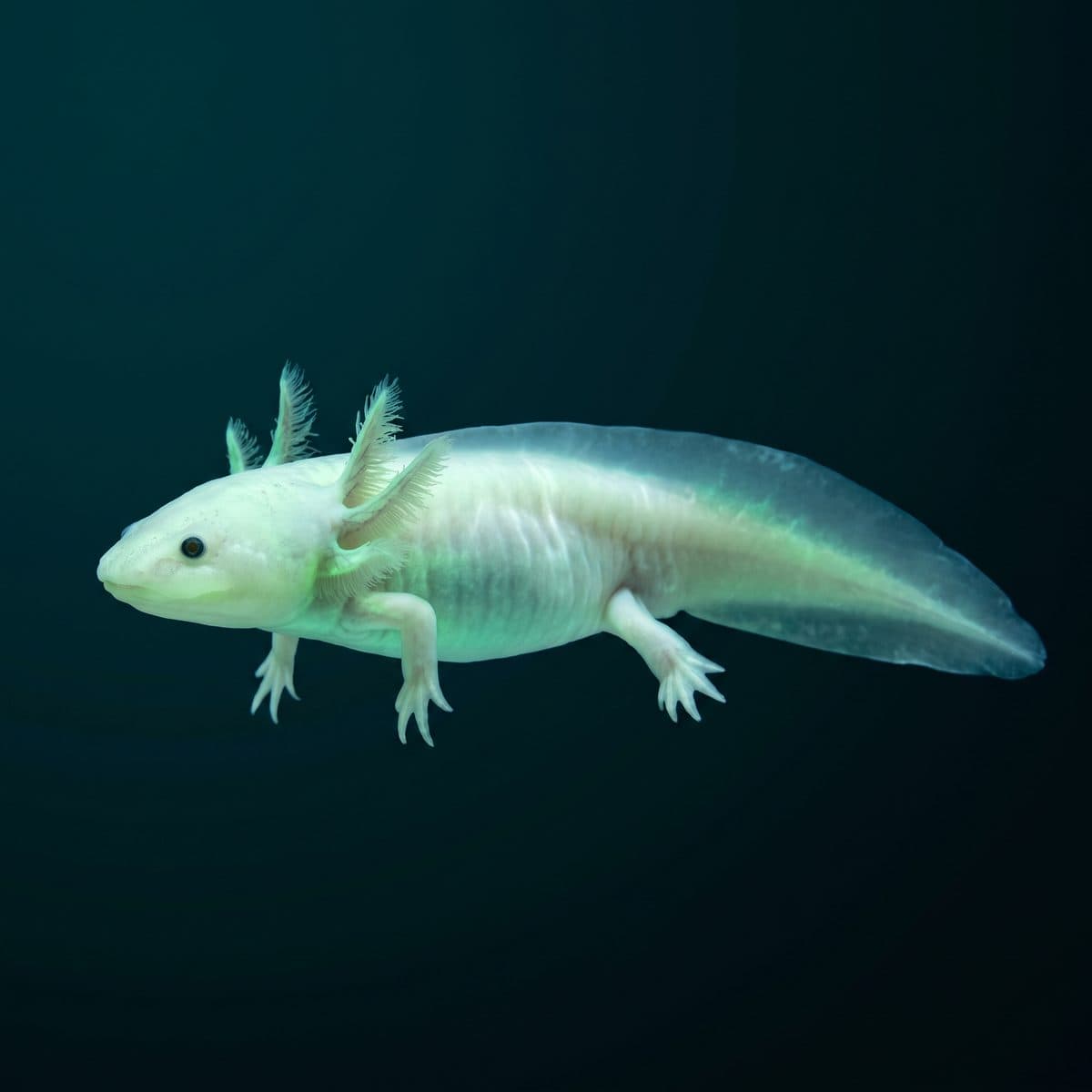
- GFP (Green Fluorescent Protein): Originally developed for laboratory research, GFP axolotls carry a jellyfish gene (Aequorea victoria) that causes their tissues to fluoresce bright green under blue or UV light. Under normal lighting, GFP animals appear identical to their base morph (leucistic GFP, wild-type GFP, etc.). The fluorescence is heritable and does not affect the animal's health or behaviour. GFP axolotls have become increasingly popular in the hobby, though they remain controversial among purists who object to transgenic animals in the pet trade.
- Copper: A relatively rare morph displaying a warm copper-to-caramel colouration with lighter gill filaments. Copper is an albino variant with reduced xanthophore intensity, producing a more subtle, metallic tone than the golden albino.
When purchasing morphs from breeders, always request photographs under consistent lighting conditions. Axolotl colouration can shift dramatically depending on substrate colour (they darken on dark substrates and lighten on pale ones), stress levels, and age. Reputable breeders will provide lineage information and disclose whether a specimen carries heterozygous genes for other morph traits.
Regeneration
The axolotl's regenerative capacity is without parallel among vertebrates and is the primary reason it has been a laboratory model organism for over 150 years. Axolotls can fully regenerate limbs, tail, portions of the heart, spinal cord, lens of the eye, and even sections of the brain — all without scarring. A severed limb will regrow to full functional capacity, including nerves, blood vessels, muscle, bone, and skin, within 8–12 weeks depending on the animal's age and the ambient temperature.
This regeneration is mediated by the formation of a blastema — a mass of dedifferentiated cells that forms at the wound site and recapitulates the developmental programme that originally built the structure. Research published in Nature and Cell Reports has identified key signalling pathways (including Wnt, FGF, and BMP) that orchestrate this process, with direct implications for human regenerative medicine.
For the hobbyist, the practical significance is twofold. First, minor injuries — a nipped gill filament, a bitten toe, even a lost limb from an aggressive tank mate — will heal completely without veterinary intervention, provided water quality is excellent and the wound does not become infected. Second, this regenerative capacity means that cosmetic imperfections in newly acquired axolotls (damaged gills, shortened toes) are usually temporary. Given clean, cool water and proper nutrition, the animal will restore itself.
However, regeneration is not a licence for careless husbandry. Each regenerative event consumes significant metabolic resources, and repeated injuries can exhaust the animal's regenerative reserve over time. Chronic stress, warm water, and poor nutrition all impair regeneration. The goal is always prevention — provide a safe environment so the axolotl never needs to deploy its remarkable healing abilities.
Breeding
Axolotls are among the easiest amphibians to breed in captivity, which accounts for the robust captive population despite the species' critical wild status. Sexual maturity is reached at 12–18 months, though it is advisable to wait until animals are at least 18 months old and 20 cm in length before breeding to ensure full physical development.
Sexing adults is straightforward: males develop pronounced cloacal swelling (a visibly enlarged, bulbous cloaca) while females retain a flatter cloacal region and typically have a rounder body habitus when gravid. Males also tend to be slimmer with longer tails relative to body length.
Breeding is triggered by a temperature cycle. Gradually reduce the water temperature to 12–14 °C (54–57 °F) over two weeks, maintain this cool period for 4–6 weeks, then allow the temperature to rise back to 16–18 °C. This simulates the seasonal cooling and warming that triggers spawning in the wild. During the cool period, feed sparingly but maintain impeccable water quality.
The male initiates courtship by depositing 5–25 spermatophores (gelatinous sperm packets) on the substrate. The female picks these up with her cloaca. Within 24–72 hours, she begins laying eggs — typically 100–600 per clutch — individually affixing them to plants, rocks, or any available surface. Remove the adults immediately after egg deposition, as they will consume their own eggs without hesitation.
Eggs hatch in 14–21 days at 18 °C. Larvae are tiny (10–12 mm) and require live food — freshly hatched brine shrimp (Artemia nauplii) for the first two weeks, transitioning to chopped blackworms and micro-bloodworms as they grow. Cannibalism is common among larvae; size-sort frequently and separate aggressors. Rearing a full clutch to sellable size (8–10 cm) takes approximately 4–6 months and requires significant tank space and daily feeding.
Common Health Issues
Fungal infections are the most common ailment, appearing as white cotton-like growths on the skin or gills. They are almost always secondary to poor water quality, physical injury, or thermal stress. Treat mild cases with daily salt baths (2–3 teaspoons of non-iodised salt per litre, 10–15 minutes) and improve water conditions. Severe infections may require methylene blue baths. Never use copper-based medications — they are lethal to amphibians.
Gill deterioration manifests as shortened, curled, or discoloured gill filaments. Causes include poor water quality (elevated ammonia or nitrite), low dissolved oxygen, water temperatures above 22 °C, and chronic stress from aggressive tank mates or excessive current. Address the underlying cause promptly; gill filaments will typically regenerate within 4–8 weeks once conditions improve.
Impaction from swallowed gravel is a surgical emergency. Symptoms include lethargy, loss of appetite, bloating, and buoyancy problems. Prevention is simple: never use gravel substrate. If impaction is suspected, a lukewarm water bath (not exceeding 20 °C) may encourage the animal to pass the obstruction, but veterinary intervention is often required.
Stress-related floating — the animal persistently floats at the surface and cannot submerge — can result from gut gas (overfeeding, swallowed air), constipation, or water quality issues. Fasting for 48–72 hours and performing a 50% water change resolves most cases. Persistent floating warrants a veterinary consultation to rule out internal infection.
Ammonia burns present as red or inflamed patches on the skin, particularly on the belly and gill stalks. They indicate an uncycled or inadequately filtered tank. Immediate action: 50% water change, dose with a detoxifying water conditioner (Seachem Prime), and resolve the underlying filtration issue.