Overview
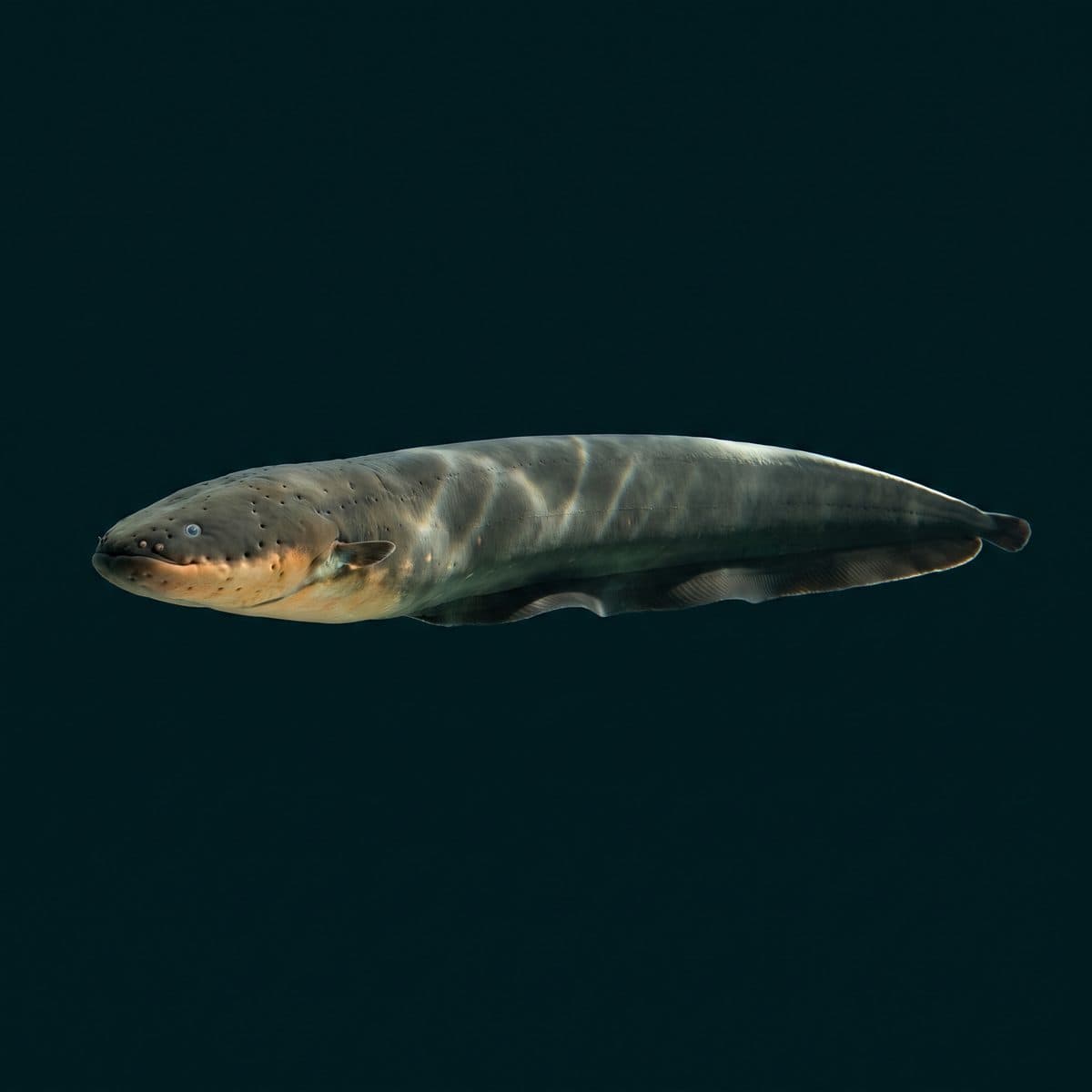
The Electric Eel (Electrophorus electricus) is arguably the most formidable freshwater fish a private aquarist can legally own — though "legally" comes with significant caveats depending on jurisdiction. Despite its common name, it is not a true eel (order Anguilliformes) but a South American knifefish in the order Gymnotiformes, more closely related to catfish and carp than to moray eels or congers. What sets it apart from every other aquarium species is its three specialised electric organs — the Main organ, Hunter's organ, and Sach's organ — which together comprise roughly 80% of its body mass and can generate discharges of 860 volts at peak amplitude.
In 2019, a landmark paper by de Santana et al. in Nature Communications split the single species Electrophorus electricus into three: E. electricus sensu stricto (the original Linnean species from the Guiana Shield drainages), E. voltai (from the Brazilian Shield, capable of the highest recorded voltage), and E. varii (lowland Amazon basin). Most specimens entering the aquarium trade are E. varii or E. electricus s.s., though positive identification requires genetic analysis. For practical husbandry purposes, care requirements are identical across the three species.
At The Fish Collection, we have housed Electric Eels in our display systems since 2014 and have advised zoological institutions on exhibit design. We treat this species with the same respect an electrician gives high-voltage cabling — because the physiological reality demands it. A full-grown specimen can deliver a shock that causes involuntary muscle contraction severe enough to cause drowning if the keeper's hand is submerged. This guide is written for experienced aquarists who have the infrastructure, budget, and discipline to keep this animal responsibly.
Natural Habitat
Electrophorus species inhabit the slow-moving, oxygen-poor waterways of the Amazon and Orinoco River basins — murky floodplain streams, swamp margins, and seasonally inundated forest pools across Venezuela, the Guianas, Brazil, Colombia, Ecuador, and Peru. These environments are characterised by extremely low dissolved-oxygen levels (often below 1 mg/L), warm temperatures (25–30 °C year-round), acidic blackwater chemistry (pH 5.0–7.0), and near-zero visibility due to tannin staining and suspended sediment.
The low-oxygen environment is precisely why the Electric Eel evolved obligate air breathing. Every 10–15 minutes, it rises to the surface to gulp atmospheric air into a highly vascularised oral cavity that functions as a primitive lung. This adaptation means the species is essentially independent of dissolved oxygen — a trait that simplifies one aspect of captive care but introduces the requirement for unrestricted surface access at all times.
In the wild, Electric Eels are apex predators that use low-voltage pulses (roughly 10 V from Sach's organ) for continuous electrolocation — mapping their environment in total darkness much like Elephantnose Fish — and high-voltage volleys from the Main and Hunter's organs to stun prey and deter predators. They are solitary except during breeding season, and individual home ranges can span several hundred metres of stream channel. The substrate in their preferred habitat is soft mud and leaf litter over clay, with submerged root tangles providing the primary structural element.
Tank Requirements
Tank Dimensions & Construction
An adult Electric Eel exceeding 2 metres in length requires a minimum aquarium of 500 gallons (1,900 litres) with internal dimensions of at least 300 cm long × 90 cm wide × 70 cm tall. Juveniles (under 60 cm) can be started in 125-gallon grow-out tanks, but growth is rapid — expect to reach the 500-gallon threshold within 3–4 years. Ideally, plan for 750–1,000 gallons to accommodate a full-grown adult comfortably.
Tank construction deserves special consideration. Glass aquaria are acceptable but must be a minimum of 19 mm thick with eurobraced tops; acrylic is preferred for large builds owing to superior impact resistance. The tank must not have a sealed top — Electric Eels are obligate air breathers and will drown if denied surface access. Use a mesh or grated lid that prevents escape (they are capable climbers) while allowing unrestricted air exchange. Leave a minimum 10 cm air gap between the water surface and the lid.
The substrate should be fine sand or bare bottom. Avoid gravel, which traps waste beneath a fish that produces a heavy bioload. Décor should be limited to large PVC pipe sections (15 cm diameter or larger) and smooth driftwood for hiding. Electric Eels are clumsy swimmers and will damage themselves on sharp rock edges or tightly fitted caves.
Electrical Safety Protocols
This section is not optional — it is the single most critical aspect of Electric Eel husbandry. A high-voltage discharge conducted through aquarium water can travel up the keeper's arm and across the chest, with potentially fatal cardiac consequences. Implement the following without exception:
- Rubber gauntlet gloves: Wear electrician-rated insulating gloves (Class 0 minimum, rated to 1,000 V) for any interaction involving hands in the water — feeding, maintenance, catching the fish.
- GFCI protection: Every electrical device on the tank circuit must be protected by a ground-fault circuit interrupter. This protects against stray voltage from the eel entering equipment wiring.
- Grounding probe: Install a titanium grounding probe connected to an earth ground to dissipate stray voltage from the water column.
- Never work alone: Always have a second person present when performing tank maintenance. If you are incapacitated by a shock, you need someone who can pull you clear and call emergency services.
- Signage: Post visible warning signage on the tank. If the aquarium is accessible to children or uninformed visitors, consider a locking lid mechanism.
- Feeding tools: Use long (60 cm+) insulated feeding tongs. Never hand-feed an Electric Eel under any circumstances.
We have personally experienced minor shocks from juvenile specimens and can attest that even a 200 V discharge from a 50 cm juvenile is profoundly unpleasant — comparable to grabbing a live household wire. An adult discharge at 860 V is in a different category entirely and must be treated as a genuine life-safety hazard.
Filtration & Flow
Despite the species' tolerance of hypoxic water, captive Electric Eels produce a substantial bioload and require robust mechanical and biological filtration. Target 6–8× turnover per hour through a large sump system (100–150 gallons) with multiple stages: coarse foam for mechanical pre-filtration, ceramic bio-media for nitrification, and activated carbon for odour and dissolved organic compound removal. A 57-watt UV steriliser in the return line reduces bacterial counts and helps manage the chronically murky water that protein-rich feeding regimes produce.
Flow should be gentle. Electric Eels are poor swimmers — their propulsion comes entirely from an undulating anal fin, and strong currents cause fatigue and stress. Diffuse the sump return through a wide spray bar or manifold to distribute flow evenly without creating directional jets. Surface agitation should be minimal to avoid disrupting the air-breathing behaviour.
Water changes of 25–30% weekly are essential. Use temperature-matched, dechlorinated water and add it slowly via a drip system to avoid sudden parameter shifts. The high bioload of a carnivorous fish exceeding 2 metres means nitrate accumulation is rapid — monitoring with a reliable test kit (API or Salifert) should be performed twice weekly.
Water Parameters
Electric Eels are relatively tolerant of a range of water chemistry, reflecting the variable conditions in Amazonian floodplains, but the following ranges promote optimal health:
- Temperature: 25–28 °C (77–82 °F). Use a titanium inline heater protected from direct contact with the fish — a curious eel investigating a glass heater can shatter it.
- pH: 6.0–7.0. Soft, slightly acidic conditions mimic the blackwater origin. Indian almond leaf extract or peat filtration can help buffer to the low end.
- General Hardness (GH): 1–8 dGH (18–143 ppm).
- Carbonate Hardness (KH): 1–4 dKH. Low KH is natural for this species but requires careful monitoring to prevent pH crashes.
- Ammonia / Nitrite: 0 ppm — always.
- Nitrate: <30 ppm. The species tolerates moderate nitrate better than many Amazonian fish, but keeping levels below 20 ppm is ideal.
Because the Electric Eel breathes atmospheric air, dissolved oxygen is less critical than for gill-dependent species. However, maintaining reasonable oxygenation (>4 mg/L) supports the biological filter and any tank mates. Aeration through the sump return is typically sufficient.
Diet & Feeding
Electric Eels are opportunistic carnivores. In the wild, their diet consists of fish, amphibians, crustaceans, and occasionally small mammals and birds that fall into the water. In captivity, the primary dietary challenge is weaning juveniles off live prey and onto prepared and frozen foods — a transition that is worth the effort for both convenience and biosecurity.
A feeding protocol for captive Electrophorus:
- Juveniles (under 60 cm): Feed daily. Offer live earthworms (nightcrawlers), frozen silversides, frozen lance fish, and frozen shrimp. Begin pellet training early by soaking Hikari Massivore or Northfin Monster pellets in garlic guard and offering on feeding tongs alongside frozen items.
- Sub-adults (60–120 cm): Feed every 2–3 days. Whole frozen tilapia fillets, jumbo shrimp (shell-on), smelt, and squid strips form the staple. Supplement with earthworms for variety. Most sub-adults will accept pellets by this stage.
- Adults (120+ cm): Feed 2–3 times per week. Offer whole frozen fish (tilapia, trout, or mackerel), large prawns, and crayfish. An adult Electric Eel consuming a 200 g tilapia fillet produces a correspondingly large waste load — factor this into your water-change schedule.
Always use long insulated feeding tongs. Present food at the water's surface and allow the eel to locate it via electrolocation — they will detect the electrical field generated by the metal tongs and the bioelectric signature of the food item. Never drop food directly onto the eel, as this can provoke a defensive discharge. Remove uneaten food within 30 minutes to prevent water quality deterioration.
Vitamin supplementation is recommended: soak frozen food items in a multivitamin solution (Brightwell Aquatics Vitamarin-M or Seachem Nourish) twice weekly to compensate for nutrient loss during the freezing process.
Behaviour & Temperament
Electric Eels are predominantly nocturnal, spending daylight hours resting in hides or lying motionless on the substrate. At dusk, they become active, slowly patrolling the tank perimeter using low-voltage electrolocation pulses to map their surroundings. Despite their fearsome electrical capability, they are generally placid animals that reserve high-voltage discharges for feeding and self-defence. Unprovoked discharges in a well-managed tank are rare.
They are surprisingly intelligent. Captive specimens learn to associate their keeper with food within weeks and will rise to the surface in anticipation when the keeper approaches. They can be conditioned to feeding stations and will tolerate routine maintenance without discharging, provided movements are slow and predictable. Sudden movements, vibrations from tank tapping, or attempts to net the fish are the primary triggers for defensive discharges.
Electric Eels are solitary and should be housed alone except in very large systems (1,000+ gallons) where two individuals have been introduced simultaneously. Even then, conspecific aggression is possible, and high-voltage "duels" between rival eels can damage equipment and stress both animals.
Compatible Tank Mates
The safest approach is to keep an Electric Eel as a solitary specimen. Any tank mate small enough to be stunned and swallowed (virtually any fish under 25 cm) will eventually be eaten. Species that have been housed successfully with adult Electric Eels in large systems include:
- Arapaima — Too large to be eaten and tolerant of the same water conditions. Requires an enormous system (2,000+ gallons).
- Large Plecostomus — Armoured catfish like Pterygoplichthys species (40+ cm) are generally ignored, as their bony plates provide some insulation from electrical discharge.
- Peacock Bass — Large Cichla species (30+ cm) are fast enough to avoid predation and robust enough to tolerate the electrical environment, though minor behavioural effects from ambient low-voltage pulses have been observed.
Under no circumstances should small or mid-sized community fish be housed with an Electric Eel. The eel will systematically stun and consume every fish it can fit in its mouth, which for an adult specimen means anything under approximately 20 cm.
Breeding
Breeding Electrophorus in captivity has been achieved only in a handful of zoological institutions and research facilities. In the wild, breeding occurs during the dry season in shallow, isolated pools. Males construct foam nests using oral secretions, and females deposit eggs into the nest. The male guards the nest and newly hatched fry, which feed on a mucus secretion from the father's skin — a form of parental care unique among knifefishes. Early-stage fry reportedly also prey on late-laid eggs and smaller siblings.
The logistical requirements for captive breeding are beyond the scope of private aquaria: paired adults require a 2,000+ gallon system with the ability to simulate seasonal water-level changes, and the high-voltage discharges during courtship and nest defence make the process genuinely dangerous for personnel. All specimens in the aquarium trade are wild-caught from South American export facilities.
If you acquire a juvenile Electric Eel, plan for a 15–22 year commitment. These are long-lived animals that grow continuously for the first 8–10 years before reaching maximum size. Rehoming an adult specimen is extremely difficult — zoos and public aquaria have limited space, and few private keepers have appropriate infrastructure. Plan for the full lifespan before purchasing.
Common Health Issues
Skin Lesions & Bacterial Infections
The most common health issue in captive Electric Eels is bacterial dermatitis — red, ulcerated patches on the skin caused by Aeromonas or Pseudomonas bacteria. The root cause is almost always poor water quality, particularly elevated nitrate and organic waste levels. The species' thick, mucus-coated skin is naturally resistant to infection, but chronic exposure to degraded water overwhelms this defence. Treatment involves aggressive water quality improvement (daily 25% water changes for 7–10 days), salt baths (5 g/L for 15 minutes, administered in a separate container — wearing insulating gloves), and antibiotic treatment with kanamycin (Seachem KanaPlex) if lesions do not resolve within a week. Avoid copper-based medications.
Respiratory Problems
Because Electric Eels are obligate air breathers, any obstruction of surface access is a medical emergency. A sealed lid, a surface covered in floating plants, or a tankmate that aggressively defends the surface zone can cause the eel to suffocate even in well-oxygenated water. Symptoms of respiratory distress include increasingly frantic surfacing attempts, lethargy, loss of appetite, and abnormal body positioning (floating vertically with the head at the surface). Ensure the tank lid allows free air access at all times, and maintain at least 10 cm of airspace between the water surface and any covering.
Chronic respiratory issues can also arise from poor air quality above the tank. Chemical fumes, tobacco smoke, aerosol sprays, and paint vapours in the room can irritate the eel's oral respiratory lining. House the aquarium in a well-ventilated room free from airborne contaminants.