Overview
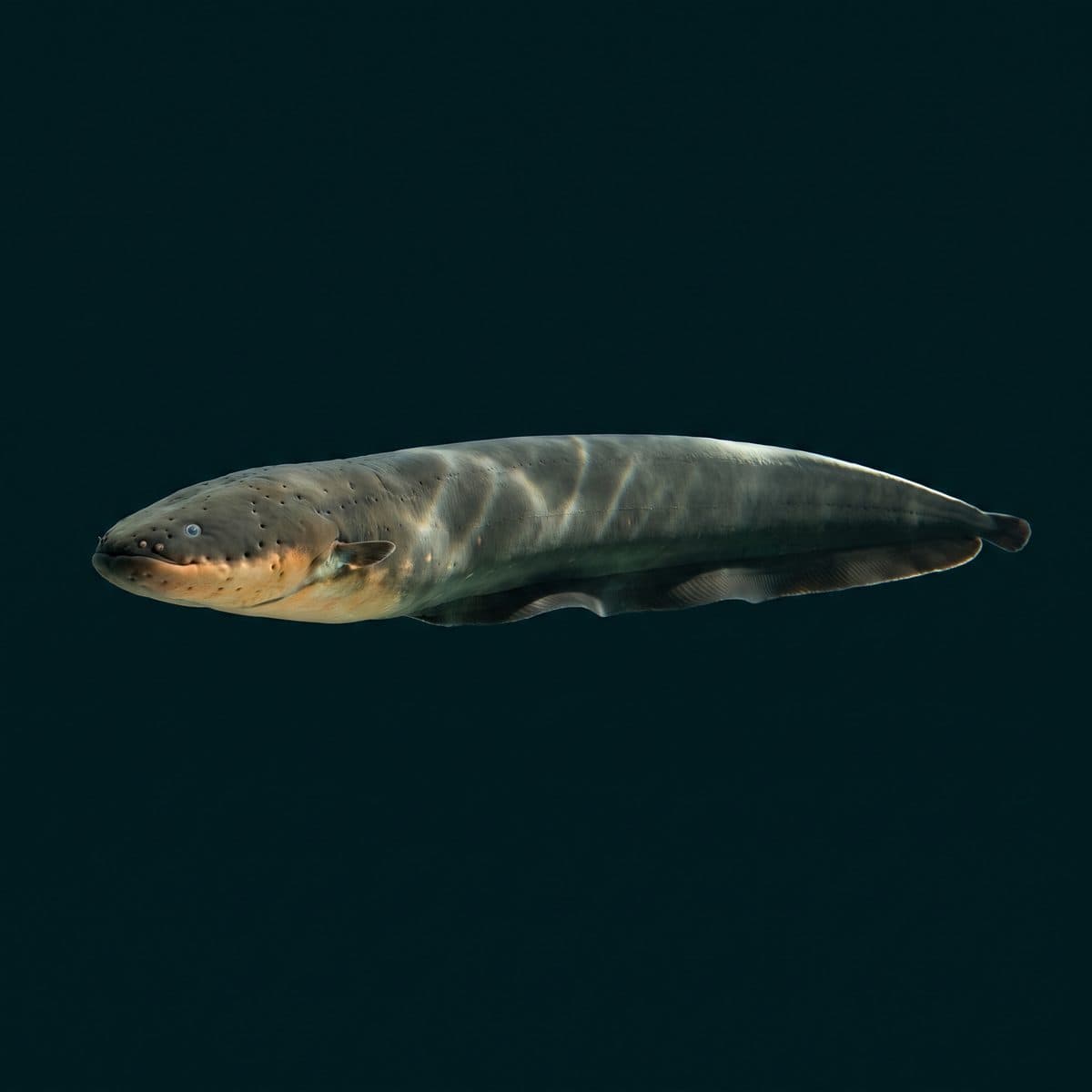
Freshwater "eels" in the aquarium hobby are primarily spiny eels (family Mastacembelidae) — elongated, snake-like fish with pointed snouts and a row of small spines preceding the dorsal fin. True eels (Anguilliformes) are rarely kept. Spiny eels are native to Africa and Asia, are primarily nocturnal, and spend much of the day buried in substrate with only their heads protruding.
Popular Species
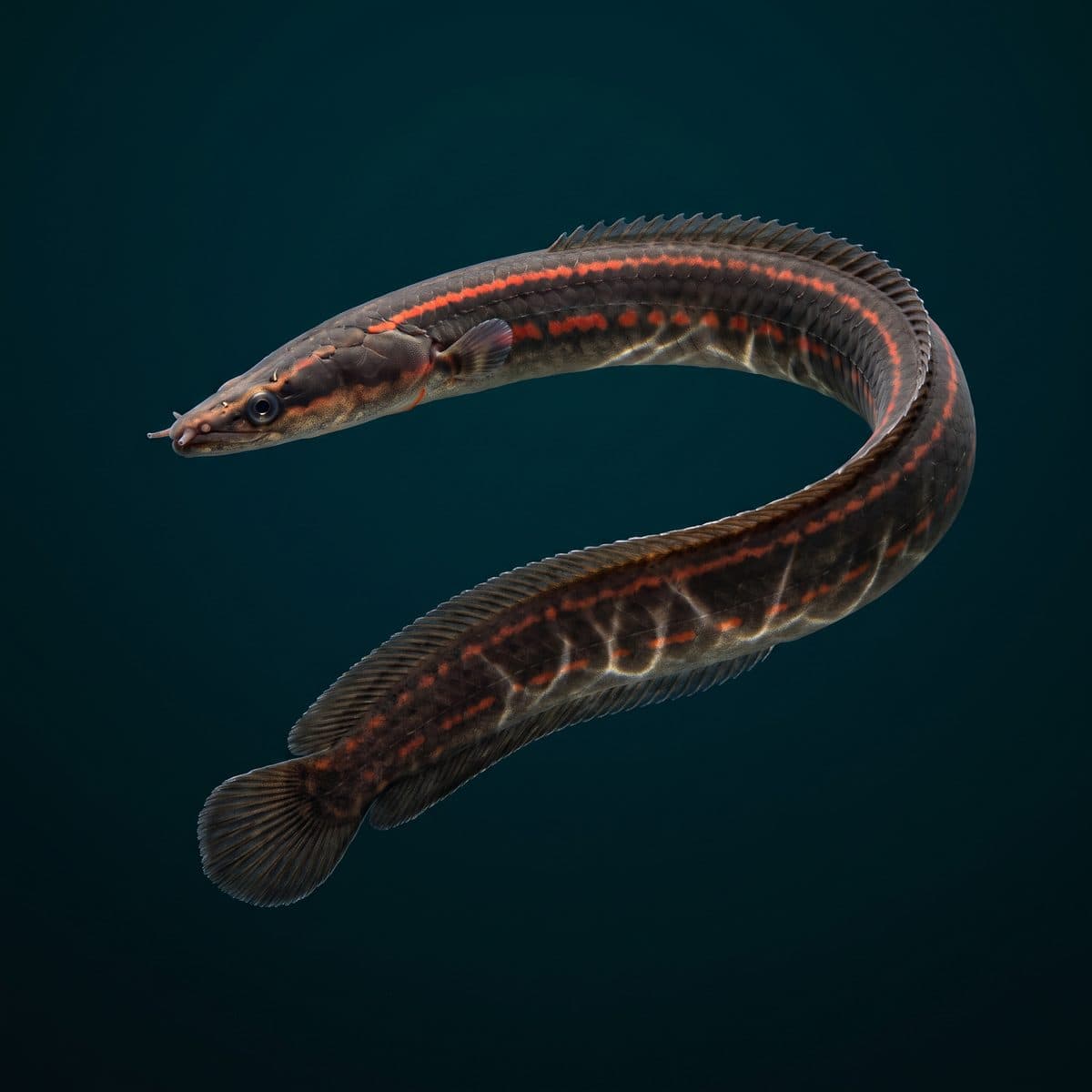
- Fire Eel (Mastacembelus erythrotaenia) — grows to 40 in, needs 125+ gallons, most impressive species with orange-red markings
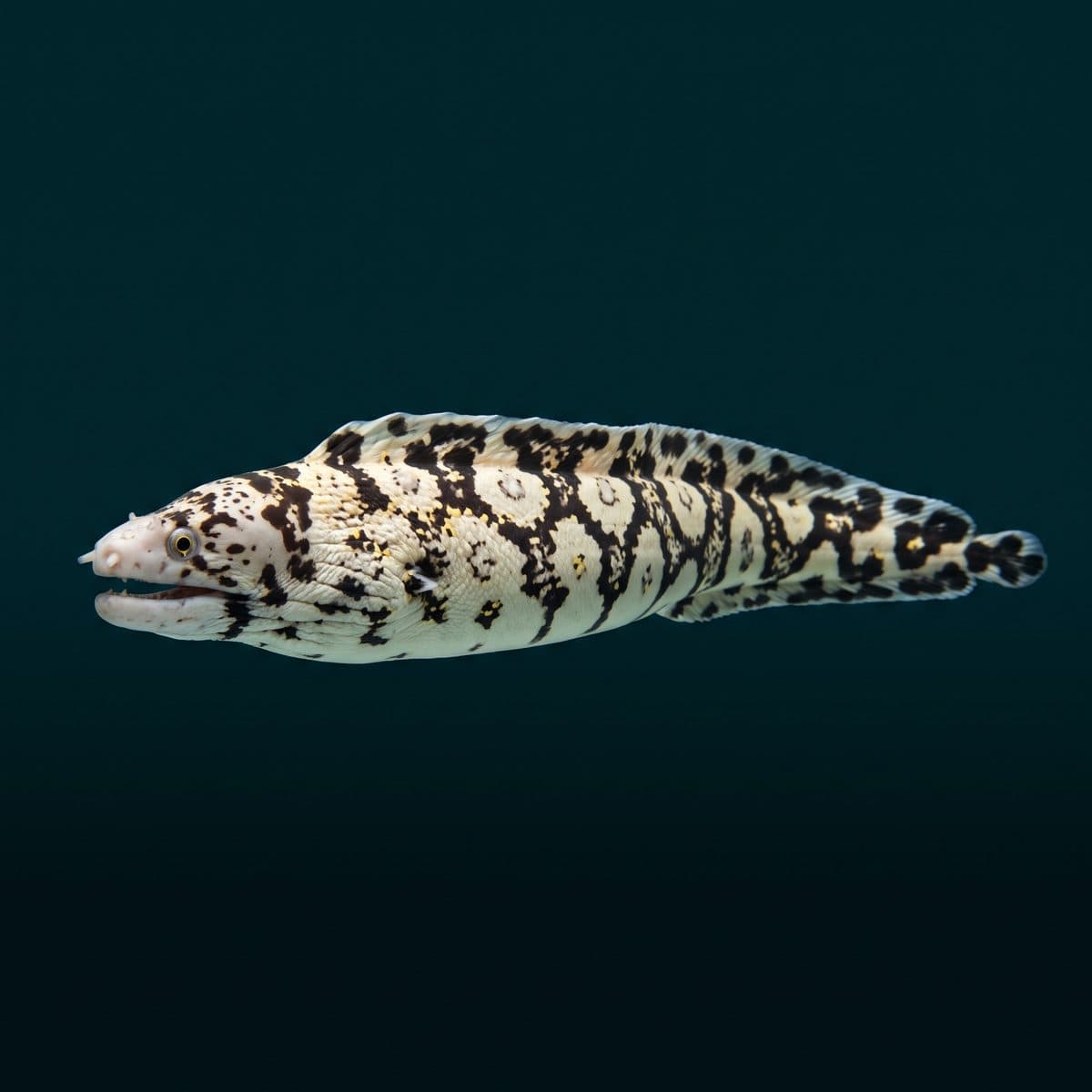
- Tire Track Eel (Mastacembelus armatus) — grows to 28 in, 75+ gallons, distinctive zigzag markings
- Peacock Eel (Macrognathus siamensis) — grows to 12 in, 55+ gallons, smallest and most beginner-friendly
- Half-Banded Spiny Eel (Macrognathus circumcinctus) — 8 in, 30+ gallons, good for smaller setups
Tank Setup
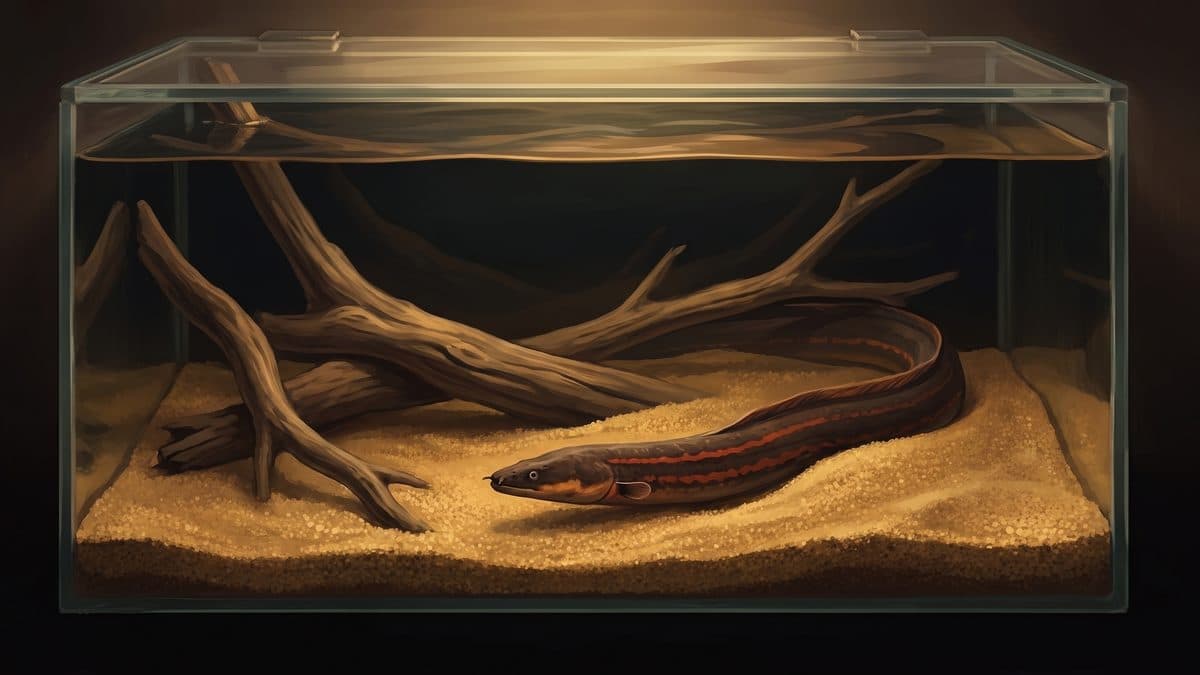
The single most critical requirement is fine sand substrate. Spiny eels burrow constantly — gravel can damage their delicate skin and cause infections. Use play sand or pool filter sand at a depth of 2–3 inches. Provide PVC pipes, driftwood caves, and dense plants (real or artificial) for additional hiding spots. Keep lighting dim — eels are most active under subdued light or moonlight.
Escape Prevention
Eels are legendary escape artists. Any gap in the tank lid larger than the eel's head diameter is a potential exit. Seal around filter intakes, airline tubing holes, and heater cord cutouts with foam, filter floss, or custom-cut acrylic. Use a weighted glass or acrylic lid rather than a screen top. Check for escapees first thing every morning if you have a new eel — the first week is highest risk.
Water Parameters
- Temperature: 75–82 °F (24–28 °C)
- pH: 6.5–7.5
- GH: 5–15 dGH
- Ammonia/Nitrite: 0 ppm
- Nitrate: Below 20 ppm — eels are scaleless and sensitive to poor water quality
Feeding
Eels are obligate carnivores. The best foods are live or frozen bloodworms, earthworms, blackworms, brine shrimp, and small pieces of raw shrimp. Fire eels and tire track eels can eventually be trained to take carnivore pellets, but this requires patience — start by mixing pellets with familiar live foods. Feed at night (lights off) using a feeding dish or target feeding with tweezers near the eel's hiding spot.
Tank Mates
Eels are peaceful toward fish too large to eat. Good companions include medium to large tetras (Congo, Buenos Aires), Rainbowfish, Corydoras (for peacock eels), Angels, and Gouramis. Avoid small fish (neon tetras, guppies), aggressive cichlids that might nip, and bottom-dwelling fish that compete for hiding spots. Other eels of similar size can coexist with adequate space and hiding spots.
Health Considerations
Eels are scaleless and therefore sensitive to medications. Use half-dose for copper and formalin-based treatments. Common issues include bacterial skin infections from substrate abrasion (always use sand, never gravel), weight loss from inadequate feeding (eels need target-fed if in community tanks), and ich (treat with heat + salt rather than copper). Eels are also sensitive to salt — avoid concentrations above 0.1% for extended periods.
Acclimating a New Spiny Eel
The first month decides everything with spiny eels. Most specimens in the trade are wild-caught and arrive thin and stressed, and the number one killer in the first 60 days is brutally simple: the eel never starts eating.
Stack the odds in your favour:
- Set up hiding places before the eel arrives. An eel that feels secure starts eating days sooner. Sand deep enough to bury in plus at least one snug PVC tube is the minimum.
- Offer live blackworms or small earthworms first. Wriggling movement triggers a feeding response when nothing else will. Frozen foods come later.
- Feed after lights-out for the first two weeks, placing food near the hiding spot with tweezers or a turkey baster.
- Don't panic over refusals. A decent-weight eel can skip food for a week without harm. Offer nightly, remove leftovers each morning, and watch the belly profile — if it's going concave, escalate to live foods immediately.
Expect to barely see your new eel for 2–4 weeks. That's normal, and it passes — most settled spiny eels learn the routine and start appearing at the front glass when you approach.
Feeding Schedule by Size
How often you feed depends mostly on the size of the eel:
- Small species (half-banded, peacock — under 8 in): Nightly or every other night. Small meals of bloodworms, blackworms, chopped earthworm, and brine shrimp.
- Medium eels (8–16 in): Every 2 days — whole earthworms, shrimp pieces, and krill.
- Large fire eels and adult tire tracks (16 in and up): 2–3 meals a week — several nightcrawlers, whole prawns, mussel meat, and (once trained) large sinking carnivore pellets.
In community tanks, always target-feed. Faster fish strip the water column before a shy eel emerges, and slow starvation over months — masked by "he must be eating at night" — is depressingly common. If you can't confirm your eel has eaten in the past week, assume it hasn't and adjust.
Maintenance in a Burrowing-Fish Tank
Routine maintenance changes a little when a foot of muscle might be buried anywhere in your substrate. A few habits keep water changes drama-free:
- Locate the eel before you start. A gravel vacuum plunged into occupied sand causes panic sprints — and a panicking eel can hit the glass hard or find the one gap in your lid.
- Hover, don't plunge. Hold the siphon an inch above the sand to lift waste without digging. Sand stays cleaner than gravel anyway, since debris sits on top.
- Vacuum in sections. Do a third of the bed each week rather than strip-mining the whole tank in one session — the eel keeps some undisturbed territory.
- Mind the open lid. Most escapes happen during or right after maintenance. Make the lid check the final step of every session, every time.
- Do a weekly headcount. Spiny eels can stay hidden for days, which is normal — but confirming yours is present and plump once a week catches problems (and escapes) early.
Tank Planning by Species
The four common species have genuinely different long-term needs, so match the eel to the tank you can actually run:
| Species | Adult Size | Minimum Tank | Difficulty |
|---|---|---|---|
| Half-Banded Spiny Eel | 8 in | 30 gal | Easy |
| Peacock Eel | 12 in | 55 gal | Easy |
| Tire Track Eel | 28 in | 75–125 gal | Moderate |
| Fire Eel | 40 in | 125–180 gal | Moderate–Hard |
The honest note: fire eels are sold at 6 inches and look nothing like the metre-long, arm-thick adult they become over 5–10 years. They're magnificent fish — genuinely one of the best "wet pets" in the hobby, learning to hand-feed and living 15+ years — but only take one on if the 6-foot tank is already in the plan. For everyone else, a peacock eel delivers most of the charm in a fraction of the space.