Overview
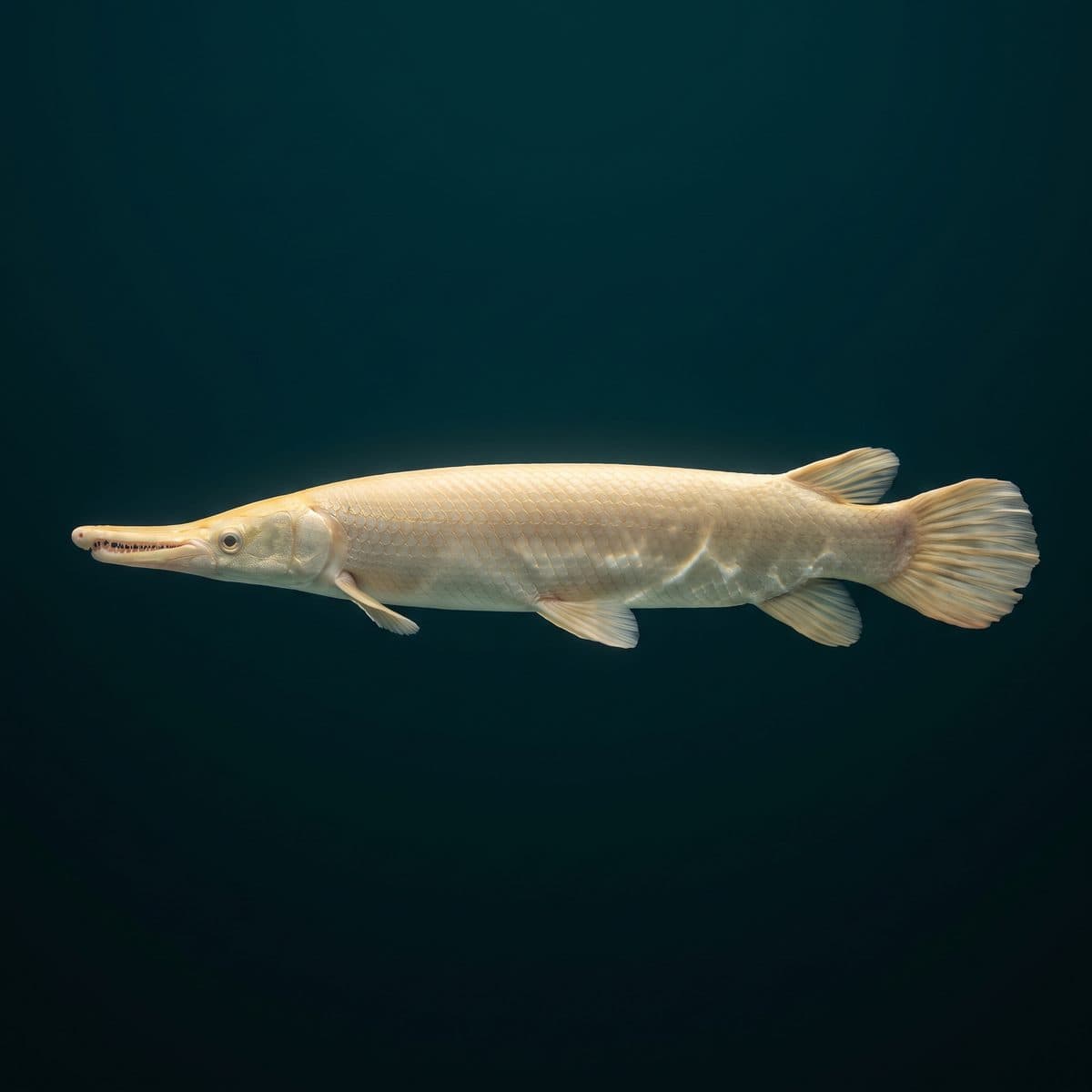
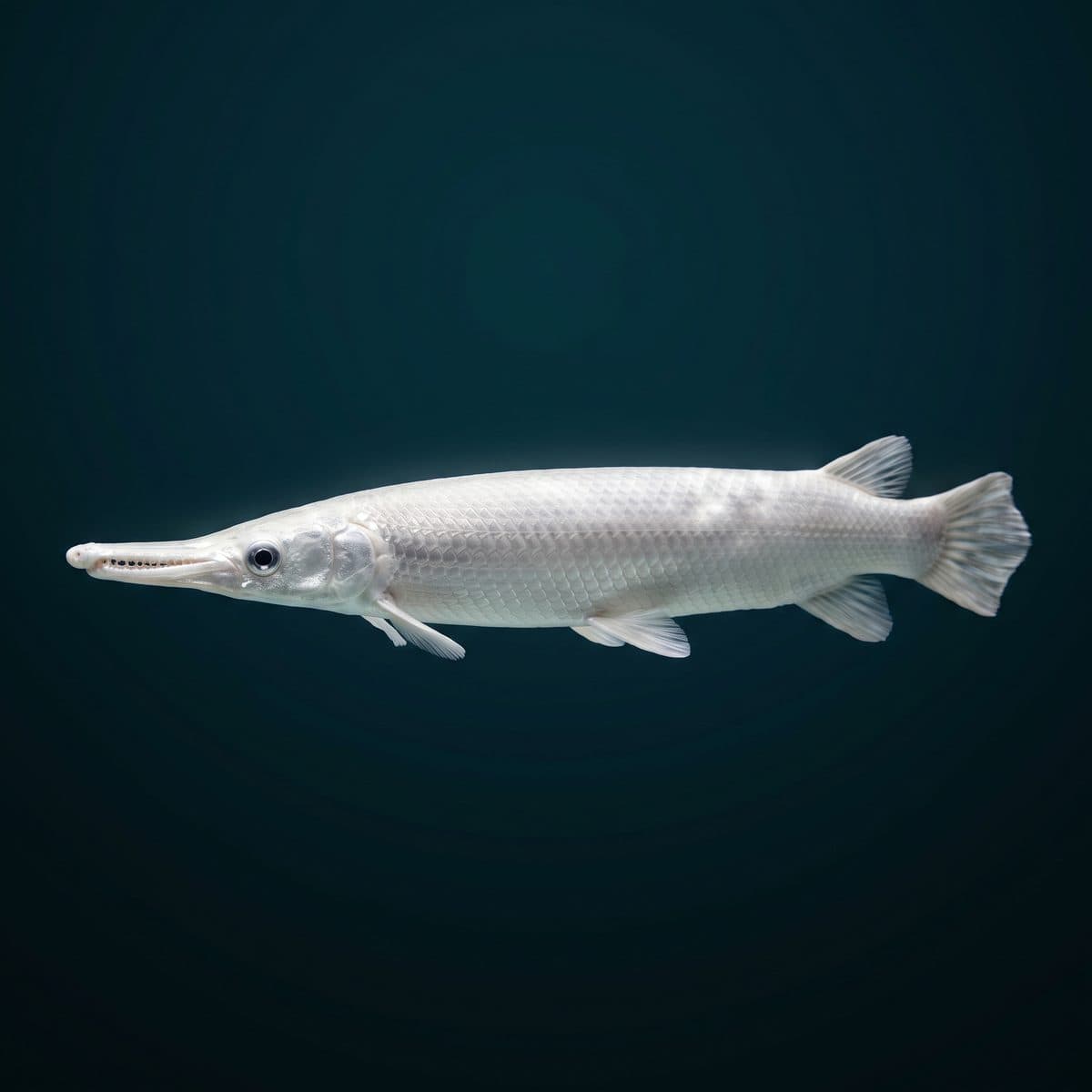
Gar are among the oldest surviving fish families, with a fossil record dating back 100 million years. Their elongated bodies, hard ganoid scales, and long snouts filled with needle-like teeth give them a distinctly prehistoric appearance. Seven living species exist, four of which are commonly kept: the Spotted Gar, Florida Gar, Longnose Gar, and the massive Alligator Gar.
Species Comparison
- Spotted Gar (Lepisosteus oculatus) — 24–36 in, 125+ gallon tank, most manageable for home aquariums
- Florida Gar (Lepisosteus platyrhincus) — 24–36 in, similar to spotted, endemic to Florida
- Longnose Gar (Lepisosteus osseus) — 36–48 in, 180+ gallons, more elongated snout
- Alligator Gar (Atractosteus spatula) — 6–10 ft in wild, needs pond or 300+ gallon tank, not truly suited for home aquariums
Tank Requirements
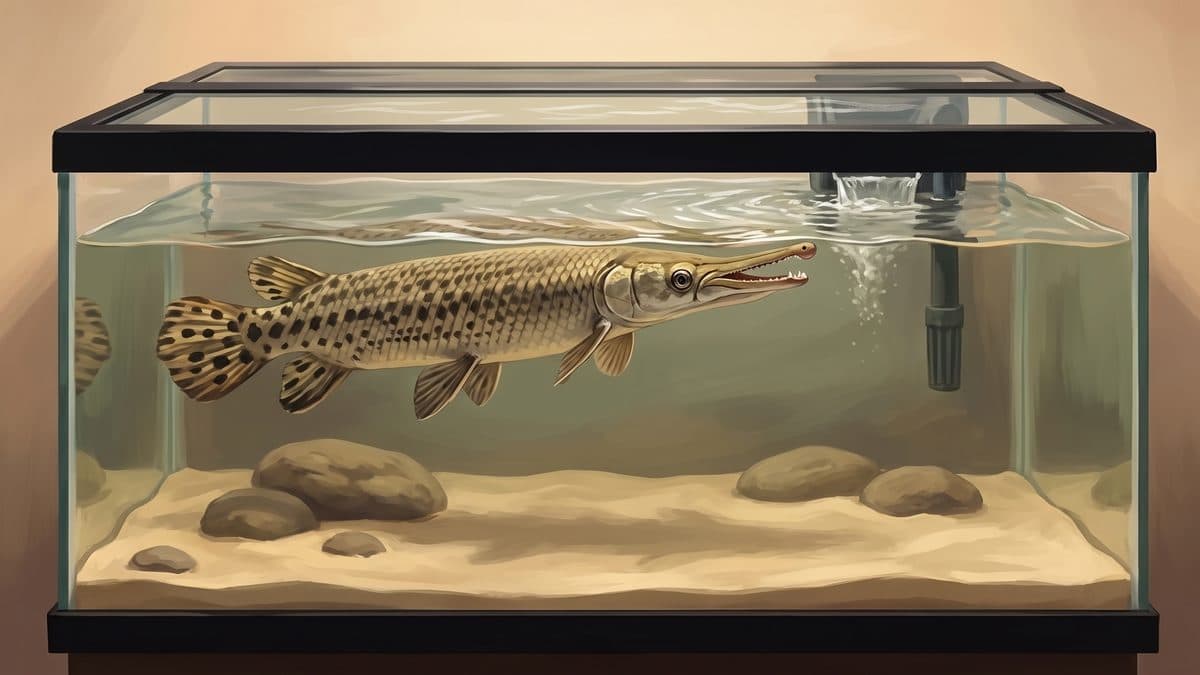
Gar are surface-dwellers that need long tanks rather than tall ones. A 6-foot-long tank is minimum for spotted gar; 8+ feet for longnose. Avoid sharp décor — gar can injure their elongated snouts. Sand or fine gravel substrate is preferred. A tight lid is essential — gar are powerful leapers. Keep water level 2–3 inches below the rim to allow surface air breathing.
Water Parameters
- Temperature: 60–80 °F (gar tolerate a wide range; native to temperate and subtropical waters)
- pH: 6.5–8.0
- GH: 5–20 dGH
- Ammonia/Nitrite: 0 ppm
- Nitrate: Below 40 ppm
Air Breathing
Gar possess a vascularised swim bladder that functions as a primitive lung, allowing them to breathe atmospheric air. In oxygen-depleted water, gar surface to gulp air — this is normal behaviour, not a sign of distress. However, gar must have access to air above the water surface. Never fill the tank to the brim or cover the surface completely. Leave at least 2 inches of airspace.
Diet and Feeding
Gar are ambush predators that strike sideways with their elongated jaws. Feed whole smelt, silversides, shrimp, and raw tilapia fillets. Many gar can be trained to accept carnivore pellets (Hikari Massivore, Northfin Predator) — start training young for best results. Feed juveniles daily, adults every 2–3 days. Avoid live feeder fish due to disease risk.
Tank Mates
Gar are surprisingly docile toward fish too large to eat. Compatible tank mates include large catfish (Synodontis, Red Tail Catfish), Bichirs, large cichlids (Oscars, Jack Dempsey), and other gar species. Any fish narrow enough to fit in the gar's snout will eventually be eaten.
Health and Longevity
Gar are remarkably disease-resistant thanks to their ganoid scales and primitive immune system. Their primary captive health risk is snout damage from striking glass walls — provide adequate tank length. Gar grow slowly but live for decades. A spotted gar can live 18+ years; alligator gar exceed 50 years. Commit to long-term care before acquiring these ancient predators.
Feeding Schedule and Pellet Training
Gar are ambush feeders with slow metabolisms, so the most common feeding mistake is simply overdoing it. Here's what works:
- Juveniles (under 12 in): Feed daily — small whole silversides, chopped shrimp, and earthworms. Young gar burn energy fast and grow steadily.
- Sub-adults (12–24 in): Every other day, with portions about the size of the gar's head.
- Adults: 2–3 meals per week is plenty. A gar that hovers hopefully at the surface isn't starving — they're opportunists by design.
Pellet training is worth the effort for both cost and nutrition, and it's much easier before the fish hits 12 inches. Start by tossing thawed silversides so the gar links surface disturbance with food. After a week, alternate a large floating stick pellet with each silverside. Most spotted and Florida gar make the connection within 2–4 weeks; longnose are more stubborn, and some individuals never convert — keep frozen smelt on hand as a fallback.
One warning worth repeating: thiaminase. A diet heavy in raw goldfish, rosy reds, and certain smelt breaks down vitamin B1 over time and causes neurological damage. Rotate in shrimp, tilapia, and pellets, and dust frozen food with a vitamin supplement monthly.
Pond and Tub Keeping
Because most gar are temperate fish, they're among the few "monster fish" that genuinely thrive in unheated indoor ponds and stock-tank setups — often a better home than glass tanks for adults. A 300-gallon stock tank with an 8 × 3 foot footprint gives a pair of spotted gar more usable floor space than a 180-gallon show tank, at a fraction of the price.
The essentials translate directly: 2–3 inches of air gap for surface breathing, a weighted rigid mesh lid (a determined gar will lift a loose cover), and oversized filtration. Outdoor ponds work where water stays above roughly 40 °F — spotted and longnose gar tolerate near-freezing water in deep ponds and overwinter under ice across much of their native range. Alligator gar are the exception: they're subtropical and need water above 50 °F year-round.
Whatever the vessel, keep the water clear enough to actually see your fish. Gar hang motionless just under the surface, and in murky water you won't spot snout damage or weight loss until it's advanced.
Legality and Buying Considerations
Check your state's regulations before buying any gar. As native North American predators, gar sit in a legal patchwork that varies wildly: some states ban alligator gar outright, others require permits for any gar species, and a few prohibit keeping native fish entirely. Your state fish and wildlife agency is the authority here — not the seller's shipping policy.
When you do buy, look for a straight, undamaged snout with both jaws meeting evenly (chronic tank-strike damage shows as a blunted or scarred tip), a filled-out body behind the head, clear eyes, and — most tellingly — a feeding response. Ask the seller to feed in front of you. Captive-bred spotted gar are increasingly available and adapt to aquarium life far better than wild-caught adults, which can refuse food for weeks.
Be careful with "platinum" and short-body morphs. Platinum gar are striking but command prices hundreds to thousands of dollars higher, and short-body morphs carry spinal deformities that tend to shorten lifespan — know exactly what you're paying for.
Common Problems and Troubleshooting
- Snout damage: The most common gar injury, caused by striking glass when startled. Minor abrasions heal in clean water; repeated damage means the tank is too short or foot traffic keeps spooking the fish. Add a background and dim the lights so the gar can read its boundaries.
- Refusing food: Normal for 1–2 weeks after a move. Beyond that, check temperature (cold gar don't eat), offer live ghost shrimp to trigger a strike, and try feeding at dusk with the lights off.
- Constant air-gulping: Remember, a gulp every few minutes is normal. Frantic, non-stop gulping suggests low dissolved oxygen — check surface agitation and aeration, especially in warm water.
- Jumping: Gar leap when startled, usually at night. Weight the lid, seal any gap wider than 2 inches, and run a dim moonlight so the fish can orient itself after the room goes dark.