The Honest Overview
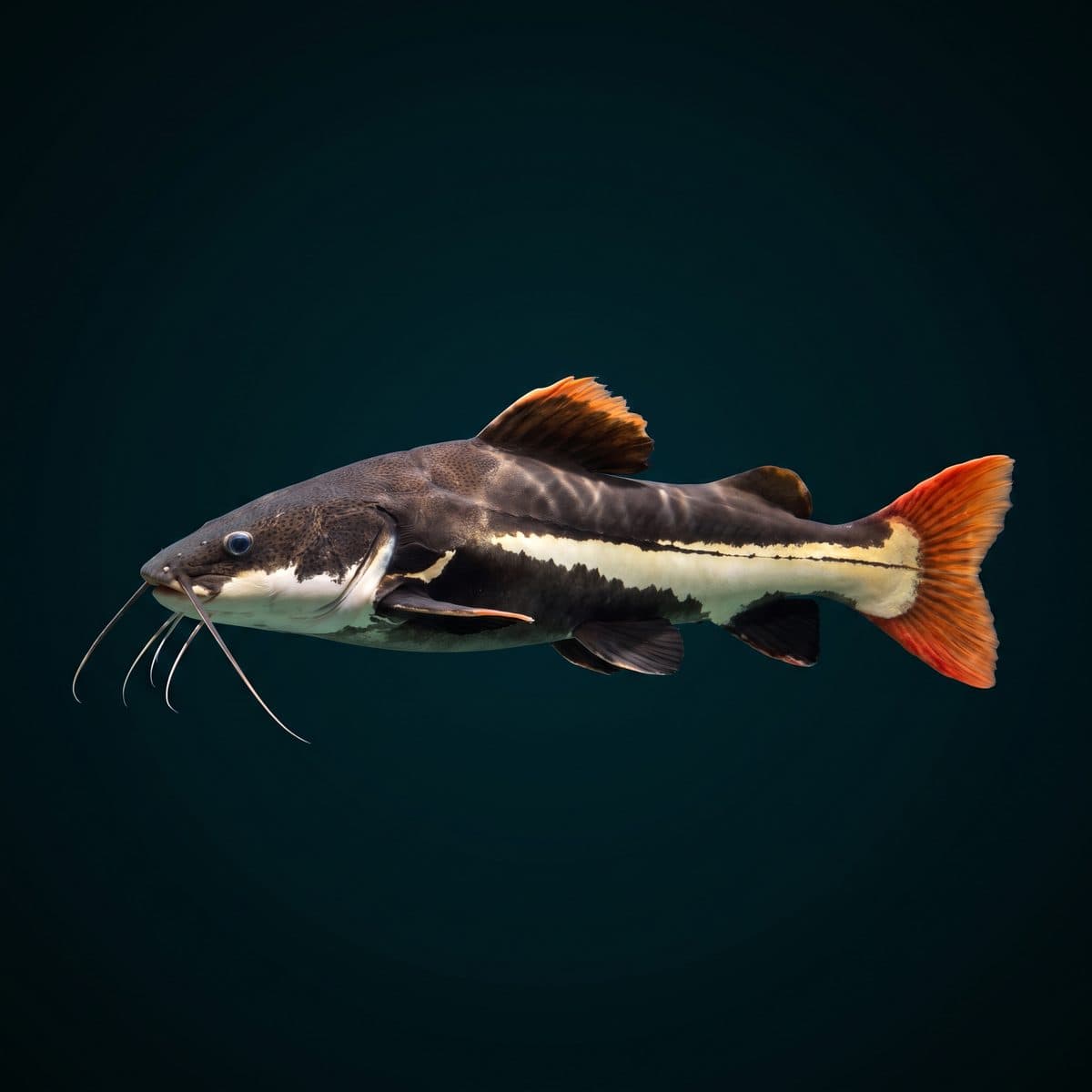
The Red Tail Catfish (Phractocephalus hemioliopterus) is one of the most beautiful and charismatic freshwater fish in the world — and one of the most commonly regretted purchases. Sold as adorable 5 cm (2-inch) juveniles in pet shops for $15–$30, they grow into 100–130 cm (40–50 inch) monsters that need a tank larger than most bedrooms. The gap between what people buy and what they can house is enormous, and RTCs are among the most frequently surrendered fish at public aquariums.
This guide is written not to discourage keeping Red Tail Catfish but to ensure anyone who does so understands exactly what is required. If you have the space, budget, and commitment for a 1,000+ gallon system, the RTC is a magnificent, personable fish that will live 20+ years. If you do not, please choose a different species.
Growth Rate and Size
Red Tail Catfish grow extremely rapidly:
- Purchase size: 5–8 cm (2–3 inches)
- 6 months: 20–25 cm (8–10 inches)
- 1 year: 35–45 cm (14–18 inches)
- 2 years: 60–75 cm (24–30 inches)
- 3–5 years: 80–110 cm (32–43 inches)
- Adult (5+ years): 100–130 cm (40–50 inches), weight 20–50 kg
Growth cannot be stunted by tank size. A Red Tail Catfish in a 200-gallon tank does not stop growing — it continues growing, develops spinal deformity from inability to turn, and suffers organ compression. Tank size must match the fish's growth rate, not the other way around.
Tank Requirements
Juvenile Housing
A 125-gallon tank is adequate for juveniles up to approximately 30 cm (12 inches). This provides a growth window of roughly 9–12 months from purchase. During this phase, establish the filtration and water management habits that will scale up with the fish.
Adult Housing
An adult Red Tail Catfish requires a minimum of 1,000 gallons — realistically, 1,500–2,000 gallons for a fully grown specimen. Many successful keepers use heated indoor ponds (stock tanks, concrete ponds, or above-ground pools with custom filtration) rather than glass or acrylic aquariums, which become prohibitively expensive at this scale.
- Minimum footprint: 10 × 5 feet (300 × 150 cm) — the fish must be able to turn without bending.
- Filtration: Sump or pond filtration rated for 10,000+ GPH. Moving beds, bog filters, and commercial-grade UV sterilisers are standard.
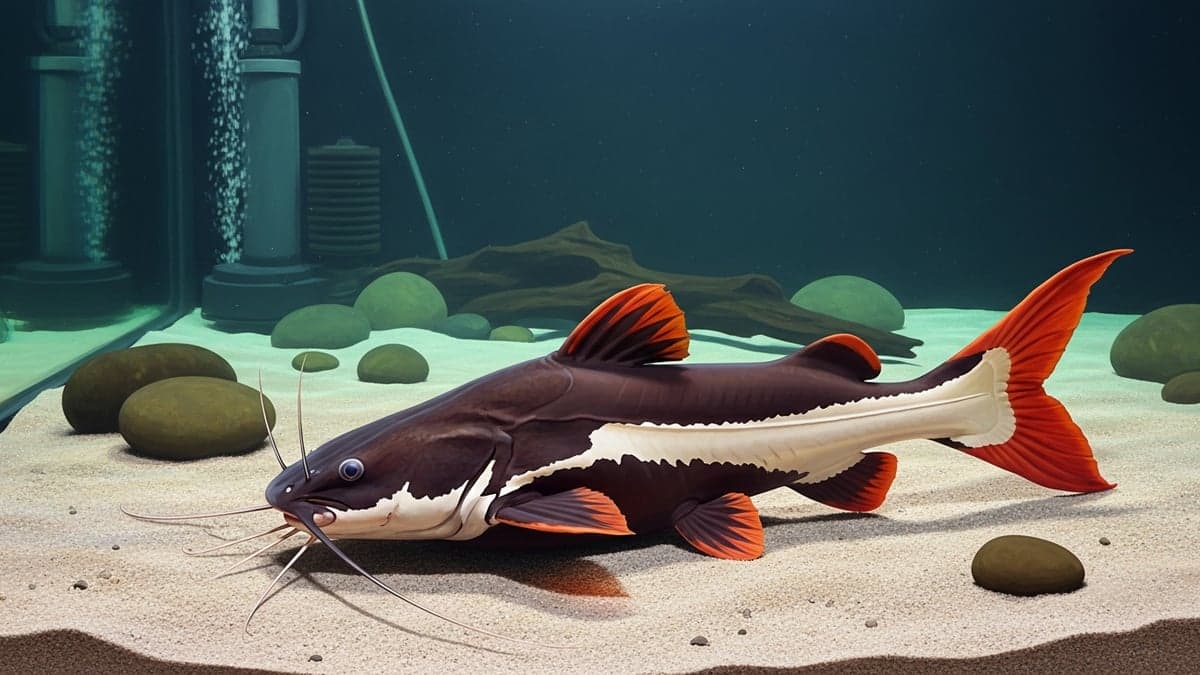
- Substrate: Bare bottom or fine sand. RTCs vacuum the substrate with their enormous mouth during feeding, ingesting gravel and potentially suffering impaction.
- Décor: Minimal. Large, smooth driftwood or PVC tunnels for shelter. RTCs are powerful enough to move rocks and break equipment.
- Lid: RTCs can splash water several feet during feeding. Secure covers prevent water loss and protect nearby electrical equipment.
Water Parameters
- Temperature: 22–26 °C (72–79 °F). Slightly cooler than many tropical species — RTCs originate from deep river channels.
- pH: 6.0–7.5. Adaptable, but slightly acidic to neutral is preferred.
- Hardness: 2–15 dGH.
- Ammonia/Nitrite: 0 ppm.
- Nitrate: Below 40 ppm; below 20 ppm preferred.
The sheer volume of waste produced by an adult RTC is immense. Weekly water changes of 30–50 % in a 1,000-gallon system means replacing 300–500 gallons of water per week. Automated water-change systems (continuous drip-and-drain) are virtually mandatory for long-term RTC keeping.
Feeding
Red Tail Catfish are opportunistic predators with an astonishingly large gape — they will attempt to eat anything that fits in their mouth, including tank mates, heaters, and PVC fittings.
Appropriate foods:
- Frozen fish fillets (tilapia, pollock, smelt) — the dietary staple
- Whole frozen shrimp and prawns
- Earthworms and nightcrawlers (excellent nutrition)
- High-quality catfish or predator pellets (Hikari Massivore, Northfin Predator)
- Frozen squid and mussels (occasional variety)
Feeding schedule: Juveniles daily. Sub-adults (30–60 cm) 3–4 times weekly. Adults (60+ cm) 2–3 times weekly. RTCs have slow metabolisms for their size and are prone to obesity. A fasting day between feeds is recommended for adults.
Avoid: Live feeder fish (parasite and disease vector), mammalian meats (beef, chicken — too high in saturated fat), and anything your hand-fed RTC might confuse with food (which is everything). Use long feeding tongs — an adult RTC bite, while not sharp-toothed, has crushing force. For predator feeding protocols, see our predatory fish feeding guide.
Temperament and Tank Mates
Red Tail Catfish are not aggressive in the conventional sense — they do not attack or chase tank mates. They are, however, indiscriminate eaters. Anything that fits in the mouth (which, for an adult, includes fish up to 30–40 cm) will be consumed. They are gentle giants with an enormous appetite.
In systems of 1,500+ gallons, tank mates must be too large to eat:
- Large Arowana: Silver Arowana of similar body length are classic RTC companions in pond-style setups.
- Large Bichirs: Polypterus endlicherii at 50+ cm are generally safe.
- Pacu: Large enough and fast enough to coexist.
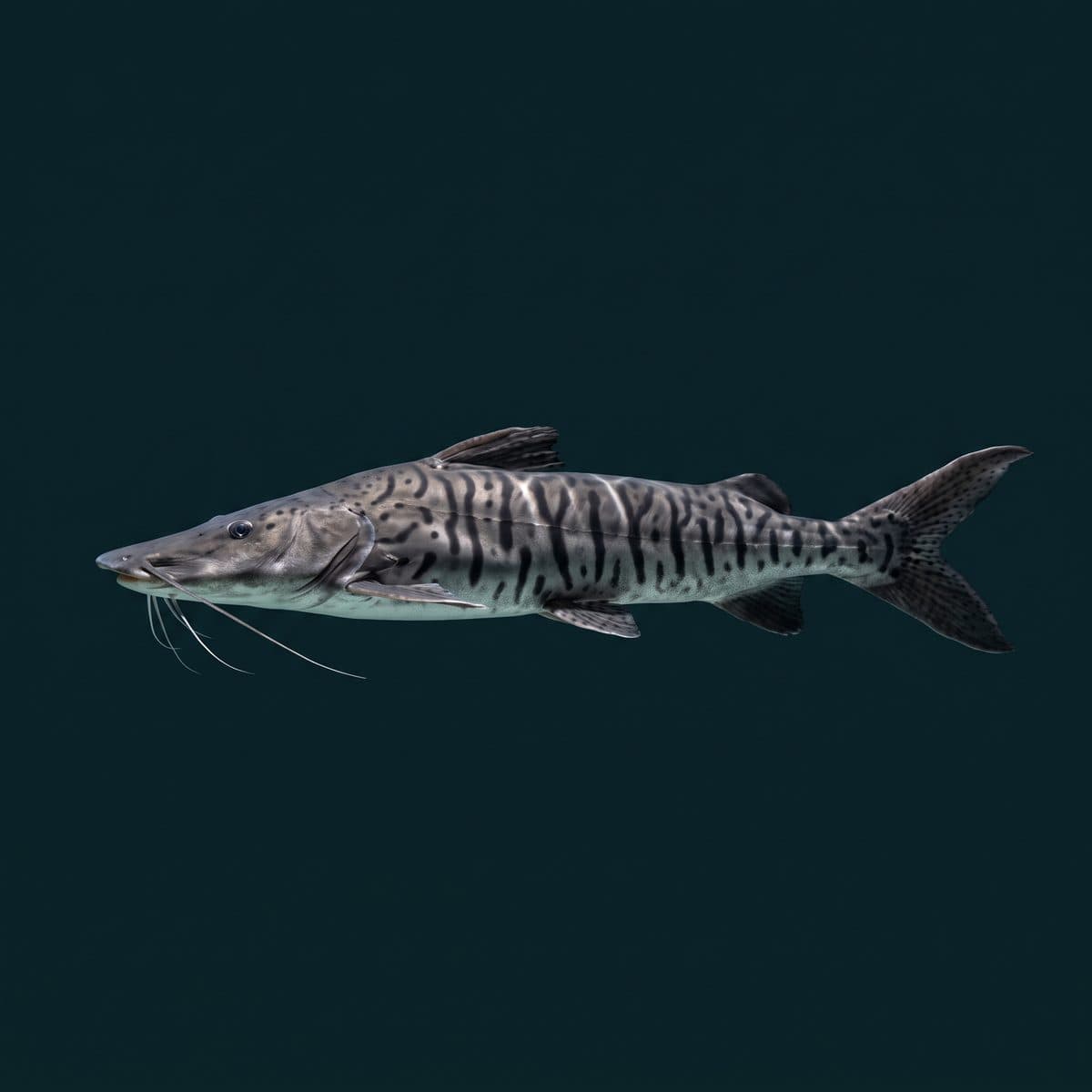
- Other large catfish: Tiger Shovelnose, Giraffe Catfish of similar size.
Never mix RTCs with fish even slightly small enough to eat. The phrase "if it fits, it sits" applies — the RTC will attempt to swallow it.
Health
Red Tail Catfish are remarkably hardy. Common issues:
- Obesity: The primary health concern. Overfed RTCs develop fatty liver disease. Maintain strict feeding schedules with regular fasting.
- Substrate impaction: RTCs vacuum gravel during feeding. Use bare bottom or fine sand only.
- Bacterial infections: Usually secondary to poor water quality in undersized systems. Maintain adequate filtration and water change schedules.
- Injury from poor housing: RTCs in undersized tanks develop spinal deformity, fin damage from wall contact, and chronic stress. The solution is appropriate housing, not medication.
Should You Keep a Red Tail Catfish?
Ask yourself honestly:
- Can I provide a 1,000+ gallon system (or indoor heated pond) within 2 years of purchase?
- Can I perform 300–500 gallon water changes weekly for 20+ years?
- Can I budget $100–$300/month for food and electricity for this single fish?
- Am I prepared for a pet that will outlive most dogs?
If the answer to all four is yes, a Red Tail Catfish will reward you with decades of interaction with one of the most magnificent freshwater fish on Earth. If any answer is no, consider the hundreds of other stunning species that thrive in standard-sized aquariums. Browse The Fish Collection's collection for species suited to every tank size and experience level.