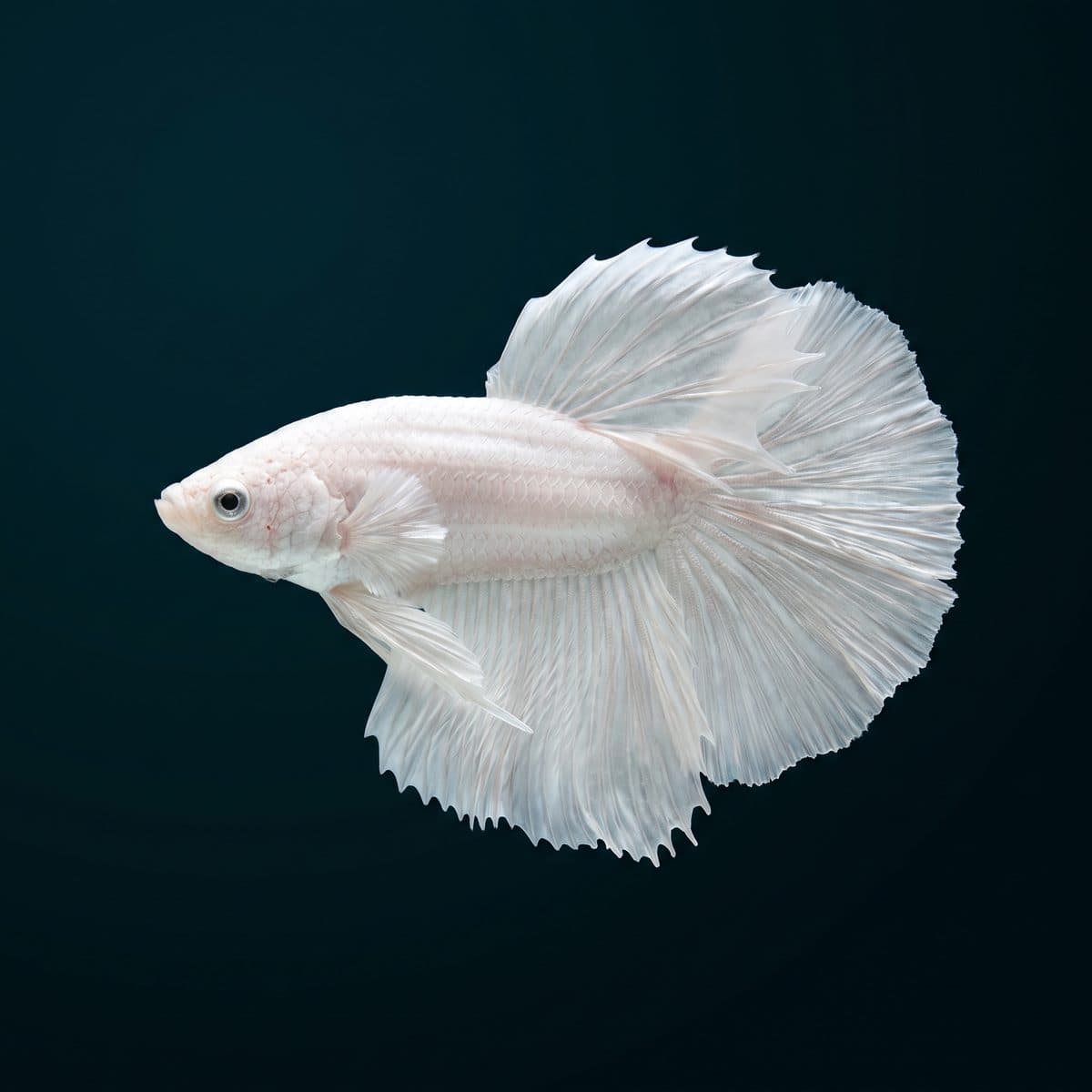
Overview
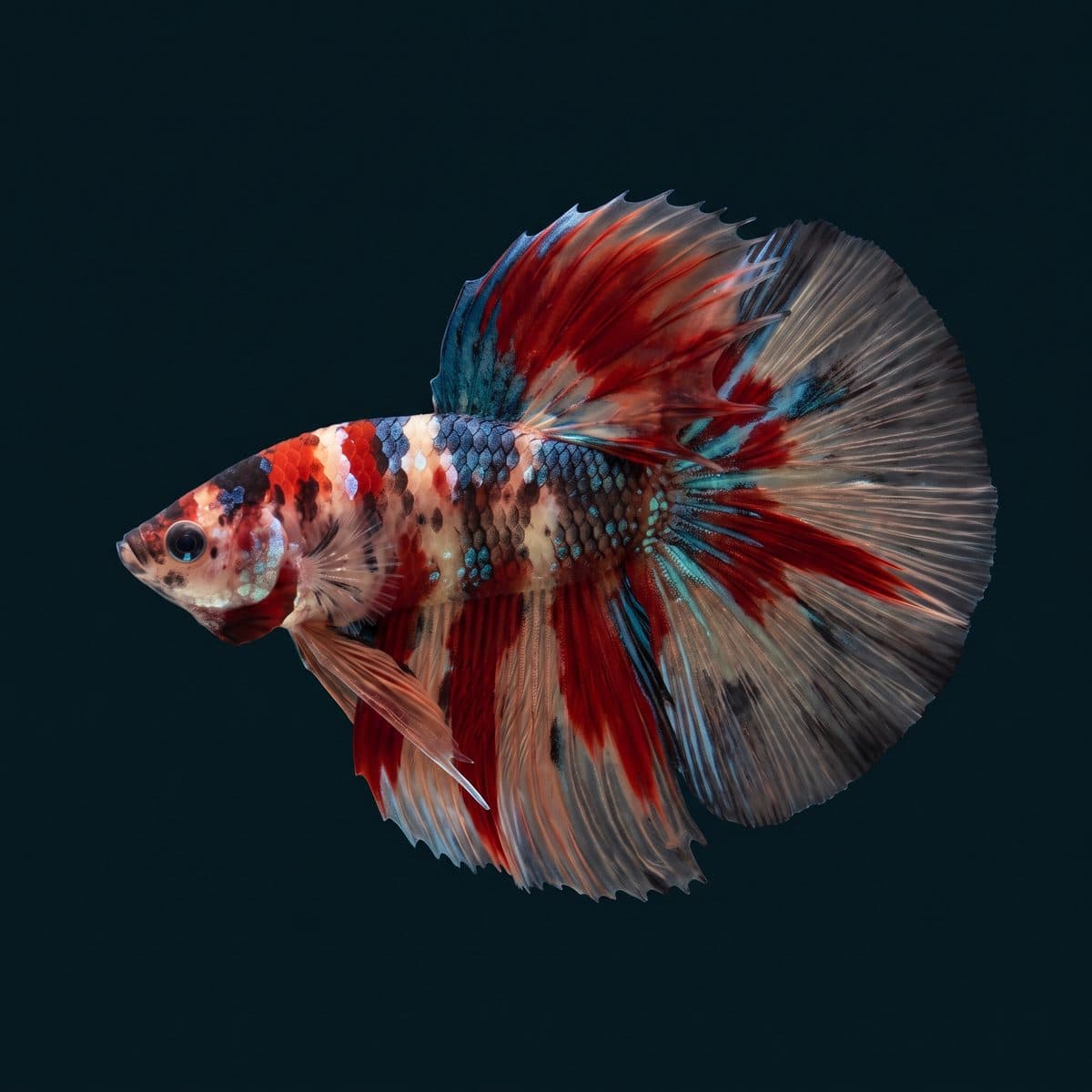
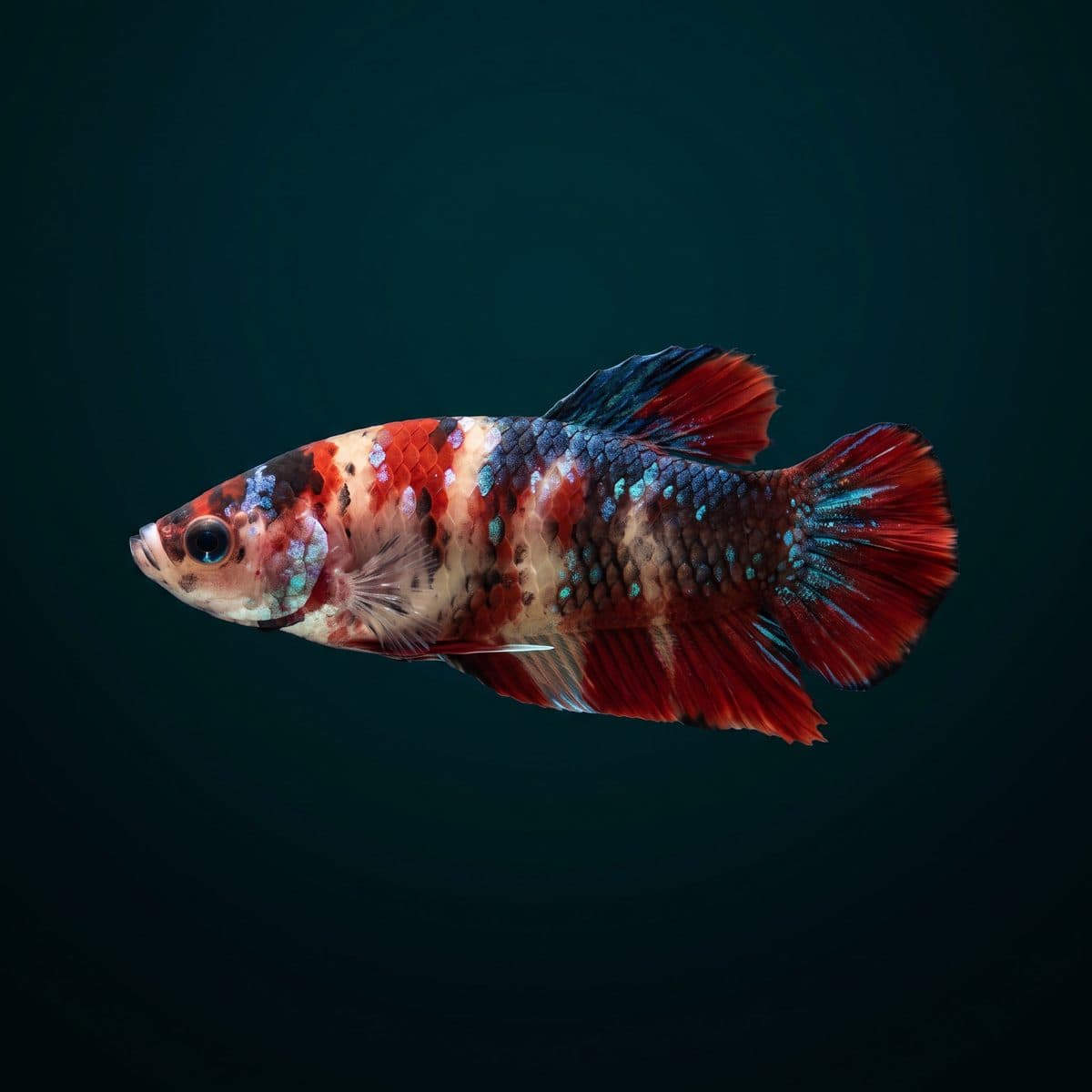
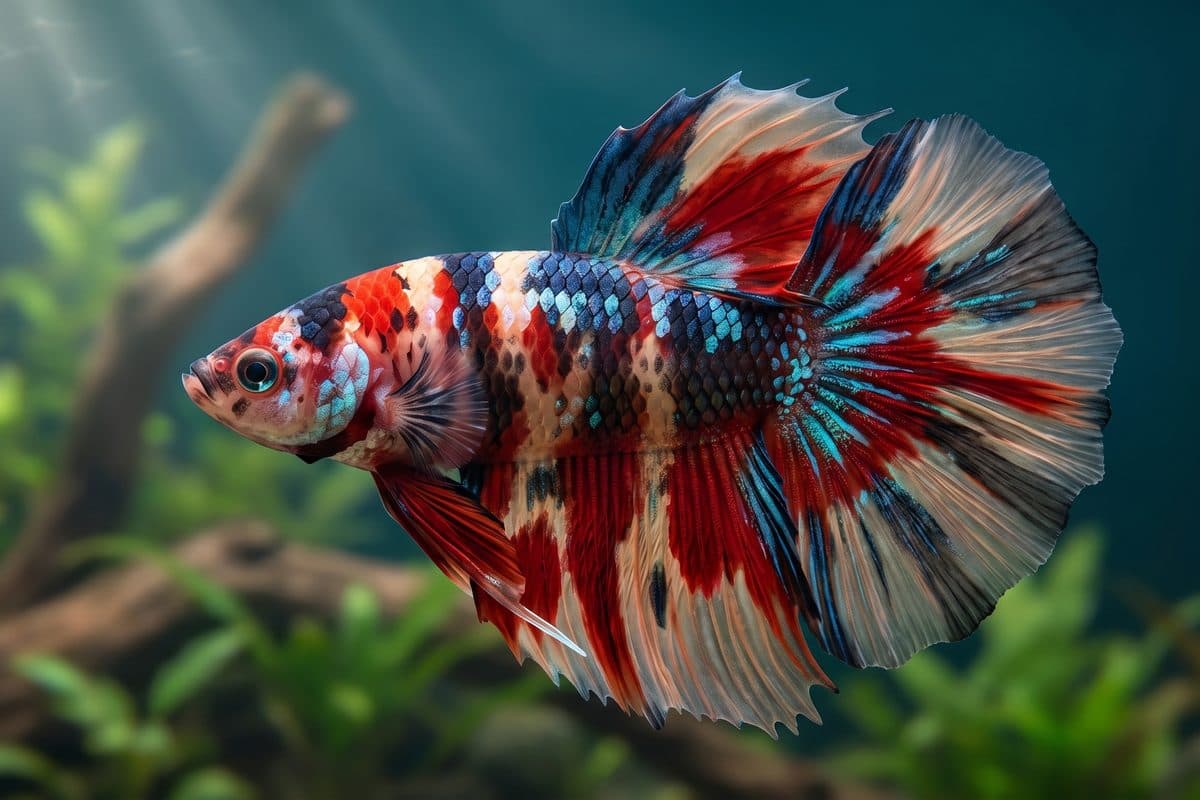
The Galaxy Koi betta represents one of the most exciting developments in ornamental betta breeding of the past decade. The variety emerged from Thai breeding programmes in the mid-2010s, combining three genetic components into a single, visually spectacular package: a koi-like pattern of red (hi), black (sumi), and white/cellophane base colours; the marble gene (a jumping transposon that causes colour patterns to shift over time); and an iridescent blue-teal overlay — the "galaxy" component — that blankets portions of the body and fins with shimmering, almost metallic scales.
The result is a fish that looks different every time you examine it closely. The interplay of warm koi tones and cool iridescent galaxy scales creates a depth and complexity of colour that is unmatched in the betta world. Combined with the marble gene's tendency to rearrange the pattern over weeks and months, a Galaxy Koi betta is genuinely a living, evolving work of art.
At The Fish Collection, Galaxy Koi bettas are among our most requested varieties. We source them from specialist Thai breeders who have stabilised the pattern to a degree that ensures consistently stunning specimens — though, as we discuss below, "stable" is a relative term when the marble gene is involved. This guide covers everything you need to know about selecting, keeping, and breeding these extraordinary fish.
Origins & Genetics
The Galaxy Koi pattern is the product of multiple genetic layers interacting simultaneously:
Koi base pattern: The "koi" component refers to a colour distribution that mimics the red, black, and white patterning of ornamental koi carp. In betta genetics, this is achieved through a combination of the marble gene (which creates the patchy, asymmetrical colour distribution), red pigmentation genes, and melano or dark-body genes that contribute the black elements. The white or cellophane areas are regions where the marble gene has silenced pigment production.
Galaxy (iridescent) overlay: The "galaxy" element is produced by dense iridophore layers — cells containing crystalline guanine platelets that reflect light to produce blue, teal, green, or purple iridescence. In Galaxy Koi bettas, this iridescent layer is selectively distributed across parts of the body and fins, creating a shimmering overlay that interacts with the underlying koi colours. The genetic control of iridophore density and distribution is polygenic (controlled by multiple genes) and not yet fully mapped.
The Marble Gene
The marble gene is the most fascinating — and most unpredictable — element of Galaxy Koi genetics. Identified as a transposable element (transposon, or "jumping gene"), the marble gene can insert itself into or excise itself from pigmentation genes, activating or silencing colour production in individual cells and their descendant cell lines. This is the molecular mechanism behind the colour changes that marble bettas undergo throughout their lives.
The practical implications are significant:
- Colour will change: A Galaxy Koi betta purchased as a juvenile will almost certainly look different as an adult. Red patches may expand or contract, black areas may intensify or recede, iridescent coverage may shift, and white/cellophane areas may gain or lose pigmentation. This is normal, expected, and — for most keepers — part of the appeal.
- Changes are unpredictable: There is no reliable way to predict how a specific marble betta's colour will evolve. Two siblings from the same spawning may develop in completely different directions. Some fish stabilise relatively quickly (within 6–12 months); others continue shifting throughout their lives.
- Photography timing matters: When purchasing online, understand that the fish you receive may look noticeably different from the listing photograph within weeks. Reputable sellers photograph fish as close to the shipping date as possible and disclose the marble gene's dynamic nature.
The marble gene is dominant, meaning a fish needs only one copy to express the colour-changing phenotype. However, the degree of instability varies — some marble lines produce fish with relatively stable patterns, while others produce fish that change dramatically and frequently. Breeders who have worked with the gene for many generations have developed lines with somewhat more predictable colour development, though complete stability is not achievable with the marble gene present.
Colour Development Over Time
Understanding the typical colour development trajectory of a Galaxy Koi betta helps set realistic expectations for new keepers:
Juvenile (6–10 weeks): Young Galaxy Koi bettas are often predominantly dark — heavy black and muted red with the iridescent layer just beginning to appear. At this stage, the pattern is raw and undefined. Experienced breeders select promising juveniles based on the quality and distribution of early iridescence rather than the overall pattern, which will change substantially.
Sub-adult (3–5 months): This is often the most dramatic developmental phase. The marble gene becomes increasingly active, and colours begin to separate and define themselves. Red areas intensify, black may concentrate into bolder patches, and the galaxy iridescence spreads and brightens. Many fish go through a phase where they appear to "lose" colour — large areas turn cellophane/white — before pigment re-emerges in new patterns.
Adult (6–12 months): The pattern typically reaches its most visually striking expression in the first year. Red is at peak intensity, galaxy scales are fully developed, and the contrast between warm and cool tones is at its highest. This is the period when the fish is most photogenic and most closely resembles the breeder's listing photographs.
Mature adult (12+ months): Some Galaxy Koi bettas stabilise and maintain their pattern with only minor shifts from this point forward. Others continue to evolve — a common trajectory is the gradual expansion of iridescent coverage at the expense of red, eventually producing a fish that appears more "galaxy" than "koi." Dark melanin patches may also spread or fade. This later-life colour shift is a characteristic of the marble gene and does not indicate a health problem.
Environmental factors also influence colour expression. Warm water (26–28 °C) and a protein-rich diet tend to intensify red pigmentation. Low-stress environments with appropriate cover and lighting allow the iridescent layer to display at its best. Conversely, cold water, poor nutrition, and chronic stress can wash out colours across the spectrum.
Care Requirements
Galaxy Koi bettas have identical care requirements to all Betta splendens varieties. For comprehensive care instructions, please refer to our Betta Fish Complete Guide. The key points are summarised here:
- Tank size: 5 gallons (19 L) minimum, 10 gallons ideal. Heated to 24–28 °C (76–82 °F) with gentle filtration.
- Water parameters: pH 6.5–7.5, GH 3–12 dGH, ammonia and nitrite 0 ppm, nitrate below 20 ppm.
- Diet: High-quality betta pellets supplemented with frozen bloodworms, brine shrimp, and daphnia. Fast one day per week.
- Environment: Live plants, floating cover, dim-to-moderate lighting, and Indian almond leaves for tannin benefits. Avoid strong currents.
- Housing: Males must be kept individually. Galaxy Koi females can potentially be kept in sorority setups (5+, 20-gallon minimum) but require careful monitoring.
One care consideration specific to Galaxy Koi and other heavily iridescent bettas: strong, direct overhead lighting can wash out the iridescent layer visually, making the galaxy scales appear dull. Side lighting or angled LED spotlights will showcase the iridescence far more effectively. Many hobbyists use a combination of moderate overhead light for plant growth and a small directional LED to highlight the betta's metallic scales.
Sourcing Quality Specimens
The explosive popularity of Galaxy Koi bettas has inevitably led to market saturation with low-quality, poorly bred specimens. Knowing what to look for — and what to avoid — is essential for acquiring a fish that will be a genuine specimen.
What to look for:
- Balanced colour distribution: The best Galaxy Koi bettas display a harmonious balance of red, black/dark, white, and iridescent galaxy scales. Fish that are overwhelmingly one colour (mostly red, mostly black, or mostly iridescent) may be marketed as Galaxy Koi but lack the multi-tonal interplay that defines the variety.
- Dense, bright iridescence: The "galaxy" layer should be vivid — bright blue, teal, or green that catches the light clearly, not a faint, washed-out shimmer. Dense iridescence indicates strong iridophore genetics.
- Clean fin type: Galaxy Koi is a colour pattern, not a fin type, so it can be expressed in any tail form. The most desirable combinations are Galaxy Koi Halfmoon (GKHM) and Galaxy Koi Halfmoon Plakat (GKHMPK). Ensure the fin type is well-formed — 180-degree spread for Halfmoons, symmetrical proportions for Plakats — independent of the colour assessment.
- Health indicators: Clear eyes, intact fins (no rot or clamping), active behaviour, and a visible appetite. Avoid fish with clamped fins, visible parasites, or lethargic posture.
What to avoid:
- Pet-shop Galaxy Koi: Mass-market bettas labelled "Galaxy Koi" or "Koi" in chain pet shops are often low-grade marble bettas with minimal iridescence and poor fin form. They may look vaguely koi-like but bear little resemblance to breeder-quality Galaxy Koi specimens.
- Heavily filtered photographs: Online sellers who oversaturate images or use blue LED lighting to enhance the appearance of iridescence artificially. Request video of the fish under white light before purchasing.
- Very young fish: Juveniles under 3 months are too young to evaluate meaningfully. The pattern will change so dramatically that the fish you receive may look entirely different from its adult form. Purchase sub-adults (4–6 months) or adults for the most accurate representation.
The Fish Collection sources Galaxy Koi bettas from a network of specialist Thai breeders with whom we have multi-year relationships. Every fish is photographed under standardised white lighting, and video is available on request. We ship with heat packs in insulated packaging to maintain tropical temperatures throughout transit.
Breeding
Breeding Galaxy Koi bettas is straightforward in terms of spawning technique — the process is identical to breeding any Betta splendens (see our Betta Fish Complete Guide for the full protocol). The challenge lies in the genetics.
Because the Galaxy Koi pattern involves multiple interacting genes (marble transposon, red pigmentation, melano/dark genes, and polygenic iridophore distribution), spawnings produce highly variable offspring. A pairing of two stunning Galaxy Koi parents will produce fry that range from solid-coloured (red, black, or cellophane) to beautifully patterned Galaxy Koi, with every intermediate expression represented. Expect roughly 20–40% of a spawning to develop patterns that merit the "Galaxy Koi" designation; the remainder will be attractive marble or koi bettas of varying quality.
The marble gene adds an additional layer of complexity: offspring may look unpromising as juveniles, only to develop spectacular patterns at 4–6 months. Conversely, juveniles with promising early patterns may shift into less desirable expressions as the marble gene continues to rearrange pigmentation. For this reason, experienced breeders grow out all fry to at least 3–4 months before making culling or selection decisions.
Selective breeding over multiple generations can increase the proportion of high-quality Galaxy Koi offspring. Select breeding stock that maintained their Galaxy Koi pattern through to maturity (indicating relative marble gene stability), displayed dense iridescence, and had strong fin form. Back-crossing to proven Galaxy Koi lines helps reinforce the desired trait combination, but the inherent variability of the marble gene means that no line will breed entirely true.