Overview
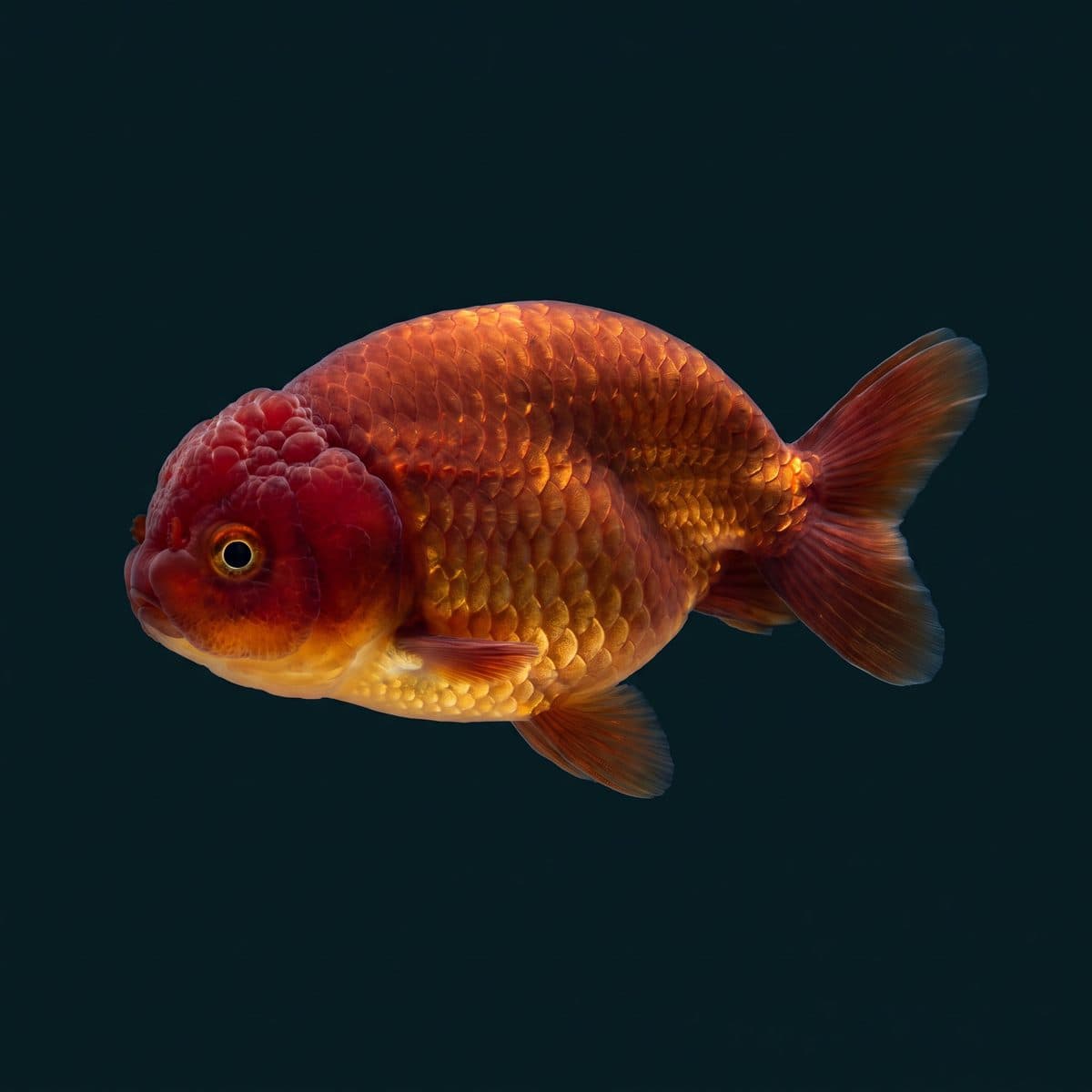
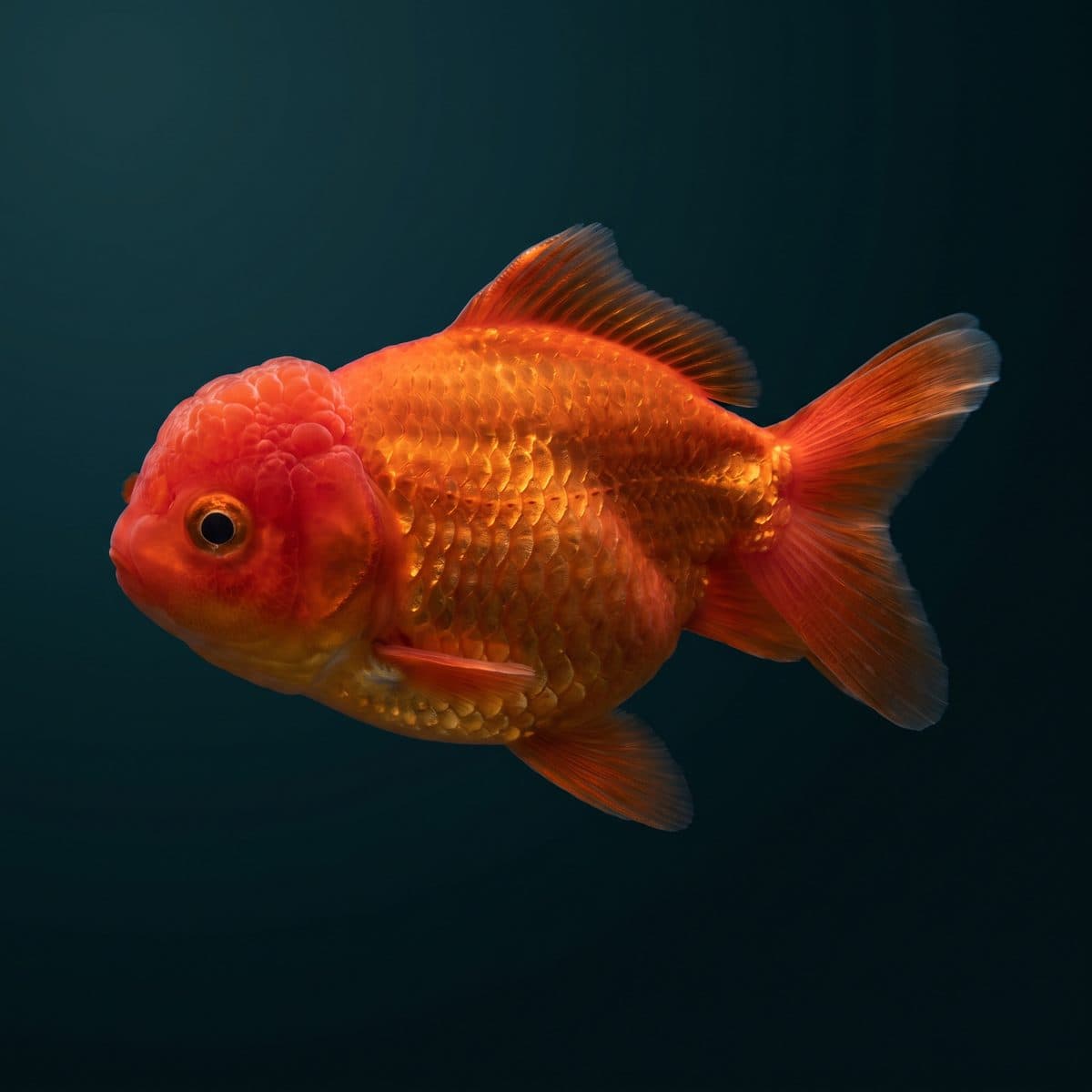
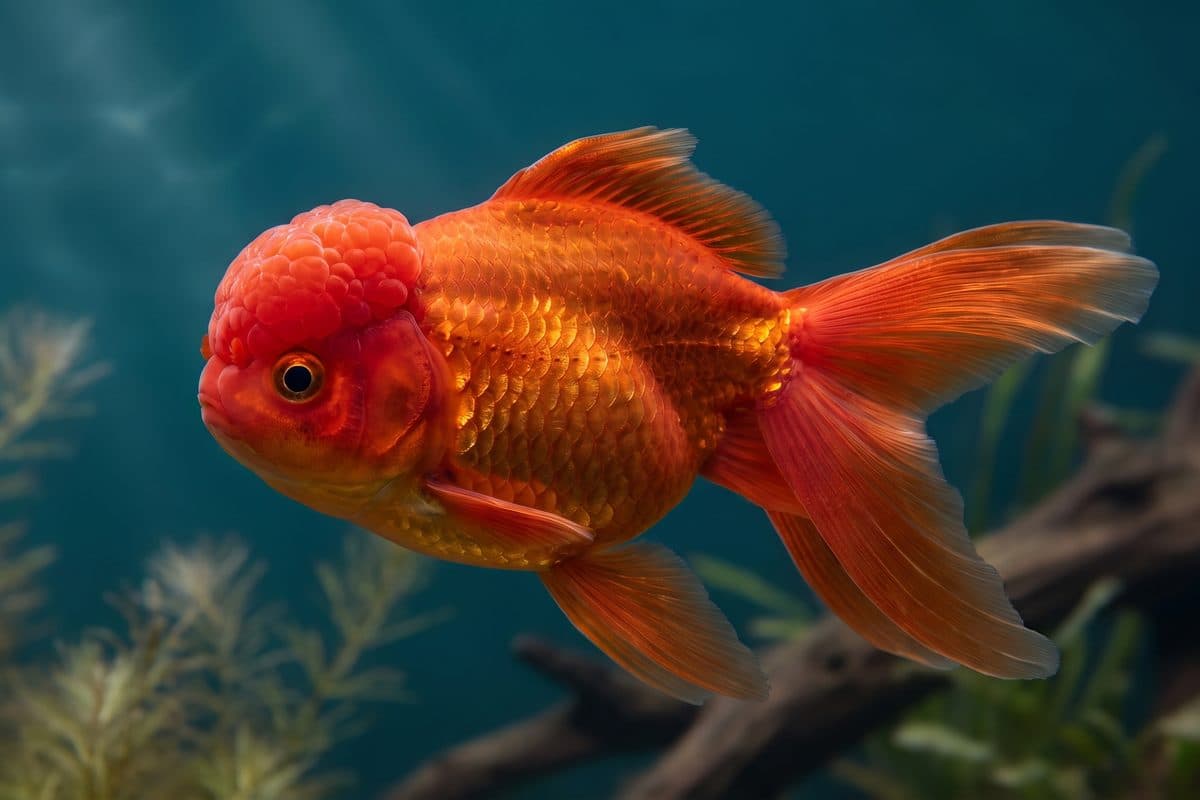
The Oranda goldfish has been cultivated in China since at least the 15th century, with Japanese breeders refining the variety further from the 17th century onward. The variety's defining feature — the wen, a fleshy, raspberry-textured growth that develops on the head and sometimes the cheeks and gill covers — sets it apart from all other fancy goldfish types. Combined with a deep, egg-shaped body, flowing double-tail finnage, and an extraordinary range of available colours, the Oranda offers a combination of elegance and character that few other ornamental fish can match.
In competitive goldfish showing, the Oranda is one of the most popular and hotly contested varieties. Top-quality show Orandas — particularly the highly prized Red Cap (white body with a vivid red wen) and the Thai-bred Blue Oranda — can command prices exceeding £500 for exceptional specimens.
The Wen — Head Growth
The wen is the Oranda's signature feature and the source of most care considerations specific to the variety. Key facts about wen development:
- Onset: Wen growth typically begins at 3–4 months of age, with visible development becoming apparent by 6–12 months. The wen continues to develop and grow throughout the fish's life, typically reaching full size at 2–3 years.
- Genetics: Wen size, shape, and coverage are genetically determined. Selective breeding over centuries has produced lines with wens ranging from modest head-only coverage to extreme full-face growth that covers the cheeks, gill plates, and even partially obscures the eyes.
- Composition: The wen is composed of thickened epithelial tissue — essentially hypertrophied skin cells. It is not a tumour or a disease, though it is susceptible to bacterial and fungal infection if water quality is poor.
- Diet influence: While genetics determine wen potential, diet influences expression. High-protein diets rich in bloodworms and quality pellets promote wen growth. Some breeders supplement with spirulina and astaxanthin to enhance wen colour.
Colour Varieties
Orandas are available in a remarkable range of colours and patterns:
- Red Cap: White body with a vivid red wen. The most iconic Oranda variety and one of the most sought-after in the goldfish hobby.
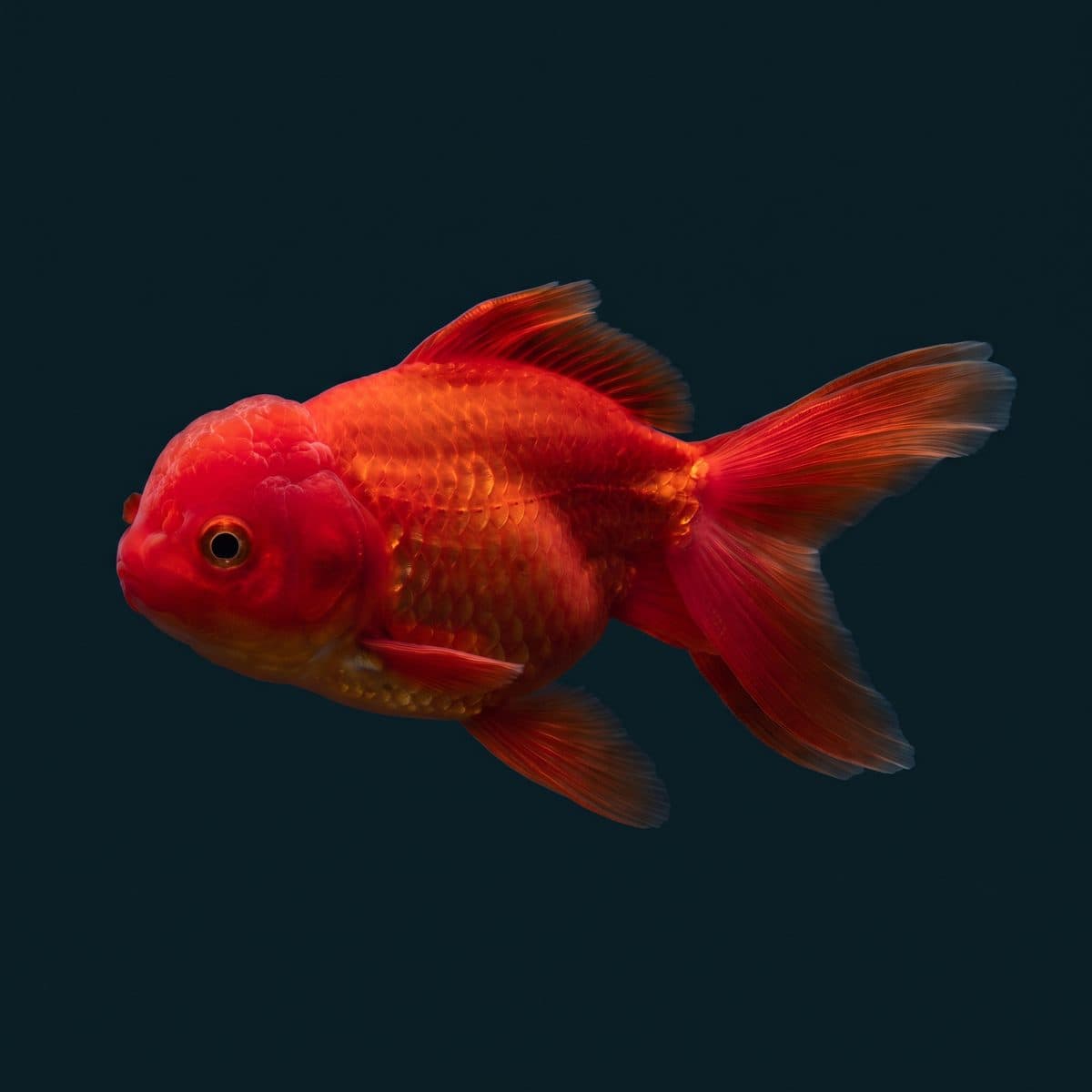
- Red / Orange: Solid red-orange body and wen. The most commonly available variety.
- Black: Solid black — a dramatic variety, though black colouration can fade to bronze or orange with age in some lines.
- Blue: A steel-blue or grey-blue metallic colour. Thai Blue Orandas are particularly prized for their colour intensity and wen development.
- Chocolate: A rich brown colour that is surprisingly rare and highly valued.
- Calico: Multi-coloured patchwork of red, black, white, and blue on a nacreous (pearlescent) scale base.
- Panda: Black-and-white pattern — striking but prone to colour change, as the black may fade over time.
Tank Requirements
- Tank size: 30 gallons (114 L) minimum for a single Oranda; add 10–15 gallons per additional fish. A pair is best in 40–50 gallons; a group of 4 needs 75+ gallons.
- Filtration: Goldfish produce more waste than tropical fish of equivalent size. A filter rated for 1.5–2× the tank's actual volume is recommended. Canister filters or large HOB filters with substantial biological media are ideal.
- Substrate: Smooth sand or fine, rounded gravel. Avoid anything sharp that could injure the wen if the fish roots around the bottom (which they will).
- Plants: Orandas will uproot delicate plants. Use hardy, robust species attached to hardscape: Anubias, Java Fern, and Java Moss on driftwood or rocks. Floating plants (Water Lettuce, Frogbit) provide shade and are out of reach.
- Décor: Avoid anything with sharp edges that could snag the flowing finnage or injure the wen. Smooth driftwood, rounded river stones, and ceramic ornaments with no rough edges are safe choices.
Water Parameters
- Temperature: 65–75 °F (18–24 °C). Orandas are coldwater fish that do not need a heater in most homes. They tolerate temperatures down to 55 °F (13 °C) but are most active and healthy at 68–72 °F (20–22 °C). Avoid sustained temperatures above 80 °F (27 °C).
- pH: 6.5–7.5.
- GH: 5–15 dGH.
- Ammonia/Nitrite: 0 ppm — critical for wen health.
- Nitrate: Below 20 ppm — elevated nitrate is a primary trigger for wen infections.
Weekly 30–50% water changes are the single most important care practice for Orandas. The combination of high bioload and wen susceptibility to infection means water quality must be impeccable.
Diet & Feeding
- Staple: Sinking goldfish pellets (Hikari Oranda Gold, Northfin Goldfish, Repashy Super Gold gel food). Sinking foods are preferred over floating to reduce air ingestion, which can cause buoyancy issues in deep-bodied fancy goldfish.
- Protein supplements: Frozen bloodworms, brine shrimp, daphnia — 2–3 times weekly. These promote wen growth.
- Vegetables: Blanched peas (with skin removed — excellent for digestion), blanched spinach, cucumber, and zucchini. Vegetables should compose 20–30% of the diet.
- Feeding schedule: 2–3 small meals per day rather than one large feeding. Offer only what can be consumed in 2 minutes per feeding.
Wen Maintenance & Health
The wen requires specific attention that other goldfish varieties do not:
- Water quality: The wen's folded, textured surface can trap debris and bacteria. Pristine water quality is the primary defence against wen infection. If you see white cottony patches on the wen, this is likely fungal infection — treat immediately with antifungal medication and increase water changes.
- Wen trimming: In extreme cases, the wen can overgrow to the point where it obscures the fish's vision. Wen trimming is a procedure performed by experienced keepers and breeders using sharp scissors or a scalpel. The wen has minimal nerve endings and the fish recovers quickly, but the procedure should not be attempted without research and confidence. Veterinary consultation is recommended for first-time trimming.
- Observation: Regularly examine the wen for redness, swelling, white patches, or unusual texture changes. Early detection of problems allows quick treatment.
Tank Mates
Orandas are peaceful, slow-swimming fish that should only be housed with other fancy goldfish of similar swimming ability:
- Ideal: Ranchu, Lionhead, Ryukin, Telescope, Pearlscale — all similarly bodied and paced.
- Avoid: Single-tail goldfish (Comet, Shubunkin, Common) — these are much faster swimmers that will outcompete Orandas for food. Also avoid all tropical fish (incompatible temperature requirements) and any fin-nipping species.
History & Origins
The Oranda is the product of centuries of patient selective breeding of Carassius auratus. The variety was developed in China, where goldfish culture stretches back over a thousand years, and its signature wen was refined over generations before Japanese breeders took it up and pushed it further from the 17th century onward. The name itself is a curiosity — "Oranda" is an old Japanese word for Holland, reflecting a time when exotic imports were loosely associated with Dutch traders, even though the fish is East Asian through and through.
What breeders were selecting for, across all those generations, was the combination that still defines the Oranda: a deep, egg-shaped body, flowing double-tail finnage, and above all that raspberry-textured wen crowning the head. Each of those traits is a departure from the streamlined wild carp the goldfish descends from, and each one is why the Oranda needs the specific care this guide describes.
Today the Oranda is one of the most popular fancy goldfish in the world and a mainstay of competitive showing, with prized lines like the Red Cap and the Thai-bred Blue Oranda changing hands for serious money. Understanding that heritage helps as a keeper: you're looking after a living result of a very long breeding tradition, a fish shaped entirely by human preference and reliant on you to meet the needs that come with its exaggerated form.
Health & Common Problems
Orandas are prone to the same issues as other deep-bodied fancy goldfish, plus the wen-specific concerns covered earlier. The ones to know:
- Swim bladder disorder: The round body crowds the swim bladder, so buoyancy problems — floating, sinking, or struggling to stay level — are common, often after eating. Feed pre-soaked sinking food, include blanched peas, and fast periodically.
- Wen infections: The folded wen traps debris and can develop bacterial or fungal infection, seen as redness or white cottony patches. Pristine water is the prevention; treat promptly if it appears.
- Ich and flukes: Common goldfish parasites, usually triggered by stress or a chill and often introduced by un-quarantined new fish.
- Dropsy and bacterial ulcers: Signs of internal problems or poor water quality, shown by raised scales, swelling, or open sores. Both are far easier to prevent than to cure.
Notice how many of these trace back to the same two causes: water quality and diet. Orandas produce a lot of waste and carry a vulnerable wen, so weekly 30–50% water changes, strong filtration, low nitrate, and a careful sinking-food diet do more for their health than any medication. Quarantine new additions, keep the temperature stable in the 65–75 °F range, and an Oranda can live well over a decade — sometimes past 20 years.
Breeding
Orandas breed like other goldfish, and it's a rewarding project if you have the space and patience. Spawning is seasonally triggered: condition a mature group through a cool winter period, then raise the temperature gradually from around 60 °F into the low 70s °F in spring while feeding richly on live and frozen protein. Males develop small white breeding tubercles on the gill covers and leading pectoral rays and chase the plumper females, who scatter sticky eggs across plants or spawning mops.
The adults will eat their own eggs enthusiastically, so remove either the eggs or the parents straight after spawning. Eggs hatch in 4–7 days depending on temperature, and the tiny fry can be started on infusoria and liquid fry food before moving up to baby brine shrimp as they grow.
Breeding show-quality Orandas, though, is a long game of selection. Wen development, body shape, tail form, and colour are all variable, and only a small fraction of any spawn will show the full, even wen and balanced pattern that defines a good Oranda — the rest grow out as perfectly nice pets. Serious breeders raise large numbers and cull hard over months and years, which is exactly why top show fish command the prices they do. For most keepers, a casual spawn is a fun experience; consistent quality is a serious, space-hungry undertaking.
Choosing a Quality Oranda
Whether you want a show fish or a healthy companion, assess an Oranda in the same order: health first, then conformation. A healthy Oranda is active and swims on an even keel, with clear eyes, erect fins, a rounded (not bloated) belly, and no red streaks, ulcers, or cottony patches — pay particular attention to the wen, which should be clean and free of redness or fuzzy growth.
For quality, look at the wen, body, and tail together. In a good Oranda the wen is developing evenly and symmetrically across the head (it won't be full until 2–3 years, so a young fish is partly a bet on genetics). The body should be deep and rounded — roughly egg-shaped — and the double tail should be well-split, held open, and matched on both sides, flowing gracefully as the fish moves. In coloured varieties like the Red Cap, look for crisp, clean colour boundaries.
Above all, weigh conformation against health and swimming ability. A stunning wen means little on a fish that lists to one side, struggles with buoyancy, or has an infected head. Buying from a breeder or importer with quality parent stock is the best way to predict how the wen and body will mature — and a robust, well-shaped young fish from good stock will reward you far more than a flashier but weaker one.