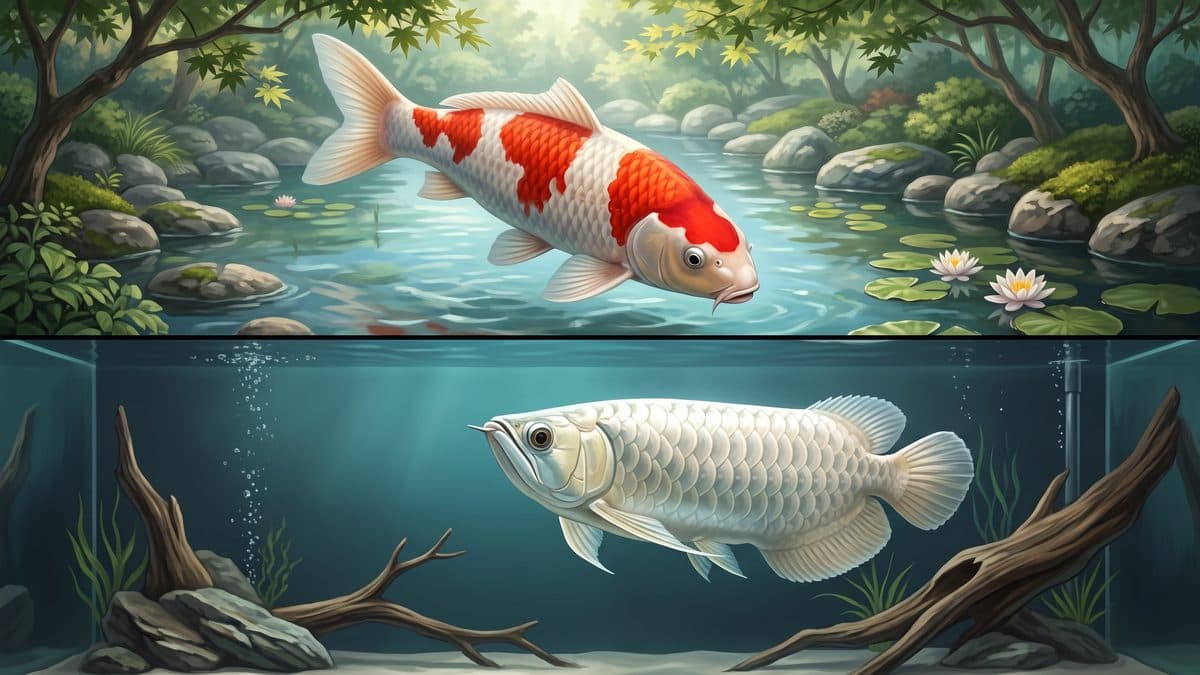
Koi vs Arowana: Prestige Fish Head to Head
In the world of ornamental fishkeeping, two species stand above all others in terms of cultural prestige, collector value, and the sheer devotion they inspire in their keepers: the Koi (Nishikigoi) and the Asian Arowana. Both have transcended the aquarium hobby to become cultural symbols — Koi in Japanese aesthetics and garden design, Arowanas in Chinese and Southeast Asian feng shui and prosperity beliefs. Both command prices that rival fine art and luxury automobiles.
Comparing them is not about declaring a winner — they serve different cultural functions and require fundamentally different keeping environments. This guide provides a clear-eyed analysis for collectors and enthusiasts considering either or both.
Koi Overview
Nishikigoi — literally "brocade carp" — are ornamental varieties of Cyprinus rubrofuscus selectively bred in Japan since the early 1800s. The modern Koi hobby centres on the Japanese show circuit, where fish are judged on body conformation (body shape), skin quality (lustre, clarity), pattern (balance, edge sharpness), and colour intensity. The "Big Three" varieties — Kohaku (white with red), Taisho Sanke (white, red, black), and Showa Sanshoku (black base with red and white) — dominate competition, though over 100 named varieties exist.
Koi grow to 60–90 cm in ponds, with competition-calibre "Jumbo" Koi exceeding 100 cm. They are long-lived — 25–35 years is standard, and well-documented cases exist of Koi living past 50 years. They are social, intelligent fish that learn to recognise individual humans and can be hand-fed. A well-built Koi pond with champion-grade fish is considered a living artwork in Japanese culture — the fish, the water, and the garden create an integrated aesthetic experience.
The Koi market operates on a global scale with Japanese breeders at the apex. Annual auctions at farms in Niigata Prefecture draw international buyers who compete for tosai (one-year-old) from premium bloodlines. The record sale — "S Legend," a 101 cm Kohaku bred by Sakai Fish Farm — sold for ¥203 million ($1.8 million USD) in 2018. Quality bloodline Koi routinely sell for $1,000–$50,000 at two to three years of age.
Arowana Overview
The Asian Arowana (Scleropages formosus) is a member of the ancient Osteoglossidae family — bony-tongued fish that have existed for over 100 million years. Native to the peat swamp forests and slow-moving rivers of Southeast Asia (Malaysia, Indonesia, Thailand, Vietnam), the species was nearly driven to extinction by overcollection in the 1970s and is listed on CITES Appendix I — the highest level of trade protection.
Today, all legally traded Asian Arowanas are captive-bred on certified farms in Southeast Asia, primarily in Malaysia, Singapore, and Indonesia. Each fish is microchipped for identification and comes with a CITES certificate. Despite this regulation, the species remains illegal to import or own in the United States due to the Endangered Species Act — a restriction that fuels its mystique and desirability.
Major varieties include:
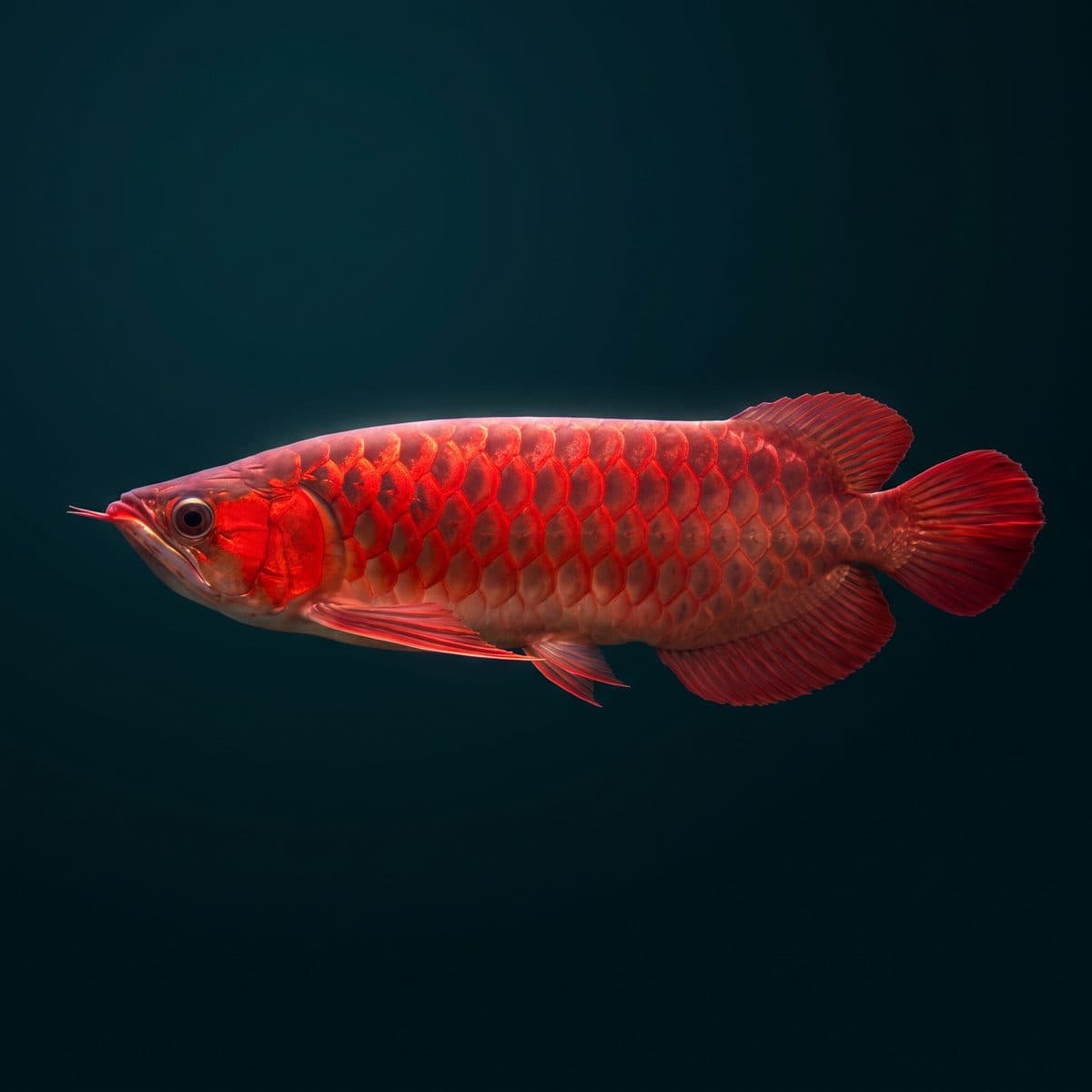
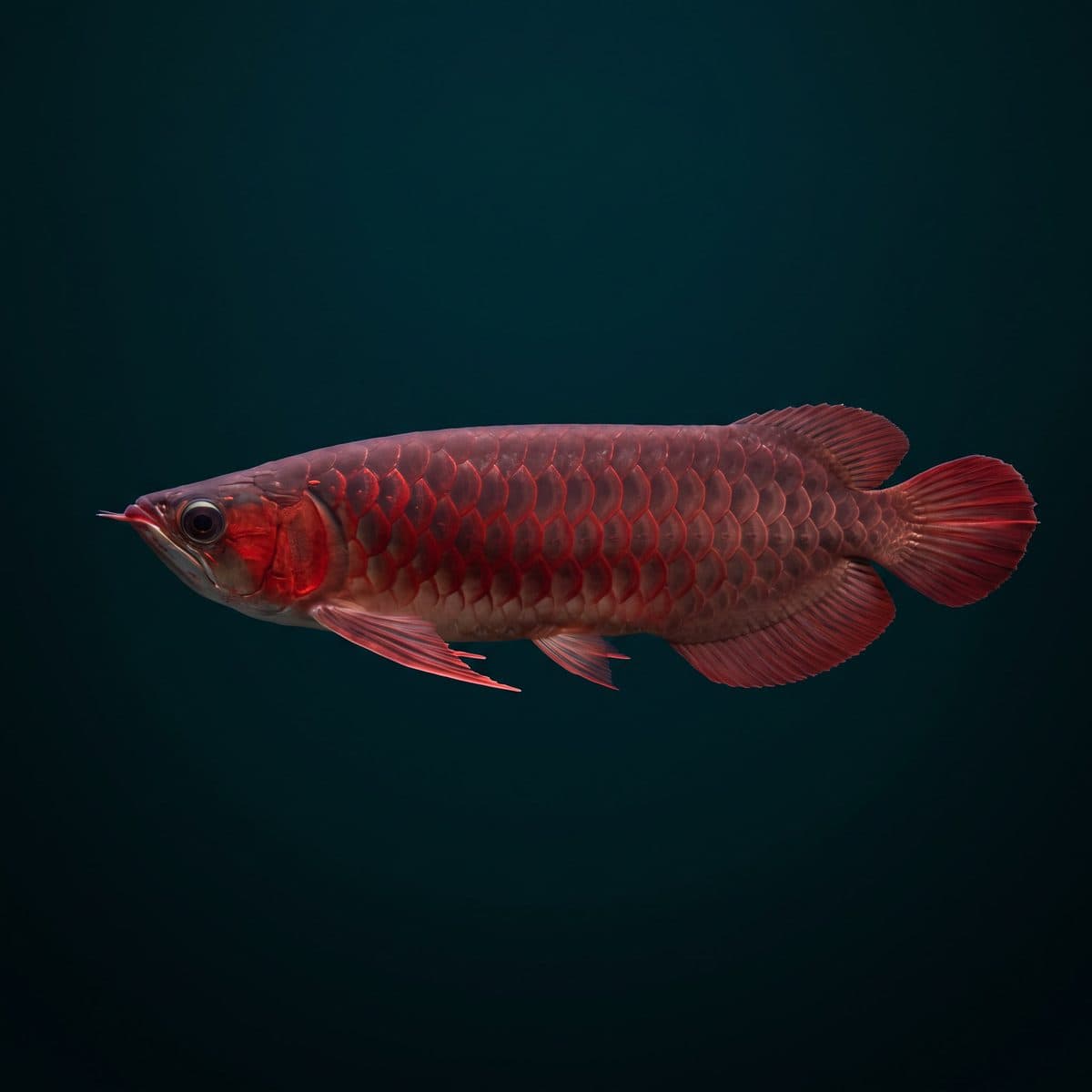
- Super Red: Deep crimson-red scales covering the entire body. The most popular variety in the Chinese market, symbolising luck and prosperity. Premium specimens cost $5,000–$50,000.
- Cross Back Golden: Metallic gold scales covering all six rows of the body (versus only the lower rows in Red Tail Golden). The most prestigious golden variety. Price: $3,000–$30,000.
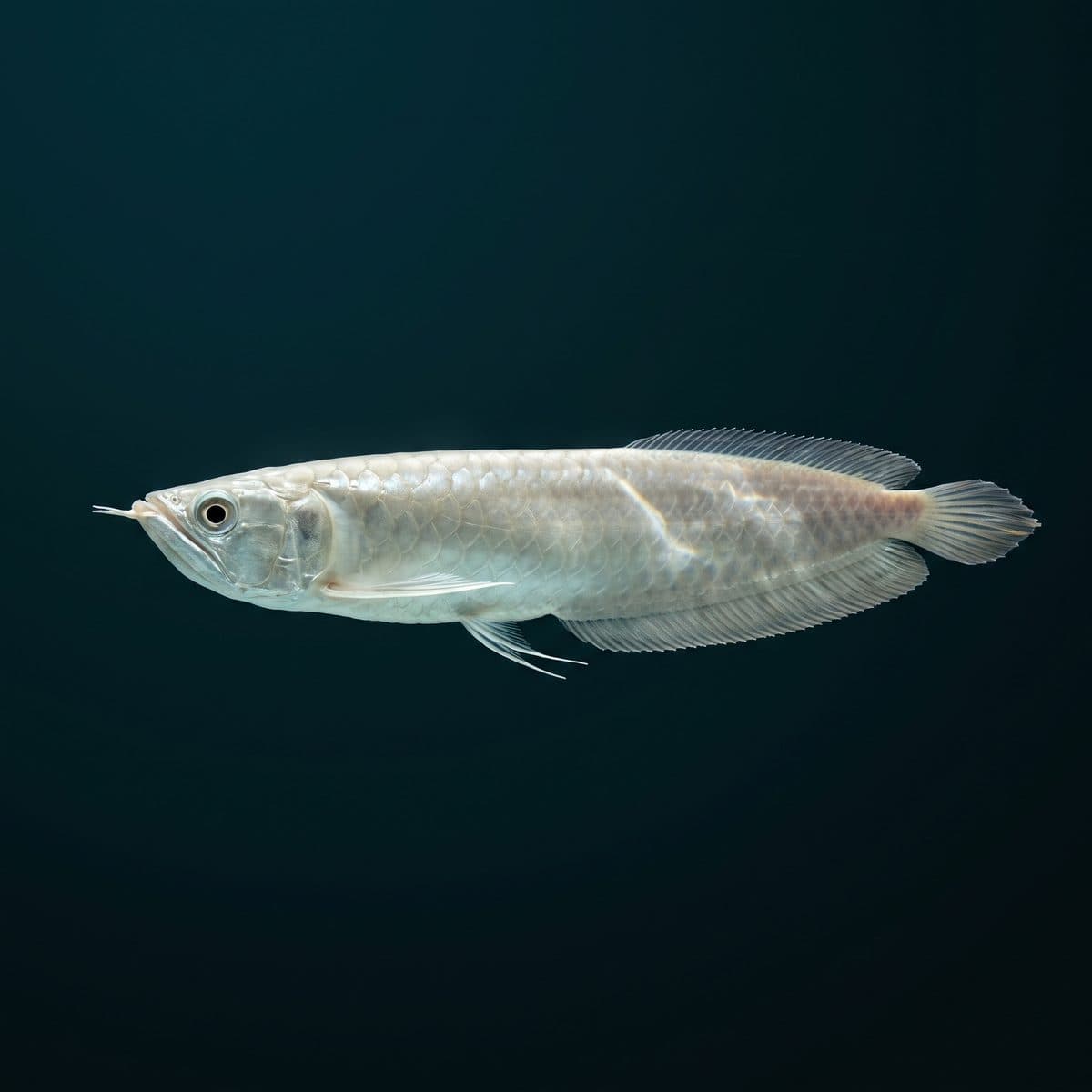
- Platinum (Albino): An extremely rare, all-white mutation with no pigmentation. The rarest and most expensive Arowana variety. Verified sales: $200,000–$400,000+.
- Red Tail Golden: Gold scales on the lower 3–4 rows, with a distinctive red tail. More affordable than Cross Back: $1,000–$5,000.
The Arowana's cultural significance in Chinese and Southeast Asian communities is profound. It is called the "Dragon Fish" (龙鱼) because its large, metallic scales, barbels, and sinuous movement evoke a Chinese dragon — a symbol of power, prosperity, and good fortune. Many successful businesspeople in Asia maintain Arowanas in their offices and homes, believing the fish brings financial luck. This cultural demand is the primary driver of the Arowana's extraordinary market value.
Key Differences
Keeping Environment
This is the most fundamental practical difference. Koi are pond fish — they require outdoor ponds of 1,000+ gallons with multi-stage filtration, aeration, and seasonal management (overwintering in cold climates). Indoor Koi keeping is possible but requires enormous tanks (500+ gallons) and heavy infrastructure. Arowanas are aquarium fish — they require large indoor tanks of 250+ gallons (Asian species; Silver Arowanas need 300+) with standard aquarium filtration. They cannot be kept in outdoor ponds in any climate due to their strict tropical temperature requirements (26–30 °C).
Cultural Context
Koi culture is Japanese — rooted in wabi-sabi aesthetics, garden design, and the Zen appreciation of living beauty. The Koi show circuit is a formal, structured world with strict judging criteria and a clear hierarchy of breeders. Arowana culture is Chinese/Southeast Asian — connected to feng shui, prosperity symbolism, and the display of wealth and status. Arowana ownership in these cultures is as much a social and spiritual act as a hobby.
Investment Trajectory
Both fish can appreciate in value, but the dynamics differ. A Koi's value peaks at 3–5 years of age, when body size, skin quality, and pattern development reach their best expression. After this peak, many Koi plateau or decline in show quality. The best Koi are sold or shown at this prime age. Arowanas appreciate continuously — colour deepens, scales become more metallic, and the fish develops the gravitas that Asian collectors prize. A well-maintained Arowana at 8–10 years old can be worth significantly more than it was as a juvenile, provided the colour development is exceptional.
Number of Fish
Koi are kept in groups — a single Koi in a pond is aesthetically incomplete and socially unstimulating for the fish. A quality Koi collection typically contains 10–30+ fish, with the keeper curating the collection for colour balance, variety representation, and individual merit. Arowanas are kept individually — one per tank. Some keepers maintain a "wall" of Arowana tanks (multiple tanks in a fishroom, each with a single specimen), but each fish is a solo centrepiece.
Quick Comparison Table
| Factor | Koi (Cyprinus rubrofuscus) | Asian Arowana (Scleropages formosus) |
|---|---|---|
| Adult Size | 60–100+ cm | 60–90 cm |
| Lifespan | 25–35+ years (records: 50+) | 15–20+ years |
| Keeping Environment | Outdoor pond (1,000+ gal) | Indoor aquarium (250+ gal) |
| Temperature | 2–30 °C (cold-tolerant) | 26–30 °C (strict tropical) |
| Social Structure | Group (10–30+ typical) | Solo (one per tank) |
| Record Sale Price | $1.8 million (S Legend, 2018) | $400,000+ (Platinum Arowana) |
| Typical Premium Price | $1,000–$50,000 | $1,000–$50,000 |
| Entry-Level Price | $10–$50 (domestic Koi) | $150–$500 (Red Tail Golden) |
| US Legality | Legal everywhere | Illegal (ESA/CITES Appendix I) |
| Cultural Base | Japanese (aesthetics, garden design) | Chinese/SE Asian (feng shui, prosperity) |
| CITES Status | Not listed | Appendix I (highest protection) |
Tank and Pond Requirements Comparison
Koi pond setup: A serious Koi pond starts at 1,000 gallons with a depth of 90–120 cm (3–4 feet). Championship-level ponds are 3,000–10,000+ gallons. Essential components: multi-stage filtration (settlement chamber → biological filter → polish filter), bottom drains with gravity-fed pipework, UV steriliser (controls parasites and green water), aeration system (air pump + diffusers or waterfall), and a vortex or drum filter for mechanical waste removal.
Climate management is region-dependent. In cold climates (USDA zones 3–6), ponds must be deep enough to prevent freezing to the bottom, and de-icers or aeration keep a hole in surface ice for gas exchange. In hot climates, shade structures or pond chillers prevent overheating. A quality Koi pond with professional filtration costs $5,000–$50,000 to build, with ongoing annual costs of $500–$2,000 for electricity, food, water treatment, and health management.
Arowana tank setup: An Asian Arowana requires a minimum 250-gallon tank with dimensions of at least 72 × 30 inches (length × width). Serious keepers use 96 × 30 or 96 × 36 inch tanks (350–500 gallons). Filtration is typically sump-based: a 50–100 gallon sump with drip tray, biological media (K1, ceramic rings), and a return pump providing 6–8 times tank turnover. Heaters maintain 27–29 °C with redundant backup.
Tank décor is minimal — a tan or black background, sand or bare bottom, and possibly a single large piece of driftwood. The focus is entirely on the fish. Lighting is carefully chosen to enhance scale colour: warm-white LEDs or specialised Arowana lights that bring out red and gold tones. Some keepers use tanning lights to intensify red colouration (a controversial but widespread practice in the Asian Arowana hobby). Water changes of 25–30 % weekly maintain quality. A quality Arowana setup costs $2,000–$10,000 for the tank and equipment, before the fish.
Which Should You Choose?
Choose Koi if:
- You have (or can build) an outdoor pond of 1,000+ gallons
- You enjoy the meditative, garden-integrated aesthetic of a Koi pond
- You want a multi-decade commitment to a collection of living art
- You appreciate the structured world of Koi shows and Japanese breeding culture
- You live in the US (where Asian Arowanas are illegal)
Choose an Arowana if:
- You want a single, intensely interactive indoor centrepiece fish
- You are in a jurisdiction where Asian Arowanas are legal (Asia, Europe, most of the world except the US)
- You appreciate the cultural symbolism and feng shui significance
- You have space for a 250+ gallon indoor aquarium
- You are interested in the collector market and potential value appreciation
Our recommendation: For US hobbyists, Koi are the accessible path to prestige fishkeeping — legal, available, and supported by a robust domestic show circuit. Silver Arowanas offer a legal, affordable taste of the Arowana experience. For international hobbyists with access to Asian Arowanas, the choice depends on whether you prefer an outdoor, communal experience (Koi) or an indoor, individual experience (Arowana). Many elite collectors in Asia maintain both — a Koi pond in the garden and an Arowana tank in the living room — representing the ultimate expression of ornamental fishkeeping on both fronts.