Moderate
3 Rimasti
Panther Grouper
Cromileptes altivelis
da 69 €Get a quote
Cephalopholis miniata
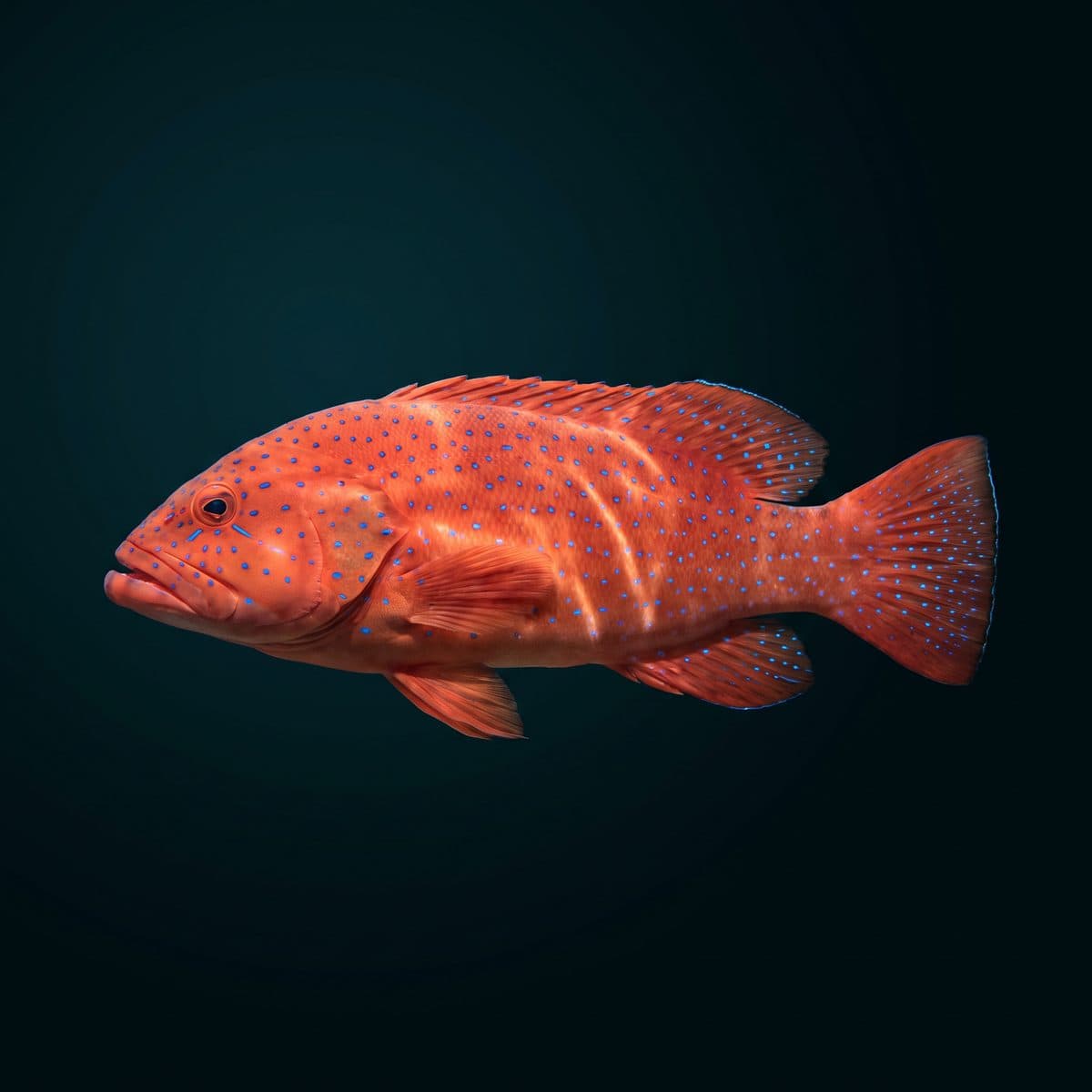
The Miniatus Grouper — also known as the Coral Hind — is among the most vividly colored grouper species available to marine aquarists. Cephalopholis miniata displays a brilliant vermillion-red to orange body densely covered with electric blue spots that create a visual effect so intense it appears almost artificial. Under reef lighting with blue spectrum emphasis, the spots fluoresce with a neon quality that makes the Miniatus Grouper one of the most photogenic fish in any marine system. The Fish Collection sources our Miniatus Groupers from sustainable Indo-Pacific collectors, selecting specimens with the most vivid base coloration and highest density of blue spots.
Insulated, oxygen-packed transit · live-arrival guaranteed
Tank size
150+ gallons
Temperamento
Semi-aggressive
Alimentazione
Carnivore
Water
72–78°F · pH 8.1–8.4
Tell us what you're dreaming of — we'll reply with a price tailored to you.
Not sure if this fish is right for you?
Our team will happily help you choose.
The Miniatus Grouper — also known as the Coral Hind — is among the most vividly colored grouper species available to marine aquarists. Cephalopholis miniata displays a brilliant vermillion-red to orange body densely covered with electric blue spots that create a visual effect so intense it appears almost artificial. Under reef lighting with blue spectrum emphasis, the spots fluoresce with a neon quality that makes the Miniatus Grouper one of the most photogenic fish in any marine system. The Fish Collection sources our Miniatus Groupers from sustainable Indo-Pacific collectors, selecting specimens with the most vivid base coloration and highest density of blue spots.
The Miniatus Grouper occupies a comfortable middle ground in the marine grouper world — large enough to be a commanding presence at a maximum size of 16 to 18 inches, yet small enough to be housed in moderately large home aquariums rather than requiring the warehouse-scale systems that Panther Groupers and Goliath Groupers demand. This manageable size, combined with spectacular coloration and a bold, personable temperament, has made C. miniata one of the most popular grouper species in the marine hobby.
In the aquarium, the Miniatus Grouper is a classic ambush predator that spends much of its time perched on rockwork or nestled in caves, waiting motionless until prey passes within striking distance. The strike itself is a study in precision — a explosive burst of speed followed by a powerful suction gulp that engulfs the target. Feeding time is dramatic and entertaining, though it serves as a constant reminder that any tankmate small enough to swallow is not a tankmate but a meal.
Tank requirements center on adequate water volume and rockwork. A minimum 150-gallon aquarium is required for a single adult, with 200 gallons or larger being preferable. The tank should feature extensive live rock arranged to create caves, ledges, and overhangs that the grouper can claim as its home base. Open swimming lanes between rock structures allow the fish to patrol its territory. Water flow should be moderate — Miniatus Groupers inhabit reef faces with current in the wild but are not current-loving fish in the way that tangs or anthias are.
Water parameters follow standard reef ranges. Temperature between 72 and 78 degrees Fahrenheit, pH between 8.1 and 8.4, and specific gravity of 1.020 to 1.025. Efficient protein skimming is essential, and biological filtration should be oversized to handle the grouper's carnivorous waste output. Weekly water changes of ten to fifteen percent maintain long-term water quality.
Diet is exclusively carnivorous. Market shrimp, silversides, squid, clam, and marine pellets are all accepted eagerly. Our specimens are eating frozen foods enthusiastically. Color-enhancing foods rich in astaxanthin and carotenoids can intensify the red-orange base coloration. Feed two to three times per week for adults. The Fish Collection ships all Miniatus Groupers in insulated marine containers with our live arrival guarantee.
Domande Comuni
Risorse Specialistiche
Potrebbe Interessarti Anche
da 101,20 €
Indicative price