Intermediate
Red-Bellied Piranha
Pygocentrus nattereri
da 69 €Get a quote
Pygocentrus nattereri
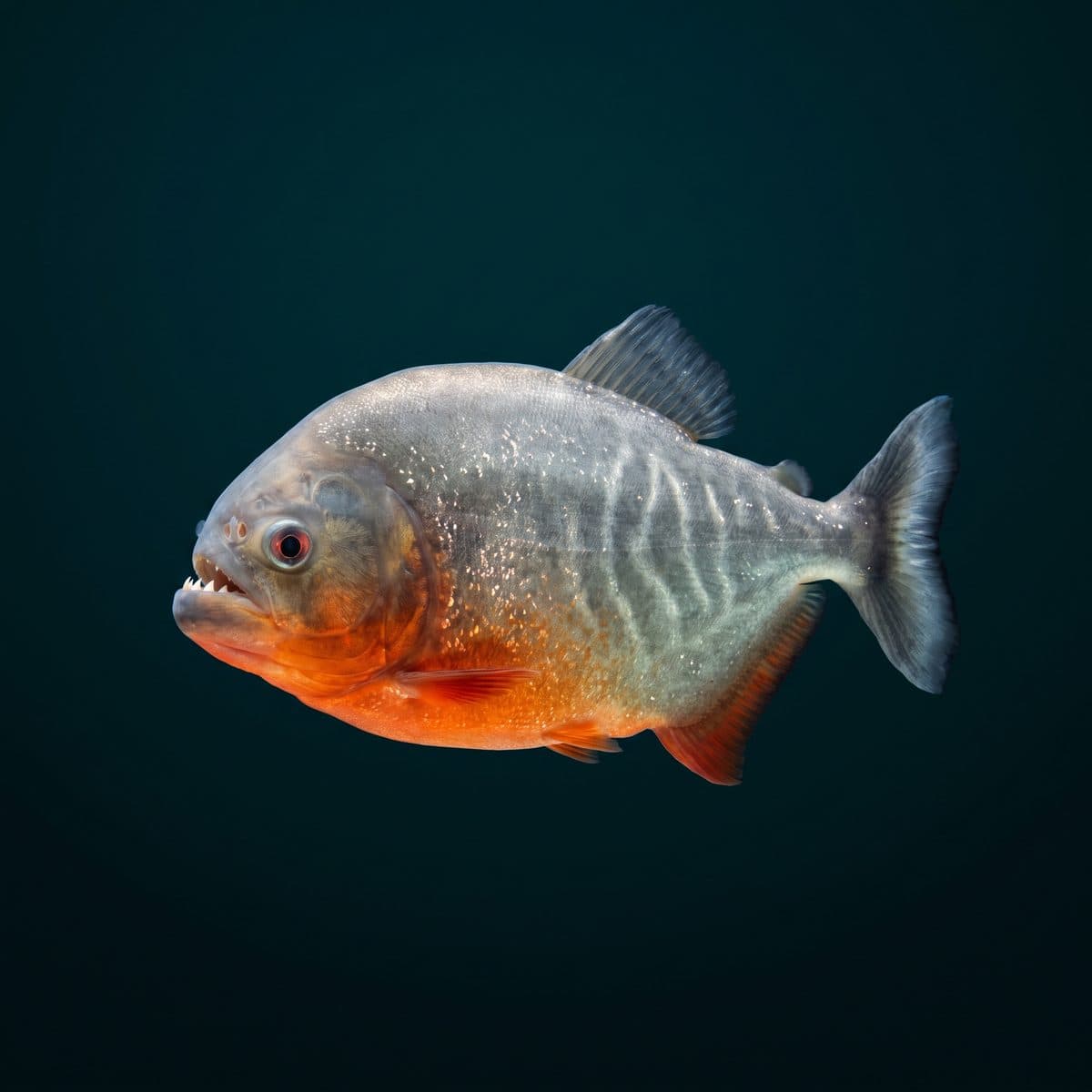
The Red-Bellied Piranha is the most iconic freshwater predator in the world — the fish that launched a thousand Hollywood myths and continues to captivate aquarists with its combination of silver-scaled beauty, crimson ventral coloring, and the unmistakable dentition that has made the name "piranha" synonymous with aquatic danger. Pygocentrus nattereri is the most widely distributed piranha species, found throughout the Amazon Basin and its major tributaries, where it lives in large schools that hunt cooperatively and establish complex social hierarchies.
Insulated, oxygen-packed transit · live-arrival guaranteed
Tank size
100+ gallons
Temperamento
Predatory schooling fish
Alimentazione
Carnivore
Water
75–82°F · pH 6–7.5
Tell us what you're dreaming of — we'll reply with a price tailored to you.
Not sure if this fish is right for you?
Our team will happily help you choose.
The Red-Bellied Piranha is the most iconic freshwater predator in the world — the fish that launched a thousand Hollywood myths and continues to captivate aquarists with its combination of silver-scaled beauty, crimson ventral coloring, and the unmistakable dentition that has made the name "piranha" synonymous with aquatic danger. Pygocentrus nattereri is the most widely distributed piranha species, found throughout the Amazon Basin and its major tributaries, where it lives in large schools that hunt cooperatively and establish complex social hierarchies.
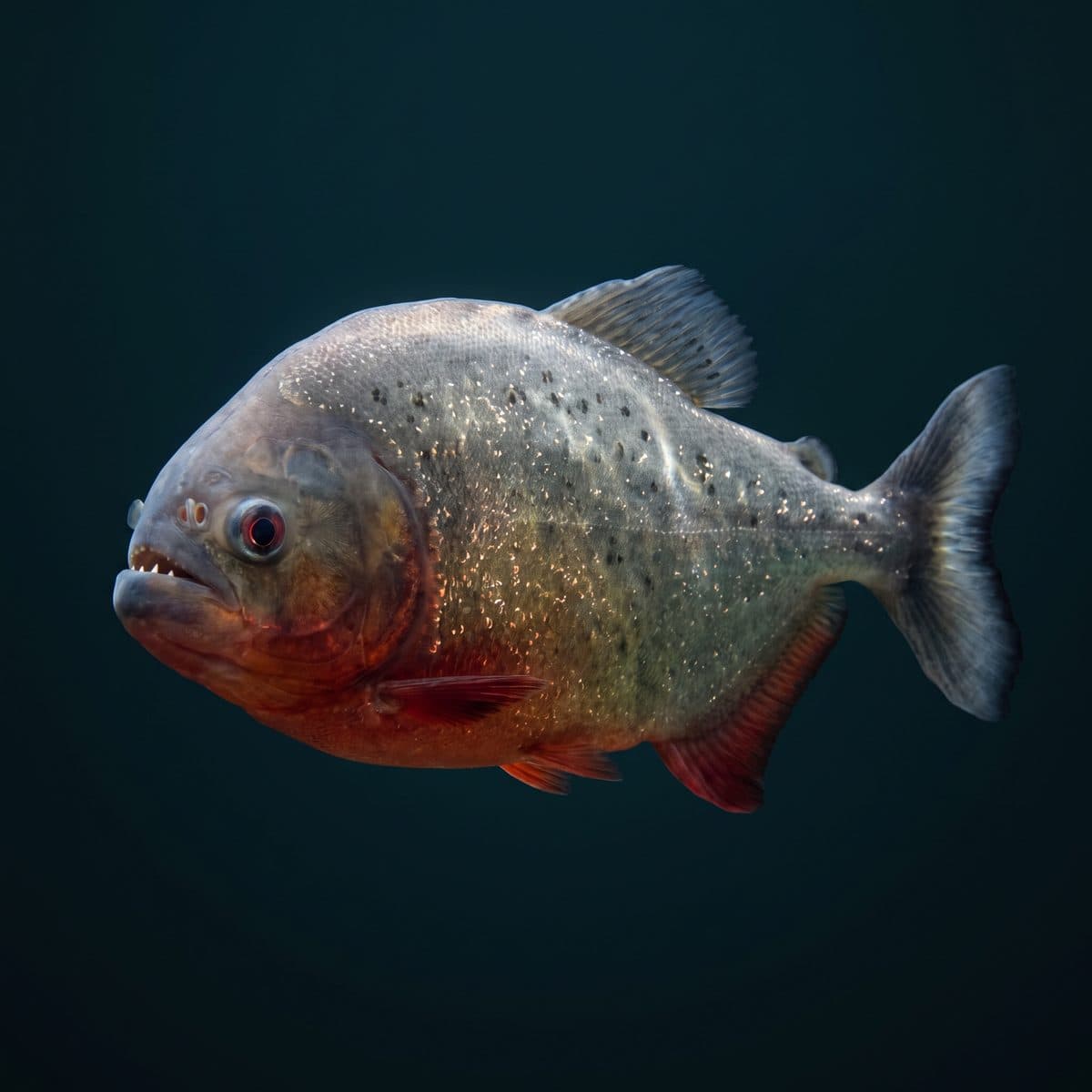
At The Fish Collection, we offer captive-bred Red-Bellied Piranhas that are health-certified, quarantined, and feeding on a varied diet before shipment. Our specimens display the vivid red-orange belly coloration and iridescent silver flanks that characterize healthy, well-conditioned individuals. Maximum size reaches approximately 14 inches in captivity, though most specimens settle around 10 to 12 inches in a well-maintained aquarium.
Keeping Red-Bellied Piranhas successfully requires understanding their social nature. These are schooling predators that must be kept in groups — a minimum of five individuals is recommended to establish a stable hierarchy and reduce aggression toward any single fish. A lone piranha is a stressed piranha, prone to hiding, refusing food, and wasting away. A school of six or more in a 100-gallon or larger aquarium will display natural behaviors including coordinated movement, hierarchical posturing, and group feeding responses that make them one of the most dynamic displays in freshwater fishkeeping.
Water parameters should replicate Amazonian conditions: temperature between 75 and 82 degrees Fahrenheit, pH of 6.0 to 7.5, and soft to moderately hard water. Oversized filtration is essential — piranhas are messy feeders that shred food and scatter debris throughout the tank. A canister filter or sump rated for at least twice the tank volume, combined with weekly 30 percent water changes, will maintain the water quality this species demands.
Diet in captivity should be varied and protein-rich: raw shrimp, fish fillets, earthworms, mussels, and high-quality sinking pellets. Contrary to popular belief, piranhas do not require live feeder fish and are actually healthier on a diet of prepared foods that eliminates parasite transmission risk. Feed every other day for adults, daily for growing juveniles. Feeding time is dramatic — the school converges instantly on food, and a piece of fish disappears in seconds.
Domande Comuni
Risorse Specialistiche
Potrebbe Interessarti Anche
da 36,80 €
Indicative price