Overview
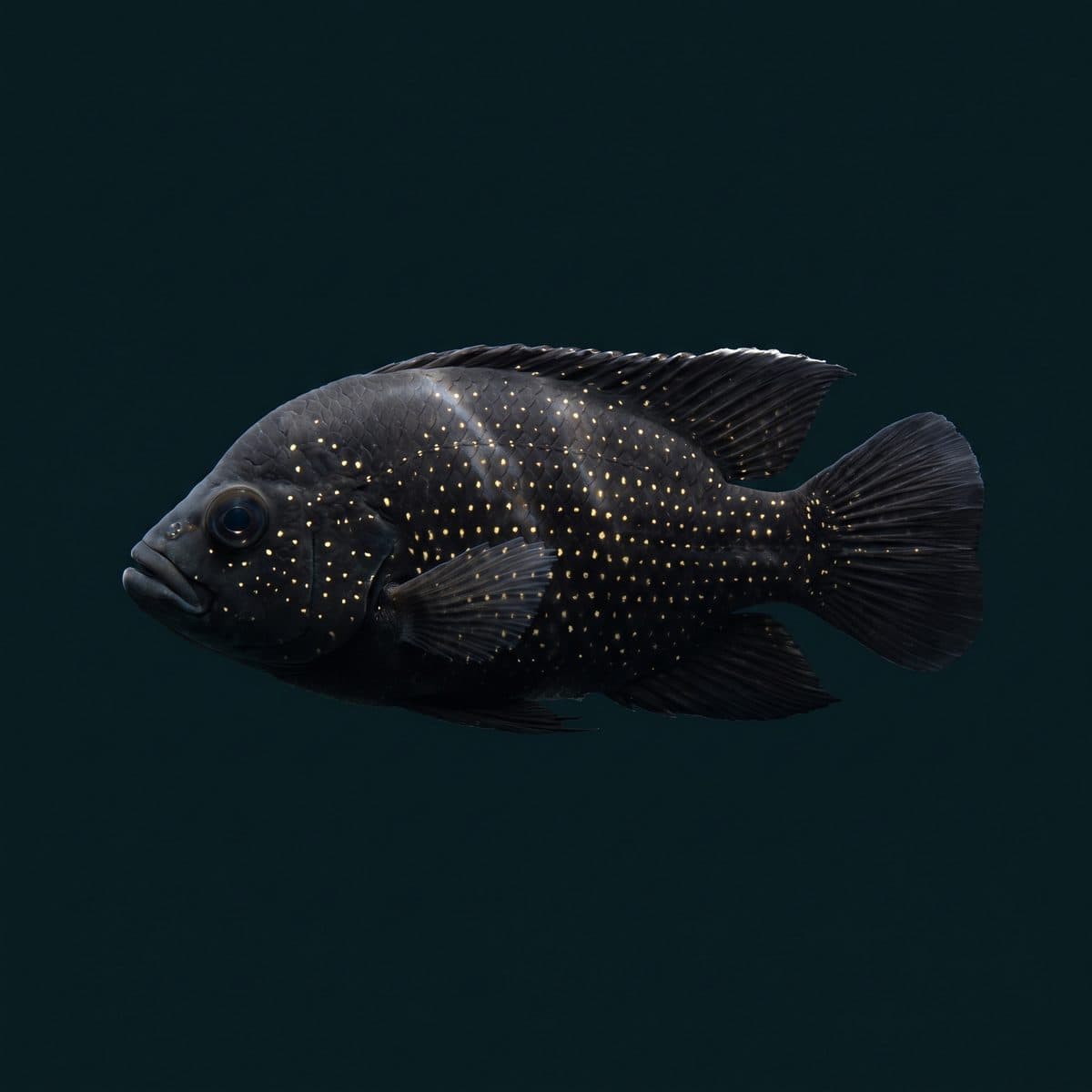
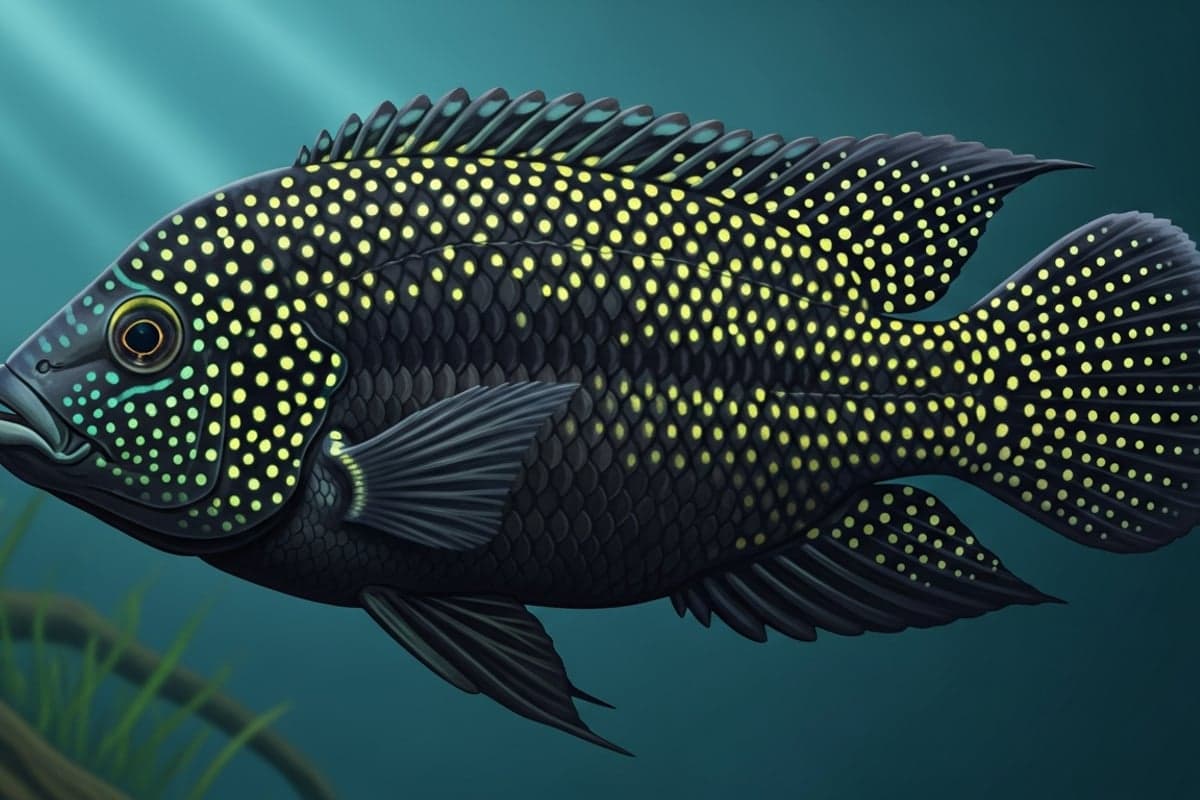
The Starry Night Cichlid (Paratilapia polleni) is one of Madagascar's most extraordinary freshwater fishes — and one of its most endangered. Endemic to the rivers and lakes of eastern and northern Madagascar, this robust cichlid reaches approximately 28 cm (11 inches) in captivity and is instantly recognisable by its adult colouration: a deep black base colour blanketed with hundreds of iridescent spots that range from brilliant white to gold to electric blue depending on the fish's mood, lighting conditions, and viewing angle. The effect is genuinely reminiscent of a star-filled night sky — hence the common name.
Paratilapia polleni is one of only two recognised species in the genus Paratilapia (the other being the closely related and equally endangered P. bleekeri). Madagascar's cichlid fauna is remarkably depauperate compared to the African Great Lakes — only a handful of native species exist — making every Malagasy cichlid a conservation priority. The IUCN lists P. polleni as Vulnerable, with wild populations declining due to deforestation-driven habitat degradation, competition from introduced tilapia (Oreochromis spp.), and predation by the invasive Asian snakehead (Channa spp.).
At The Fish Collection, we maintain a breeding colony of Starry Night Cichlids sourced from verified F1 captive-bred stock. We consider captive maintenance and propagation of this species to be a genuine conservation contribution — every successful hobbyist breeding programme reduces pressure on wild populations and maintains genetic diversity outside of Madagascar. This guide equips you to both keep and breed this remarkable fish.
Natural Habitat
Wild Paratilapia polleni are found in the freshwater rivers, streams, and lakes of eastern and northern Madagascar, with stronghold populations in the Nosivolo River catchment, the Maroantsetra region, and scattered localities along the eastern escarpment. The habitats they occupy range from clear, moderately flowing highland streams with rocky substrates to lowland rivers with sandy-muddy bottoms and overhanging riparian vegetation.
Water chemistry across their range is generally neutral to slightly alkaline (pH 7.0–8.2), moderately hard (5–15 dGH), and warm (22–28 °C, with lower temperatures in highland streams). Madagascar's eastern rivers are characterised by seasonal flooding during the November–March wet season, which expands available habitat and disperses populations, followed by a dry season that concentrates fish into deeper pools and permanent river channels.
Starry Night Cichlids are generalist predators in the wild, feeding on aquatic insects, small fish, crustaceans, and organic detritus. They occupy a mid-water to benthic niche, using rocky structure and submerged wood as ambush points and territorial markers. Males are strongly territorial during breeding season and defend nesting sites aggressively against conspecifics and other species.
Tank Requirements
Tank Dimensions & Aquascaping
A single adult Starry Night Cichlid or a bonded pair requires a minimum 75-gallon (285 L) aquarium measuring at least 120 cm long × 45 cm wide × 50 cm tall. For a community setup with other large tank mates, 125+ gallons provides the territory needed to reduce aggression. These are active, moderately territorial cichlids that need both open swimming space and structured territory.
Aquascaping should incorporate large rocks (flat slate, river stone, lava rock) arranged to create caves, overhangs, and distinct territorial boundaries. Driftwood adds both visual complexity and mild tannin supplementation. If keeping a pair, provide at least two cave structures — the male will claim the primary cave as a spawning site, and the female needs an alternative retreat. Substrate should be medium-grade sand or fine gravel; avoid sharp substrates that could cause injury during the vigorous digging these cichlids engage in during breeding preparation.
Live plants are an option but will be rearranged and potentially damaged during breeding. Hardy species attached to rocks or wood (Anubias, Java fern, Bolbitis) survive best. Rooted plants will be uprooted by digging behaviour.
Filtration & Flow
Filtration turnover of 6–8× the tank volume per hour is appropriate. A canister filter (Fluval FX4 for 75-gallon, FX6 for 125+ gallon) provides the biological capacity needed for a messy cichlid. Sponge pre-filters extend maintenance intervals and prevent fry from being drawn into the intake — important if you intend to breed the fish in the display tank.
Moderate flow along the tank length replicates natural river conditions and promotes good dissolved oxygen levels. Avoid stagnant areas, which encourage bacterial growth and contribute to the water quality degradation that Malagasy cichlids are sensitive to.
Lighting
The Starry Night Cichlid's iridescent spotting displays most dramatically under moderate lighting with a neutral-to-warm colour temperature (5,000–7,000 K). Avoid intense blue-spectrum lighting, which washes out the gold and white spot colouration. A dimmable LED fixture at 50–70% intensity on an 8–10 hour photoperiod provides excellent visual display while maintaining a comfortable light level for the fish.
Water Parameters
Starry Night Cichlids are adaptable to a range of freshwater conditions, making them more forgiving than many exotic species. However, they perform best in stable, clean water that reflects their Malagasy river origins:
- Temperature: 22–28 °C (72–82 °F). They tolerate a wider range than most tropical cichlids, with 24–26 °C being the optimal sweet spot. This cooler tolerance makes them viable for unheated aquariums in temperate climates.
- pH: 7.0–8.0. Neutral to slightly alkaline. Stable conditions matter more than hitting a precise value.
- GH: 5–15 dGH. Moderate hardness is ideal.
- KH: 3–10 dKH. Adequate buffering prevents pH fluctuations.
- Ammonia / Nitrite: 0 ppm — always.
- Nitrate: <20 ppm. Weekly 25–30% water changes with dechlorinated, temperature-matched water.
Tannin supplementation via Indian almond leaves or alder cones is appreciated and provides mild antibacterial benefit. The light brown water tint also enhances the visual contrast of the fish's spotted patterning against a dark background.
Diet & Feeding
Starry Night Cichlids are opportunistic omnivores with a carnivorous leaning. In the wild, their diet includes aquatic insect larvae, small fish, freshwater crustaceans, and plant-derived detritus. In captivity, offer a varied diet for optimal health and colouration:
- Primary: High-quality cichlid pellets — NorthFin Cichlid Formula, Hikari Cichlid Gold, or New Life Spectrum. Feed once to twice daily, offering what the fish consumes within 2–3 minutes.
- Frozen: Bloodworms, Mysis shrimp, brine shrimp (enriched), and chopped market prawn. Feed 3–4 times per week as a supplement or alternating with pellets.
- Live: Earthworms, blackworms, and gut-loaded crickets provide excellent enrichment and conditioning for breeding. Offer once or twice weekly.
- Vegetable: Blanched spinach, zucchini medallions, and spirulina-enriched foods provide plant matter that supports digestive health.
Colour-enhancing foods rich in astaxanthin and carotenoids intensify the gold and blue tones in the iridescent spotting. NorthFin and New Life Spectrum formulations include these pigment precursors as standard ingredients.
Behaviour & Temperament
Starry Night Cichlids are semi-aggressive, territorial fish that assert dominance through lateral displays, gill flaring, and jaw-locking. Outside of breeding season, their aggression is moderate and manageable in appropriately sized tanks with adequate territory structure. During breeding, both sexes — but especially males — become significantly more aggressive, defending their spawning site vigorously against all tank mates.
Males are larger and develop more intense colouration than females, with a slight nuchal hump in mature specimens. Pair bonds are strong once established, and bonded pairs often remain together for years. However, pair formation can be violent — introduce a group of 5–6 juveniles and allow natural pairing, then remove unpaired individuals once a dominant pair establishes.
The species is intelligent and interactive, learning to recognise its keeper and responding to daily routines with visible anticipation. They are active swimmers that patrol their territory with confidence, making them a dynamic centrepiece for a Malagasy or general cichlid display.
Compatible Tank Mates
Tank mates should be robust, moderately sized fish that can hold their own without provoking excessive aggression. Suitable companions include:
- Other Malagasy cichlids — Ptychochromis species are compatible in large tanks and create a geographically accurate biotope display.
- Rainbowfish — Madagascar rainbowfish (Bedotia spp.) are ideal dither fish that occupy the upper water column.
- Large barbs — Tinfoil Barbs, Denison Barbs in schools of 6+.
- Robust catfish — Synodontis, large Bristlenose Pleco, or Zebra Pleco (in separate territories).
- Other moderately aggressive cichlids — Severums, Geophagus, or Frontosa in very large tanks (150+ gallons).
Avoid small fish that could be eaten, overly aggressive species (Flowerhorn, large Mbuna), and delicate fish that cannot tolerate the semi-aggressive environment.
Breeding
Starry Night Cichlids are substrate-spawning biparental cichlids, and captive breeding is both achievable and highly encouraged given the species' conservation status. A bonded pair will select a flat rock surface or cave ceiling, clean it meticulously over several days, and deposit 200–500 adhesive eggs. Both parents guard the clutch aggressively, fanning the eggs and removing any that develop fungus.
Eggs hatch in 48–72 hours at 26 °C. The wrigglers are moved by the parents to pre-dug pits in the substrate, where they remain for an additional 4–5 days until they become free-swimming. Once free-swimming, the fry school tightly around the parents, who continue to defend them actively for 3–4 weeks. This extended parental care is one of the most fascinating behaviours to observe in freshwater cichlids.
To condition a pair for spawning, increase protein-rich foods (bloodworms, live earthworms) for 2–3 weeks and perform a series of 30% water changes with slightly cooler water (2–3 °C below tank temperature) to simulate seasonal rainfall. Ensure the pair has a dedicated cave or flat rock surface for egg deposition. If breeding in a community tank, be prepared for extreme aggression — the pair will attack any fish that approaches the spawning area, potentially injuring or killing tank mates. A dedicated breeding tank of 40–50 gallons is safer for all parties.
Raise fry on baby brine shrimp (Artemia nauplii) from day one of free-swimming, transitioning to crushed pellets and micro worms at 2–3 weeks. Fry grow quickly with frequent small feedings (4–5 times daily) and daily water changes of 25%.
Common Health Issues
Hole-in-the-Head Disease
Like many cichlid species, Starry Night Cichlids are susceptible to hole-in-the-head disease (HITH/HLLE), which presents as pitted erosions on the head and lateral line. The condition is associated with the flagellate Hexamita, poor water quality (particularly elevated nitrate), vitamin deficiency, and the use of activated carbon in filtration. Treatment involves metronidazole (250 mg per 40 L, every 48 hours for three doses), improved diet with vitamin supplementation, and removal of activated carbon. Prevention is straightforward: maintain low nitrate through consistent water changes, feed a varied diet, and avoid prolonged use of chemical filtration media.
Aggression-Related Injuries
During breeding or territorial disputes, Starry Night Cichlids can inflict significant injuries on tank mates and conspecifics — torn fins, split lips, and scale loss are common. Minor injuries heal quickly in clean water with adequate nutrition. More serious wounds (deep lacerations, eye damage) may require antibiotic treatment with kanamycin or a broad-spectrum topical treatment. The best prevention is adequate tank size, multiple territory structures, and removing unpaired conspecifics from breeding tanks. If a bonded pair is terrorising community tank mates during spawning, consider temporarily isolating the pair in a dedicated breeding tank.
Other health considerations include ich (treat with raised temperature to 30 °C plus 2 g/L aquarium salt), bloat from overfeeding or poor-quality food (prevention: feed sparingly, use high-quality pellets), and stress-related conditions from inadequate hiding places or overly aggressive tank mates.