Overview
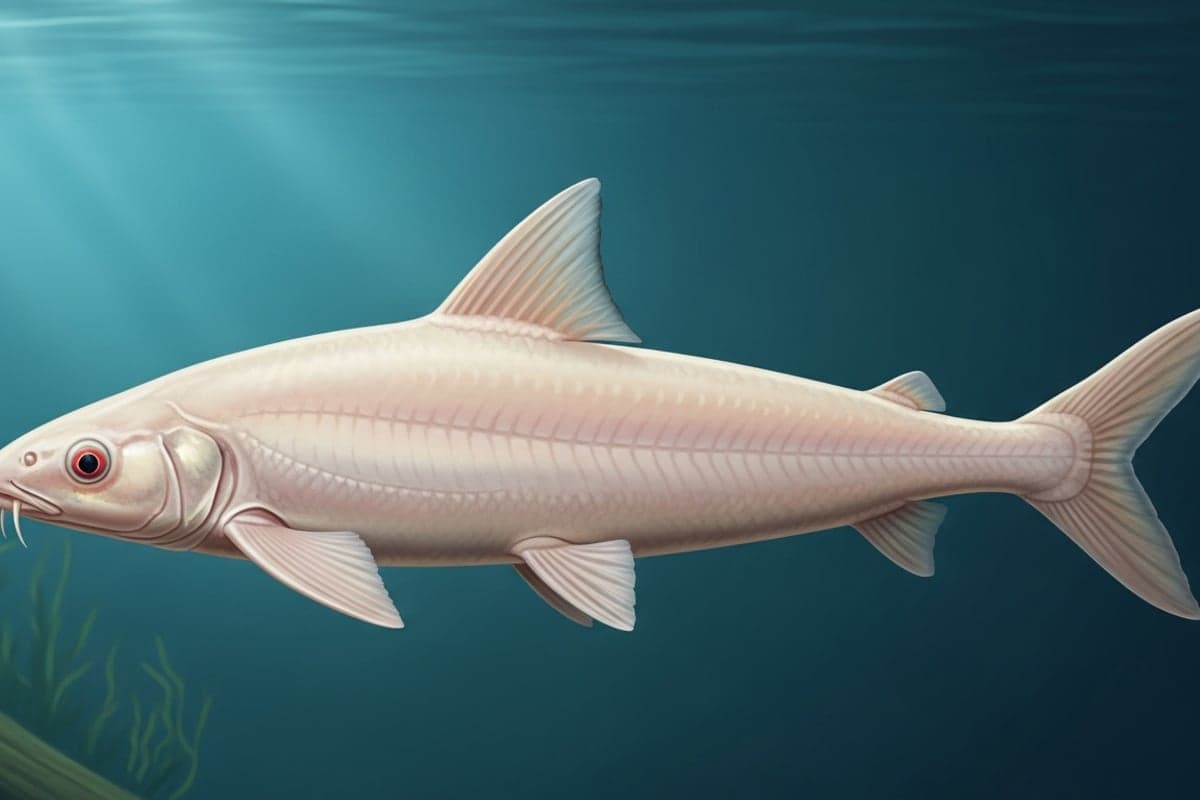
The Albino Shark is the leucistic colour morph of Epalzeorhynchos munense, a cyprinid native to the river systems of Thailand and mainland Southeast Asia. Despite the common name, it bears no relation to true sharks — the moniker derives from its upright dorsal fin, torpedo-shaped body, and assertive territorial behaviour. The albino variant retains the species' characteristic fin shape and personality while replacing the dark grey-green body pigmentation with a pale cream-to-white colouration, making the red-orange fins even more visually striking.
This species is one of the most widely available semi-aggressive freshwater fish in the hobby, sold in virtually every aquarium retailer worldwide. Unfortunately, its ubiquity has led to widespread misunderstanding. Pet-store staff routinely sell Albino Sharks for 10-gallon tanks or recommend them as community-safe, which leads to severe aggression problems as the fish matures. In reality, the Albino Shark is a highly territorial bottom-dweller that needs careful tankmate selection and sufficient space to establish a home range without constant conflict.
At The Fish Collection, we consider the Albino Shark an excellent species for intermediate aquarists who enjoy watching assertive, personality-driven fish. With the right setup, their territorial displays are entertaining rather than destructive, and their constant activity level makes them a genuine centrepiece species. This guide covers everything needed for successful long-term care, drawing on our experience with hundreds of specimens across retail and private collections. For more on related barb and cyprinid species, see our dedicated category page.
Natural Habitat
Wild Epalzeorhynchos munense inhabit the fast-flowing tributaries and main channels of river systems in Thailand, Laos, and Cambodia. Their preferred microhabitat is the rocky, gravel-bottomed runs where moderate-to-strong current flows over cobbles and boulders — zones that support biofilm and algae growth, the species' primary natural food source. During the wet season, they move into flooded marginal areas, but they consistently select zones with significant current and structure.
Water conditions in these habitats are characterised by moderate hardness (5–15 dGH), slightly acidic to neutral pH (6.5–7.5), and temperatures of 24–27 °C. Dissolved oxygen levels are high owing to the current, and water clarity is variable — ranging from clear during the dry season to turbid during monsoon floods. The substrate is predominantly gravel and cobble interspersed with sand deposits.
In the wild, these fish are solitary and strongly territorial. Individual fish claim a boulder or rock crevice and defend a surrounding area of 1–2 square metres against all conspecifics and similarly shaped intruders. This territorial imperative is hardwired and persists in captivity regardless of how long the fish has been in an aquarium. Understanding this behaviour is the key to managing aggression: the fish is not "mean" — it is following a survival strategy that works well in a Southeast Asian river but can be problematic in a glass box.
Tank Requirements
Tank Dimensions & Aquascaping
A minimum aquarium of 55 gallons (210 litres) with dimensions of at least 120 cm long × 40 cm wide is essential for a single Albino Shark. The footprint is critical — these are bottom-oriented, highly active fish that patrol a defined territory. Tanks shorter than 120 cm do not provide enough linear space for the fish to establish a territory while leaving room for other inhabitants. For community setups with multiple bottom-dwelling species, a 75-gallon (280 L) or larger tank is strongly recommended.
Aquascaping should prioritise structure and sight-line breaks. Create distinct territories using clusters of rocks, driftwood, and dense plant stands spaced along the tank's length. Each "zone" should include at least one cave or overhang — the Albino Shark will claim one as its home base and defend the surrounding area. By creating 3–4 visually isolated zones in a 55-gallon tank, you allow other bottom-dwelling fish to exist outside the Shark's perceived territory. Avoid open, unstructured layouts, which force the Shark into a single contiguous territory that encompasses the entire tank floor — a recipe for relentless harassment of all bottom-oriented tank mates.
Filtration & Flow
Target a turnover rate of 8–10× the tank volume per hour. Albino Sharks are riverine fish that appreciate moderate-to-strong flow and high dissolved oxygen. A large canister filter (e.g., Fluval FX4 for a 55-gallon, FX6 for 75+ gallons) with the outlet directed along the tank's length creates the longitudinal current these fish prefer. Supplement with a circulation pump or wavemaker if needed to eliminate dead spots.
Biological filtration should be robust. Ceramic bio-media or sintered glass in the canister, combined with an internal sponge filter for supplementary biological capacity, provides the redundancy needed to maintain zero ammonia and nitrite in a moderately stocked community. Perform 25% water changes weekly — these fish produce moderate bioload for their size, and consistent water quality is essential for fin colouration and immune health.
Lighting
Moderate lighting is ideal. Albino Sharks tolerate a broader range of lighting intensities than many other species profiled in this series, but note that the albino morph lacks normal skin pigmentation and may be more photosensitive than wild-type specimens. Providing shaded areas via floating plants (Amazon Frogbit, Water Sprite) or overhanging driftwood gives the fish the option to retreat from bright zones. Standard aquarium LED lighting at 60–80% intensity on a 10-hour photoperiod works well and supports algae growth on rocks — a natural food source the Shark will graze throughout the day.
Water Parameters
Albino Sharks are hardy and adaptable compared to many species in our collection, but consistent parameters promote optimal health and colouration:
- Temperature: 24–27 °C (75–81 °F). They tolerate a wider range (22–30 °C) but prolonged extremes compromise immunity.
- pH: 6.5–7.5. Most tap water in this range is fine without modification.
- General Hardness (GH): 5–15 dGH (89–268 ppm).
- Carbonate Hardness (KH): 3–10 dKH. Higher KH provides pH stability, which is more important than hitting a specific number.
- Ammonia / Nitrite: 0 ppm always.
- Nitrate: <30 ppm. These fish are more tolerant of moderate nitrate than many species but still benefit from keeping levels low.
The Albino Shark is often recommended as one of the more forgiving species in terms of water chemistry, and this is broadly accurate. Where they are not forgiving is in the consistency of those parameters. Sudden shifts in pH or temperature — as commonly occurs during large, unmixed water changes — trigger stress, immune suppression, and ich outbreaks. Always temperature-match and dechlorinate replacement water before adding it to the tank, and limit individual water changes to 25–30% of total volume.
Diet & Feeding
Albino Sharks are true omnivores with a dietary profile that leans slightly toward vegetarian in the wild (biofilm, algae, detritus) but readily accepts a wide range of foods in captivity. This dietary flexibility is one of the species' most appealing qualities — they are not picky eaters.
A well-rounded diet should include:
- Sinking algae wafers: The daily staple. Hikari Algae Wafers, Northfin Veggie Formula, or similar products provide the plant-based nutrition that should form 40–50% of the diet.
- High-quality sinking pellets: Northfin Community or Hikari Micro Pellets. Offer 3–4 times per week.
- Blanched vegetables: Zucchini medallions, cucumber slices, shelled peas, and spinach leaves are eagerly accepted. Blanch briefly (30 seconds in boiling water) to soften, then weight them down with a veggie clip or stainless steel plant anchor.
- Frozen foods: Bloodworms, brine shrimp, and daphnia provide protein enrichment. Offer 2–3 times per week as a treat, not a staple.
- Natural biofilm grazing: In a tank with moderate lighting and rock surfaces, biofilm and green algae will grow naturally. The Albino Shark will graze these surfaces continuously throughout the day — this natural foraging behaviour is excellent for both nutrition and behavioural enrichment.
Feed once or twice daily, offering amounts consumed within 3–5 minutes. Drop sinking foods near the Shark's preferred territory during the first feeding — this helps reinforce the territory as the food source and can reduce the fish's motivation to patrol aggressively into other zones.
Behaviour & Tank Mates
The defining behavioural trait of the Albino Shark is territorial aggression directed primarily at bottom-dwelling fish with similar body shapes. This aggression is not random or malicious — it is a highly specific response triggered by conspecifics, fish with similar silhouettes (other "sharks," loaches, Corydoras, Plecostomus), and anything that enters the established territory around the home cave. Mid-water and surface-dwelling fish are typically ignored entirely.
Aggression follows a predictable pattern: the Shark establishes a home cave within the first 48 hours, begins patrolling an expanding perimeter, and chases intruders with a combination of lateral displays, fin flaring, and direct charges. In most cases, the display is sufficient to drive off the intruder without physical contact. However, in undersized tanks where the harassed fish cannot escape to a zone outside the Shark's territory, the relentless chasing causes chronic stress, fin damage, and immune suppression in the victim.
The key management principle: provide enough space and structure so that the Shark's territory is a subset of the total tank floor, not the entire thing. In a well-aquascaped 55+ gallon tank, the Shark will claim one end and leave the rest largely uncontested.
Compatible Tank Mates
The best tank mates for Albino Sharks are mid-water and surface-dwelling species that do not compete for bottom territory:
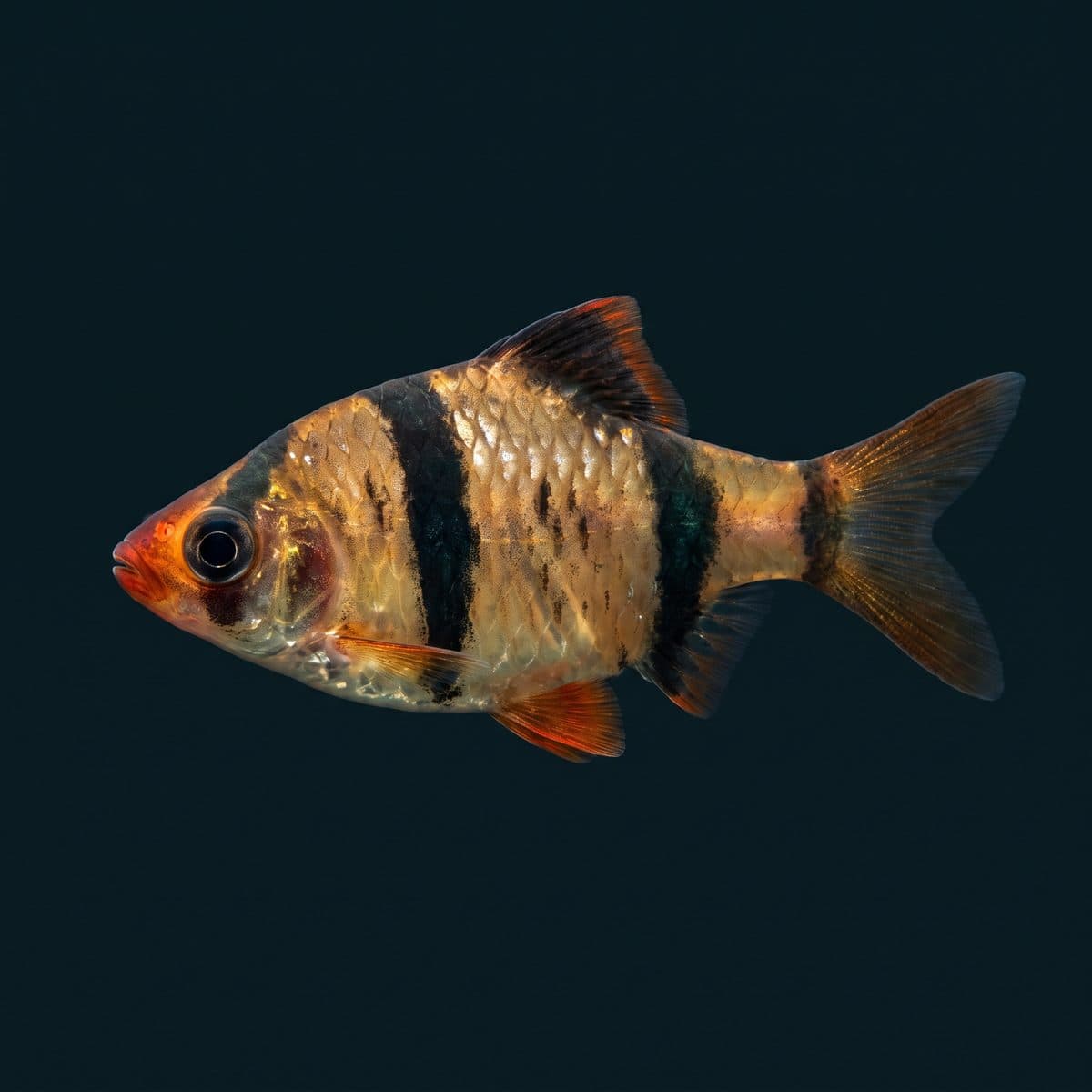
- Tiger Barbs (Puntigrus tetrazona): Fast, robust schooling fish that inhabit the mid-water column. Their speed and group dynamics make them effectively immune to the Shark's territorial displays.
- Giant Danios (Devario aequipinnatus): Energetic upper-water schoolers too fast and too indifferent to be bothered by bottom-zone aggression.
- Rainbowfish (Melanotaenia spp.): Peaceful, colourful mid-water fish that pair beautifully with the Shark's colouration.
- Medium-sized barb species: Rosy Barbs, Odessa Barbs, and Gold Barbs occupy the mid-water zone and add excellent colour.
- Bristlenose Pleco (Ancistrus spp.): One of the few bottom-dwellers that coexists reasonably well — their heavy armour and nocturnal habits reduce conflict. Provide separate caves for each.
Avoid: other "shark" species (Rainbow Sharks, Red-Tail Sharks), territorial cichlids, slow-moving bottom fish with similar profiles, and any species with long, trailing fins that invite nipping.
Breeding
Breeding Albino Sharks in home aquaria is exceptionally difficult and rarely achieved. The vast majority of specimens in the trade are produced via hormone-induced spawning (using synthetic gonadotropins) at commercial farms in Thailand and Indonesia. Natural spawning behaviour is poorly documented, but is believed to involve seasonal migration to specific spawning grounds in the wild — conditions essentially impossible to replicate in a home aquarium.
The few successful home breedings that have been reported involved very large tanks (200+ gallons), a group of 6+ mature adults aged 3+ years, and a combination of environmental triggers: a simulated dry season (reduced water changes, slight temperature increase) followed by a "rainy season" simulation (large cool water changes, increased flow, reduced photoperiod). Eggs are scattered over gravel substrates and hatch in approximately 48–72 hours. Fry are free-swimming within 3–4 days and accept infusoria and powdered fry food.
For the vast majority of keepers, breeding is not a realistic objective. Focus on providing excellent care for commercially produced specimens, and enjoy the Albino Shark for its personality and visual impact rather than its reproductive potential.
Common Health Issues
Aggression Management
The most common "health" issue with Albino Sharks is actually a husbandry issue: aggression-induced stress in tank mates. Signs include shredded fins, pale colouration, hiding behaviour, and refusal to eat in the victim fish. The root cause is almost always insufficient space or lack of structure. Solutions include adding more sight-line breaks (driftwood, rocks, tall plants), rearranging the aquascape to "reset" territories, upgrading to a larger tank, or rehoming incompatible bottom-dwellers. In extreme cases where a single Shark is terrorising the entire community, temporary isolation in a breeder box for 48 hours can reset territorial behaviour when the fish is reintroduced to a rearranged aquascape.
Ich & Skin Parasites
Albino Sharks are moderately susceptible to Ichthyophthirius multifiliis (ich), particularly following temperature fluctuations or transport stress. The albino morph's pale skin makes white spot lesions harder to detect visually than on wild-type fish — look for behavioural signs such as flashing (rubbing against surfaces), rapid gill movement, and clamped fins. Treatment with standard ich medications (malachite green + formalin at label dose) is effective, as this species does not show the medication sensitivity seen in scaleless fish. Elevating temperature to 30 °C accelerates the parasite's life cycle and improves treatment efficacy. Maintain excellent water quality throughout treatment and add supplemental aeration, as medications reduce dissolved oxygen.
Skin flukes (Gyrodactylus and Dactylogyrus spp.) are occasionally encountered in newly imported specimens. Symptoms include excessive mucus production, flashing, and grey patches on the skin. Praziquantel (PraziPro) is the treatment of choice and is well-tolerated by this species at standard dosing.