Overview
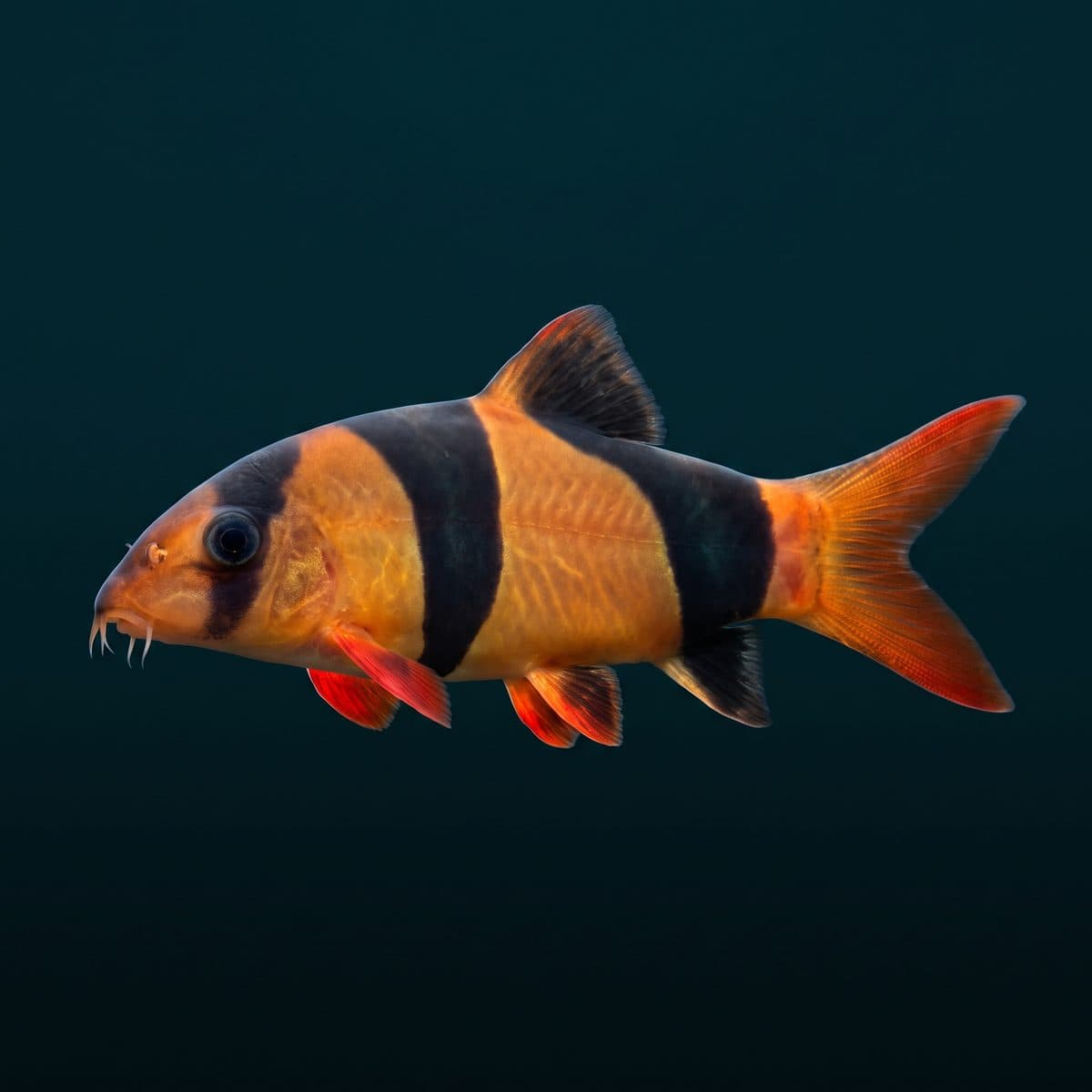
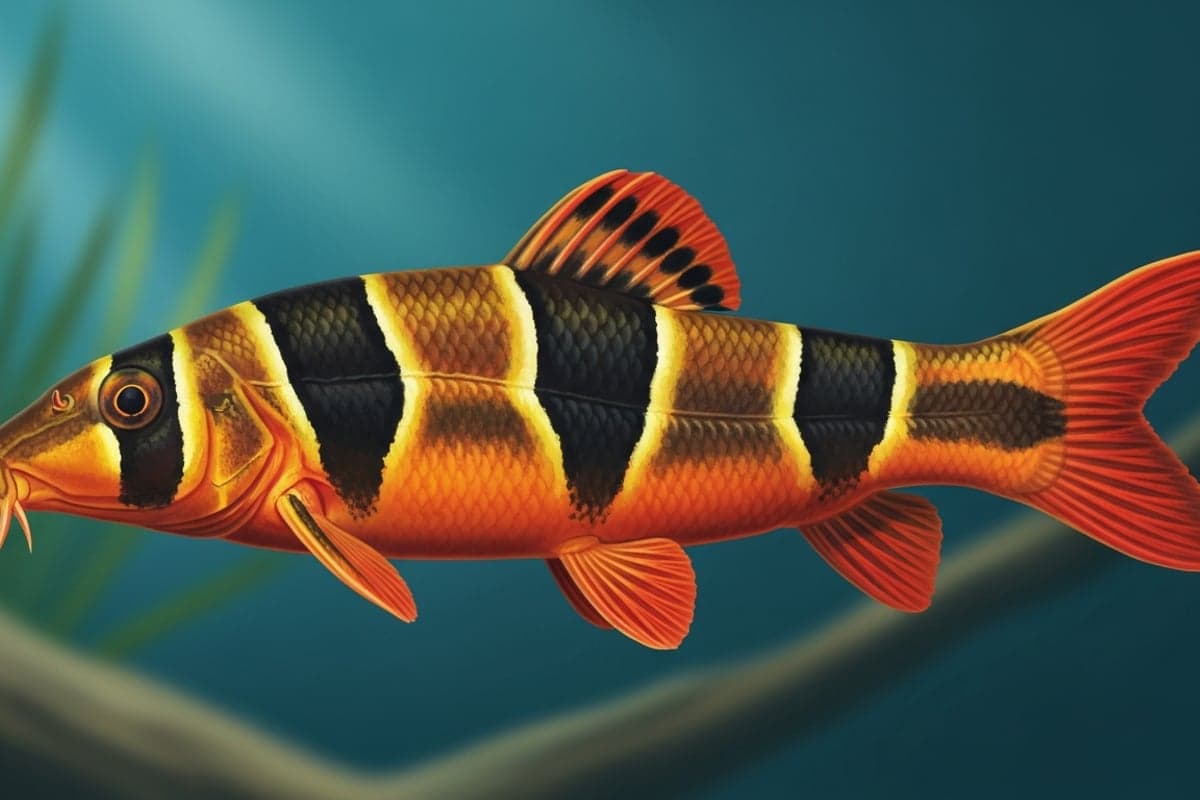
The Clown Loach (Chromobotia macracanthus) is arguably the most popular loach in the freshwater aquarium hobby and one of the most recognisable tropical fish of any kind. Its bold pattern of bright orange body colour intersected by three jet-black wedge-shaped bands, combined with its active social behaviour and endearing "playing dead" habit (lying on its side — completely normal), has made it a favourite among hobbyists for over half a century.
What many new keepers do not realise, however, is that Clown Loaches are not the small, easy community fish they appear to be in the shop. They grow slowly but steadily to 25–30 cm (10–12 inches) over a decade, with some exceptional specimens reaching 40 cm in large aquaria. They are highly social and must be kept in groups of at least 5, which means the eventual tank requirement is substantial — 125 gallons at minimum. And they are extraordinarily long-lived, with lifespans of 20–25 years well documented. A Clown Loach is a multi-decade commitment.
At The Fish Collection, we have sourced Clown Loaches from licensed Indonesian exporters for years and understand the nuances of their care from acclimatisation through long-term maintenance. This guide provides the comprehensive information you need to keep these magnificent fish thriving for their full, impressive lifespan.
Natural Habitat
Chromobotia macracanthus is endemic to the large river systems of the Indonesian islands of Borneo (Kalimantan) and Sumatra. They inhabit the main channels and tributaries of rivers such as the Kapuas, Kahayan, and Barito in Borneo and the Batang Hari and Musi in Sumatra. These are warm (26–30 °C), soft (GH 2–8 dGH), slightly acidic to neutral (pH 5.5–7.0) tropical rivers that flow through dense equatorial rainforest.
In their natural habitat, Clown Loaches are found in moderate current over substrates of sand, pebbles, and submerged woody debris. They are benthic fish that use their sensitive barbels to forage among the substrate for insect larvae, worms, crustaceans, and snails. During the monsoon season, they migrate upstream into flooded forest areas and tributary streams to spawn — a seasonal migration that has so far prevented reliable captive breeding.
The vast majority of Clown Loaches in the aquarium trade are wild-caught from Borneo and Sumatra and exported through Jakarta-based fish farms that hold and condition the fish before shipment. Indonesia regulates the harvest through seasonal quotas, and The Fish Collection works exclusively with exporters who operate within these legal frameworks. Understanding the wild origin of these fish is important for providing appropriate water chemistry and reducing acclimatisation stress.
Tank Requirements
Tank Dimensions & Aquascape
A group of 5–6 Clown Loaches requires a minimum 125-gallon (475 L) aquarium measuring at least 180 cm long × 45 cm wide × 50 cm tall (72 × 18 × 20 inches). For larger groups or to allow the fish to reach their full adult size potential, 200–300 gallons is preferable. Length is the primary consideration — Clown Loaches are active swimmers that spend hours cruising the bottom third of the tank in their social group.
Aquascaping should provide abundant hiding places. Clown Loaches are most confident — and display the best colouration — when they have access to sheltered retreats. Stacked driftwood, coconut shells, PVC pipe sections, and commercial loach caves all work well. The fish will pile into a single hiding spot in a tight cluster, a charming social behaviour that requires caves large enough to accommodate the entire group. Substrate should be fine sand or smooth gravel — Clown Loaches have sensitive barbels that can be damaged by rough substrate. Live plants are compatible; Java Fern, Anubias, and Cryptocoryne species tolerate the low-to-moderate lighting Clown Loaches prefer.
Filtration & Flow
Clown Loaches appreciate moderate water flow that replicates their riverine habitat. A canister filter rated for 1.5–2× the tank volume, or a sump system, provides the mechanical and biological filtration needed for a group of messy omnivores. Target a turnover rate of 6–8× the tank volume per hour. Ensure the filter output creates a gentle current along the length of the tank, with calmer zones behind driftwood for resting.
Biological filtration must be well-established before introducing Clown Loaches — these fish are highly sensitive to ammonia and nitrite, particularly during the acclimatisation period. A fully cycled tank with established bacterial colonies is non-negotiable. Supplemental aeration via air stones is beneficial, particularly at the upper end of the temperature range where dissolved oxygen levels naturally decrease.
Lighting
Clown Loaches prefer subdued lighting. In their natural habitat, the rainforest canopy filters most direct sunlight, creating a dappled, low-light environment at the riverbed. Standard LED fixtures at 30–50% intensity, or tanks with extensive floating plant cover, replicate these conditions well. Under bright lighting, Clown Loaches will hide for extended periods and display washed-out colouration. A gradual dawn/dusk light transition encourages natural behaviour and reduces startle responses.
Water Parameters
Clown Loaches perform best in warm, soft, slightly acidic water that mirrors their Indonesian river habitat:
- Temperature: 26–30 °C (78–86 °F). The warmer end of this range (28–30 °C) promotes the best colouration and activity. Temperatures below 24 °C suppress immune function and increase ich susceptibility dramatically.
- pH: 6.0–7.5. Stability is more important than hitting a specific target. Avoid pH swings greater than 0.3 units per day.
- General Hardness (GH): 2–10 dGH (36–179 ppm). Soft to moderately hard water is preferred.
- Carbonate Hardness (KH): 2–6 dKH.
- Ammonia / Nitrite: 0 ppm — always. Clown Loaches are especially sensitive to nitrogenous waste.
- Nitrate: <20 ppm. Weekly 25–30% water changes maintain this in most setups.
An important note on medication sensitivity: Clown Loaches have tiny, embedded scales and are functionally similar to scaleless fish in terms of medication tolerance. They are extremely sensitive to copper, formalin, malachite green, and potassium permanganate. Always use half-dose protocols when treating Clown Loaches and never add copper-based medications to a Clown Loach tank.
Diet & Feeding
Clown Loaches are true omnivores with a particular fondness for snails — they are, in fact, one of the most effective biological snail-control agents available to aquarists. Their diet in the wild consists of insect larvae, worms, small crustaceans, plant matter, and molluscs, which they locate using their sensitive barbels.
Recommended foods:
- Sinking pellets and wafers — Hikari Sinking Wafers, Northfin Kelp Wafers, or Repashy Bottom Scratcher gel food. These should form the dietary base, offered daily.
- Frozen bloodworms — a favourite food that Clown Loaches devour enthusiastically. Offer 2–3 times per week.
- Frozen brine shrimp and Mysis shrimp — excellent supplemental protein.
- Snails — Malaysian Trumpet Snails, Ramshorn Snails, and small pond snails. Clown Loaches will systematically eliminate pest snails, extracting them from their shells with remarkable dexterity. Providing a regular snail supply is both enrichment and nutrition.
- Blanched vegetables — cucumber, courgette (zucchini), and spinach. Offered 1–2 times weekly for fibre and vitamins. Remove after 12 hours.
- Earthworms — chopped nightcrawlers are readily accepted and highly nutritious.
Feed Clown Loaches once or twice daily, ideally in the evening when they are most active. Use a feeding dish or scatter food near their preferred hiding spots to ensure all group members get a share. Clown Loaches feed by methodically sifting through substrate, so sinking foods that settle on the bottom are more appropriate than floating options.
Behaviour & Temperament
Clown Loaches are among the most socially complex freshwater fish commonly kept in aquaria. They are obligate schoolers — individuals kept alone or in pairs become stressed, reclusive, and prone to disease. A group of 5 or more displays a rich repertoire of social behaviours: group foraging, communal sleeping in piles within caves, hierarchical displays involving lateral body vibrations, and the famous "Clown Loach death fake," in which the fish lies motionless on its side or even upside-down, apparently lifeless, only to spring to action when disturbed. This behaviour is completely normal and not a sign of illness, though it understandably alarms new owners.
Clown Loaches are crepuscular — most active during dawn and dusk periods, with moderate activity throughout the day if the tank is appropriately dim. They produce audible clicking sounds using their pharyngeal teeth, a communication behaviour that is most often heard during feeding or social interactions.
Compatible Tank Mates
Clown Loaches are peaceful, non-aggressive fish that integrate well into community setups with similarly sized, non-aggressive species. Suitable companions include:
- Large tetras and barbs — Congo Tetras, Denison Barbs, Roseline Sharks, and Tinfoil Barbs are all compatible.
- Rainbowfish — Boesemani and Turquoise Rainbowfish are excellent mid-water companions that appreciate similar water parameters.
- Corydoras catfish — peaceful bottom-dwellers that coexist well, provided both species have adequate floor space.
- Gouramis — Pearl Gouramis and Moonlight Gouramis are calm top-water companions.
- Medium cichlids — Severums, Geophagus, and Angelfish are compatible in large tanks. Avoid aggressive cichlids.
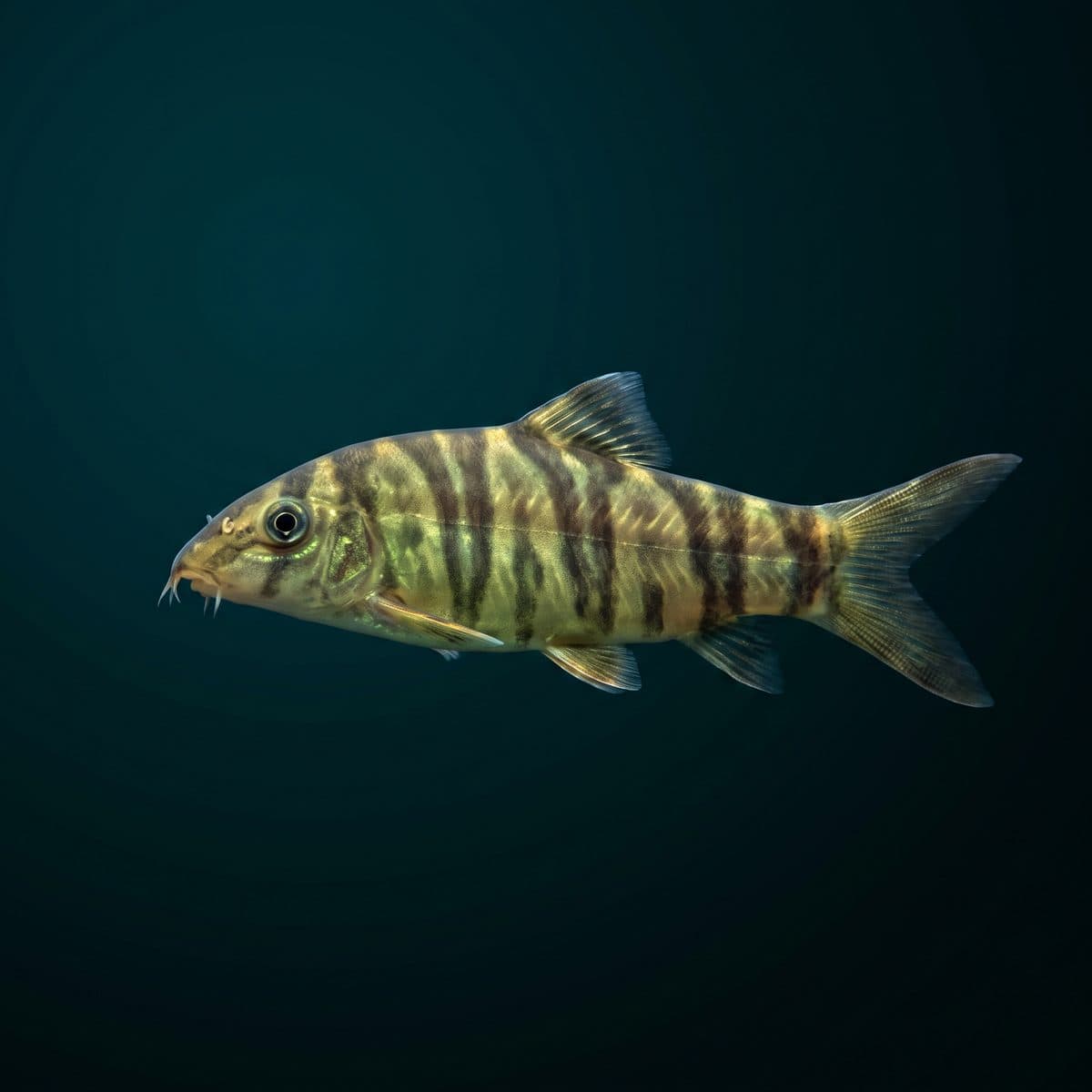
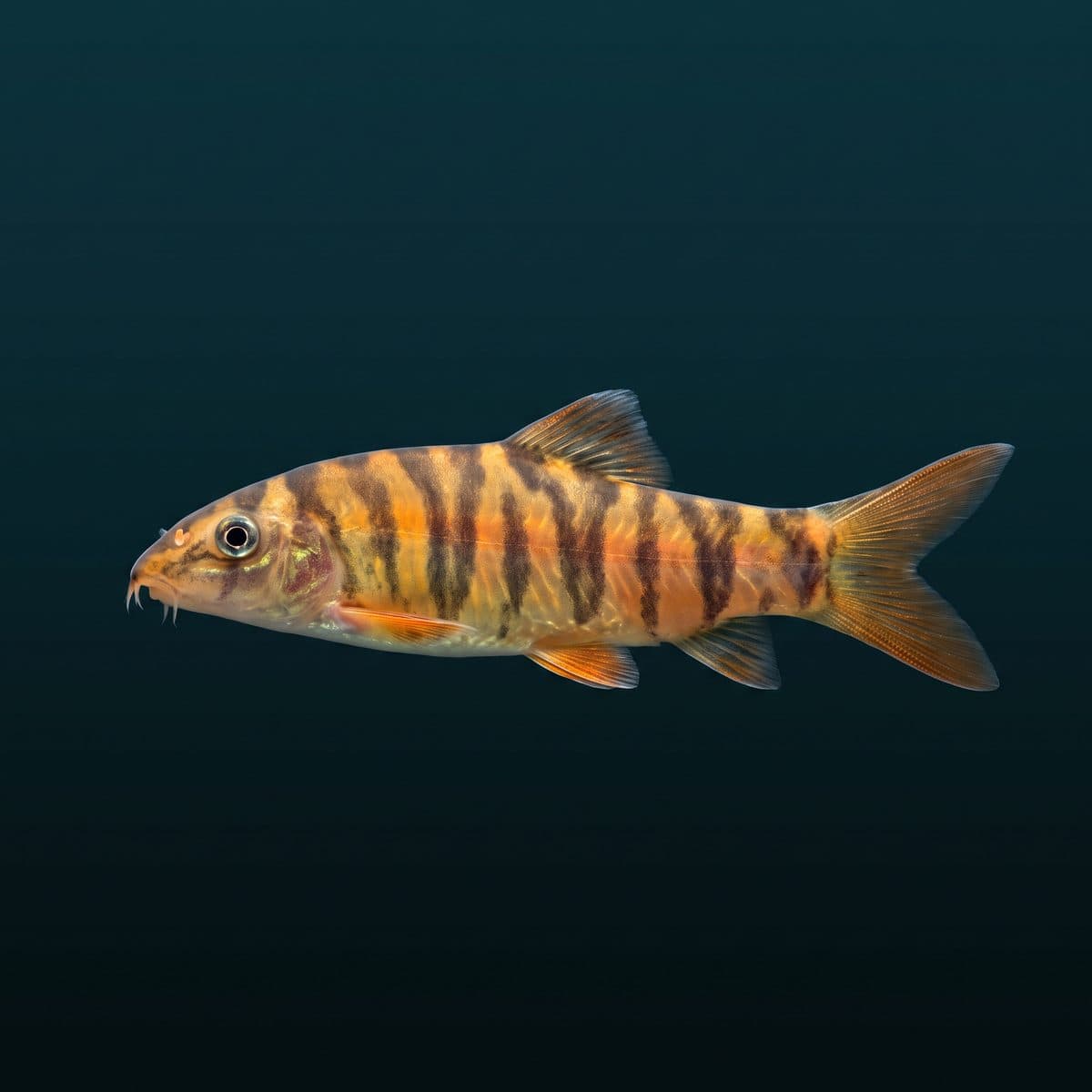
- Other loaches — Yo-yo Loaches, Zebra Loaches, and Kuhli Loaches can coexist in spacious tanks.
Avoid highly aggressive species (large Central American cichlids, Red-Bellied Piranhas), very small fish that might stress the Clown Loaches during their active periods, and fin-nippers. Clown Loaches possess a sharp suborbital spine beneath each eye that can be erected defensively — this spine can become entangled in nets (always use a container to catch Clown Loaches, never a net) and can injure aggressive tank mates that attempt to bully them.
Breeding
Captive breeding of Clown Loaches remains one of the great unsolved challenges in freshwater aquaculture. Despite their enormous popularity and decades of effort by hobbyists and commercial farms alike, reliable captive propagation has not been achieved. Virtually all Clown Loaches in the trade are wild-caught from Borneo and Sumatra.
In the wild, Clown Loaches are seasonal migratory spawners. They travel upstream into tributary streams and flooded forest areas during the monsoon season, where females release thousands of small, non-adhesive eggs into the current. The eggs drift downstream and develop without parental care. This pelagic spawning strategy is extremely difficult to replicate in aquaria.
A few commercial operations in Indonesia and the Czech Republic have reported limited success using hormonal induction (injections of Ovaprim or similar gonadotropin-releasing hormone analogues) to trigger spawning in conditioned adults. However, yields are low and the process requires veterinary expertise. For the foreseeable future, sustainable wild harvest from managed Indonesian fisheries remains the primary source of Clown Loaches for the aquarium trade.
Common Health Issues
Ich (White Spot Disease)
Clown Loaches are notoriously susceptible to ich (Ichthyophthirius multifiliis) — they are often the first fish in a community tank to show symptoms and the most heavily infested. Their tiny embedded scales offer less physical protection against the parasite than the fully scaled bodies of most other aquarium fish. Treatment must account for their medication sensitivity: never use copper-based treatments or full-strength malachite green. The safest and most effective approach is to raise the temperature to 30–32 °C over 48 hours (which accelerates the parasite's life cycle) and treat with half-dose malachite green/formaldehyde combination (Kordon Rid Ich Plus at 50% label dose) or Kordon Ich Attack (herbal formula safe for sensitive species). Maintain elevated temperatures for 10–14 days to ensure all life stages of the parasite are eliminated.
Skinny Disease
Skinny disease — progressive wasting characterised by a sunken belly and visible spine despite continued feeding — is a common and frustrating condition in Clown Loaches. It is typically caused by internal flagellate parasites (Hexamita, Spironucleus) or intestinal nematodes, often acquired during the wild-harvest and export process. Treatment involves identifying the parasite (a faecal sample examination by a veterinarian is ideal) and administering targeted medication: metronidazole (250 mg per 40 litres, repeated after 48 hours) for flagellates, or levamisole/fenbendazole for nematodes. Prophylactic deworming with praziquantel during quarantine is strongly recommended for all newly acquired Clown Loaches.
Other health concerns include Columnaris (bacterial infection presenting as white fuzzy patches, particularly at low temperatures — maintain 28+ °C as prevention), fin rot (secondary to poor water quality), and sensitivity to medications. The single best health strategy for Clown Loaches is prevention through warm water, pristine quality, a varied diet, and a proper quarantine period of 4–6 weeks for all new arrivals.