Overview
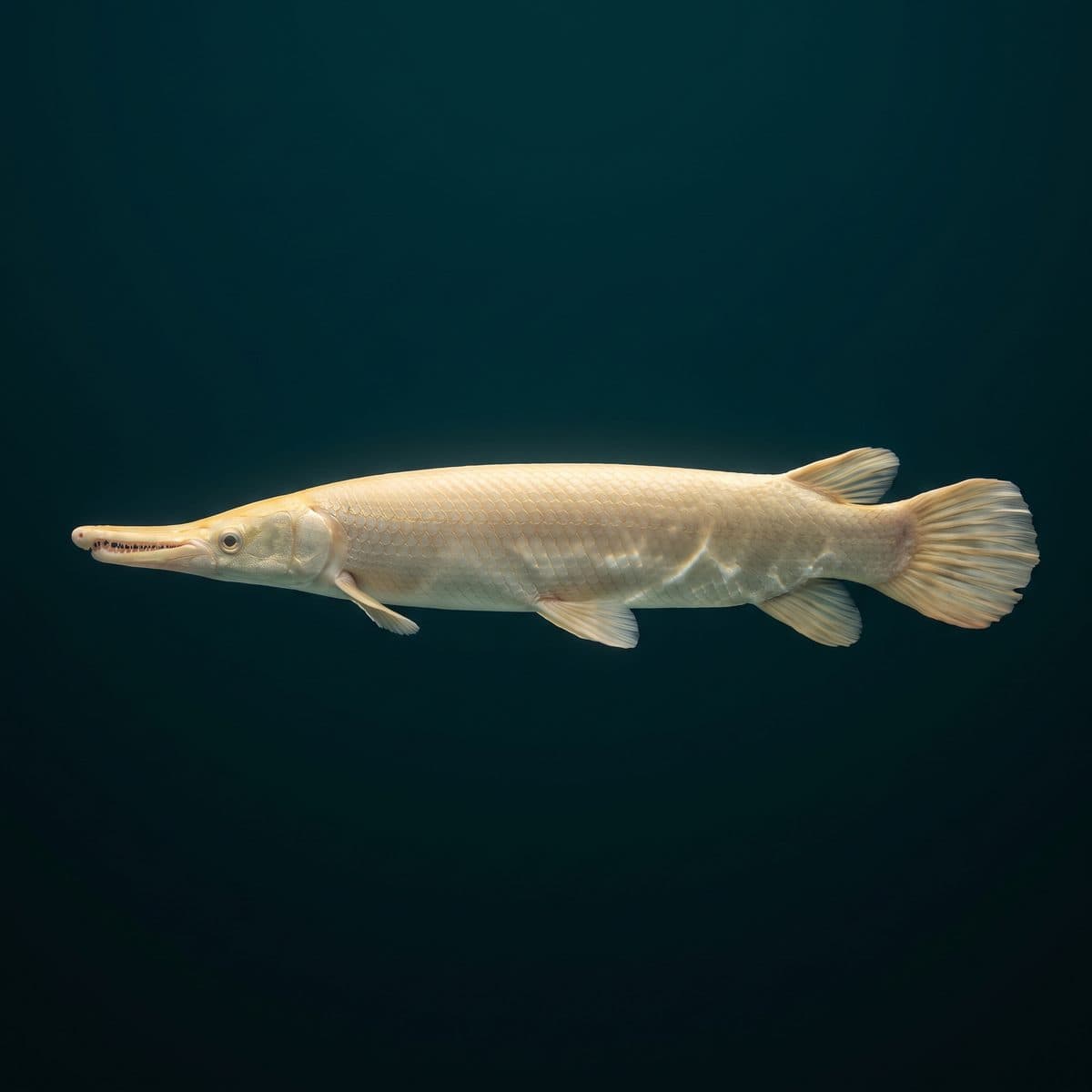
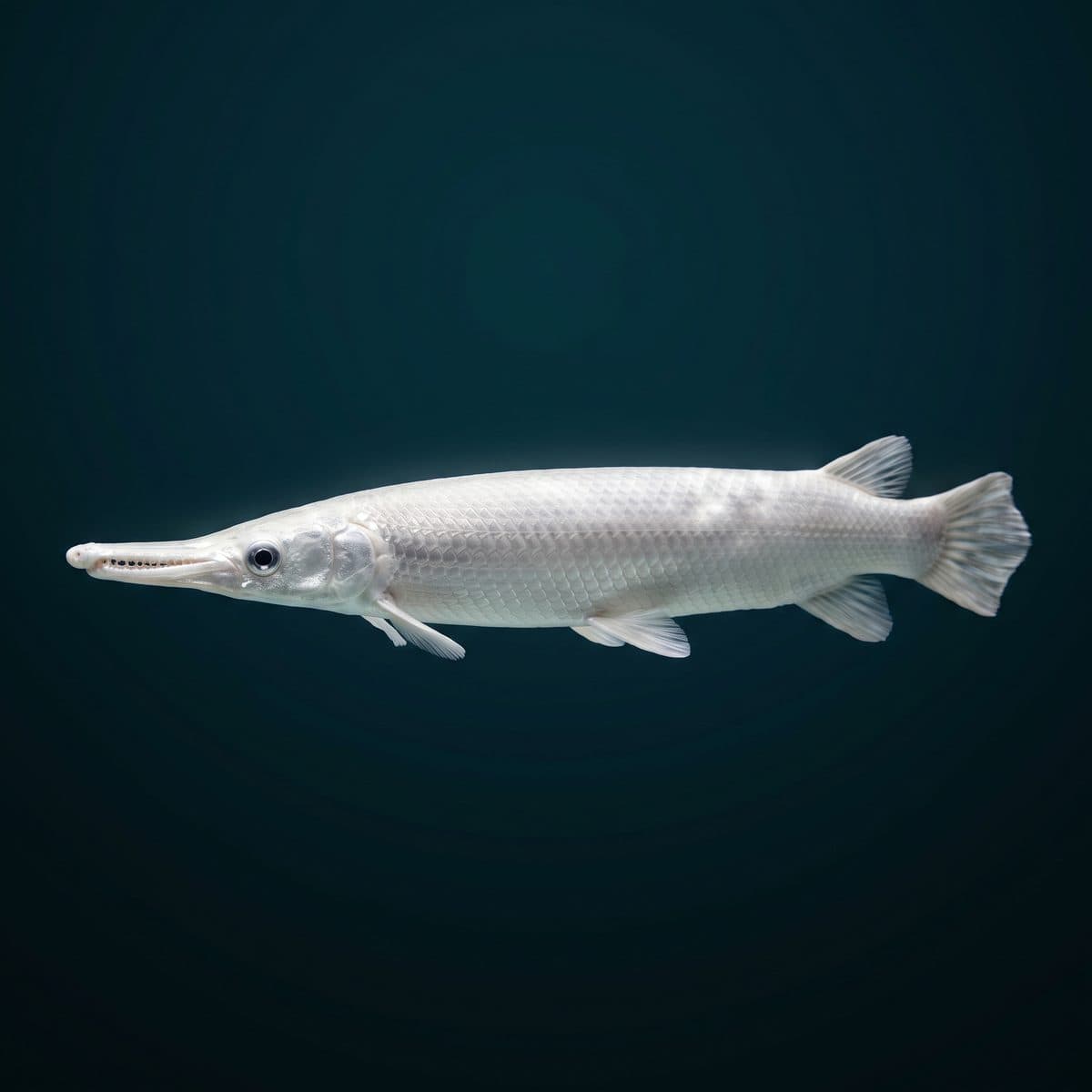
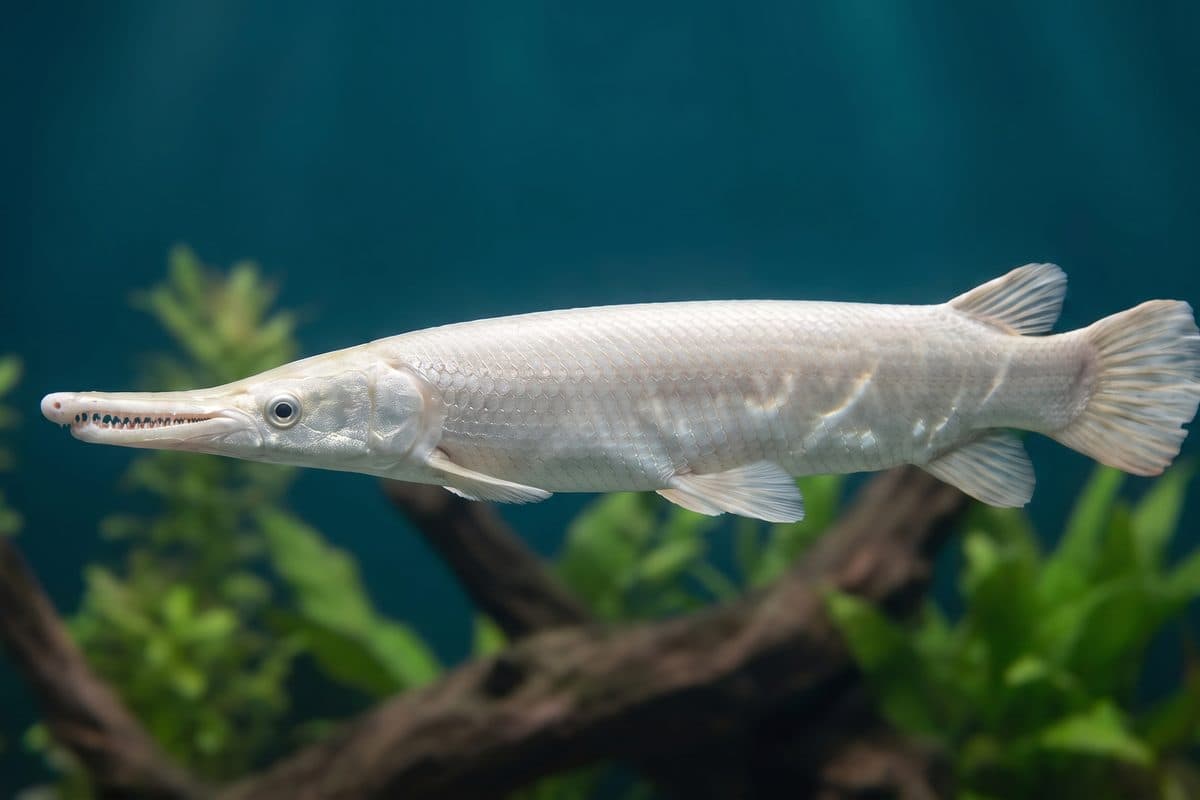
Platinum Gar are among the most prized colour morphs in the predatory fish hobby. The platinum mutation — which can be leucistic (reduced melanin), xanthic (lacking dark pigment while retaining yellow/gold), or fully albino (lacking all melanin, with red/pink eyes) — transforms the typically dark, spotted gar into a luminous silver-white or golden fish that commands immediate attention in any tank. These fish are rare in the wild and even rarer in captivity, as the colour mutation makes them more visible to predators and less likely to survive to adulthood in natural habitats.
The Fish Collection sources Platinum Gar from specialist breeders in the United States and Southeast Asia who have established captive-bred lines of these colour morphs, reducing dependence on wild-caught specimens and ensuring healthier, better-adapted fish for the aquarium trade.
Species & Identification
The term "Platinum Gar" is applied to several gar species. The most common in the aquarium trade are:
- Platinum Florida Gar (Lepisosteus platyrhincus): The most frequently available platinum gar. Wild-type Florida Gar are olive-brown with dark spots; platinum variants are solid silver-white or cream. Adults reach 45–60 cm (18–24 in), making them the most manageable gar for home aquariums.
- Platinum Spotted Gar (Lepisosteus oculatus): Similar size to the Florida Gar (45–75 cm / 18–30 in). Platinum specimens lack the characteristic dark body spots, appearing as uniform silver-white with occasional faint ghost patterning visible under certain lighting.
- Platinum Shortnose Gar (Lepisosteus platostomus): A compact species reaching 60–75 cm (24–30 in). Less commonly available in platinum form.
- Platinum Longnose Gar (Lepisosteus osseus): The largest of the common Lepisosteus species at 90–120 cm (36–48 in). Platinum variants are extremely rare and command the highest prices.
It is important to identify the species correctly when purchasing, as adult size varies significantly. The Florida Gar and Spotted Gar are the most practical choices for home aquariums due to their relatively moderate adult size.
Colour Genetics
Several genetic mechanisms can produce the platinum phenotype in gar:
- Leucism: Reduced melanin production throughout the body, resulting in a pale silver-white or cream colour with normally pigmented (dark) eyes. This is the most common "platinum" type.
- Xanthism: Absence of melanin combined with normal or enhanced xanthophore (yellow pigment cell) expression, producing a golden or butter-yellow fish. Sometimes marketed as "Golden Gar."
- Albinism: Complete absence of melanin, producing a white or cream body with pink or red eyes. True albino gar are the rarest and most valuable.
All three types are recessive mutations, meaning both parents must carry the gene for offspring to express the phenotype. In captive breeding programmes, establishing and maintaining platinum lines requires careful line-breeding over multiple generations.
Tank Requirements
Tank size depends on the species, but all gar need long, rectangular tanks that provide adequate turning room:
- Florida / Spotted Gar: 125 gallons (473 L) minimum for a single adult; 180+ gallons for a pair or community. Tank length of at least 6 feet (180 cm).
- Longnose Gar: 300+ gallons with 8-foot (240 cm) minimum length.
Critical requirement — secure lid: Gar are surface-dwelling fish that breathe atmospheric air. They will jump, especially when startled. A tight-fitting, weighted lid is absolutely essential. Gaps of even a few centimetres can be exploited.
Filtration: Canister or sump filtration rated for 4–6× turnover. Gar are moderate waste producers but benefit from excellent water quality. Moderate current is appreciated.
Décor: Open swimming space with driftwood positioned along the tank perimeter. Avoid sharp decorations that could damage the gar's elongated snout. Floating plants provide shade and security.
Water Parameters
- Temperature: 70–82 °F (21–28 °C). Subtropical to tropical range — most species tolerate seasonal temperature fluctuation.
- pH: 6.5–8.0.
- Hardness: Adaptable; 5–20 dGH.
- Ammonia/Nitrite: 0 ppm.
- Nitrate: Below 40 ppm.
Diet & Feeding
All gar are carnivores. Platinum variants have identical dietary requirements to wild-type fish:
- Staple foods: Frozen whole silversides, smelt, shrimp (shell-on), and lance fish.
- Supplementary: Frozen tilapia fillets, frozen crayfish, and earthworms.
- Feeding frequency: Juveniles daily; sub-adults every 2–3 days; adults 2–3 times weekly.
Gar are surface feeders that prefer food floating at or near the surface. Use feeding tongs to present food at the waterline. Many gar can be trained to accept food from tongs readily.
Behaviour & Tank Mates
Gar are surface-dwelling ambush predators. They spend most of their time hovering just below the waterline, occasionally surfacing to gulp air. They are generally peaceful toward fish they cannot eat, making them suitable for large predator communities with:
- Large catfish (Plecostomus, Synodontis)
- Large cichlids (Oscars, Severums, large Geophagus)
- Other gar species of similar size
- Bichirs
Avoid housing with anything small enough to be swallowed — gar have a deceptively large gape for their body width.
Pricing & Availability
Platinum Gar are premium-priced due to their rarity:
- Platinum Florida/Spotted Gar (juvenile): £150–£400
- Platinum Florida/Spotted Gar (sub-adult): £400–£800
- Platinum Longnose Gar: £600–£2,000+
- True Albino Gar (any species): £500–£3,000+
Availability is sporadic — platinum colour morphs cannot be produced on demand, as the trait is recessive and spawning gar in captivity is itself a specialist endeavour. The Fish Collection maintains relationships with dedicated gar breeders and offers platinum specimens when available.
Natural Habitat & Wild Behaviour
Platinum Gar are colour morphs of North American gar species, so to keep one well it helps to know how the wild-type fish live. The species behind most platinum gar — the Florida Gar (Lepisosteus platyrhincus) and Spotted Gar (Lepisosteus oculatus) — inhabit the slow rivers, oxbow lakes, swamps, and backwaters of the southeastern United States, drifting among vegetation and submerged wood in warm, still to gently flowing water.
Gar are surface-oriented ambush predators. They hang motionless just below the waterline, angled among reeds and branches, then snap sideways with astonishing speed to grab passing fish. A key adaptation is their ability to gulp atmospheric air using a vascularised swim bladder that works like a primitive lung, which lets them survive in the warm, oxygen-poor water where they often live — and explains the surfacing behaviour you'll see in the aquarium.
That wild profile shapes everything about their care. They want long, open surface swimming room rather than height; they appreciate floating cover to feel secure; and their air-gulping is normal, healthy behaviour you should never try to prevent. The platinum morph doesn't change any of this — a Platinum Florida Gar behaves exactly like its spotted wild cousin, just in a far more eye-catching package. Understanding the surface-ambush lifestyle is the difference between a stressed, jumpy gar and a calm, confident one.
Acclimation & Handling
Gar are hardy once established, but two things make the early days and any handling tricky: their long, delicate snout and their powerful jumping. A new gar should be drip-acclimated and moved into a dimly lit tank with a secure lid already in place. Expect it to hug the surface nervously at first; floating plants and subdued light help it settle.
The snout is the vulnerable point. That elongated rostrum, packed with needle teeth, is easily damaged if the fish bolts into glass or hard décor — a common injury that starts as a worn or scraped tip and can become infected. Keep the tank long, avoid hard decorations near the front glass, and never chase or startle a gar. Damaged snouts often heal in clean water but can leave permanent shortening.
Then there's jumping. Gar are surface fish and strong jumpers, especially when spooked or newly introduced, so a tight, weighted, fully covering lid is non-negotiable — a gar on the floor is one of the most common and avoidable losses with this group. When you must move one, guide it into a large, rigid container rather than netting it; the teeth and gill covers tangle badly in mesh, and thrashing risks both the fish and your hands. Handle calmly and infrequently, and a gar rewards you with decades of steady, confident behaviour.
Health & Common Problems
Gar are armoured in tough ganoid scales and are genuinely robust fish, but they have a few characteristic weak points worth watching:
- Snout and mouth injuries: By far the most common gar problem, caused by collisions with glass or décor. Keep an eye on the tip of the rostrum for wear, redness, or fungus, and maintain pristine water so minor damage heals rather than becoming infected.
- Ich and skin parasites: Gar can get white spot, though their armour offers some protection. They tolerate most treatments, but as primitive fish they can be sensitive to high medication doses — treat cautiously and avoid overdosing.
- Poor diet issues: A monotonous or fatty diet, or reliance on feeder goldfish, leads to nutritional problems and fat accumulation. Feeder fish also risk introducing disease. Feed varied whole frozen foods instead.
- Cuts from netting: Their scales and teeth catch in nets, causing damage. Move them in containers, not nets.
The single biggest health lever is a clean, spacious, well-covered tank. Avoid feeders, keep the snout safe from hard surfaces, hold nitrate down with regular water changes, and a Platinum Gar will live 15–25 years. Note that true albino (red-eyed) platinum gar benefit from moderate lighting and shade, while leucistic (dark-eyed) fish have no special light sensitivity.
Is a Platinum Gar Right for You?
A Platinum Gar is a spectacular, premium-priced predator, but it's a big, long-lived fish with specific needs. Weigh it up honestly before committing.
A Platinum Gar suits you if you:
- Can provide a long tank of at least 125 gallons (much more for larger species) with a secure, weighted lid.
- Understand adult sizes vary by species — from around 45 cm for a Florida Gar to well over a metre for a Longnose.
- Are happy to feed a carnivore on varied frozen foods and keep only tank mates too big to eat.
- Want an unusual, prehistoric-looking centrepiece and can commit for 15–25 years.
Reconsider if you:
- Have limited space or a short tank — gar need length and surface area above all.
- Keep small or mid-sized community fish that will end up as prey.
- Aren't prepared for the cost, the lifespan, or the escape-proofing a jumper demands.
Identify the exact species before you buy so you know how big it'll get, confirm it's captive-bred where possible, and make sure your tank suits its adult size. Get those right and a Platinum Gar is one of the most striking predators you can keep — a luminous, living fossil that will cruise the surface of your tank for decades.