Debunking the Bowl Myth
The most persistent myth in the aquarium hobby is that Betta fish can live in bowls, vases, or tiny unfiltered containers. This myth has killed more fish than any disease. It persists because Bettas possess a labyrinth organ — a specialised respiratory structure that allows them to breathe atmospheric air in oxygen-depleted water. This adaptation evolved in the stagnant rice paddies and floodplains of Southeast Asia, where seasonal drought reduces fish to surviving in shrinking puddles. It is a survival mechanism, not a lifestyle preference.
A Betta in a bowl is not thriving — it is surviving. It is breathing air because the water it is sitting in cannot sustain life. It is motionless not because it is calm, but because ammonia from its own waste is burning its gills and fins. Its lifespan drops from 3–5 years to 6–12 months. The colour fades, the fins clamp, and the fish dies slowly of organ failure in a container of its own diluted urine.
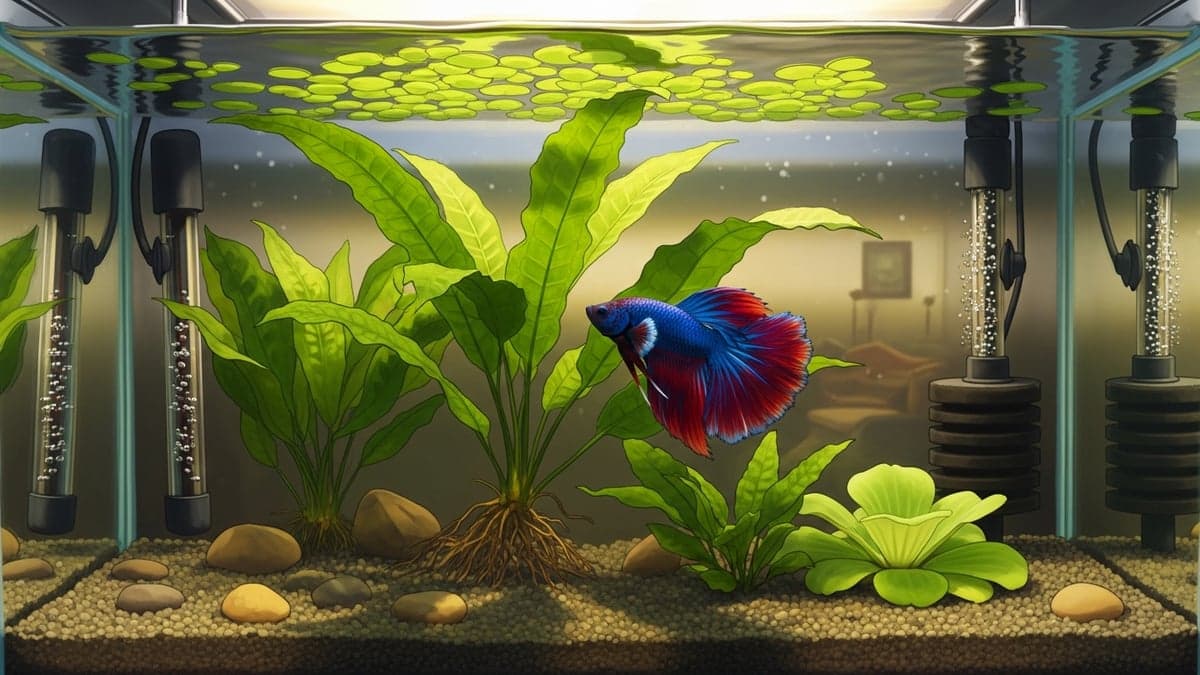
Every responsible Betta keeper needs to internalise this: Bettas deserve heated, filtered tanks with adequate space. The information below establishes the minimum standard for ethical Betta care.
Tank Size: 5 Gallons Minimum
The minimum tank size for a single Betta is 5 gallons (19 litres). This is not a generous recommendation — it is the floor below which water quality becomes impossible to maintain without heroic intervention. In a 5-gallon tank with a filter and heater, you can achieve stable nitrogen cycling, consistent temperature, and enough swimming space for the fish to exhibit natural behaviour: patrolling, flaring, building bubble nests, and exploring.
A 10-gallon tank is ideal for a single Betta. The additional volume provides dramatically better parameter stability (a 10-gallon tank is twice as forgiving as a 5-gallon during a missed water change), allows for aquascaping with live plants, and provides enough space for a small community if desired. The cost difference between a 5-gallon and 10-gallon setup is typically less than $20 — there is no reason to choose smaller.
For Betta sororities (groups of female Bettas), a minimum of 20 gallons is required with heavy planting and multiple line-of-sight breaks. Sororities are not recommended for beginners — they require careful monitoring and can collapse into aggression without warning.
Water Parameters
Temperature and Heating
Bettas are tropical fish native to Southeast Asia. They require water temperatures of 76–82 °F (24–28 °C) — a range that ambient room temperature in most homes does not reliably provide. A heater is not optional.
Use an adjustable heater rated for your tank size: 25 watts for 5 gallons, 50 watts for 10 gallons. Avoid preset heaters that lock at a fixed temperature — they often run 2–3 °F off their claimed set point, and you have no ability to adjust. An adjustable heater (Eheim Jäger, Aqueon Pro, or Cobalt Neo-Therm) allows precise calibration using a separate thermometer to verify accuracy.
Temperature stability matters as much as the absolute number. A Betta in a stable 78 °F tank is healthier than one fluctuating between 74 °F and 82 °F due to a failing heater or room-temperature swings. Position the heater near the filter output for even heat distribution, and verify temperature at the opposite end of the tank to ensure no cold spots exist.
Below 74 °F, Betta metabolism slows dramatically. The fish becomes lethargic, stops eating, and its immune system weakens — making it vulnerable to every opportunistic pathogen in the water. Chronic cold is the silent killer of pet-shop Bettas housed in unheated cups.
pH and Hardness
Bettas are adaptable to a range of water chemistry:
- pH: 6.5–7.5 (slightly acidic to neutral). Bettas originate from soft, acidic water but adapt readily to neutral tap water. Stability is more important than hitting a specific number — do not chase pH with chemicals.
- GH: 3–12 dGH (soft to moderately hard).
- KH: 2–8 dKH (sufficient to buffer against pH crashes).
Most municipal tap water (dechlorinated) falls within acceptable parameters for Bettas. Test your tap water once to establish a baseline. If your water is extremely hard (above 15 dGH) or extremely alkaline (pH above 8.0), consider blending with RO water to bring parameters into range.
Indian almond leaves (Terminalia catappa) release tannins that gently lower pH, soften water, and provide mild antifungal and antibacterial properties. They are a staple in Betta keeping — add one medium leaf per 5 gallons and replace every 2–3 weeks as it decomposes. The amber-tinted "blackwater" effect mimics natural habitat and visibly reduces stress in many Bettas.
The Nitrogen Cycle
Every Betta tank must be fully cycled before the fish is introduced. The nitrogen cycle converts toxic ammonia (produced by fish waste and uneaten food) to nitrite (also toxic), then to nitrate (tolerable at low levels). This process is performed by beneficial bacteria that colonise your filter media and tank surfaces.
Target parameters at all times:
- Ammonia: 0 ppm
- Nitrite: 0 ppm
- Nitrate: Below 20 ppm (below 10 ppm preferred)
Perform a fishless cycle using pure ammonia before adding the Betta. The cycle takes 4–6 weeks. Once established, maintain it through regular feeding (which provides ongoing ammonia input) and weekly 25 % water changes to export accumulated nitrate. Never replace all filter media at once — you will crash the cycle and expose the fish to ammonia poisoning.
Filtration
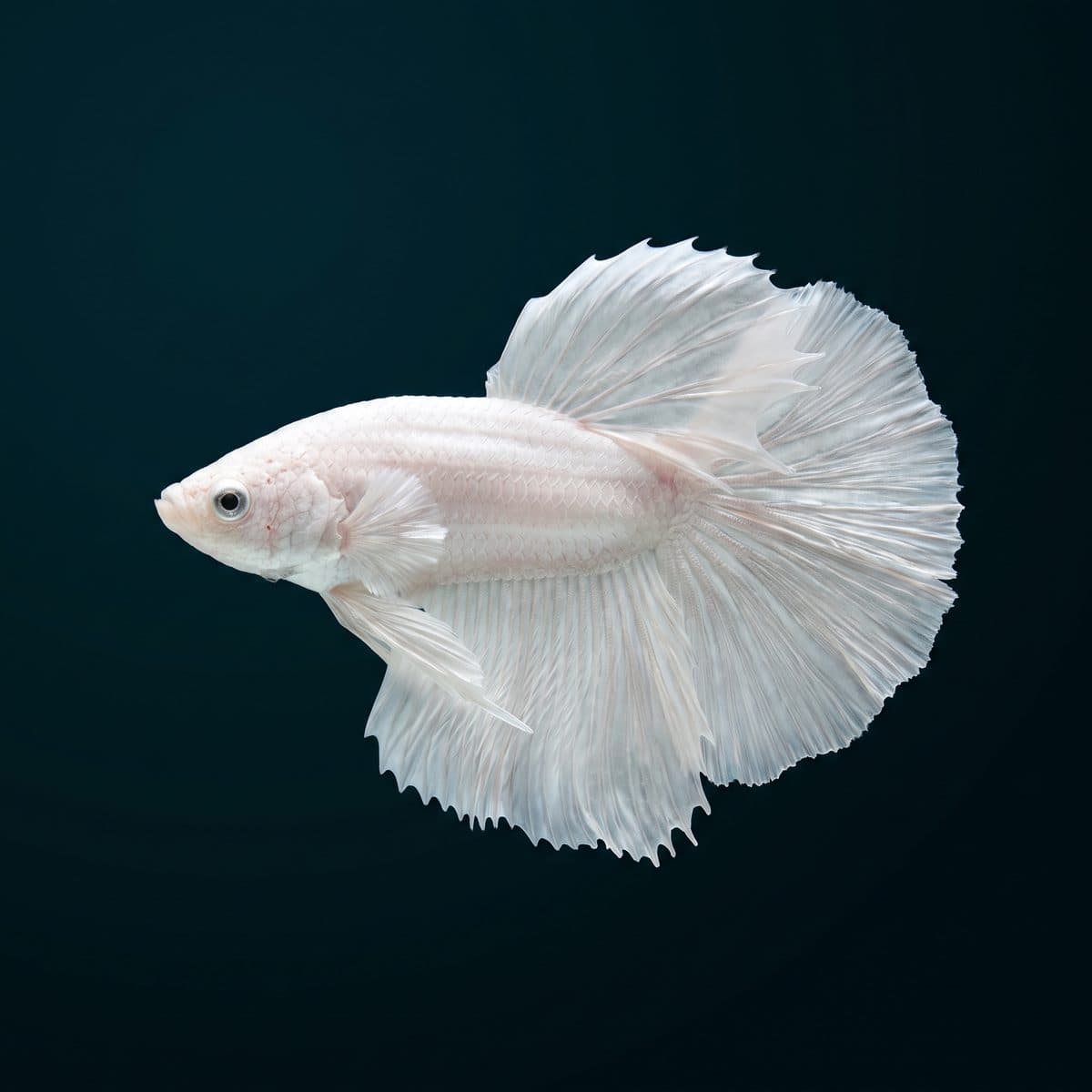
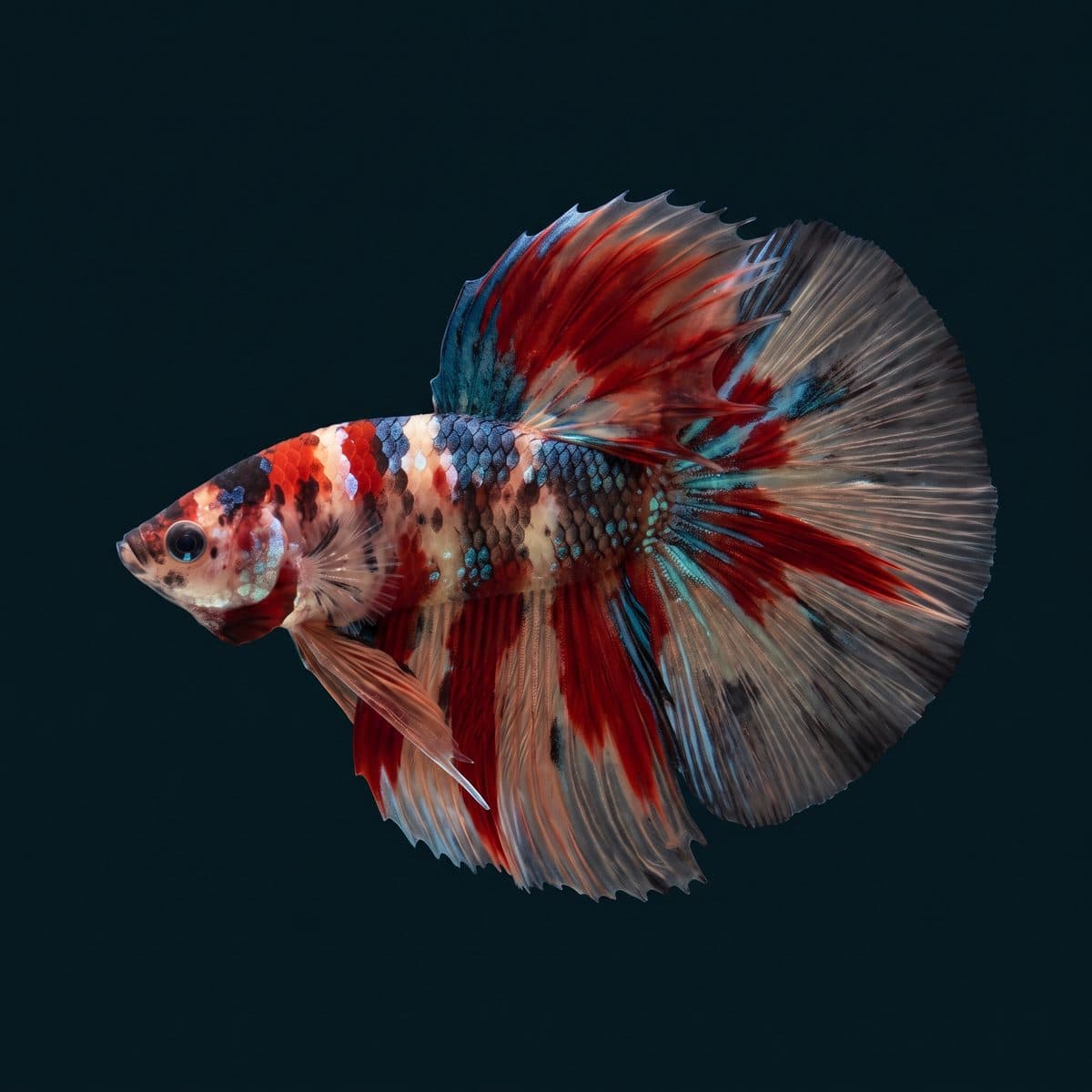
Bettas need filtration — but not the kind designed for a community tank of tetras. Bettas are poor swimmers. Their elaborate finnage (particularly in long-finned varieties like Halfmoon, Rosetail, and Delta) creates enormous drag. A filter that produces strong current will exhaust the fish, tear fins, and cause chronic stress.
Sponge filters are ideal. They provide excellent biological filtration with virtually no current — just a gentle column of rising bubbles. A single sponge filter rated for your tank size, driven by a small air pump with an adjustable valve, is all a Betta tank needs.
If using a hang-on-back (HOB) filter, baffle the output. Cut a plastic water bottle lengthwise and attach it to the filter output as a flow diffuser, or stuff the output compartment with filter sponge to reduce the waterfall effect. The surface should have gentle movement, not a cascading torrent.
Internal filters with adjustable flow can work if dialled to the lowest setting. Ensure the intake is covered with a pre-filter sponge — Betta fins can be sucked into unprotected intake slots, causing serious injury.
Diet and Feeding
Pellets: The Staple
High-quality Betta-specific pellets are the foundation of a healthy diet. Look for pellets with whole fish or insect meal as the first ingredient — not wheat flour or soy, which are cheap fillers that provide minimal nutrition. Recommended brands include Northfin Betta Bits, New Life Spectrum Betta Formula, and Fluval Bug Bites for Bettas.
Feed 2–4 pellets per meal, twice daily. A Betta's stomach is approximately the size of its eye — overfeeding is extremely easy and leads to constipation, bloating, and swim bladder problems. If the fish's belly appears visibly rounded after feeding, you are giving too much.
Frozen and Live Foods
Variety is essential for Betta health and colouration. Supplement pellets with:
- Frozen bloodworms: The Betta favourite. Offer 2–3 times per week as a meal replacement. Thaw a small portion in tank water before feeding.
- Frozen brine shrimp: Good source of roughage. Useful for fasting/digestive health days.
- Frozen daphnia: Excellent for digestion — acts as a natural laxative. Ideal for Bettas prone to bloating.
- Live foods (mosquito larvae, wingless fruit flies, micro worms): Trigger the most intense feeding response and provide the highest nutritional value. Mosquito larvae are a natural Betta food in the wild and are eagerly consumed.
Implement a weekly fasting day (no food) to allow the digestive system to clear. This is particularly important for Bettas, which are prone to constipation and swim bladder issues from overfeeding.
Feeding Schedule
A practical weekly feeding schedule:
- Monday–Tuesday: Pellets (2–4 per meal, twice daily)
- Wednesday: Frozen bloodworms (replace one pellet meal)
- Thursday–Friday: Pellets
- Saturday: Frozen daphnia or brine shrimp
- Sunday: Fasting day — no food
This schedule provides balanced nutrition, digestive variety, and a regular fast to prevent the bloating that plagues overfed Bettas.
Tank Mates
Compatible Species
Bettas can coexist with carefully selected tank mates in tanks of 20 gallons or larger. The key principles: avoid fin-nippers, avoid fish that resemble other male Bettas (long fins, bright colours), and choose species that occupy different tank levels.
Generally compatible species:
- Nerite snails: Algae-eating, peaceful, and completely ignored by Bettas. The easiest and safest tank mate.
- Mystery snails: Larger than nerites, equally peaceful. Their long tentacles may occasionally attract a curious nip, but serious aggression is rare.
- Corydoras catfish (pygmy or habrosus): Small, peaceful bottom-dwellers that occupy a different tank zone. Keep in groups of 6+ in a 20-gallon tank.
- Kuhli loaches: Nocturnal, eel-like bottom-dwellers that are virtually invisible to a Betta. Require a group of 6+ and a sand substrate.
- Ember tetras: Small (2 cm), dull-coloured, and fast. Their subdued orange colouration and small size usually keep them below the Betta's aggression threshold. School of 8+ in 20 gallons.
- Amano shrimp: Large enough (4–5 cm) to avoid being eaten by most Bettas. Excellent algae cleaners. Smaller cherry shrimp are risky — many Bettas view them as food.
Species to Avoid
- Other male Bettas: Two males in the same tank will fight to the death. No exceptions.
- Guppies: Their flowing tails trigger territorial aggression in male Bettas.
- Tiger barbs and other fin-nippers: They will shred a Betta's fins to ribbons.
- Gouramis: Close relatives of Bettas and perceived as rivals. Aggression is inevitable.
- Brightly coloured or long-finned fish: Anything that resembles a competing male will be attacked.
- Aggressive cichlids: Any cichlid large or aggressive enough to bully a Betta is an inappropriate tank mate.
Individual Betta temperament varies enormously. Some Bettas tolerate tank mates readily; others attack anything that moves. Always have a backup plan (divider or separate tank) in case your Betta proves incompatible with community life.
Common Diseases
Fin Rot
Fin rot is the most common Betta disease and is almost always caused by poor water quality. Symptoms: ragged, disintegrating fin edges, sometimes with a white or black margin. In early stages, fins appear slightly frayed; in advanced cases, the rot progresses to the body and becomes life-threatening.
Treatment: Improve water quality immediately. Perform 25–50 % water changes daily until ammonia and nitrite are at 0 ppm. Mild cases heal with clean water alone within 2–3 weeks. For moderate cases, add Indian almond leaves (natural antibacterial) and aquarium salt (1 tsp per gallon) for 7–10 days. Severe cases (rot reaching the body) require antibiotic treatment — kanamycin or erythromycin in a hospital tank.
Velvet (Oodinium)
Velvet is a parasitic infection caused by Oodinium pilularis. It presents as a fine, gold or rust-coloured dust on the fish's body and fins — best visible by shining a torch on the fish at an angle in a dark room. The fish will clamp its fins, scratch against surfaces (flashing), become lethargic, and lose appetite.
Treatment: Velvet is highly contagious and progresses rapidly. Raise the temperature to 82 °F (28 °C) to accelerate the parasite's life cycle. Treat with a copper-based medication (Seachem Cupramine at the recommended dose). Blackout the tank by covering it completely — Oodinium is a dinoflagellate that uses photosynthesis, and darkness weakens it. Treat for the full 14-day course even if symptoms resolve earlier.
Ich (White Spot Disease)
Ich (Ichthyophthirius multifiliis) presents as distinct white spots (1–2 mm) scattered across the body and fins, resembling grains of salt. The fish flashes, clamps fins, and becomes lethargic. Ich is triggered by temperature drops or stress that suppresses the immune system.
Treatment: Raise the temperature gradually (over 24 hours) to 82–86 °F (28–30 °C). The elevated temperature accelerates the parasite's life cycle, forcing it off the fish and into the free-swimming stage where it is vulnerable to treatment. Add aquarium salt (1 tsp per gallon) or treat with a formalin/malachite green medication (Ich-X is widely recommended). Maintain elevated temperature and treatment for 10–14 days after the last visible spot disappears to ensure all life-cycle stages are eliminated.
Breeding Basics
Betta breeding is a fascinating but demanding process that requires preparation, dedicated equipment, and a plan for hundreds of fry. Do not breed on impulse — you will need homes for 50–300 juvenile Bettas.
Essential equipment:
- Breeding tank: 10–20 gallons, bare bottom, shallow water (4–6 inches), heater set to 80 °F (27 °C), no filter during spawning (the current destroys bubble nests and scatters eggs).
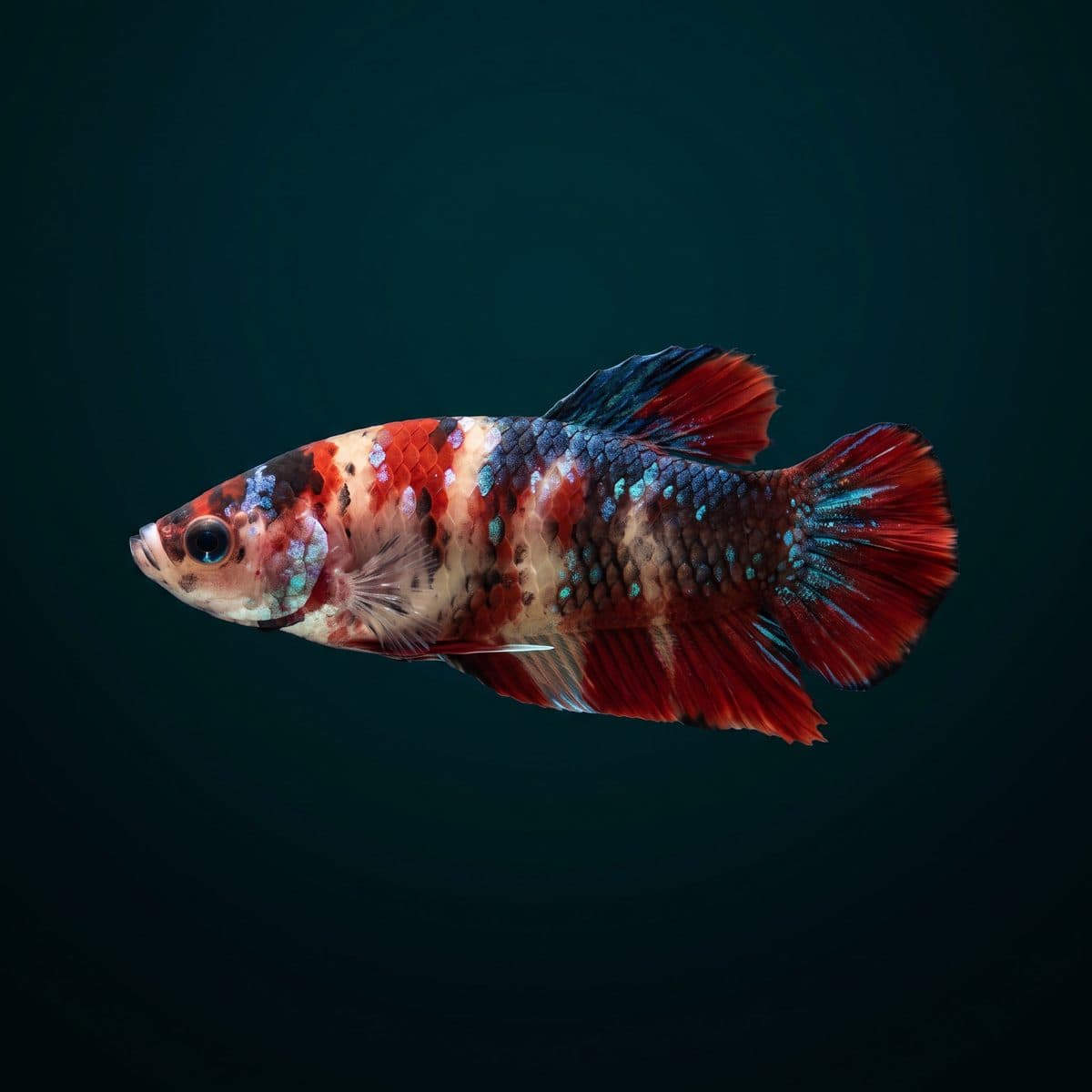
- Conditioning: Feed both male and female high-protein live foods (bloodworms, brine shrimp) for 2–4 weeks before introducing them. The female should be visibly plump with eggs (look for vertical breeding stripes and a protruding ovipositor).
- Introduction: Place the female in a clear container or chimney within the breeding tank so the male can see but not reach her. The male will build a bubble nest (a raft of saliva-coated air bubbles at the surface) within 1–3 days. Release the female when the nest is substantial and the male is displaying intensely.
- Spawning: The male wraps his body around the female in a nuptial embrace, squeezing eggs from her body. He fertilises them and carries each egg to the bubble nest. This process repeats over 2–6 hours. Remove the female immediately after spawning — the male will become aggressively protective of the nest and may injure her.
- Fry care: The male tends the nest for 24–48 hours until the fry hatch and become free-swimming. Remove the male once fry are swimming horizontally. Feed newly free-swimming fry infusoria or vinegar eels for the first 3–5 days, then transition to freshly hatched brine shrimp nauplii. After 4–6 weeks, introduce crushed pellets and frozen foods.
Begin separating aggressive males into individual containers at 8–12 weeks — this is when male aggression typically emerges. Female Bettas can often be raised together in a grow-out tank until they reach sellable or rehomeable size.
Betta breeding is rewarding for experienced keepers, but the commitment is substantial. Each spawn produces dozens to hundreds of fry that need individual attention, water changes, and eventually separate housing for males. Plan your breeding project fully before starting — not after you have 200 baby Bettas and nowhere to put them.